
A headache location meaning chart offers useful clues about what’s causing your pain, but location alone was never designed to diagnose anything. Where pain shows up narrows the likely cause, tension headache, migraine, cluster headache, or occasionally something more serious, but it’s one data point among several a clinician weighs together. This guide gives the location breakdown most people search for, then honestly covers what a chart like this can’t tell you and where the rare, serious causes actually reside.
Key Takeaways
- A headache location meaning chart can offer useful clues, but location alone isn’t diagnostic, it works best combined with pain quality, timing, and associated symptoms.
- Most common locations, the back of the head, temples, and forehead, point toward tension headache or migraine, by far the two most frequent headache types.
- A handful of specific locations are rarely linked to serious causes, including aneurysm, temporal arteritis, and severe hypertension, and these deserve real attention.
- Tracking additional details like pain quality, triggers, and associated symptoms alongside location builds a far clearer picture than location by itself.
- Headaches that are persistent, unusual for you, or paired with red-flag symptoms warrant medical evaluation rather than chart-based self-diagnosis.
What a Headache Location Chart Can (and Can’t) Tell You
Practicing headache specialists routinely caution that most online headache location charts are too generic to be genuinely useful on their own, since location without the fuller symptom picture can’t pin down a diagnosis by itself. That criticism is fair, and it’s exactly why this headache location meaning chart is built differently.
- Location narrows possibilities; it doesn’t confirm a diagnosis, a headache behind one eye could be a cluster headache, a migraine, or, rarely, something requiring urgent care.
- Clinically sourced references, including WebMD’s location-based headache chart, pair location with pain quality and accompanying symptoms rather than using location in isolation.
- The same location can mean different things at different ages, temple pain in a 30-year-old rarely signals the same concern it does in someone over 50.
- Charts work best as a starting point for conversation with a doctor.
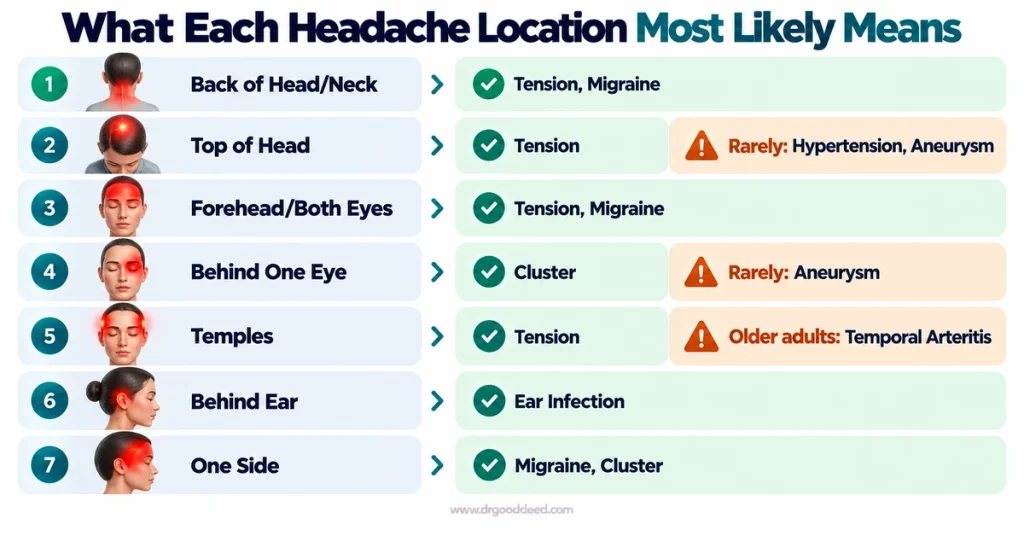
Headache Location Chart: What Each Area May Mean
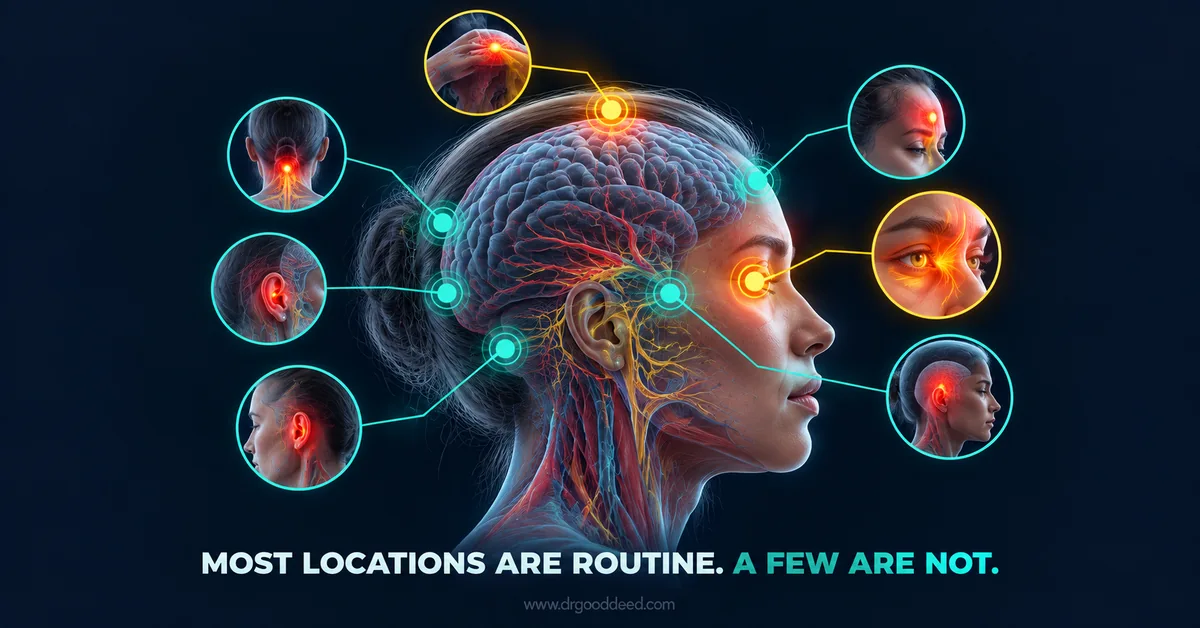
The table below maps eight common pain locations to their most likely cause, along with other possibilities including the rare but serious causes.
| Location | Most Likely Cause | Other Possible Causes (Including Rare, Serious Ones) |
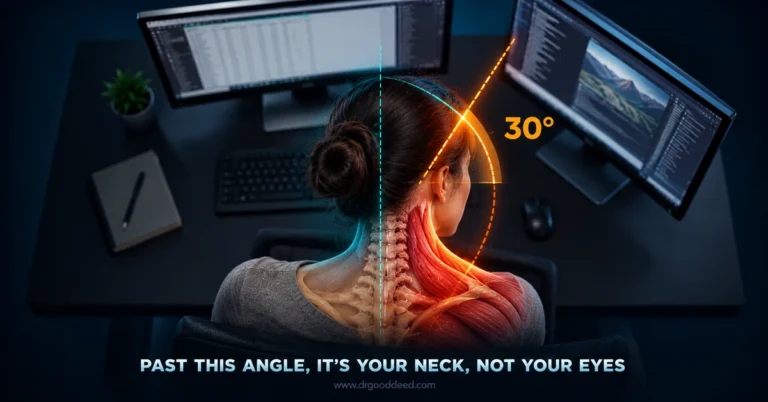
| Back of head or neck | Tension headache, migraine | Arthritis in the upper spine, occipital neuralgia |
| Top of the head (“hairband” area) | Tension headache | Migraine, occipital neuralgia; rarely, severe hypertension or a bleeding aneurysm |
| Forehead, cheeks, behind both eyes | Tension headache, migraine | Cluster headache, sinus infection |
| Behind one eye | Cluster headache | Migraine, occipital neuralgia, eye infection; rarely, an aneurysm |
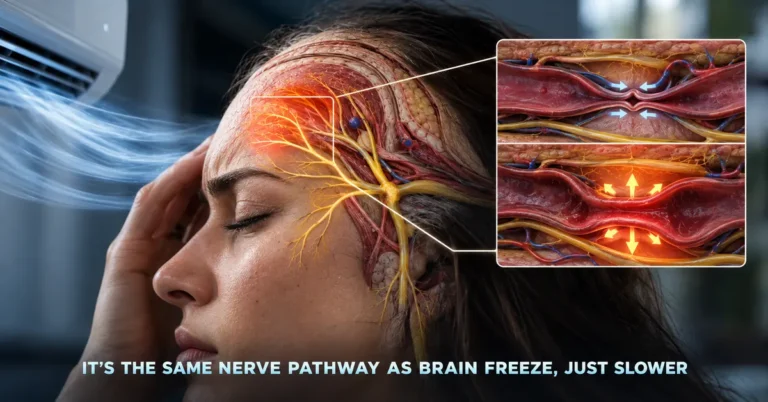
| Temples | Tension headache | Migraine, cluster headache, TMJ disorder; in older adults specifically, temporal arteritis |
| Behind the ear | Ear infection (more common in children) | Occipital neuralgia, sinus infection, TMJ disorder, dental problems, covered in more depth in our guide to headache and ear pain on one side |
| One side of the head | Migraine, cluster headache | Hemicrania continua; rarely, an aneurysm |
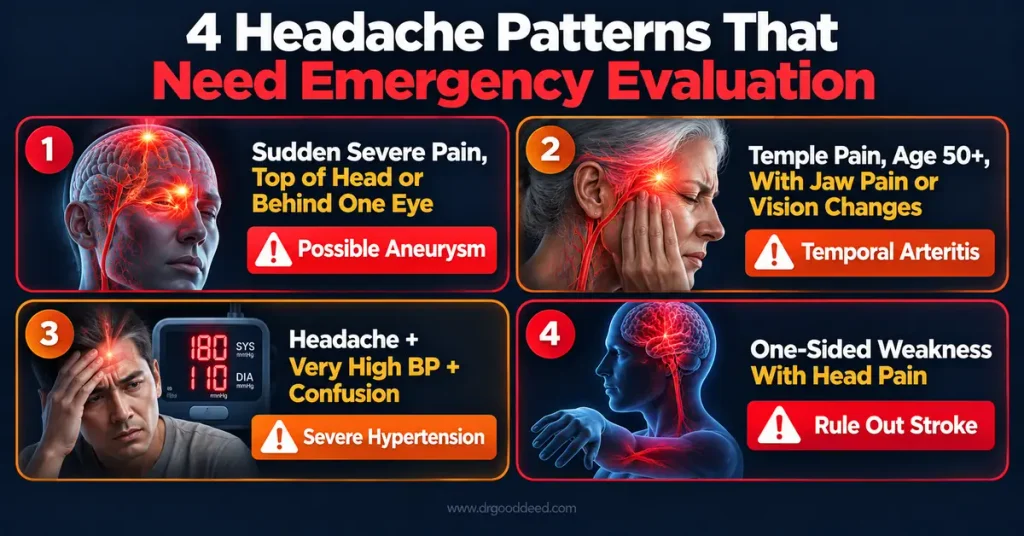
Red Flag Locations: When Headache Location Signals an Emergency
- Sudden, severe headache at the top of the head or behind one eye can signal a bleeding aneurysm and needs emergency evaluation; this pattern is sometimes called a thunderclap headache.
- Temple pain in adults over 50, particularly with scalp tenderness, jaw pain while chewing, or vision changes, raises concern for temporal arteritis, an inflammatory condition that can threaten eyesight if untreated.
- Headache paired with very high blood pressure readings, vision disturbances, or confusion may point to severe hypertension affecting the brain, a distinct and urgent scenario from typical tension or migraine pain.
- One-sided weakness or numbness accompanying head pain deserves prompt evaluation to rule out conditions like hemiplegic migraine, which can closely mimic stroke symptoms.
- Sudden visual disturbances limited to one eye alongside headache should be evaluated for retinal migraine, a distinct and uncommon migraine subtype affecting vision in a single eye.
When Location Alone Isn’t Enough: What Else to Track
- Pain quality matters, throbbing and pulsing points toward migraine, while a tight, pressing sensation is more typical of tension headache.
- Food triggers worth noting include stress, skipped meals, poor sleep, bright light, or specific foods, patterns here often reveal more than location alone.
- Associated symptoms, nausea, light sensitivity, ear pain, or watery eyes, help distinguish migraine from cluster headache from conditions like headache and ear pain on one side.
- Timing and frequency matter too, cluster headaches often strike at the same time daily, while tension headaches build gradually across a stressful day.
Pro Tip: Track headache location using a simple clock-face description, “2 o’clock behind my right eye” rather than just “right side,” since precise location combined with timing patterns gives a doctor far more diagnostic traction than a vague description during a rushed appointment.
When to See a Doctor
A headache location chart is educational, not diagnostic, and certain patterns should prompt a medical visit rather than continued self-tracking. Sudden, severe, new headaches after age 50, or headaches accompanied by weakness, vision loss, confusion, or fever need prompt evaluation. Headaches that are increasing in frequency, changing character, or not responding to usual treatment also warrant a conversation with a doctor rather than more chart-checking.
FAQs
Can headache location change over time in the same person?
Yes. Migraine location often shifts between episodes, and tension headaches can move from the temples to the back of the head. Consistent location change alone isn’t concerning; sudden new patterns after age 50 warrant evaluation.
Does headache location matter more than pain type?
No. Pain quality, throbbing versus pressing, and associated symptoms like nausea or light sensitivity carry equal diagnostic weight. Location narrows possibilities; pain type and accompanying symptoms confirm the likely headache category.
Can stress cause headaches in any location?
Yes. Stress commonly triggers tension headaches at the temples or back of the head, and can also trigger migraine regardless of location. Stress doesn’t explain sudden, severe, or one-sided weakness paired with head pain.
Is a headache location chart accurate for children?
Partially. Behind-the-ear pain more often signals ear infection in children than adults, while migraine and tension patterns largely overlap with adult presentations. Persistent or severe pediatric headaches always warrant pediatrician evaluation.
Can a headache location chart replace seeing a doctor?
No. A headache location meaning chart offers educational clues only; it cannot rule out serious causes like aneurysm or temporal arteritis. Persistent, severe, or unusual headaches require direct medical evaluation, not chart-based self-diagnosis.
Sources
- Headache Location Chart: What Your Pain Location Actually Means, Claru link
- Thunderclap Headache, clinical overview link
- Location of Headache Meaning and Headache Placement Meanings, Virtual Headache Specialist link
Medical Disclaimer: This article is for general information only and is not medical advice. It does not replace a diagnosis, treatment plan, or guidance from a qualified healthcare professional. Always talk to your doctor about your own symptoms and before starting, stopping, or changing any treatment. If you think you may be having a medical emergency, call 911 or go to your nearest emergency room.