


If your leg falls asleep easily, especially when sitting or lying down, temporary pressure on a nerve is a common explanation. You may notice numbness, tingling, or pins and needles that improve when you change position. However, if your leg keeps falling asleep without an obvious trigger, the episodes last a long time, or you develop weakness, the cause may involve a nerve, your back, or circulation. Recognizing the pattern can help you decide when to seek medical care.
Key Takeaways
- A leg that falls asleep easily is often caused by pressure on a nerve or reduced blood supply from sitting or lying in one position.
- If numbness keeps returning, lasts a long time, or occurs without an obvious trigger, seek medical advice.
- Brief tingling that improves when you change position is common.
- Repeated numbness may be linked to nerve damage, sciatica, or circulation problems.
- Sudden numbness with weakness, facial drooping, or difficulty speaking requires emergency care.
- The pattern, duration, and other symptoms can help a doctor identify the cause.
Why Does My Leg Fall Asleep So Easily?
If your leg falls asleep easily, you may notice tingling, numbness, or a pins-and-needles sensation after sitting at your desk, crossing your legs, or lying in one position. This usually happens when pressure affects a nerve or its blood supply. According to the NHS, pressure can temporarily disrupt normal nerve signaling, causing numbness or tingling that improves as the pressure is relieved. The Cleveland Clinic also explains that this sensation, known as paresthesia, often occurs when pressure on a nerve is removed and normal sensation returns.
When you change position and remove the pressure, normal nerve signaling returns, and you may briefly feel pins and needles as the sensation comes back. However, if your leg keeps falling asleep without a clear reason, lasts longer than usual, or repeatedly affects your daily activities, it is worth getting checked by a doctor.
The medical term for this sensation is paresthesia. It can occur temporarily because of body position or alongside an underlying nerve, back, or circulation problem.
What Causes a Leg to Fall Asleep Easily?
The cause often depends on when the numbness starts, how long it lasts, and whether you have other symptoms. A brief episode after sitting differs from numbness that keeps returning without an obvious trigger.
Sitting or Lying in One Position
Sitting for a long time, crossing your legs, or putting pressure on one part of your leg can affect a nerve and its blood supply, causing temporary numbness or tingling. If your leg falls asleep at night, lying in one position for too long can put pressure on a nerve in the same way. According to the NHS, these episodes usually last a few minutes and stop once the pressure is relieved by moving or taking the weight off the affected area.
If your leg falls asleep when sitting and the sensation improves soon after you stand or change position, pressure may be the reason. Frequent episodes, however, should not automatically be dismissed as a posture issue.
A Pinched Nerve or Sciatica
A nerve can become irritated or compressed in the lower back, causing symptoms that travel into the buttock, leg, or foot. Sciatica may cause pain, tingling, or numbness that runs down one leg.
If your leg numbness occurs with lower back pain, you can read more about common causes of lower back pain. A doctor can assess whether the symptoms suggest sciatica or another nerve problem.
Peripheral Neuropathy
Peripheral neuropathy occurs when nerves outside the brain and spinal cord become damaged. It can cause numbness, tingling, burning sensations, or pain, sometimes affecting both legs.
Possible causes include diabetes, certain vitamin deficiencies, alcohol use, some medicines, and nerve injury. People with diabetes may develop nerve damage over time. Harvard Health notes that diabetes is the most common identifiable cause of peripheral neuropathy, accounting for about one-third of cases, although more than 100 conditions and factors can contribute to nerve damage. Multiple sclerosis, a condition that affects the brain and spinal cord, can also damage nerves and contribute to numbness or tingling, according to the NHS and Cleveland Clinic. Learn more about whether diabetic neuropathy can be reversed to understand why identifying the cause and managing it matters.
If you also experience burning, tingling, or numbness in your feet, explore these symptoms of neuropathy in the feet. Do not start supplements or change prescribed medicines on your own. Speak with your doctor if you suspect a deficiency or medicine-related side effect.
Circulation Problems
Reduced blood flow can sometimes contribute to unusual sensations in the legs. Symptoms such as persistently cold feet, swelling, or leg pain while walking deserve medical assessment, especially when they occur alongside recurring numbness.
Circulation-related symptoms can have different causes, so numbness alone cannot confirm poor circulation. If you notice ongoing changes in your legs, a clinician can assess whether a blood-flow problem or another condition is responsible.
Hyperventilation or Anxiety
Rapid breathing during anxiety or panic can cause tingling sensations, including in the hands and feet. Do not assume anxiety is the cause of recurring leg numbness; see a doctor if it keeps happening.
What Does the Pattern of Leg Numbness Mean?
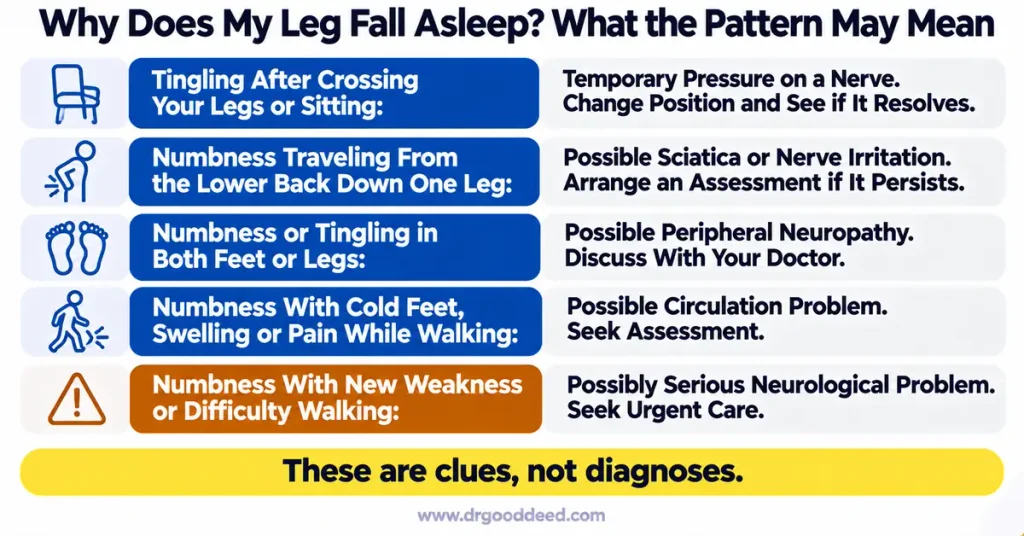
When your leg falls asleep easily, pay attention to what triggers it and what happens when the sensation starts. These clues can help you explain your symptoms to a healthcare professional, although they cannot confirm a diagnosis.
| What you notice | What it may suggest | What to do |
| Tingling after crossing your legs or sitting | Temporary pressure on a nerve | Change position and see whether the sensation resolves. |
| Numbness that travels from your lower back down one leg | Possible sciatica or nerve irritation | Arrange a medical assessment if it persists or returns. |
| Numbness or tingling in both feet or legs | Possible peripheral neuropathy or another underlying issue | Discuss recurring symptoms with your doctor. |
| Numbness with cold feet, swelling, or pain while walking | A possible circulation problem or another condition | Seek medical assessment. |
| Numbness with new weakness or difficulty walking | A potentially serious neurological problem | Seek urgent medical care. |
The most useful details are whether one or both legs are affected, how long the symptoms last, how often they occur, and whether pain, swelling, weakness, or back symptoms accompany them.
When Should You Worry About Your Leg Falling Asleep?
A leg that falls asleep briefly after pressure is removed is often not an emergency. However, numbness that keeps returning, lasts a long time, appears without an obvious trigger, or interferes with walking should be assessed by a healthcare professional.
Seek Emergency Care for Sudden Symptoms
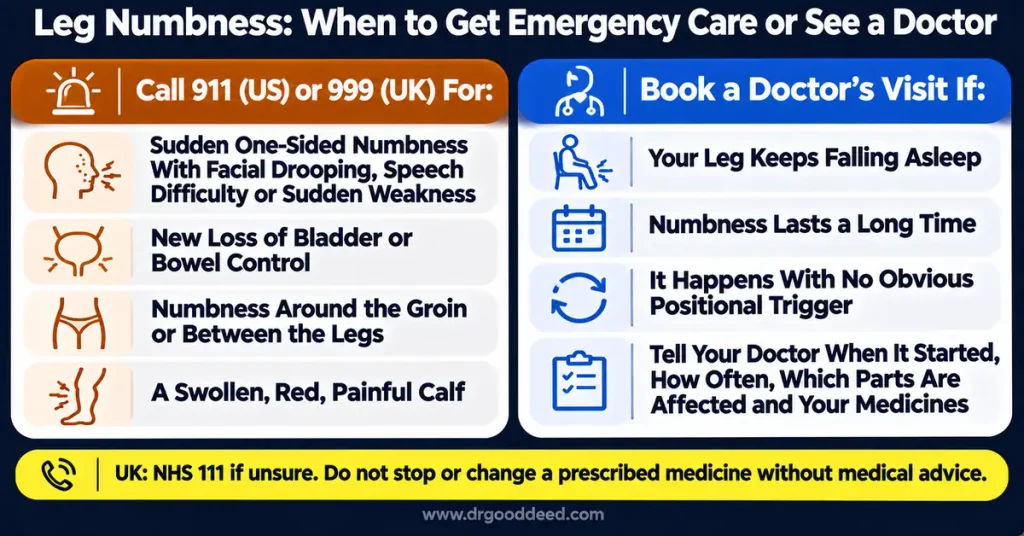
Call 911 in the US or 999 in the UK, or go to the nearest emergency department, if sudden numbness occurs on one side of the body, particularly with facial drooping, speech difficulty, or sudden weakness. These can be warning signs of a stroke. Read more about what a stroke can feel like, but do not delay emergency care.
Other symptoms that need urgent medical assessment include new loss of bladder or bowel control, numbness around the groin or between the legs, or a swollen, red, painful calf. These warning signs need prompt evaluation rather than home treatment.
Arrange a Doctor’s Appointment
Contact your primary care doctor in the US or your GP in the UK if your leg keeps falling asleep, the sensation lasts a long time, or it happens without an obvious positional trigger. If you are in the UK and are unsure what to do, NHS 111 can provide guidance.
Tell your doctor when the symptoms started, how often they occur, which parts of your leg are affected, and whether you have other symptoms. Mention any existing health conditions and medicines you take. Do not stop or change a prescribed medicine without medical advice.
How Do Doctors Find the Cause?
A doctor will usually ask about your symptoms, medical history, daily activities, and the positions that trigger the numbness. They may examine sensation, muscle strength, reflexes, and how you walk.
Depending on your symptoms and examination, further tests may include:
- Blood tests to check for possible underlying causes, such as diabetes or a vitamin deficiency.
- Nerve tests to assess how well certain nerves function.
- Imaging tests when a back, spinal, or other structural problem is suspected.
The appropriate evaluation depends on your symptoms and the findings of your clinical examination.
How Can You Stop Your Leg From Falling Asleep?
If the sensation starts after sitting or putting pressure on your leg, take the weight off the affected area and change position. Stand up or move gently if you can do so safely, and allow time for normal sensation to return.
If the numbness keeps coming back, lasts a long time, or occurs without a clear trigger, changing position may not address the underlying cause. Arrange a medical assessment instead of relying on repeated self-treatment.
Conclusion
A leg that falls asleep easily is often linked to pressure on a nerve while sitting or lying down. The important distinction is whether the sensation resolves after changing position or keeps returning without a clear reason.
Pay attention to how long the numbness lasts, whether one or both legs are affected, and whether you notice back pain, swelling, cold feet, or weakness. Seek medical advice for recurring or prolonged symptoms, and get emergency help for sudden numbness accompanied by stroke warning signs. A healthcare professional can assess your symptoms and determine whether further tests or treatment are needed.
Frequently Asked Questions
Why does my leg fall asleep at night?
Your leg may fall asleep at night when your sleeping position puts pressure on a nerve, temporarily disrupting normal nerve signals. Changing positions usually relieves the pressure and allows sensation to return, according to the NHS.
Can anxiety make your legs feel numb?
Yes. Anxiety can trigger rapid breathing (hyperventilation), which may cause tingling or numbness in the legs and other parts of the body. The Cleveland Clinic explains that hyperventilation can alter carbon dioxide levels in the blood and contribute to these sensations.
Can vitamin deficiency cause leg numbness?
Yes. Deficiencies in vitamins B12 and other nutrients needed for healthy nerve function can cause numbness, tingling, and other symptoms of peripheral neuropathy. Harvard Health identifies vitamin deficiencies among the possible causes of nerve damage.
Can diabetes cause your legs to fall asleep frequently?
Yes. Diabetes can damage peripheral nerves over time, leading to recurring tingling, numbness, or burning sensations, particularly in the feet and legs. The NHS identifies diabetic neuropathy as a complication of diabetes that can affect sensation.
Is it normal for your leg to fall asleep a lot?
Brief episodes that resolve after changing position are common. Frequent or lasting numbness should be checked by a doctor.
What does it mean when your leg keeps falling asleep?
It may be related to nerve compression, sciatica, peripheral neuropathy, or a circulation problem. A doctor can help identify the cause.
Can a vitamin deficiency make your legs fall asleep?
Yes. Certain vitamin deficiencies, including vitamin B12 deficiency, can contribute to nerve problems. A doctor can determine whether testing is appropriate.
Can diabetes cause your legs to fall asleep?
Yes. Diabetes can damage peripheral nerves and cause numbness, tingling, or pain in the legs and feet.
Medical Disclaimer: This article is for informational and educational purposes only and does not replace professional medical advice, diagnosis, or treatment. Always consult a qualified healthcare professional about your symptoms or health concerns. Never delay or disregard professional medical advice based on information provided in this article.
Sources:
1. National Health Service (NHS). Pins and needles [Internet]. London: NHS; [cited 2026 Oct 23]. Available from: https://www.nhs.uk/symptoms/pins-and-needles/ link
2. MedlinePlus. Numbness and tingling [Internet]. Bethesda (MD): National Library of Medicine; [cited 2026 Oct 23]. Available from: https://medlineplus.gov/ency/article/003206.htm link
3. National Institute of Neurological Disorders and Stroke (NINDS). Peripheral neuropathy [Internet]. Bethesda (MD): National Institutes of Health; [cited 2026 Oct 23]. Available from: https://www.ninds.nih.gov/health-information/disorders/peripheral-neuropathy link
4. MedlinePlus. Peripheral neuropathy [Internet]. Bethesda (MD): National Library of Medicine; [cited 2026 Oct 23]. Available from: https://medlineplus.gov/ency/article/000593.htm link
5. National Institute of Diabetes and Digestive and Kidney Diseases (NIDDK). Peripheral neuropathy [Internet]. Bethesda (MD): National Institutes of Health; [cited 2026 Oct 23]. Available from: https://www.niddk.nih.gov/health-information/diabetes/overview/preventing-problems/nerve-damage-diabetic-neuropathies/peripheral-neuropathy link
6. Harvard Health Publishing. Peripheral neuropathy [Internet]. Boston (MA): Harvard Medical School; [cited 2026 Oct 23]. Available from: https://www.health.harvard.edu/a_to_z/peripheral-neuropathy-a-to-z link
7. Cleveland Clinic. Paresthesia [Internet]. Cleveland (OH): Cleveland Clinic; [cited 2026 Oct 23]. Available from: https://my.clevelandclinic.org/health/symptoms/24932-paresthesia link
8. Cleveland Clinic. Hyperventilation syndrome [Internet]. Cleveland (OH): Cleveland Clinic; [cited 2026 Oct 23]. Available from: https://my.clevelandclinic.org/health/diseases/24860-hyperventilation-syndrome link
Medical Disclaimer: This article is for general information only and is not medical advice. It does not replace a diagnosis, treatment plan, or guidance from a qualified healthcare professional. Always talk to your doctor about your own symptoms and before starting, stopping, or changing any treatment. If you think you may be having a medical emergency, call 911 or go to your nearest emergency room.