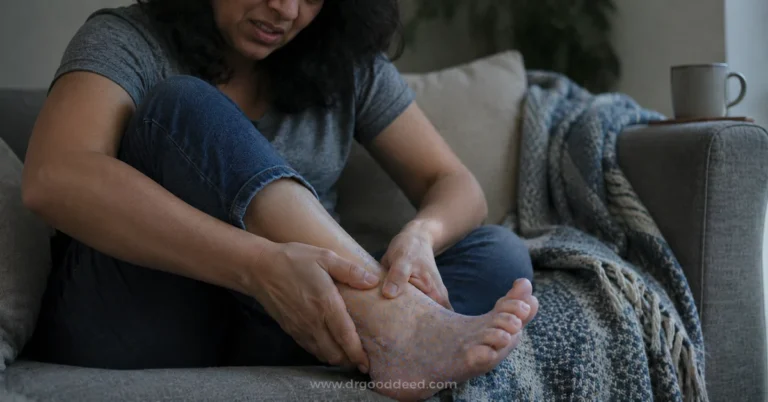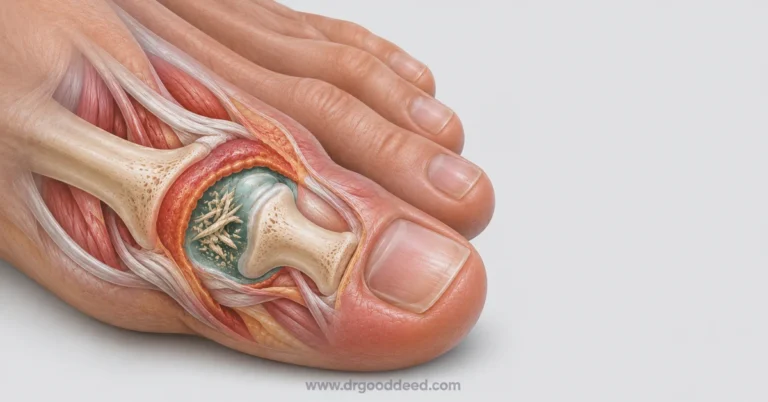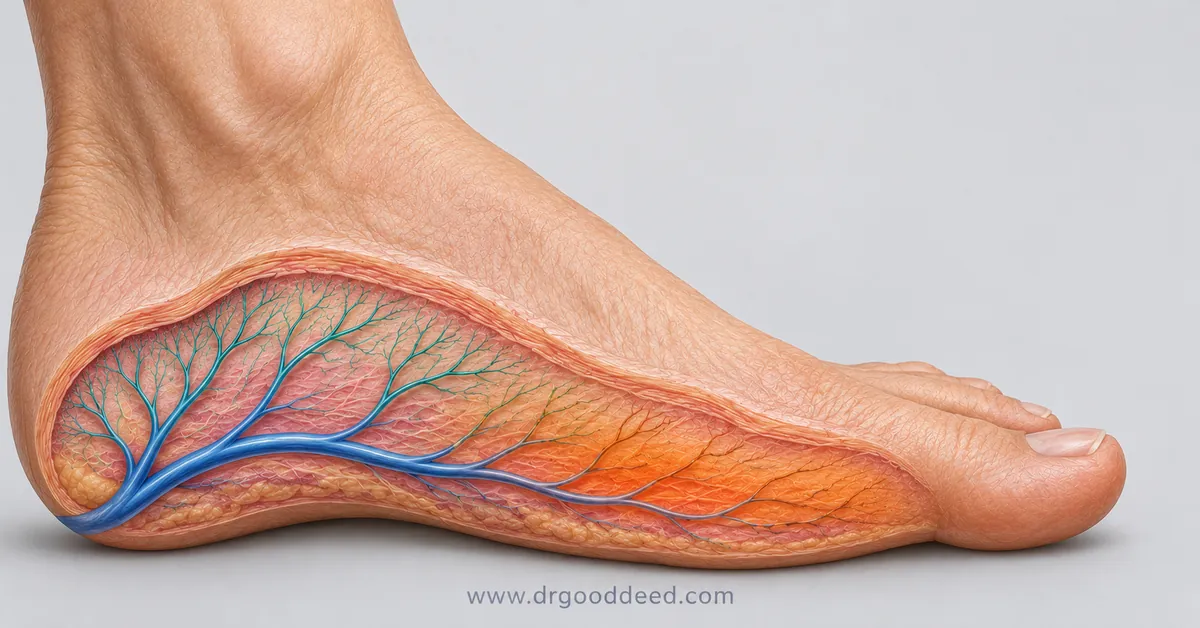

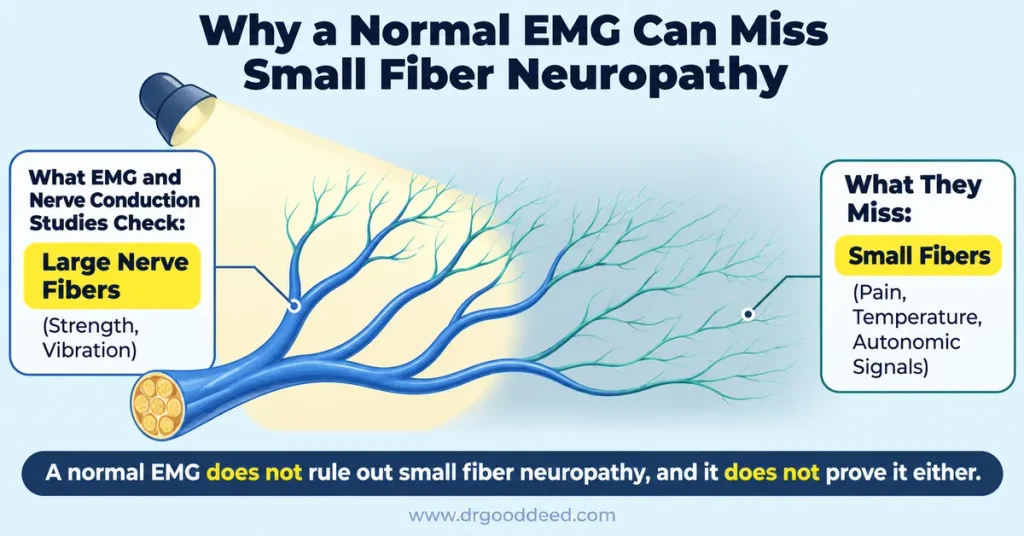
Burning feet with a normal nerve test can be frustrating. Small fiber neuropathy with a normal EMG is possible because routine electromyography (EMG) and nerve conduction studies mainly test large nerve fibers.
These tests cannot pick up damage to the small fibers that carry pain, temperature and autonomic signals, which control body functions such as sweating. Even when muscle strength is normal, small fiber neuropathy can cause burning, tingling or sensitivity to heat and cold. These symptoms can also have other causes, so more testing may be needed to find out why.
Key Takeaways
- Yes. You can have small fiber neuropathy with a normal EMG, because EMG and nerve conduction studies mainly check large nerve fibers.
- A normal EMG does not rule out small fiber neuropathy, and it does not prove it either. Only a doctor can decide.
- A cause is found in over half of people with small fiber neuropathy (Cleveland Clinic Journal of Medicine, 2009), so the work-up matters.
- Tests that look at small fibers, such as a skin punch biopsy or autonomic testing, can support the diagnosis; blood tests look for a cause.
- Sudden weakness, fast-worsening numbness, new bladder or bowel changes or fainting need prompt medical assessment.
| Symptom Pattern | What You May Notice | Why It Matters |
| Symptoms in both feet | Burning or tingling that affects both soles | May suggest a length-dependent peripheral neuropathy |
| Pain from light touch | Bed sheets or socks feel painful against the skin | May indicate increased sensitivity linked to nerve dysfunction |
| Temperature sensitivity | Difficulty judging whether bathwater is too hot | Reduced temperature sensation may raise the risk of burns |
| Symptoms with sweating changes | Burning feet with unusual sweating | May warrant evaluation for autonomic nerve involvement |
| Symptoms with standing | Dizziness after standing up, alongside sensory symptoms | May point to an autonomic problem that needs medical assessment |
What Does a Normal EMG Mean in Small Fiber Neuropathy?
A normal EMG means the large nerve fibers tested looked healthy. It does not rule out small fiber neuropathy, and it does not prove it either.
The reason is simple. Routine EMG and nerve conduction studies assess large nerve fibers, not the thin fibers involved in small fiber neuropathy. Doctors often still order them to check whether large fibers are also affected.
Your symptoms are real, and a normal result does not end the conversation. It means the next step is to look at small fibers and to look for a cause.
What Are the Symptoms of Small Fiber Neuropathy?
Small fiber neuropathy symptoms depend on which small fibers are affected and how badly they are damaged.
Burning, Tingling and Electric-Shock Sensations
Symptoms typically start in the feet and can include:
- Soles that burn or prickle
- Pins-and-needles sensations
- Sudden, stabbing or electric shock-like pain
- Discomfort from socks, bed sheets or light touch
- Pain that gets worse at night
Read our guide to neuropathy symptoms in the feet for more information.
Reduced Sensitivity to Heat and Cold
Damage to small fibers can disturb temperature perception. It may be hard to tell warm water from hot water, or you may not feel a small burn happening.
Practical tip: test bath water with a thermometer or your elbow, not your feet.
Autonomic Symptoms
Some people have unusually moist or sweaty skin, dizziness on standing, digestive upset or an abnormal heart rate. These symptoms do not point to small fiber neuropathy on their own and need a proper medical evaluation.
Large Fiber vs Small Fiber Neuropathy: How They Differ
Large fiber vs small fiber neuropathy is the key to understanding why standard nerve tests can come back normal. Small fibers carry pain, temperature and autonomic signals. Large fibers handle strength and vibration.
| Feature | Small Fiber Neuropathy | Large Fiber Neuropathy |
| Main fibers affected | A-delta and C fibers | Large sensory fibers; motor fibers may also be affected |
| Common symptoms | Burning, pain, temperature sensitivity | Reduced vibration sensation, numbness, balance difficulties |
| Muscle strength | Often preserved | May be affected when motor nerves are involved |
| Routine EMG/NCS | Often normal | May show abnormalities |
What Causes Small Fiber Neuropathy Despite a Normal EMG?
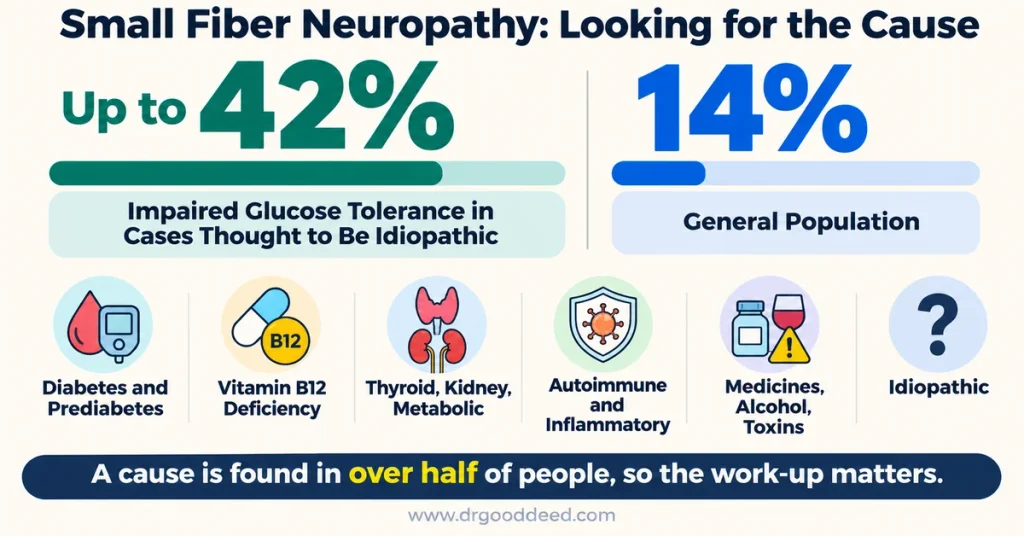
A cause is found in over half of people with small fiber neuropathy (Cleveland Clinic Journal of Medicine, 2009), so the work-up matters. Finding the cause can change treatment.
Diabetes and Prediabetes
Glucose problems are the most common cause found. In the same 2009 review, impaired glucose tolerance was found in up to 42% of cases thought to be idiopathic, compared with 14% of the general population. Nerve symptoms can appear before diabetes is diagnosed.
Your doctor may check fasting glucose and HbA1c and, if appropriate, an oral glucose tolerance test.
If you want to understand your numbers, see our guide to normal blood sugar levels by age and learn what causes high blood sugar without diabetes. You can also read whether diabetic neuropathy can be reversed.
Vitamin B12 Deficiency
Vitamin B12 supports normal nerve function. A deficiency can cause numbness, tingling and other neurological symptoms. Blood tests can help diagnose a deficiency, and further tests are used when the results are not clear.
Thyroid, Kidney and Metabolic Disorders
Peripheral nerve symptoms can be linked to an underactive thyroid or to some kidney or metabolic disorders. Your doctor decides which tests to order based on your history and exam.
Autoimmune and Inflammatory Conditions
Peripheral nerves can be involved in conditions such as Sjögren disease and sarcoidosis. Doctors consider these when symptoms, exam findings or history suggest it.
Medicines, Alcohol and Toxins
Some chemotherapy drugs, other medicines, heavy alcohol use and certain toxins can injure nerves. Tell your clinician about your history of exposure. Do not stop any medicine without talking to your doctor first.
Idiopathic Small Fiber Neuropathy
Sometimes a careful work-up does not find a specific cause. This is called idiopathic small fiber neuropathy. It does not mean the symptoms are not real. It means the cause has not been found.
Small Fiber Neuropathy Diagnosis: Which Tests Help?
No single test diagnoses small fiber neuropathy. Diagnosis combines your symptoms, a neurological exam and appropriate tests, and each result is read alongside the others.
Some tests need medicine changes beforehand. Follow the testing clinic’s instructions and ask your doctor.
Skin Punch Biopsy
A small fiber neuropathy skin biopsy removes a small piece of skin, usually under local anesthetic, using a punch instrument. A specialist counts the nerve fibers in the top layer of skin and compares the count with reference values.
A low nerve fiber density can support the diagnosis. The Cleveland Clinic Journal of Medicine (2009 review) reported a diagnostic efficiency of about 88% for skin biopsy. Results are read with your symptoms and exam. Early on, the biopsy can look normal even when small fibers are affected, so a repeat test may be considered (CCJM, 2009).
Quantitative Sensory Testing
This test measures your responses to controlled temperature or pain stimuli. It gives useful information about sensory function, but it depends partly on what you report, and it cannot confirm a diagnosis on its own.
QSART and Autonomic Testing
The quantitative sudomotor axon reflex test (QSART) measures sweat production to check some small autonomic nerve fibers. If symptoms suggest problems with sweating or blood pressure control, other autonomic tests may be ordered.
Blood Tests for Underlying Causes
No blood test diagnoses small fiber neuropathy directly. Blood tests look for causes, such as glucose problems, vitamin B12 deficiency, thyroid disorders, kidney disease and certain autoimmune or infectious conditions.
What Is the Treatment for Small Fiber Neuropathy?
Small fiber neuropathy treatment depends on the cause, how severe the condition is and your symptoms.
Treat the Underlying Cause
When a cause such as diabetes, a confirmed nutritional deficiency or a thyroid or autoimmune condition is managed, further nerve damage may be prevented. Symptoms improve to different degrees, and nerve recovery can be slow.
Manage Neuropathic Pain
A clinician may consider prescription medicines for nerve pain, such as some antidepressants and anti-seizure medicines, or certain topical medicines. The choice depends on your medical history, your other medicines and possible side effects. Do not start, stop or change any medicine without your doctor’s advice.
Protect the Feet From Injury
- Check your feet daily for cuts, blisters, burns and pressure areas.
- Wear well-fitting shoes.
- If feeling is reduced, do not walk barefoot or in socks only.
- Test bath water with a thermometer or your elbow before stepping in.
- Get medical care if a wound or infection does not heal.
Does Small Fiber Neuropathy Get Better or Worse?
The outlook depends on the cause, how much nerve is affected and for how long. Some people improve when the cause is treated, some stay stable, and some get worse over time.
Nerve fibers may not recover completely even when pain eases. Follow-up visits track your symptoms, check lab results and adjust treatment when needed.
What Should You Ask Your Doctor?
A normal test should not end the discussion if symptoms continue. Consider asking:
- Should I have blood sugar and vitamin B12 checks?
- Does it make sense to test the small fibers, for example with a skin biopsy or autonomic testing?
- Should I see a neurologist?
- What should I track at home, such as when the burning starts and what helps?
A routine check-up can be a good time to raise these questions. See our guide to the annual physical.
When Should You Get Medical Help?
If burning feet do not go away, get worse or spread, or if they disturb your sleep or daily activities, make an appointment with a doctor.
US: see your primary care doctor first, then a neurologist if the cause is unclear. UK: see your GP first, and call NHS 111 if you are unsure where to get help.
Get emergency care for sudden weakness, sudden or fast-worsening numbness, new loss of bladder or bowel control, or fainting. US: call 911 or go to the emergency department. UK: call 999 or go to A&E. Also get checked promptly for foot wounds or burns you did not feel.
Frequently Asked Questions
Can a Normal Nerve Conduction Study Miss Small Fiber Neuropathy?
Yes. A nerve conduction study mainly checks large fibers, not the small fibers that carry pain and temperature signals. It can look normal even when small fibers are damaged.
Does a Skin Biopsy Need to Be Done to Diagnose Small Fiber Neuropathy?
Not always. Your clinician uses your symptoms, exam findings and other test results to make the diagnosis. A skin biopsy can add objective evidence.
Are Burning Feet the First Symptom of Small Fiber Neuropathy?
Often, yes. Burning feet can be an early or main symptom, but other conditions can also cause burning feet, so see a doctor.
Does Small Fiber Neuropathy Always Cause Numbness?
No. Some people have numbness, but many feel only burning, tingling or temperature changes.
Sources
Cleveland Clinic Journal of Medicine, Small Fiber Neuropathy: A Burning Problem. link
NHS, Peripheral Neuropathy: Diagnosis. link
National Institute of Neurological Disorders and Stroke, Peripheral Neuropathy. link
Mayo Clinic, Peripheral Neuropathy: Symptoms and Causes. link
Johns Hopkins Medicine, Small Fiber Sensory Neuropathy. link
Johns Hopkins Medicine, Skin Biopsy Analysis for Peripheral Neuropathies. link
Medical Disclaimer: This article is for general information only and is not medical advice. It does not replace a diagnosis, treatment plan, or guidance from a qualified healthcare professional. Always talk to your doctor about your own symptoms and before starting, stopping, or changing any treatment. If you think you may be having a medical emergency, call 911 or go to your nearest emergency room.