


Yes. Long-term metformin use is linked to low vitamin B12, and low B12 can cause tingling or numbness in the feet. This is known as metformin B12 deficiency neuropathy.
Tingling is also a common symptom of diabetic peripheral neuropathy, so metformin is not the only possible cause. Your doctor might order blood tests, a neurological examination, and review your diabetes history to help determine your problem. Early identification and timely treatment can help improve symptoms and prevent additional neurological complications. If you are new to the condition, start with what is diabetes.
Key Takeaways
- Yes, metformin can cause tingling feet indirectly: long-term use is linked to low B12, which can lead to metformin B12 deficiency neuropathy.
- Nerve dysfunction can be indicated by tingling, burning, numbness, and impaired balance.
- Diabetes itself can cause the same nerve symptoms, even when B12 levels are normal.
- Vitamin B12 testing of serum (and serum levels of methylmalonic acid if indicated) can help to detect a deficiency.
- Neurological symptoms can be present, even when there is no anemia.
- Keep taking metformin as prescribed and talk to your doctor before making any change.
How Can Metformin Cause Tingling in Your Feet?
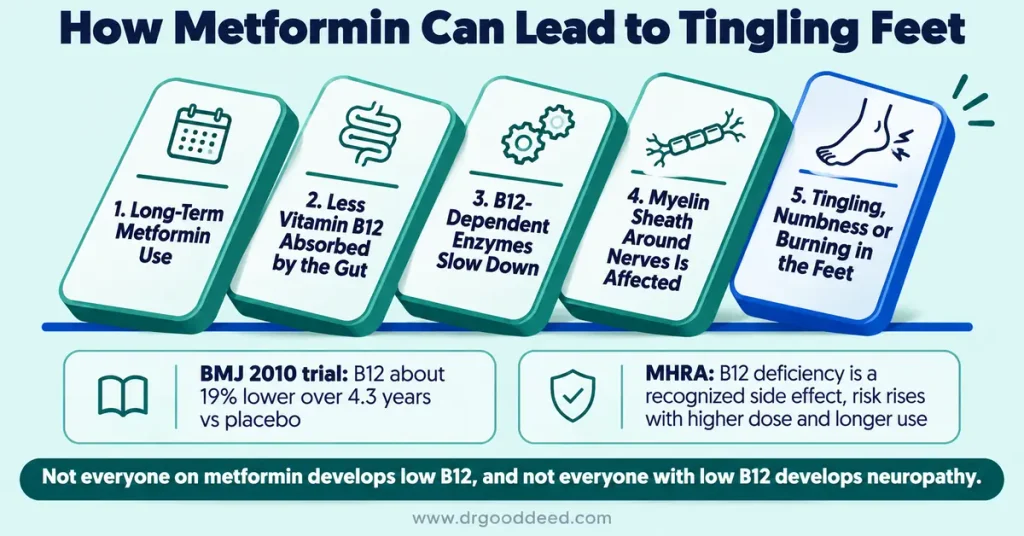
Metformin can reduce how much vitamin B12 your gut absorbs. Researchers are still studying exactly why. The MHRA lists B12 deficiency as a common side effect of metformin, affecting up to 1 in 10 people. The risk tends to be higher the longer the treatment is used, at higher doses, or when other factors impede absorption.
Vitamin B12 helps two enzymes work, methionine synthase and methylmalonyl-CoA mutase. These reactions are essential for normal cellular metabolism and maintaining the protective myelin sheath surrounding nerve fibers. For deeper details on how myelin maintains nerve function, read about neuropathy in the feet symptoms.
This B12-related nerve damage can cause tingling, numbness, or a burning sensation in the feet. However, B12 deficiency does not happen to everyone taking metformin, and not everyone with low B12 develops neuropathy. Studies are mixed on whether people taking metformin have more neuropathy overall.
Scientific fact: In a 2010 randomized trial published in The BMJ, a 19% decrease in vitamin B12 levels was seen during 4.3 years of treatment with metformin, versus placebo. This is in line with the association between long-term use of metformin and lower B12 levels, but the risk is different among individual patients.
What Are the Symptoms of Metformin B12 Deficiency Neuropathy?
Metformin B12 deficiency neuropathy may cause symptoms slowly and over time, which can often mimic diabetic neuropathy. Brief pins and needles after sitting in one position is different; see why your leg falls asleep so easily.
- Sensory symptoms
- Feeling of tingling or pins and needles in feet or hands.
- Burning sensation.
- Loss of sensation related to heat, cold and light touch.
- Feeling of numbness.
- An odd sensation when walking barefoot.
- General low B12 symptoms
- General metformin B12 deficiency symptoms may include tiredness, weakness, pale skin, dizziness, and a sore, red tongue.
- Motor and balance symptoms
- Weakness in muscles or inability to walk properly
- Poor awareness of position of one’s feet.
- Poor balance during low light levels
- Increased danger of falling when sensation loss becomes obvious.
Note: Nerve symptoms can appear even when blood counts and red blood cell size are normal. Deficiency of B12 can be present without anemia.
Diabetic Neuropathy vs B12 Deficiency: How to Tell the Difference
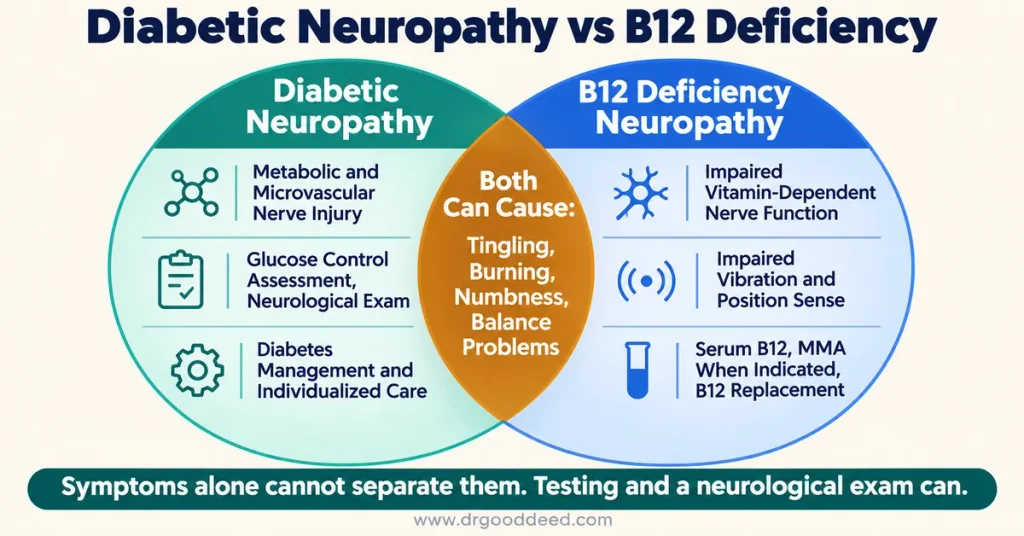
Diabetic neuropathy and vitamin B12 deficiency neuropathy can feel identical, and symptoms alone cannot separate them. Only targeted laboratory testing and a thorough neurological evaluation by a doctor can distinguish the true cause.
| Feature | Diabetic neuropathy | B12 deficiency neuropathy |
| Underlying mechanism | Metabolic and microvascular nerve injury associated with diabetes | Impaired vitamin-dependent nerve function |
| Common symptoms | Burning, tingling, numbness, reduced protective sensation | Tingling, numbness, impaired vibration, and loss of position sense |
| Balance problems | Possible, particularly with advanced sensory loss | May be prominent when spinal sensory pathways are affected |
| Useful investigations | Glucose control assessment and neurological examination | Serum B12, with MMA when indicated |
| Treatment approach | Diabetes management and individualized neuropathy care | B12 replacement and investigation of the deficiency’s cause |
To learn more about managing nerve health and recovery, explore this guide on diabetic neuropathy recovery.
Which Tests Check for B12 Deficiency on Metformin?
If you take metformin and notice numbness in your feet, your doctor may order these tests.
1. Serum Vitamin B12
This blood test is a measure of B12 levels in the blood. A low result is indicative of deficiency, and a borderline result may need further investigation. Interpretation is dependent on symptoms, clinical history and the laboratory’s normal range.
2. Complete Blood Count
A CBC may detect anemia and macrocytosis (large red blood cells). A normal result, however, does not rule out B12-related nerve damage.
3. Methylmalonic Acid (MMA)
Methylmalonic acid is a metabolic marker. MMA rises when the body does not have enough usable B12, so it helps when a B12 result is borderline.
But low kidney function may also lead to higher levels of MMA. The result must be interpreted in conjunction with kidney function, B12 and symptoms by your clinician.
4. Additional Tests
The clinician may measure folate, kidney function, thyroid function, and glucose control levels, depending upon the patient’s medical history. Nerve conduction studies are used to assess peripheral nerve damage, but do not show all types of nerve damage.
Practical advice: Inform your health care provider how long you have been on metformin, how much medication you are on right now, when the problems started, and whether you are taking B12 supplements. All these facts will help to better evaluate the results of the tests.
Who Needs a B12 Test While Taking Metformin?
The American Diabetes Association advises periodic B12 checks for people taking metformin, especially those with anemia or peripheral neuropathy. In the UK, the MHRA recommends checking vitamin B12 in anyone on metformin presenting with symptoms of deficiency, and considering periodic monitoring for patients with existing risk factors. Getting a B12 test on metformin is especially important in the following cases:
- You have taken metformin for a long time or take a high daily dose.
- You have other risk factors such as older age, low baseline B12, Crohn’s disease, or long-term use of medications like proton pump inhibitors or colchicine.
- You experience tingling, numbness, pain, or balance problems.
- You follow a strict vegan or vegetarian diet with low dietary intake of vitamin B12.
- You have a history of stomach or intestinal surgery or another gastrointestinal malabsorption condition.
The required testing period depends on an individual patient and their needs. There is no common regimen for all metformin users.
How Is Metformin B12 Deficiency Neuropathy Treated?
The treatment depends on the results of the tests for B12 deficiency, and whether other causes of neuropathy are present.
Oral vitamin B12 or injection may be recommended by your clinician. It will be based on the level of deficiency, neurological symptoms, suspected cause, and intestinal absorption.
Eating B12-rich foods such as fish, meat, eggs, dairy, and fortified foods supports normal levels, but diet alone may not correct a deficiency linked to metformin.
Please do not discontinue metformin without medical supervision. In most cases, metformin can be safely continued while B12 deficiency is treated with supplements or injections, as determined by your clinician.
Why early treatment matters: Blood markers usually normalize faster than nerve function. Nerve recovery can be slow, and some damage may be permanent if the deficiency was severe or long-lasting.
For additional dietary guidance, explore these foods rich in vitamin B12.
What to Do If Your Feet Tingle on Metformin
If you take metformin and your feet start to tingle, book an appointment rather than assuming it is nothing.
- Note the onset of symptoms and whether it is in one foot or both.
- Ask your doctor whether you need a B12 test, and an MMA test if the result is borderline.
- Review your glucose control and other possible causes of neuropathy.
- Check for cuts, blisters, redness or wounds on your feet every day.
- Do not walk without shoes when there is diminished sensation.
- Keep taking metformin and your other medicines as prescribed until your doctor says otherwise.
Know when to seek urgent care. In the US, contact your primary care provider for newly developed tingling, but call 911 or go to the nearest emergency room immediately if you experience sudden muscle weakness, trouble walking, or new loss of bowel or bladder control. In the UK, consult your GP or call NHS 111 if unsure, and call 999 or attend A&E straight away for these emergency red flags.
Tingling is different from the warning signs of lactic acidosis, a rare but serious side effect of metformin: persistent stomach pain with nausea or vomiting, fast shallow breathing, severe tiredness or unusual drowsiness. These need emergency care, so call 911 in the US or 999 in the UK.
Frequently Asked Questions
Is Metformin a Nerve Toxin?
There is no strong evidence that metformin damages nerves directly. The concern is that long-term use is linked to low B12, which can harm nerves if it is not treated. Finding and treating a deficiency early may help prevent lasting nerve problems while diabetes stays well controlled.
Can B12 Deficiency Cause Tingling Without Anemia?
Yes. Neurological symptoms such as tingling and numbness can develop before any changes in blood counts or red blood cell size appear. Standard complete blood counts cannot rule out B12-induced nerve dysfunction, which is why clinical symptom evaluation and serum B12 testing are critical.
How Often Should B12 Be Tested on Metformin?
Guidelines suggest testing vitamin B12 periodically if you have been on metformin long-term, take high doses, or develop new neuropathy or anemia. Your doctor will tailor the testing schedule based on your individual risk factors, kidney function, and ongoing symptoms.
Will Vitamin B12 Help Numbness in the Feet?
If tests confirm low B12, treatment from your doctor may improve tingling and numbness over time, but recovery varies and is not guaranteed. It depends on how early treatment starts, how severe the nerve damage is, and whether diabetic neuropathy is also present.
If B12 Is Low, Should I Stop Metformin?
No, do not stop taking metformin without your doctor’s guidance. In most cases, metformin can continue while your doctor treats the low B12, so your blood sugar control is not disrupted.
Should I Take B12 If I Am on Metformin?
You should not start high-dose supplements on your own without testing. Discuss your symptoms with your healthcare provider first. They can check your serum B12 and methylmalonic acid levels to confirm whether supplementation is necessary and recommend the most effective dosage form for your situation.
How Long Does It Take for Metformin to Cause B12 Deficiency?
There is no set timeline. Low B12 is linked mainly to long-term use, and the MHRA says the risk rises with higher doses and longer treatment. It may show up sooner if your B12 was already low, you eat little B12, or you take acid-reducing medicines.
Can Metformin Cause Numbness in Hands and Feet?
Yes, vitamin B12 deficiency neuropathy associated with metformin can cause sensory changes including numbness, tingling, and a pins-and-needles sensation in both the feet and the hands. If you notice bilateral tingling in your extremities, notify your clinician promptly for evaluation.
Sources
American Diabetes Association: Standards of Care in Diabetes (Microvascular Complications and Neuropathy) link
The BMJ, Long Term Treatment With Metformin in Patients With Type 2 Diabetes and Risk of Vitamin B-12 Deficiency (2010). link
MHRA, Metformin and Reduced Vitamin B12 Levels: New Advice for Monitoring Patients at Risk. link
NIH Office of Dietary Supplements, Vitamin B12 Fact Sheet for Health Professionals. link
NICE, Vitamin B12 Deficiency: Diagnosis and Management (NG239). link
NIDDK, What Is Diabetic Neuropathy? link
Medical Disclaimer: This article is for general information only and is not medical advice. It does not replace a diagnosis, treatment plan, or guidance from a qualified healthcare professional. Always talk to your doctor about your own symptoms and before starting, stopping, or changing any treatment. If you think you may be having a medical emergency, call 911 or go to your nearest emergency room.