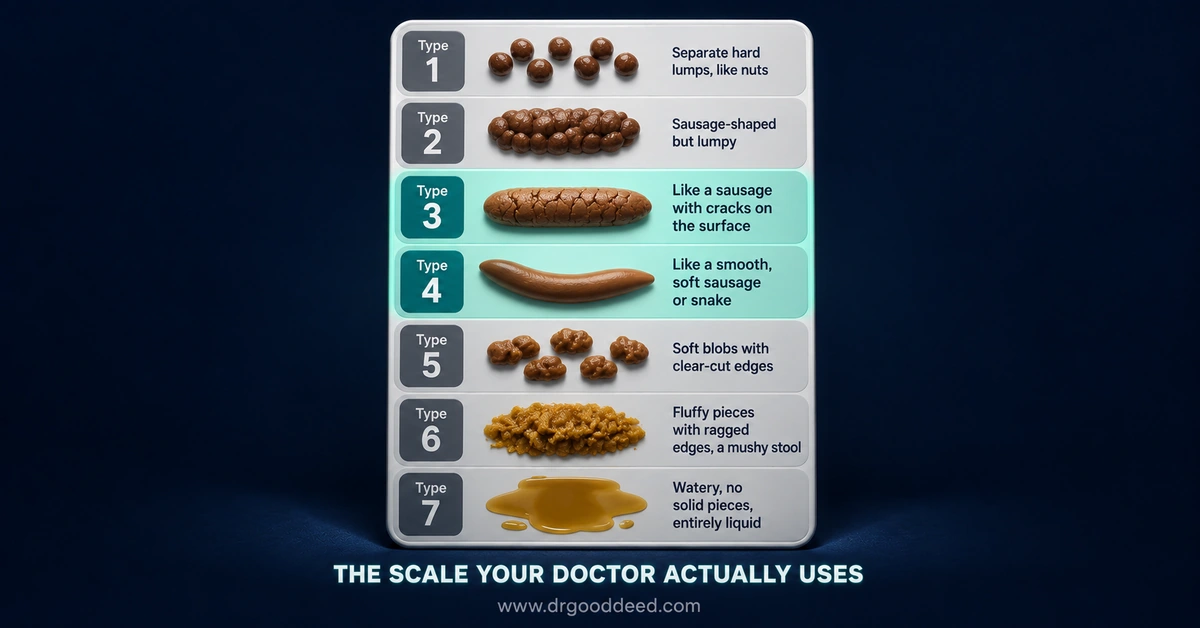

Which one looks most like yours?
Tap the closest match to see what it usually means, what can help, and when it's worth seeing a doctor.
Poop shape follows a predictable 7-type scale, and comparing your stool against it takes the guesswork out of digestive health. The types of poop on this scale run from hard, separate lumps to fully liquid stool, and each one maps to a different transit speed through your gut.
Doctors in the US rely on this exact scale during checkups, so knowing where you land on it before you walk into an appointment saves time and gives you a clearer answer than “it looked kind of weird.”
What Is the Bristol Stool Chart?
The Bristol Stool Chart, also called the Bristol Stool Scale or Bristol Stool Form Scale, sorts stool into seven categories based on shape and firmness. Gastroenterologists Stephen Lewis and Ken Heaton developed it at Bristol Royal Infirmary in the United Kingdom, publishing their validation study in 1997 after tracking bowel diaries from 66 adult volunteers.
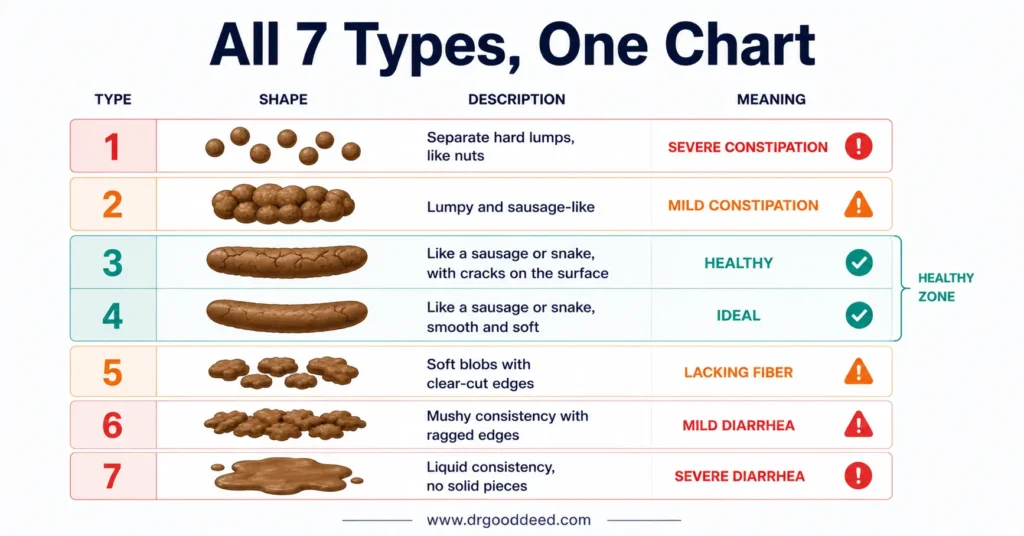
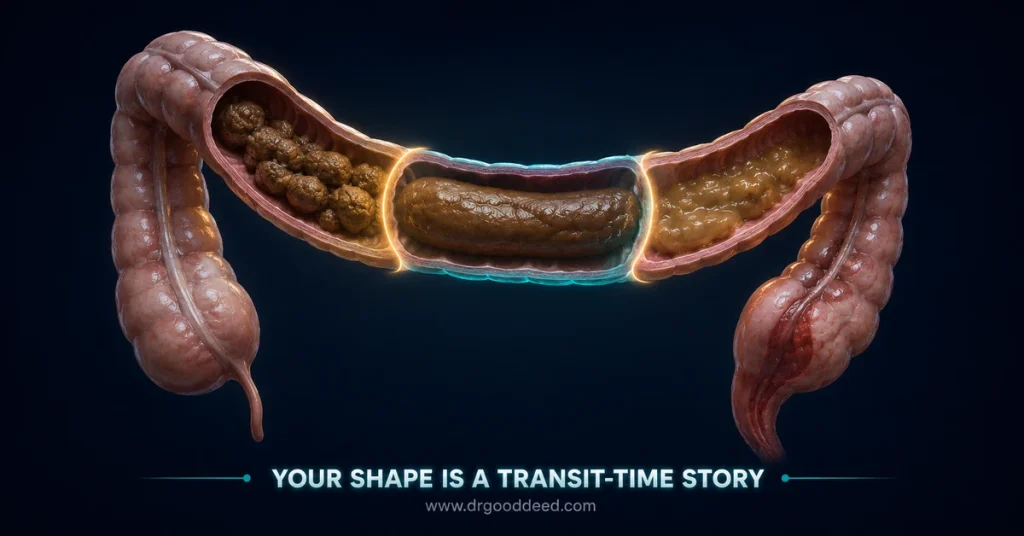
The scale works because stool shape correlates directly with colonic transit time, the number of hours food waste spends in your large intestine. Slower transit pulls more water out of stool, producing hard, separate pieces. Faster transit leaves water in, producing loose or watery stool. This is why the chart remains the standard reference for describing types of poop in clinics across the US today.
The 7 Types of Poop (Poop Type Chart)
Each of the seven types of poop sits on a spectrum from constipation to diarrhea, with the middle two types representing the target zone most gastroenterologists want to see. Here is the full breakdown in one table, something most online charts skip in favor of an image alone.
| Type | Description | What It Usually Means |
| Type 1 | Separate hard lumps, like nuts, hard to pass | Severe constipation, slow transit |
| Type 2 | Log-shaped but lumpy | Mild to moderate constipation |
| Type 3 | Log-shaped with cracks on the surface | Normal, on the firmer side |
| Type 4 | Smooth, soft sausage or snake shape | Ideal stool form |
| Type 5 | Soft blobs with clear-cut edges | Lacking fiber, borderline loose |
| Type 6 | Fluffy, mushy pieces with ragged edges | Mild diarrhea |
| Type 7 | Watery, no solid pieces | Severe diarrhea |
What Does Healthy Poop Look Like?
Healthy stool falls into Type 3 or Type 4 on the chart. It holds a log shape, passes without straining, and does not require you to rush to the bathroom. Color matters too, and a healthy stool is usually some shade of brown from bile pigment breakdown.
Floating stool on its own is not automatically a red flag. It often just means your meal had extra gas or fat content, though stool that floats and looks greasy on a regular basis is worth mentioning to a doctor.
Types 1 and 2: Signs of Constipation
Type 1 and Type 2 stool both point to constipation, the medical term for stool that moves too slowly through your colon. Type 1 looks like separate hard pellets, similar in shape to nuts, and it takes noticeable effort to pass. Type 2 is larger and log-shaped but still lumpy and firm. Both types form because stool sits in the colon long enough for extra water to get reabsorbed, leaving behind dry, compact waste.
The National Institute of Diabetes and Digestive and Kidney Diseases defines constipation as having fewer than three bowel movements a week, along with stools that are hard, dry, or difficult to pass. Low fiber intake, dehydration, low physical activity, and certain medications are the most common drivers behind Type 1 and Type 2 stool.
Types 3 and 4: The Healthy Range
Type 3 and Type 4 are the healthy range on the poop chart, and Type 4 specifically represents the gold standard shape doctors look for. Type 3 has visible cracks along a log shape and still passes easily without straining. Type 4 is smooth, soft, and holds together in one continuous piece, resembling a sausage or a snake.
Both forms suggest your colon is absorbing a normal, moderate amount of water and your transit time sits in a healthy window, generally between 24 and 72 hours from meal to bowel movement. If your stool regularly lands here, your fiber and fluid intake are likely well balanced.
Types 5, 6, and 7: Signs of Diarrhea
Types 5 through 7 are on the loose end of the poop chart. Type 5 shows up as soft blobs with clearly defined edges, often linked to inadequate fiber rather than illness. Type 6 turns mushy with ragged, uneven edges, a common marker of mild diarrhea. Type 7 is fully liquid with no solid pieces at all, the clearest sign of significant diarrhea.
According to the NIDDK, diarrhea means passing loose, watery stools three or more times a day, and it becomes dangerous when it leads to dehydration. Fast transit time is the mechanism behind all three types, since stool moves through the colon too quickly for enough water to get reabsorbed. Infections, food intolerances, stress, and certain medications commonly trigger this shift.
Can You Pass Different Poop Types in One Bowel Movement?
Yes, passing more than one stool type in a single bathroom trip is common and usually not a concern. This happens because stool that has been sitting longer near the end of your colon can be firmer than stool that formed more recently and moved through faster.
A single bowel movement might start with a firmer Type 3 piece and finish looser, closer to Type 5. This pattern shows up often after a change in diet, after eating a large or unusually fatty meal, or during the tail end of a stomach bug as your gut returns to its normal rhythm. It only becomes worth mentioning to a doctor if it happens alongside pain, blood, or a pattern that repeats for more than a couple of weeks.
What Affects Your Poop Type?
Several everyday factors shift where you land on the poop chart from one day to the next.
- Hydration: Low fluid intake pulls stool toward Type 1 and Type 2, since your colon pulls extra water out of drier waste.
- Fiber: Both too little and too much fiber can shift stool form, with too little often producing hard stool and sudden increases sometimes producing looser stool.
- Caffeine: Coffee stimulates colon contractions through a hormone called gastrin, which is why many people notice a bowel movement soon after their first cup.
- Medications: Opioids, iron supplements, and some antacids commonly cause constipation, while antibiotics, metformin, and magnesium-based products often loosen stool.
- Stress and travel: Both can speed up or slow down gut motility, shifting your usual types of poop pattern temporarily without any underlying illness.
When to See a Doctor About Your Poop Type
See a doctor if your stool consistently sits at Type 1, Type 2, Type 6, or Type 7 for more than two to three weeks. Also seek care if you notice blood, black or tarry stool, unexplained weight loss, or ongoing abdominal pain alongside a shift in your usual types of poop. Contact your a doctor right away for six or more loose stools per day, diarrhea lasting more than two days, or diarrhea combined with a high fever. A sudden, unexplained change that lasts beyond a few weeks is the clearest signal that something beyond diet or stress is involved.
FAQs
What is the ideal Bristol stool type?
Type 4. It is smooth, soft, and holds a sausage shape without straining, showing balanced fiber and water absorption in the colon.
Can stress alone change your poop type?
Yes. Stress hormones speed up or slow down colon motility, shifting stool between firmer and looser types without any infection or disease involved.
Does the Bristol Stool Chart apply to babies?
No. Infant stool, especially in breastfed babies, is naturally looser and does not follow adult transit time patterns, so pediatricians use separate stool guides.
Is Type 5 stool always a problem?
No. Type 5 often reflects low fiber intake on a given day rather than illness. It only signals a problem if it becomes your regular pattern.
Does poop type change more than poop color?
Yes, typically. Stool type shifts daily with hydration, fiber, and stress, while color usually stays stable unless diet, medication, or bleeding is involved.
Can food alone shift you between types of poop in one day?
Yes. A high-fat meal, sudden fiber increase, or spicy food can shift stool form within hours, since transit time reacts fast to digestive triggers.
Sources
- Cleveland Clinic: Bristol Stool Chart link
- Cleveland Clinic: Poop Shape, Color and Smell link
- WebMD: Bristol Stool Chart link
- GoodRx: Bristol Stool Chart link
- NIDDK: Constipation link
- NIDDK: Symptoms & Causes of Constipation link
- NIDDK: Diarrhea link
- NIDDK: Symptoms & Causes of Diarrhea link
- NIDDK: Irritable Bowel Syndrome link
- Healthline: Identifying Types of Poop with the Bristol Stool Chart link