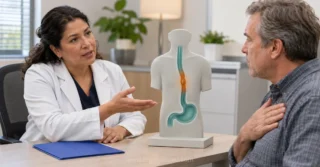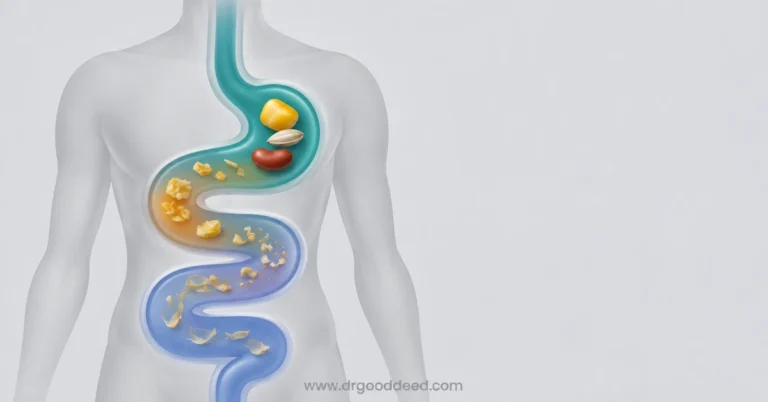

No bowel movement after colonoscopy for a day or a few days is common, because the prep emptied your colon and it needs time to refill. This article covers how long to wait, why it happens, how to get things moving and which symptoms need same-day care.
Key Takeaways
- No bowel movement after colonoscopy for a few days is usually normal; your colon was emptied by the prep and has to fill again.
- Most people are back to their normal diet by the next day, unless their doctor says otherwise (NIDDK, 2023).
- Call the doctor who did your colonoscopy if you still have not gone after 3 to 5 days; sources differ on the exact day.
- Pain, a swollen belly, fever or vomiting need same-day care, not waiting it out.
Is No Bowel Movement After Colonoscopy Normal?
Yes, no bowel movement after colonoscopy is usually normal for the first few days, as long as you feel well and can pass gas.
The prep cleared out your colon, so it takes time to make and pass new stool, especially if you ate less than usual. Sedation and the air used during the test can also slow things down (The Healthy, 2025).
It is usually fine to wait if you:
- Feel comfortable and have no severe belly pain
- Are passing gas
- Can drink fluids and eat as directed
- Have no fever or vomiting
If you cannot pass gas, your belly is swollen or the pain is getting worse, this is not ordinary constipation. Call your doctor the same day.
How Long to Wait for a Bowel Movement After Colonoscopy?
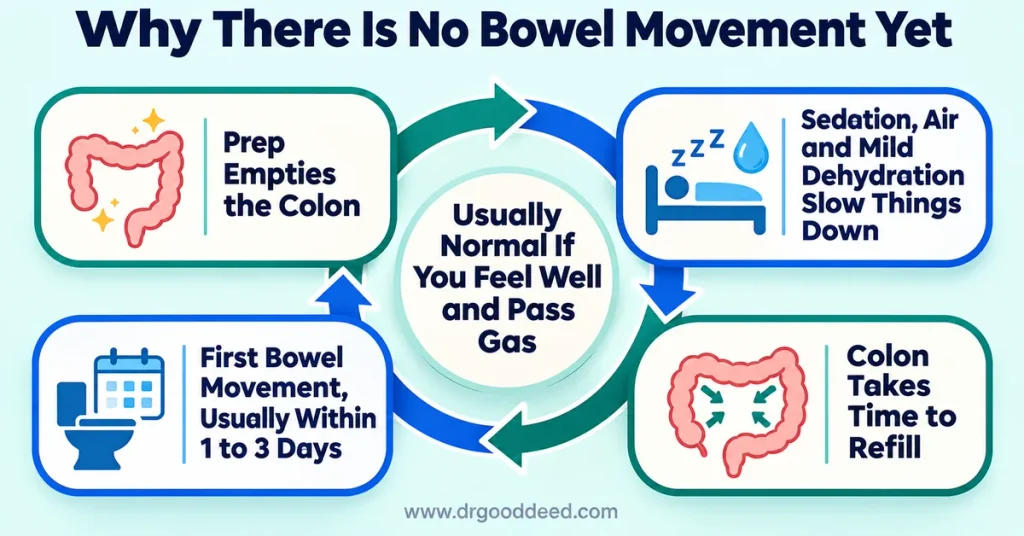
Most people go within 1 to 3 days. If it has been more than 3 to 5 days, call the doctor who did your colonoscopy.
Sources give different time frames. A Cleveland Clinic gastroenterologist advises calling if discomfort or bloating lasts more than 3 to 5 days (The Healthy, 2025), while Unio Specialty Care (2025) says to tell your doctor if bowel movements are still abnormal after a week.
Here is what is typical, day by day:
| Day | What usually happens | Action |
| 1 | You may not have a bowel movement, because the prep emptied your colon. | Drink fluids and follow your aftercare instructions. |
| 2 | Some people have a bowel movement, while others have not gone yet. | Eat your usual foods and keep drinking fluids. |
| 3 | You may still not have gone, especially if you ate very little. | If you feel well, keep following your aftercare instructions. |
| 4 | Many people have gone by now, but some still have not. | If you have discomfort or bloating, call the doctor’s office. |
| 5 | If you still have not gone, or bloating or discomfort continues, you are past the 3 to 5 day point (The Healthy, 2025). | Call the doctor who did your colonoscopy. |
| 6 | Going this long without a bowel movement is not typical. | Call the doctor who did your colonoscopy if you have not already. |
| 7 | Bowel movements that are still abnormal after a week need a check (Unio Specialty Care, 2025). | Call your doctor. |
This is a general guide. Your doctor may want to hear from you sooner, depending on your health, the procedure and your symptoms.
Why You May Not Poop After a Colonoscopy
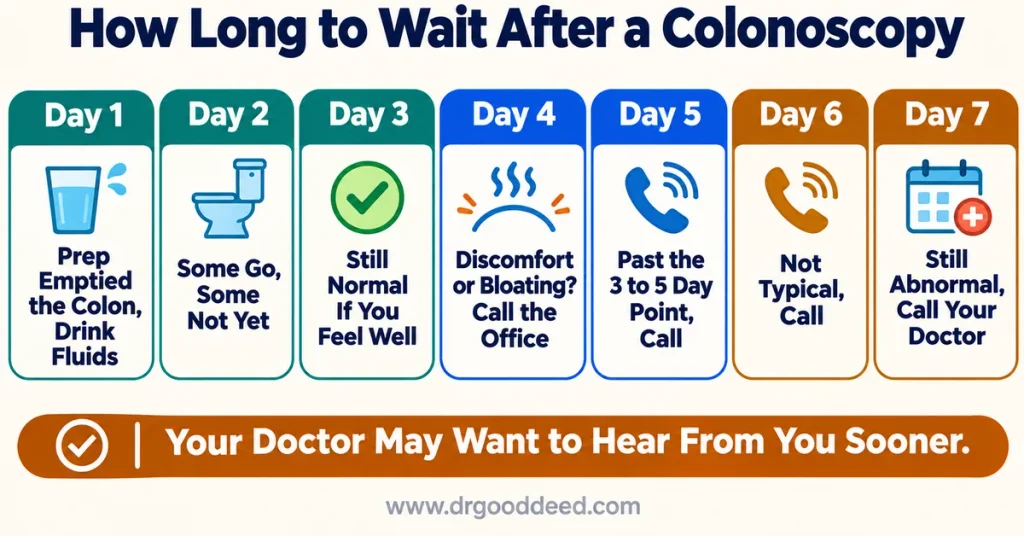
The prep empties your colon, and sedation, air in the bowel and mild dehydration can slow it down for a few days (The Healthy, 2025).
Common reasons include:
- Bowel prep: The prep emptied your bowel, so there is little stool left to pass.
- Eating less: You may have eaten less than usual before and after the test.
- Sedation: The medicine used to relax you can slow the bowel for a short time.
- Air or carbon dioxide: The team inflates the bowel with gas to see the lining, which can leave you feeling bloated.
- Dehydration: The prep can leave you a little dry, and dehydration can cause constipation on its own.
These effects usually ease as you drink more, eat normally and recover from the procedure.
How to Get Things Moving Again
Drink plenty of fluids, return to your usual meals and walk a little. Ask your doctor or pharmacist before taking any laxative or stool softener.
- Drink fluids: Follow your aftercare instructions and drink plenty of fluids, unless your doctor has told you otherwise.
- Eat your usual foods: Eat your normal meals as you can tolerate them. Fiber-rich foods may help.
- Walk: A short walk can help your bowel get back into its routine. Follow any activity limits you were given.
- Ask before taking medicine: Do not take any medicine for constipation without speaking to your doctor or pharmacist.
- Follow your discharge instructions: Your doctor may give specific advice if you had a biopsy or a polyp removed.
Once you are eating normally, the best foods for constipation can help bring back a regular rhythm.
Do not try home remedies, enemas or supplements unless your doctor suggests them.
Gas, Bloating and Other Normal After-Effects
Cramping, bloating and passing gas are common right after the test, and light bleeding is normal if polyps were removed or a biopsy was taken (NIDDK, 2023).
- Passing gas: The air or carbon dioxide used during the test can cause some discomfort until it passes.
- Light cramping: This often eases once you start passing gas.
- Irregular stools: Your first bowel movements may be loose or irregular (Unio Specialty Care, 2025), and a guide to the types of poop can help you describe them.
- Light bleeding: A little bleeding from the rectum is normal after a biopsy or polyp removal (NIDDK, 2023).
Delayed bleeding can happen up to 2 weeks after a colonoscopy, especially after polyp removal (NIDDK, 2023). If bleeding continues, contact your doctor.
If polyps were removed, your doctor will tell you when to repeat the test, and cancer screening guidelines by age explain the usual schedule.
Can a Colonoscopy Cause a Bowel Blockage?
Rarely. Serious problems such as a tear or a blockage are uncommon, but they cause pain and swelling, not just a missed bowel movement.
In a study of screening colonoscopies, perforation happened in about 3 of every 10,000 procedures and bleeding in about 15 of every 10,000 (NIDDK, 2023). Complications are more likely in older people and after polyp removal.
Get medical help the same day if you have:
- Severe or worsening belly pain
- A hard or swollen belly
- Fever or chills
- Nausea or vomiting
- Trouble passing gas or stool
Perforation is a tear in the wall of the bowel. It causes severe belly pain, fever, chills, nausea and vomiting, and people often have a few days of belly pain first (MedlinePlus, 2026). If you have these symptoms after a colonoscopy, get emergency care.
When to Call Your Doctor or Get Emergency Care
Call the doctor who did your colonoscopy if you still have not gone after 3 to 5 days, or if you have ongoing discomfort.
Go to the ER if you have any of these (NIDDK, 2023; Gastroenterology Consultants of San Antonio, 2025):
- Severe or worsening belly pain
- A hard or swollen belly
- Fever over 100.4°F, chills or vomiting
- Being unable to pass gas or stool
- Heavy bleeding or bleeding that will not stop
- Dizziness or weakness
Call 911 if you faint or have trouble breathing (Gastroenterology Consultants of San Antonio, 2025).
If no bowel movement after colonoscopy comes with pain, a swollen belly, fever or vomiting, do not wait it out; get care the same day.
Frequently Asked Questions
Is Constipation After Colonoscopy a Sign of a Problem?
Usually not. Constipation after colonoscopy tends to settle within a few days once you eat and drink normally again (The Healthy, 2025). The prep emptied your bowel, so it needs time to refill. Call your doctor if discomfort lasts or you still have not gone after 3 to 5 days.
Can Your Bowels Stop Working After a Colonoscopy?
Not usually. Sedation and the prep can slow your bowel for a short time (The Healthy, 2025). A true blockage is rare and causes pain, a swollen belly, vomiting and trouble passing gas. If you have any of these, get medical help the same day.
Is It Normal to Have Loose Stools After a Colonoscopy?
Yes. Bowel movements can be loose or irregular at first while your body recovers from the prep and you return to normal meals, and they usually settle within days (Unio Specialty Care, 2025). Contact your doctor if they last more than a week or come with pain, fever or bleeding.
Is It Normal to See Blood After a Colonoscopy?
A little blood is normal if a biopsy was taken or polyps were removed. Heavy bleeding, bleeding that will not stop, or dizziness or weakness needs care right away (NIDDK, 2023). Delayed bleeding can happen up to 2 weeks after the procedure, so contact your doctor if it starts later.
When Can I Eat Normally After a Colonoscopy?
Most people are back to their normal diet by the next day, unless the doctor gives other instructions (NIDDK, 2023). If polyps were removed, follow any diet advice in your discharge notes. Start with your usual meals, drink plenty of fluids and add fiber-rich foods as you feel ready.
Sources
- NIDDK (NIH), Colonoscopy (2023). link
- MedlinePlus (NIH), Gastrointestinal Perforation (2026). link
- The Healthy, Is Constipation After a Colonoscopy Normal? A Cleveland Clinic G.I. Doctor Explains (2025). link
- Gastroenterology Consultants of San Antonio, Colonoscopy Aftercare: What You Should Know (2025). link
- Unio Specialty Care, Tips for Surviving Your First Week of Recovery After a Colonoscopy (2025). link
Medically reviewed by Dr Nivedita Pandey, GI and hepatology.
Medical Disclaimer: This article is for general information only and is not medical advice. It does not replace a diagnosis, treatment plan, or guidance from a qualified healthcare professional. Always talk to your doctor about your own symptoms and before starting, stopping, or changing any treatment. If you think you may be having a medical emergency, call 911 or go to your nearest emergency room.