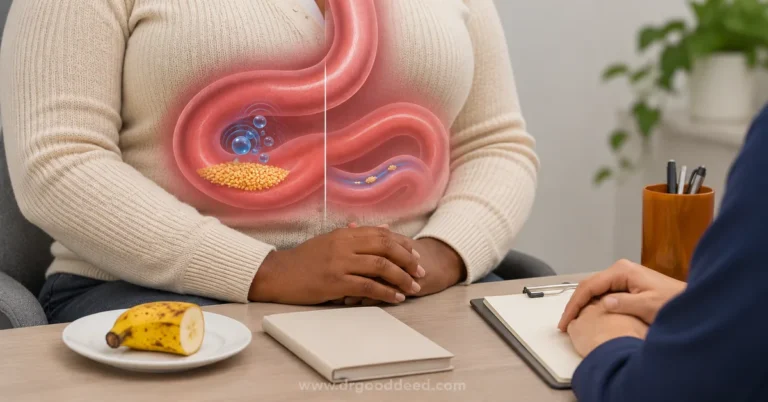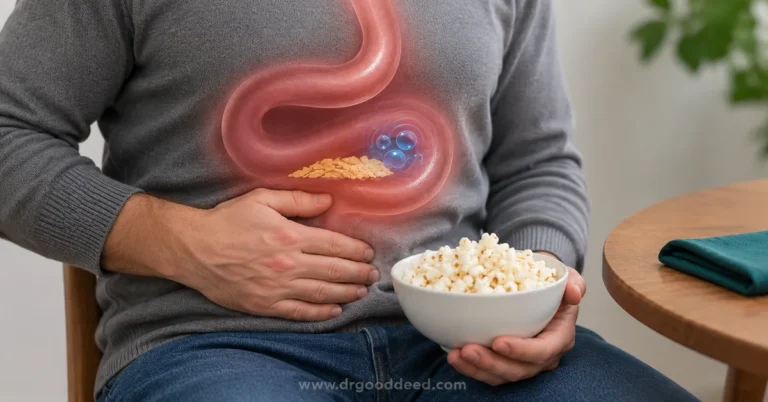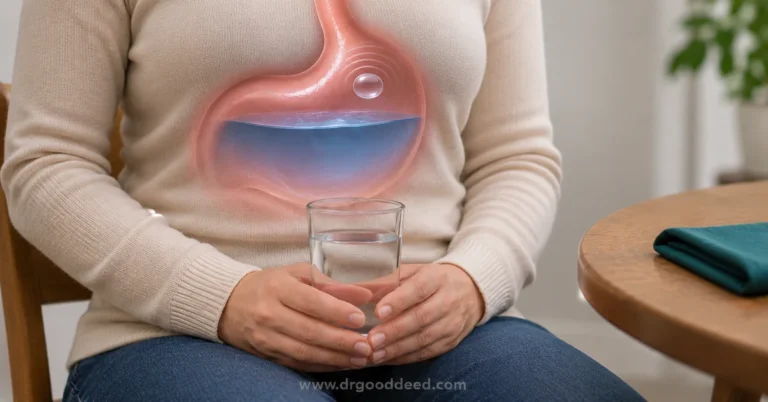
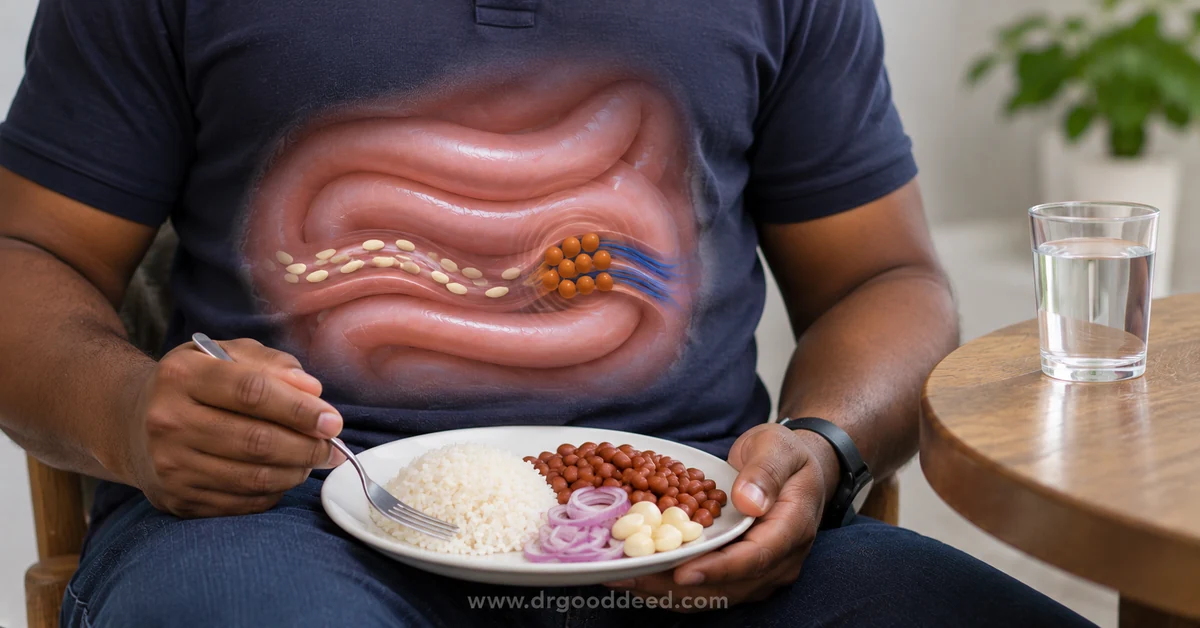

If you feel bloated after eating rice, the cause is often brown rice fiber, a large portion or other foods in the meal, not plain rice alone. Try smaller portions, chew slowly, and notice which other foods trigger your symptoms.
Key Takeaways
- Feeling bloated after eating rice often points to brown rice fiber, a large portion or other foods in the meal, not plain rice.
- Plain rice: Studies suggest it’s fully absorbed and makes little gas (Gonlachanvit, 2010).
- Food intolerances, constipation, or underlying digestive conditions may also contribute.
- What helps: Smaller portions, slower eating and a food journal.
- Get care: See a doctor if bloating keeps happening or comes with fever, vomiting, bleeding, or weight loss.
Why You Feel Bloated After Eating Rice
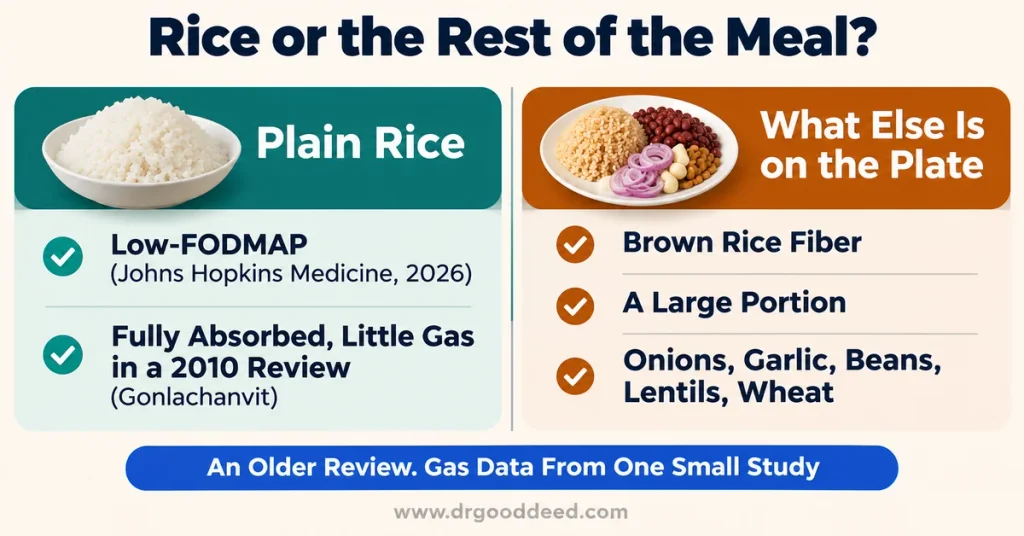
You can feel bloated after eating rice when the meal adds fiber, bulk or high-FODMAP foods, even though research reviews suggest plain rice makes little gas. FODMAPs are carbohydrates that gut bacteria ferment, and some people digest them poorly.
- Johns Hopkins Medicine (2026) lists rice as low-FODMAP.
- A 2010 review (Gonlachanvit) in the Journal of Neurogastroenterology and Motility concluded that rice is completely absorbed, makes little gas, and has low allergenicity. It’s an older review, and the gas data came from one small study of 6 people with irritable bowel syndrome and 6 controls.
- Bloating is a feeling of fullness or tightness. Distention is visible swelling of the belly, and the NIDDK (2021) says only about half of people with bloating have it.
Common Causes of Bloating After Eating Rice
Bloating after eating rice most often comes from fiber, portion size, or other foods in the meal. The causes below run from most to least likely.
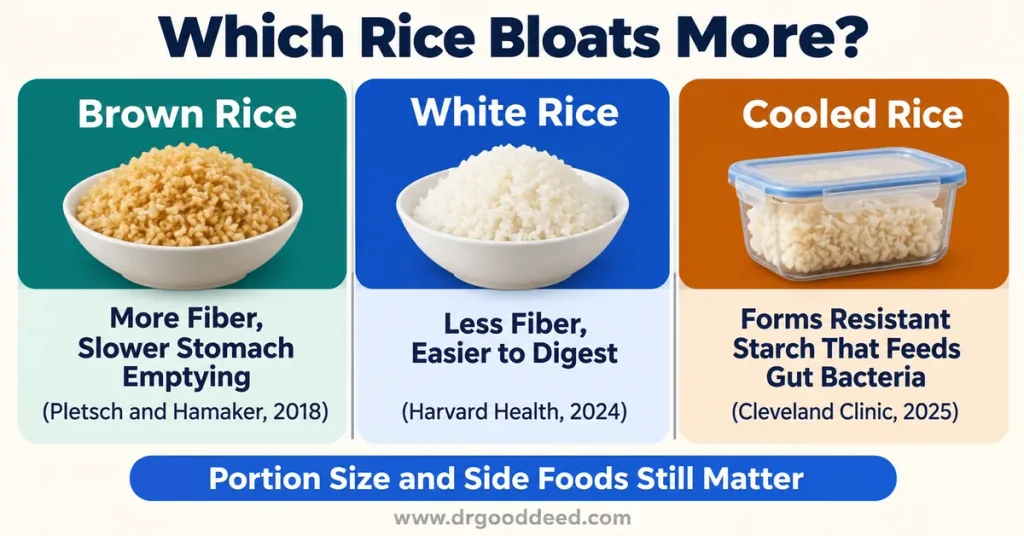
- Brown rice fiber: A cup of cooked long-grain brown rice has about 3 grams of fiber (Cleveland Clinic, 2025). White rice is easier to digest partly because it has less fiber (Harvard Health, 2024), and a 2018 study (Pletsch and Hamaker) found brown rice empties from the stomach more slowly. For nutrition beyond digestion, see brown rice vs white rice side by side.
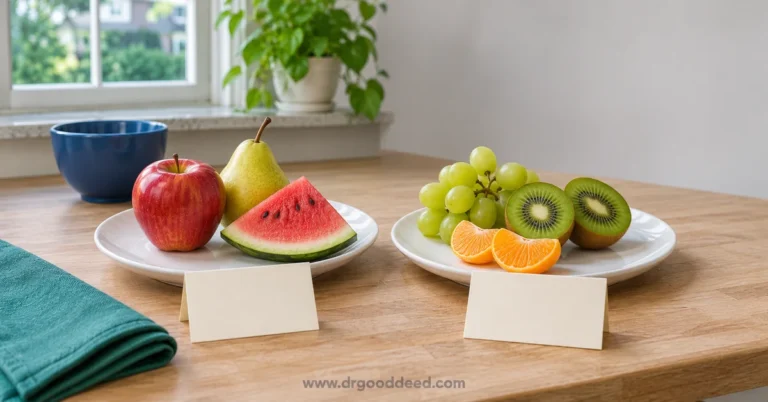
- Side foods: Onions, garlic, beans, lentils and wheat are high-FODMAP (Johns Hopkins Medicine, 2026).
- A large portion: Starch that isn’t fully digested reaches gut bacteria, which make gas (NIDDK, 2021). If small meals of any kind cause this, read about feeling really full after eating.
- Swallowing air: Eating fast and gulping drinks with a meal both do it.
- Cooled rice: Rice that’s cooked and then cooled forms resistant starch, which passes to the large intestine and feeds bacteria (Cleveland Clinic, 2025).
- Irritable bowel syndrome: IBS is one of the conditions behind gas symptoms (NIDDK, 2021).
- Small intestinal bacterial overgrowth and other digestive conditions: SIBO is most often a complication of other conditions (NIDDK, 2021), and celiac disease and constipation also appear on that list. Clinicians test for these conditions.
- A rare enzyme problem: Sucrase-isomaltase deficiency is a rare genetic disorder affecting the sugars sucrose and maltose, usually apparent after weaning (MedlinePlus Genetics).
Rice Bloating Clues and What to Do
Rice bloating clues depend on which rice, when symptoms start and what else appears.
Table: Clues after eating rice, likely cause and next step
| What you notice | Likely cause | Next step |
| Only after brown rice, not white | Fiber, or slower stomach emptying | Try a smaller portion, and ask a doctor or dietitian if it keeps happening |
| Only after leftover rice | Resistant starch may reach the large intestine (Cleveland Clinic, 2025) | Note it in your food journal. If vomiting or diarrhea follows, see the next rows |
| After rice with onions, garlic, beans or wheat | High-FODMAP side foods (Johns Hopkins, 2026) | Keep a food journal. A doctor or dietitian guides any trial diet |
| After rice that sat out | Possible food poisoning from Bacillus cereus | Vomiting, watery diarrhea or cramps need same-day care. Go to the ER if you can’t keep fluids down (Cleveland Clinic, 2026) |
| Rash, wheezing or trouble breathing | Possible allergic reaction | Call 911 or go to the ER (Mayo Clinic, 2026) |
| A baby vomiting after rice cereal | Possible FPIES, a food reaction that mostly affects infants (ACAAI, 2019) | Call the pediatrician right away |
Vomiting and diarrhea point elsewhere, so compare food poisoning vs stomach flu.
What Helps When Rice Makes You Bloated
Bloating from rice often eases with smaller portions, slower eating, and a food journal.
- Portion: Start with a smaller serving and see whether the bloating changes.
- Pace: Eating more slowly means swallowing less air.
- Food journal: Write down everything on the plate, not just the rice.
- Low-FODMAP eating: Johns Hopkins (2026) describes a short elimination phase of 2 to 6 weeks, and says not to attempt it alone if you’re underweight. A doctor or dietitian can fit rice into an IBS diet plan if you have IBS.
Doctor’s Tip: Before blaming rice, write down everything on the plate, because onions, garlic, beans and wheat are high-FODMAP foods and rice is listed as low-FODMAP (Johns Hopkins Medicine, 2026).
Rice Intolerance vs Rice Allergy: What Is the Difference?
Rice intolerance means trouble digesting a food, while rice allergy is an immune reaction. Bloating or gas can fit an intolerance, but neither one proves it.
- Testing: A food sensitivity test based on IgG antibodies has never been scientifically proven, and the AAAAI (2026) recommends against it. Skip those panels.
- Allergy signs: Rash and wheezing are signs of an allergy, and anaphylaxis needs emergency care (Mayo Clinic, 2026).
- Children: FPIES can cause severe vomiting and diarrhea hours after grains such as rice, usually in infants (ACAAI, 2019). See an allergist.
When to See a Doctor About Rice Bloating
Most bloating is harmless, but some signs need care.
- 911: Wheezing, trouble breathing or swelling after eating, or a rash with other allergy signs.
- ER or urgent care: Vomiting that keeps fluids from staying down, or very painful bloating.
- Primary care doctor: Bloating that lasts over a week, is very painful, or comes with fever, vomiting, bleeding or weight loss. Pregnancy, periods and perimenopause can also cause bloating (Cleveland Clinic, 2026).
- If it happens with most foods: Read about the causes of constant bloating.
See a doctor if feeling bloated after eating rice keeps happening, gets worse or comes with fever, vomiting, bleeding or weight loss.
Frequently Asked Questions
Does Rice Cause Bloating?
Rice causes bloating in some people, but many who feel bloated after eating rice are reacting to fiber, portion size or other foods on the plate. A 2010 review (Gonlachanvit) found that plain rice is fully absorbed and makes little gas. Reactions still vary from person to person.
Does White Rice Cause Gas and Bloating?
White rice is less likely to bloat you than brown rice because it has less fiber and is easier to digest (Harvard Health, 2024). Portion size and side foods still matter, though, so a large plate of white rice with onions or beans can leave you just as full.
Can Leftover Rice Make You Bloated?
Possibly. Cooked rice that cools forms resistant starch (Cleveland Clinic, 2025), which reaches the large intestine, where bacteria can make gas from undigested starch. If vomiting or watery diarrhea follows, suspect food poisoning instead and call your primary care doctor.
Does Rice Inflame the Gut?
There’s no good evidence that plain rice inflames the gut. A 2010 review (Gonlachanvit) found rice has low allergenicity. Pain, fever or blood alongside bloating is a different matter and needs a doctor, so don’t assume inflammation is the cause.
What Tests Can Check Bloating After Eating?
A clinician may use a hydrogen breath test or a dietitian-led elimination diet, depending on your symptoms. IgG food panels aren’t proven, and the AAAAI (2026) recommends against them. Ask your doctor which test, if any, fits your symptoms and history.
Sources
NIDDK, Symptoms & Causes of Gas in the Digestive Tract (2021). link
Johns Hopkins Medicine, FODMAP Diet: What You Need to Know (2026). link
Cleveland Clinic, Is Brown Rice Healthy? (2025). link
AAAAI, The Myth of IgG Food Panel Testing (2026). link
Cleveland Clinic, Bacillus Cereus (2026). link
Cleveland Clinic, Bloated Stomach (2026). link
Journal of Neurogastroenterology and Motility, Are Rice and Spicy Diet Good for Functional Gastrointestinal Disorders? (2010). link
Harvard Health, Brown Rice Versus White Rice: A Head-to-Head Comparison (2024). link
European Journal of Clinical Nutrition, Pletsch EA and Hamaker BR, brown rice and gastric emptying study (2018). link
Mayo Clinic, Food Allergy: Symptoms and Causes (2026). link
ACAAI, Food Protein-Induced Enterocolitis Syndrome (FPIES) (2019). link
MedlinePlus Genetics, Congenital Sucrase-Isomaltase Deficiency. link
Medical Disclaimer: This article is for general information only and is not medical advice. It does not replace a diagnosis, treatment plan, or guidance from a qualified healthcare professional. Always talk to your doctor about your own symptoms and before starting, stopping, or changing any treatment. If you think you may be having a medical emergency, call 911 or go to your nearest emergency room.