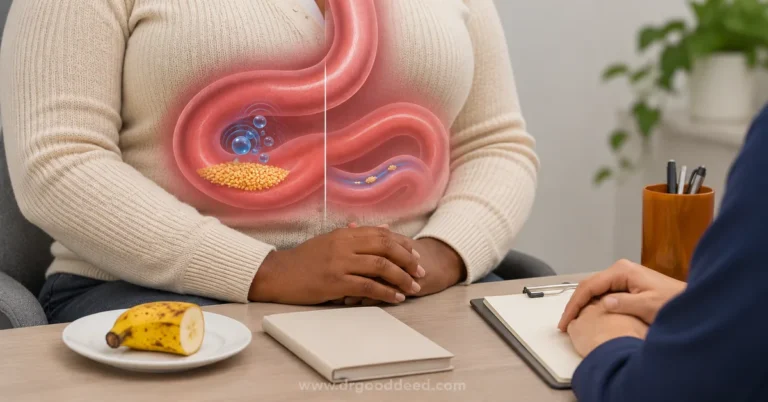
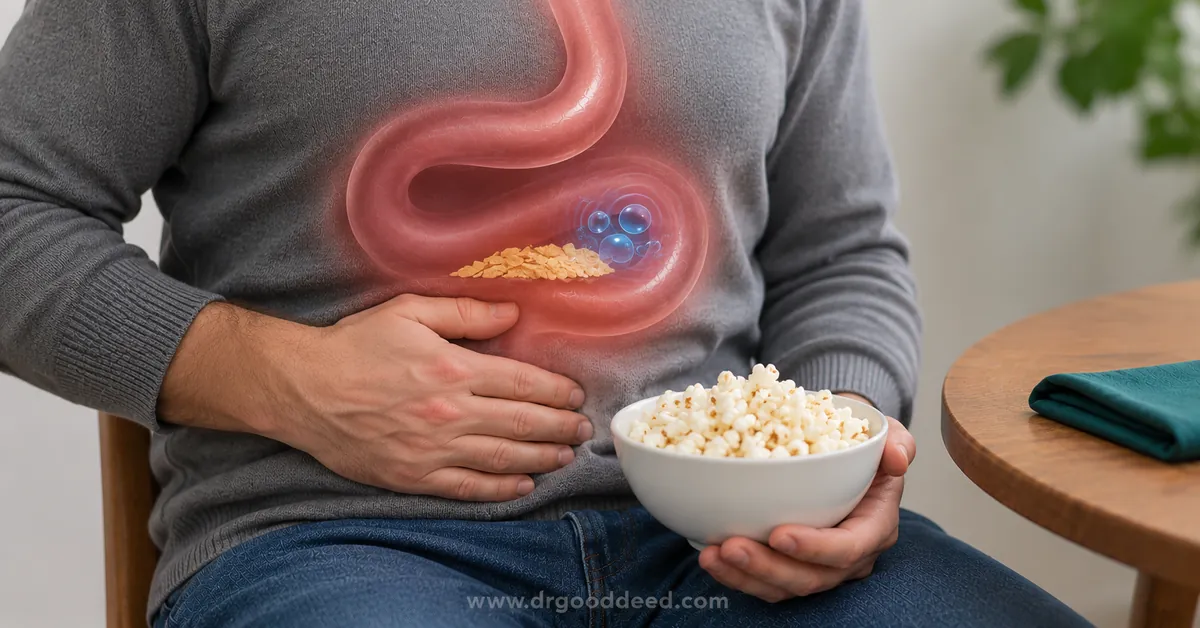

Stomach pain after eating popcorn usually comes from its tough hulls, its fiber, or the butter and oil on top. Some people may experience gas, bloating, and cramping, especially if they have a sensitive digestive system or an existing bowel issue. The amount eaten and the toppings can also affect this.
Key Takeaways
- Stomach pain after eating popcorn is usually mild and comes from tough hulls, fiber, or fatty toppings.
- Popcorn contains insoluble fiber that can cause gas and bloating in people with sensitive digestion.
- Butter, oil, and certain seasonings may cause discomfort, especially for people with IBS.
- If you experience severe pain, regular vomiting, bloating, or an inability to pass gas or stools, go to the ER.
Why Stomach Pain After Eating Popcorn Happens
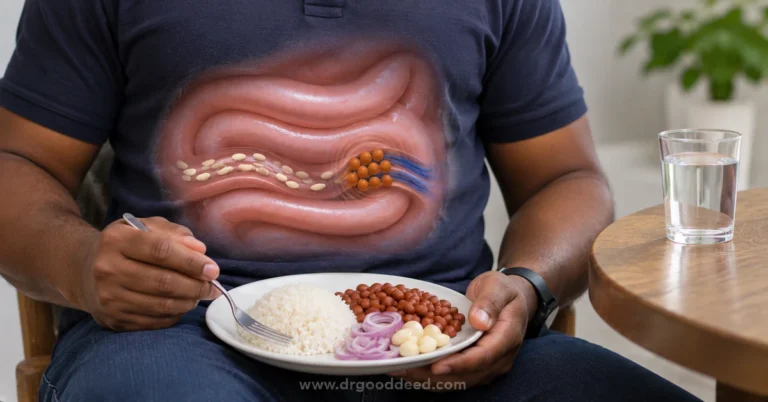
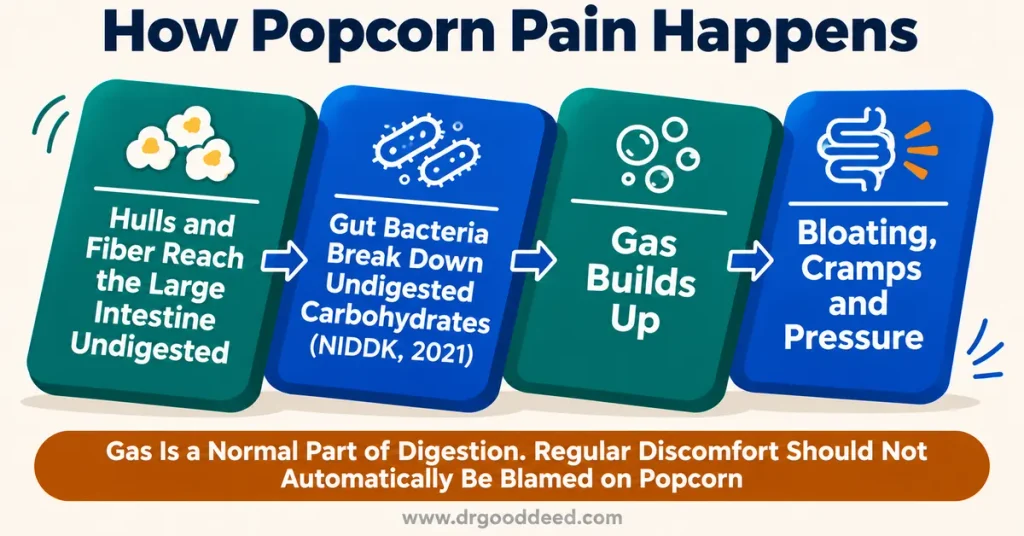
Stomach pain after eating popcorn most often happens because the hulls and fiber reach the large intestine undigested, where gut bacteria make gas. This can lead to bloating, cramping, and pressure in the abdomen.
As popcorn is a whole-grain food, it contains fiber. While fiber aids digestion, eating too much can cause discomfort.
Gas can occur as bacteria in the large intestine break down undigested carbohydrates (National Institute of Diabetes and Digestive and Kidney Diseases [NIDDK], 2021).
You may notice:
- Gas and bloating: Your stomach feels full, tight, and bloated.
- Cramps: Mild cramping from gas moving through your intestines.
- Stomach pressure: A feeling of discomfort and fullness.
- Changes in your bowel movements: Your digestive system may react differently depending on your usual fiber intake.
Gas is a natural part of digestion. However, if you regularly experience discomfort, it should not automatically be blamed on popcorn.
Popcorn Bloating, Hulls and Butter: Common Causes
Popcorn can hurt your stomach in a few common ways:
Insoluble fiber: Popcorn contains insoluble fiber. This helps make your stools bulkier and easier to move through your digestive system. However, consuming a lot of fiber in a short period can cause gas and bloating.
Hard popcorn kernels: Popcorn kernels have a hard outer shell, so they do not break down easily. Eating a large amount or not chewing your popcorn well can contribute to discomfort (Everyday Health, 2025).
Butter: Buttered popcorn and movie theater popcorn can contain a large amount of added fat. This can slow stomach emptying, causing discomfort or diarrhea (Everyday Health, 2025).
Seasonings: Onion and garlic powders contain fermentable carbohydrates (FODMAPs). These can cause gas, bloating, and other IBS symptoms in sensitive individuals (Everyday Health, 2025, citing Cleveland Clinic).
Fiber-rich foods can affect individuals differently. This is why some readers may experience stomach pain after eating oats. Read more about why oats can hurt your stomach.
Timing your symptoms can also give you some insight.
Table: What you notice, likely cause and next step
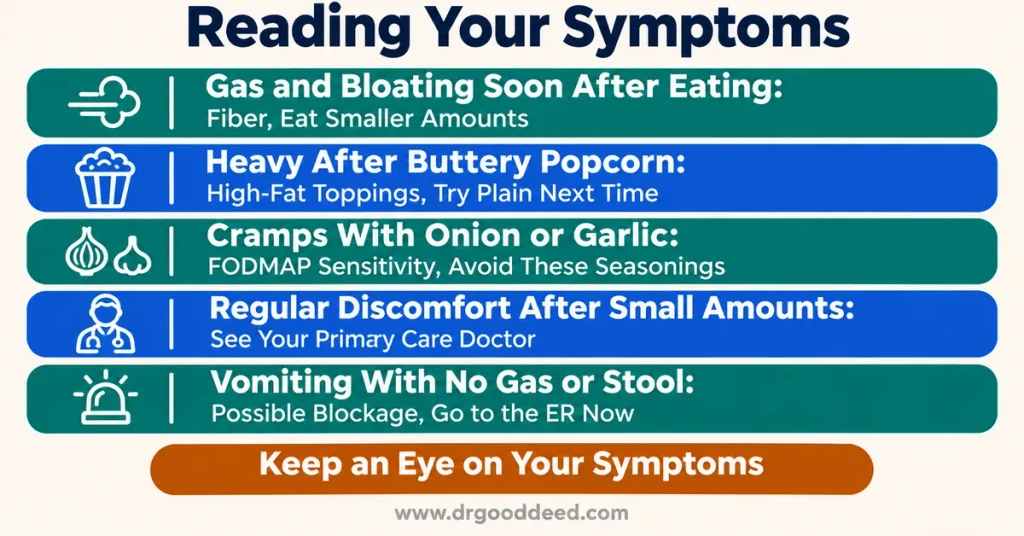
| Symptoms you may experience | Potential cause | What you can do |
| Gas and bloating shortly after eating | Fiber or undigested carbohydrates | Eat smaller amounts and keep an eye on your symptoms. |
| Feeling heavy after eating buttery popcorn | High-fat toppings | Try plain popcorn next time. |
| Cramps after eating popcorn with onion or garlic | FODMAP sensitivity | Avoid these seasonings and keep an eye on your symptoms. |
| Regular discomfort after eating small amounts | Could be a sensitivity or underlying digestive issue | See your primary care doctor. |
| Vomiting with no gas or stool | Possible bowel blockage (Mayo Clinic, 2021) | Go to the ER now. |
Gas can also cause pain in unusual areas, such as your shoulder. Learn more about gas pain in the shoulder.
Health Conditions That Make Popcorn Hurt More
People suffering from IBS, IBD, or gastroparesis may experience more discomfort after eating popcorn.
IBS: IBS is a digestive condition that can cause stomach pain, bloating, diarrhea, and constipation. The fiber and seasonings containing onion or garlic can trigger symptoms in some people. If eating popcorn causes an IBS flare-up, knowing how long an IBS flare-up lasts can help you track your recovery.
IBD: IBD is an umbrella term for conditions such as Crohn’s disease. When symptoms are active, some people struggle with high-fiber foods. Those with Crohn’s disease and a stricture in their intestine may need specialist guidance.
Gastroparesis: This is a condition where your stomach takes longer to empty. You may struggle with high-fiber foods, causing you to feel full, bloated, or uncomfortable. Learn more about gastroparesis symptoms.
Food intolerance can also be a cause. This is when your digestive system struggles to process certain foods or ingredients. It is different from a food allergy.
Popcorn intolerance symptoms: Bloating, gas, stomach cramps, diarrhea, and discomfort can occur.
If you have a food allergy, you may experience additional symptoms such as hives, swelling, and difficulty breathing. If you are struggling to breathe or your throat is swelling, call 911. A doctor can help you work out whether your symptoms are due to an intolerance, an allergy, or another digestive issue.
Popcorn and Diverticulitis: What Research Says
Most people with diverticular disease do not need to avoid popcorn (NIDDK, 2021). Diverticular disease is a condition in which small pouches form in the wall of your colon.
In the past, doctors would advise people with diverticular disease to avoid popcorn, nuts, and seeds because they believed these foods could get stuck in the pouches.
Recent research suggests that popcorn is not harmful to most people with diverticular disease.
Diverticulosis means you have the pouches. Diverticulitis occurs when one or more of these pouches become inflamed or infected. If you have diverticulitis or regular digestive issues, follow your doctor’s advice on what to eat.
How to Stop Stomach Pain From Popcorn
Eating smaller amounts, chewing your popcorn well, and choosing plain popcorn can help. If you are experiencing mild bloating or cramps, give your digestive system time to settle and avoid eating more until you feel better.
Try:
- Reduce your portion: Eat a smaller portion to help your digestive system cope with the fiber.
- Chew your popcorn: Chewing helps break it into smaller pieces. Take your time.
- Choose air-popped popcorn: This is the easiest option. It can help you see whether fatty toppings are causing issues.
- Avoid onion and garlic: If these tend to trigger your IBS symptoms, avoid using them.
- Keep track of fiber: Popcorn can add to your fiber intake. Too much dietary fiber can cause gas, bloating, and discomfort in some people. Learn more about what happens if you eat too much dietary fiber.
If you regularly experience pain after eating popcorn, try to avoid eating it until you can talk to a health professional.
When to See a Doctor for Popcorn Pain
Mild stomach discomfort may settle on its own. However, if you experience severe pain, regular vomiting, stomach bloating, or an inability to pass stools or gas, this could be a more serious issue requiring medical attention.
An intestinal blockage occurs when a partial or complete blockage prevents food or stools from moving through your intestines normally. Symptoms can include stomach cramps, constipation, vomiting, bloating, and difficulty passing stools or gas (Mayo Clinic).
Table: Symptoms and where to get care
| Symptoms you are experiencing | What to do |
| Mild gas, bloating, or cramps that settle | Keep an eye on your symptoms and avoid eating more. |
| Regular discomfort after eating popcorn | Book an appointment with your primary care doctor. |
| Ongoing stomach pain, diarrhea, or changes in bowel movements | Speak to your doctor or go to urgent care. |
| Blood in your stools or ongoing symptoms with no clear cause | Get same-day care from your doctor or urgent care. |
| Severe or worsening stomach pain, regular vomiting, or a bloated stomach | Visit the ER. |
| Stomach pain and an inability to pass gas | Go to the ER. |
Doctor’s Tip: If you are experiencing pain with vomiting and are unable to pass gas, this should not be seen as a simple fiber issue. It can be a sign of an intestinal blockage. Do not wait for it to settle.
If you are experiencing severe symptoms, collapsing, difficulty breathing, or cannot get to emergency care safely, call 911. Do not drive if you are feeling very unwell.
A case report published in 2018 in the ClinMed International Library describes a rare case of popcorn kernels contributing to a large bowel obstruction. This was just one reported case and does not mean popcorn commonly causes bowel obstructions. Most intestinal obstructions are caused by other factors, such as adhesions, hernias, cancers, and strictures.
When talking to your doctor, mention:
- How much popcorn you ate and what toppings you had.
- When the pain began and how long it lasted.
- Where the pain is and whether it is getting worse.
- Whether you are experiencing bloating, vomiting, diarrhea, constipation, or difficulty passing gas.
- Whether you have a history of IBS, IBD, or other digestive issues.
Severe, worsening, or repeated stomach pain after eating popcorn deserves a medical check rather than another diet change.
Frequently Asked Questions
Is Popcorn Inflammatory to the Gut?
Plain popcorn is not harmful to most people with diverticular disease (NIDDK, 2021). However, people with sensitive digestion or active IBD symptoms may experience discomfort due to the fiber. How popcorn affects you will depend on your own digestive health and portion size.
Can Popcorn Cause Gastritis?
There is no clear evidence that popcorn directly causes gastritis. However, buttery or oily popcorn can cause discomfort for some people. If you regularly experience stomach pain, nausea, or other symptoms, speak to your primary care doctor to find the cause.
Is Popcorn Hard to Digest at Night?
Popcorn is harder to digest than many snacks because its hull does not break down easily. If you eat a large amount or choose buttery popcorn late at night, you may feel uncomfortable and bloated at bedtime, so a smaller plain portion may help.
What Does Left-Side Pain After Eating Popcorn Mean?
Left-sided stomach pain after eating popcorn could be due to trapped gas. However, the cause cannot be identified from the location alone. If you are experiencing severe or ongoing pain or vomiting, seek medical attention, and go to the ER if you also cannot pass gas or stool.
Should I Avoid Popcorn Altogether?
Often, no. Many people can enjoy popcorn without any digestive issues. Eating smaller amounts, chewing well, and choosing plain or air-popped popcorn can help. If you still have symptoms after eating small amounts, avoid popcorn and speak to your healthcare provider about your symptoms.
Medical Review
Medically reviewed by Dr. Nivedita Pandey, Gastroenterology and Hepatology.
Sources
NIDDK, Symptoms & Causes of Gas in the Digestive Tract (2021). link link
NIDDK, Eating, Diet, & Nutrition for Diverticular Disease (2021). link link
Mayo Clinic, Intestinal Obstruction: Symptoms and Causes (2021). link link
Everyday Health, Why Does My Stomach Hurt After Eating Popcorn? (2025). link link
ClinMed International Library, Colonic Phytobezoar Caused by Popcorn Kernels (2018). link link
Medical Disclaimer: This article is for general information only and is not medical advice. It does not replace a diagnosis, treatment plan, or guidance from a qualified healthcare professional. Always talk to your doctor about your own symptoms and before starting, stopping, or changing any treatment. If you think you may be having a medical emergency, call 911 or go to your nearest emergency room.