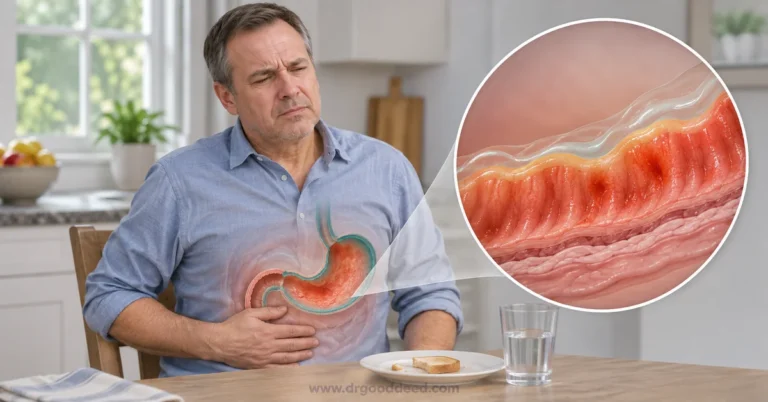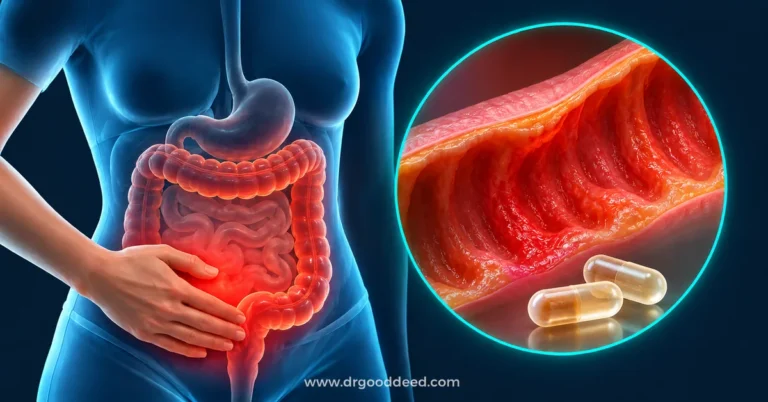

If you feel full after a few bites, feel nauseous after eating, or vomit food hours after a meal, your stomach may be emptying too slowly. Gastroparesis symptoms happen when the stomach muscles move food into the small intestine more slowly than normal, even though nothing is blocking it.
Diabetes, nerve damage and past surgery can cause this, but the cause is often unknown. Symptoms differ from person to person. If you have ongoing digestive discomfort, repeated vomiting or unexplained weight loss, see a doctor.
Key Takeaways
- Gastroparesis symptoms include nausea, vomiting, bloating, upper abdominal pain and feeling full quickly, because the stomach empties too slowly.
- Many people have mild symptoms or none at all.
- Diabetes is the most common known cause.
- Blood in vomit, coffee-ground vomit, sudden severe pain or fainting is a medical emergency.
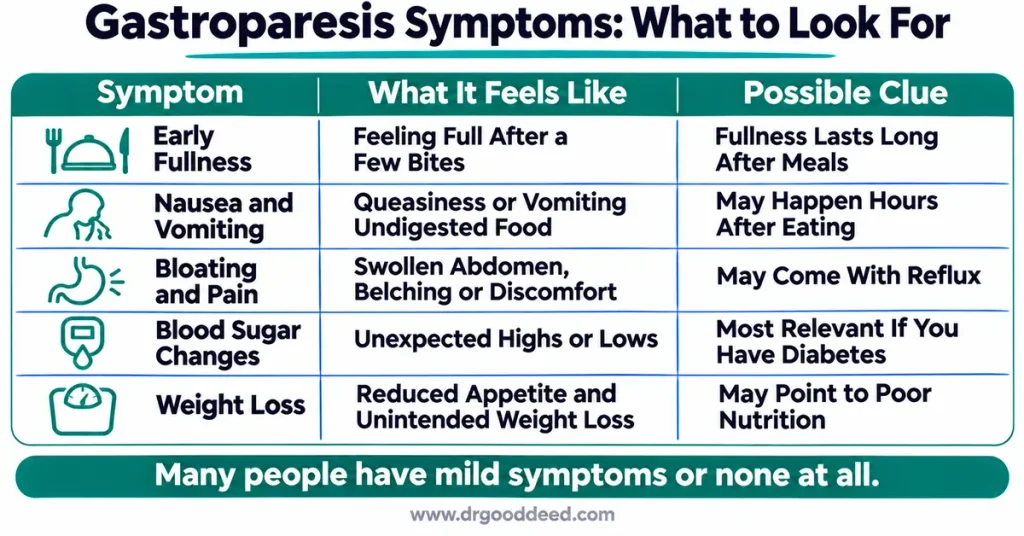
| Symptom | What it feels like | Possible clue |
| Early fullness | Feeling full after a few bites | Fullness lasts long after meals |
| Nausea and vomiting | Queasiness or vomiting undigested food | May happen hours after eating |
| Bloating and pain | Swollen abdomen, belching or discomfort | May come with reflux |
| Blood sugar changes | Unexpected highs or lows | Most relevant if you have diabetes |
| Weight loss | Reduced appetite and unintended weight loss | May point to poor nutrition |
What Are Gastroparesis Symptoms?
Gastroparesis symptoms are caused by the stomach releasing food into the small intestine more slowly than normal, even though there is no blockage. This is also called delayed stomach emptying.
Common symptoms include:
- Nausea and vomiting, particularly after meals
- Vomiting undigested food eaten hours earlier
- Feeling full after only a few bites
- Bloating, belching and upper abdominal discomfort
- Heartburn or acid reflux
- Reduced appetite and weight loss
Symptoms often start after eating, but how severe they are varies. Some people have constant discomfort, while others have very mild symptoms. If symptoms continue, a medical evaluation is important, because the cause cannot always be found.
Gastroparesis Symptoms After Eating
Gastroparesis symptoms often appear during or after a meal, because food stays in the stomach longer than usual. The timing and the mix of symptoms can help a health care professional decide which tests you need.
Common patterns include:
- Early fullness: feeling full after a few bites, or staying full long after a meal
- Reduced appetite: not wanting to eat, or feeling too full to finish a meal
- Vomiting: bringing up undigested food several hours after eating
- Bloating: a tight, swollen or gassy feeling in the abdomen
- Upper abdominal discomfort: aching or pain in the upper stomach area
- Heartburn: a burning feeling after meals
Early fullness can get worse after drinking large amounts of fluid. Solid foods, high-fat meals, high-fiber foods and carbonated drinks can also make symptoms worse for some people. If bloating and gas are your main problem, read about digestive enzymes for bloating and gas.
Practical hint: Keep a food and symptom record. Write down what you eat, how much, what symptoms you have and when they start. This helps your clinician spot patterns and adjust your diet.
Less Obvious Gastroparesis Symptoms
Some effects are easy to miss because they are subtle or develop over time as complications. They are not usually the first signs of gastroparesis.
These include:
- Blood sugar swings: slow digestion can make glucose harder to predict for people with diabetes
- Dehydration: repeated vomiting can leave the body short of fluid, and constant thirst can be one sign
- Malnutrition: eating less or vomiting often means fewer nutrients
- Vitamin deficiencies: poor intake or absorption of essential nutrients
- Bezoars: hard masses of undigested food that can form in the stomach and can be life-threatening if they stop food from passing into the small intestine
Gastroparesis does not itself cause diabetes. If you are vomiting often, eating less than usual or losing weight without a clear reason, see a doctor. If you cannot keep fluids down or feel extremely weak, get urgent help.
What Causes Delayed Gastric Emptying?
Delayed gastric emptying happens when the nerves or muscles of the stomach do not move food along normally. The cause is often never found, but some conditions and medicines play a role.
Causes and risk factors include:
- Diabetes: long-term high blood sugar can damage nerves and affect how the stomach moves. It is the most common known cause.
- Vagus nerve damage: some stomach or intestinal surgeries, and diabetes, can damage this nerve, which helps control digestion.
- Viral illness: some people develop symptoms after an infection.
- Other conditions: hypothyroidism, scleroderma, Parkinson’s disease, multiple sclerosis, migraine, and sometimes cancer or cancer treatment.
- Medicines: opioid pain relievers, some antidepressants and anticholinergic medicines can slow stomach emptying or make symptoms worse.
- Sex: people assigned female at birth are more likely to have gastroparesis (Mayo Clinic).
Mayo Clinic also lists weight loss medicines among those that can slow stomach emptying. Learn more about GLP-1 medications and digestive issues.
Some medicines can make symptoms worse without causing gastroparesis. Do not stop or switch a prescribed medicine without talking to your doctor. Ask your prescriber to review whether any of your medicines may be making your symptoms worse.
Diabetic Gastroparesis and Blood Sugar
Diabetic gastroparesis happens when diabetes affects the nerves or muscles that move food through the stomach. Food can take longer to reach the small intestine, which changes blood sugar patterns.
Glucose may rise later than expected after a meal, and repeated highs and lows make diabetes harder to manage. Poor blood sugar control can also make gastroparesis worse. Gastroparesis does not itself cause diabetes. To see typical ranges, check this normal blood sugar levels chart by age.
If you have diabetes, contact a health care provider if nausea, vomiting or fullness lasts more than a few days. They can review your glucose patterns, medications and symptoms. Do not change your insulin or other diabetes medicines because you suspect gastroparesis, unless your diabetes care team advises it.
Important: In diabetic gastroparesis, glucose can rise hours after eating, because food takes longer than usual to leave the stomach. Check your glucose as your diabetes care team recommends and report any unusual patterns, so they can adjust your treatment safely.
Gastroparesis Diagnosis: Which Tests Are Used?
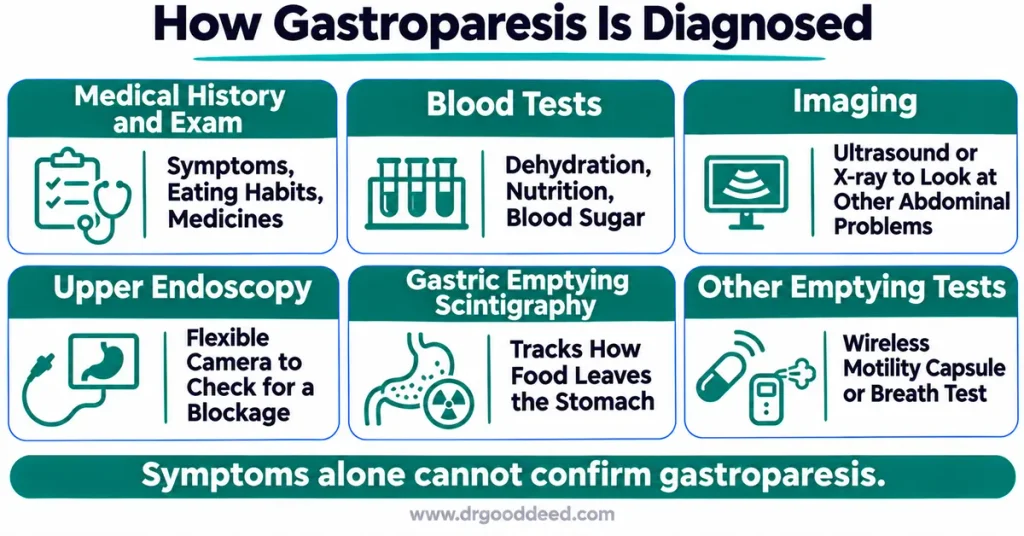
Gastroparesis diagnosis involves a medical evaluation and tests that check how quickly the stomach empties and look for other causes of your symptoms.
Your health care provider may suggest:
- A medical history and exam, covering symptoms, eating habits, health conditions and all current medicines
- Blood tests to check for dehydration, nutrition problems and blood sugar changes
- Imaging, such as an ultrasound or X-ray, to look at other abdominal problems
- Upper endoscopy, which uses a flexible camera to check for a blockage or another cause
- Gastric emptying scintigraphy, a test that tracks how food leaves the stomach
- Other emptying tests, such as a wireless motility capsule or a breath test
Symptoms alone cannot confirm gastroparesis, because other digestive conditions cause similar symptoms. Your clinician will decide which tests are right for you and tell you how to prepare.
Gastroparesis Treatment and Eating Changes
Gastroparesis treatment aims to relieve symptoms, keep you hydrated and nourished, and treat any underlying condition. The approach depends on your symptoms, test results and how you respond.
Common options include:
- Eating changes: if advised, 4 to 6 small meals a day
- Lower fat and lower fiber meals: fat and some types of fiber can slow stomach emptying, so these meals can be easier to tolerate
- Soft or liquid foods: soups and blended foods can still meet nutrition needs
- Dietitian support: a registered dietitian can help you meet your calorie, fluid and nutrient needs
- Medicine review: your prescriber can check whether any of your medicines make symptoms worse
- Anti-nausea medicines: a doctor may prescribe these to ease nausea and vomiting
- Motility medicines: in some cases a doctor may prescribe medicines such as metoclopramide, erythromycin or domperidone, which have side effects and need medical supervision
- Advanced treatments: in severe cases, feeding tube nutrition, gastric electrical stimulation (which may not be available on the NHS) or surgery may be considered
Treatment can often control symptoms, though it may not cure gastroparesis.
When Are Gastroparesis Symptoms an Emergency?
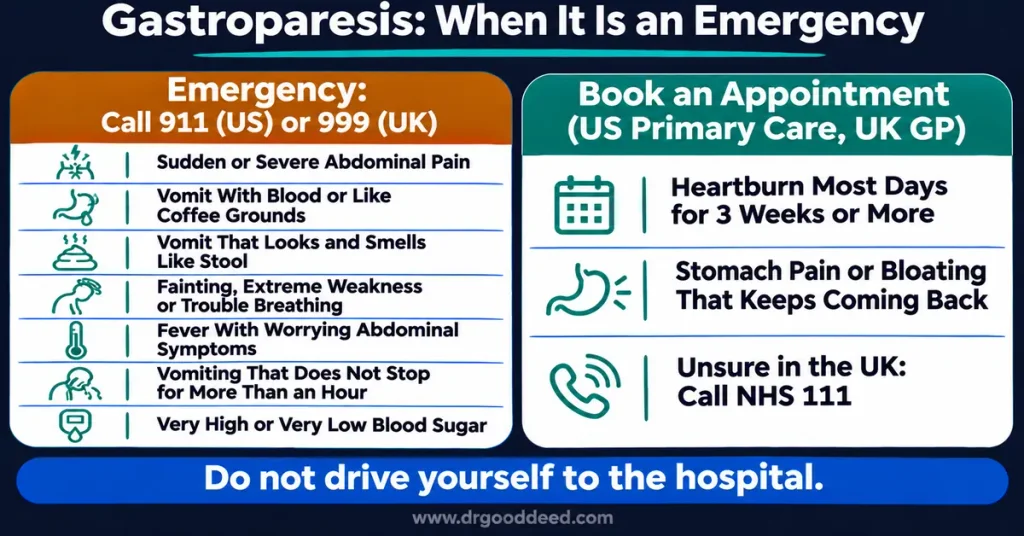
Some gastroparesis symptoms need emergency care, especially if vomiting or abdominal pain gets worse.
Get emergency help for:
- Sudden or severe abdominal pain
- Vomit with blood, or vomit that looks like coffee grounds
- Vomit that looks and smells like stool
- Fainting, extreme weakness or trouble breathing
- Fever with worrying abdominal symptoms
- Vomiting that does not stop for more than an hour
- Very high or very low blood sugar that needs urgent attention
In the US, go to the emergency department or call 911. In the UK, call 999 or go to A&E, and do not drive yourself. If you are unsure whether it is an emergency, call NHS 111 in the UK for urgent advice.
For non-urgent symptoms, make an appointment with your primary care provider or GP. This applies if you have heartburn most days for 3 weeks or more, or stomach pain or bloating that keeps coming back. If heartburn is your main symptom, see our heartburn medicine comparison.
Frequently Asked Questions
Can Gastroparesis Go Away?
It can, depending on the cause and how you respond to treatment. Treating the underlying condition may help. Some people need ongoing diet changes, medicines or nutrition support to control symptoms.
What Foods Make Gastroparesis Worse?
Some people find that high-fat foods, high-fiber foods, large solid meals and carbonated drinks make symptoms worse. A registered dietitian can build a plan for you, since needs vary.
Can Gastroparesis Cause Weight Loss?
Yes. Nausea, early fullness and repeated vomiting can reduce your appetite and make it hard to eat enough, which leads to weight loss. Tell a doctor about any unplanned weight loss.
Is Gastroparesis the Same as Indigestion?
No. Indigestion is a general term for upper abdominal discomfort, such as bloating or feeling full. Gastroparesis is a specific problem with slow stomach emptying, which tests can confirm when nothing is blocking the stomach.
Sources
- Mayo Clinic, Gastroparesis: Symptoms and Causes. link
- NIDDK, Symptoms and Causes of Gastroparesis. link
- Cleveland Clinic, Gastroparesis: Symptoms, Causes, Diagnosis and Treatment. link
- Healthline, Gastroparesis: Causes, Symptoms, and Diagnosis. link
- Johns Hopkins Medicine, Gastroparesis. link
- NHS, Gastroparesis. link
Medical Disclaimer: This article is for general information only and is not medical advice. It does not replace a diagnosis, treatment plan, or guidance from a qualified healthcare professional. Always talk to your doctor about your own symptoms and before starting, stopping, or changing any treatment. If you think you may be having a medical emergency, call 911 or go to your nearest emergency room.