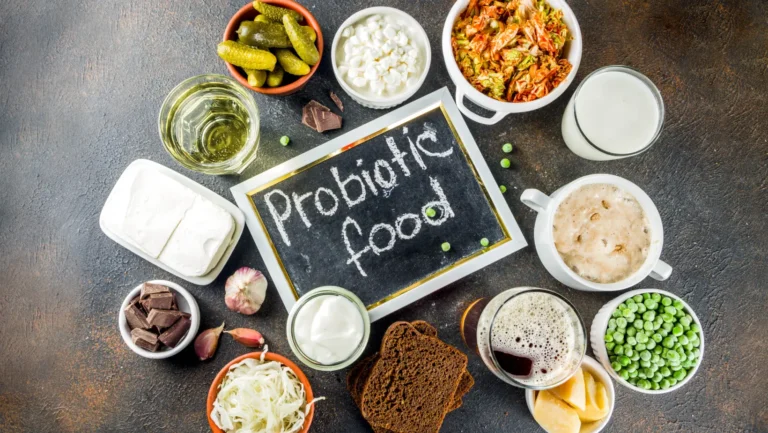

Probiotics for bloating and gas work by restoring the balance of bacteria in the gut, directly reducing the bacterial fermentation that produces excess gas. Around 16 to 19% of U.S. adults report chronic bloating, according to the American College of Gastroenterology.
The right probiotic strain can reduce gas production, improve digestion speed, and lower abdominal pressure. Not every strain does the same thing. This guide covers which strains work, how to choose correctly, and what most articles skip entirely.
How Probiotics Reduce Bloating and Gas

Probiotics for bloating and gas work through three direct biological actions: they shift gut bacteria composition, reduce fermentation byproducts, and speed up gut motility. Gas is produced when bacteria in the colon ferment undigested carbohydrates. The wrong bacterial balance produces more gas than normal. Introducing specific strains changes that balance within days to weeks.
Balancing the Gut Microbiome
The human colon contains roughly 38 trillion bacteria. When gas-producing species like Clostridiales or Enterobacteriaceae dominate, bloating increases. Probiotic strains compete with these bacteria for food and attachment sites in the gut lining, reducing their numbers over consistent use.
Reducing Gas-Producing Bacteria
Specific strains, particularly Lactobacillus acidophilus and Bifidobacterium longum, produce bacteriocins, which are compounds that suppress harmful gas-producing bacteria. This is not a general anti-bacterial effect. It is strain-specific and targeted.
Improving Digestion and Nutrient Absorption
Slow digestion leaves more undigested carbohydrates reaching the colon, where bacteria ferment them into gas. Probiotics increase gut motility and enzyme activity. Digestion issues and probiotics benefits are directly connected: better enzyme production means less fermentable substrate reaching the large intestine.
Best Probiotics for Bloating Relief
The best probiotics for bloating relief are strain-specific. CFU count matters, but strain identity matters more. A product with 50 billion CFUs of an irrelevant strain does nothing for bloating. A product with 5 billion CFUs of the right strain produces measurable results.
Lactobacillus Strains (Gas Reduction)
- Lactobacillus acidophilus NCFM: Reduces gas and bloating in lactose-intolerant individuals within 4 weeks. Studied in peer-reviewed trials published in the Journal of Dairy Science.
- Lactobacillus plantarum 299v: Reduces abdominal gas and pain in IBS patients. One of the most clinically studied strains for gas reduction specifically.
- Lactobacillus rhamnosus GG: Improves gut motility and reduces bloating in children and adults with functional gut disorders.
Bifidobacterium Strains (Bloating Relief)
- Bifidobacterium infantis 35624 (Align brand): Reduces bloating scores in IBS-D patients by 22% in 4-week trials, according to research published in the American Journal of Gastroenterology.
- Bifidobacterium longum BB536: Reduces gas production by improving fiber digestion in the large intestine.
- Bifidobacterium breve: Reduces abdominal distension specifically in functional bloating cases not caused by IBS.
Saccharomyces Boulardii (Gut Stability)
This is a yeast, not a bacterium. Saccharomyces boulardii stabilizes the gut lining, reduces inflammation, and cuts gas production caused by post-antibiotic dysbiosis. It survives stomach acid better than most bacterial strains and reaches the colon intact.
Probiotics for Abdominal Bloating After Eating
Probiotics for abdominal bloating after eating target a specific problem: food hits the gut, fermentation kicks in too fast or too intensely, and gas builds up within 30 to 90 minutes. This pattern is common in people with food intolerances, slow gastric emptying, or bacterial overgrowth.
Food Intolerance-Related Bloating
Lactose intolerance and fructose malabsorption are the two most common triggers. Lactobacillus acidophilus produces lactase, the enzyme that breaks down lactose before it reaches the colon. Using this strain consistently reduces post-meal bloating from dairy within 2 to 3 weeks.
Slow Digestion and Fermentation
When food moves slowly through the small intestine, bacteria have more time to ferment it. Lactobacillus plantarum 299v speeds up small intestine transit time, cutting the fermentation window. Probiotics for abdominal bloating after eating work best when the strain directly addresses the speed problem, not just the bacteria count.
Post-Meal Gas Buildup
Combining a Lactobacillus strain with a Bifidobacterium strain covers both the small intestine and colon. Multi-strain products targeting both areas reduce post-meal gas more effectively than single-strain products in clinical comparisons.
How to Choose Probiotics for Bloating
Choosing probiotics for bloating comes down to four factors. Brand loyalty and marketing claims are irrelevant. Strain name, CFU count, delivery format, and clinical evidence are what matter.
CFU Count and Dosage
For bloating and gas, effective doses in clinical studies range from 1 billion to 20 billion CFUs per day. Products above 50 billion CFUs are not proven to outperform 10 billion CFU products for bloating specifically. More is not automatically better.
Strain Diversity vs. Targeted Strains
Multi-strain products work better for general gut health. For specific bloating triggers, a single, well-studied strain outperforms a 15-strain blend where each strain appears in an underdosed amount. If the label lists 10 strains at 10 billion CFUs total, each strain gets roughly 1 billion CFUs, which is too low to be therapeutic for most.
Capsule vs. Powder vs. Food Sources
- Enteric-coated capsules: Protect bacteria from stomach acid. Best choice for guaranteed delivery to the colon.
- Powder: Mixes with food or water. Suitable if taken with a meal, which buffers stomach acid naturally.
- Food sources: Yogurt (Lactobacillus), kefir, kimchi, and sauerkraut provide live cultures. They work for maintenance but rarely provide therapeutic CFU levels for active bloating.
Clinical Evidence and Quality
Third-party testing by NSF International or USP Verified confirms that the label CFU count is accurate. Many probiotic products on U.S. shelves fail to deliver the stated CFU count at the time of consumption, not manufacture.
Best Time to Take Probiotics for Gas
The best time to take probiotics for gas is 30 minutes before a meal. Stomach acid is lowest before eating, so bacteria survive the transit in higher numbers. Taking probiotics with food works too, especially high-fat meals, because fat slows gastric emptying and provides a buffer.
Before Meals vs. After Meals
Taking probiotics 30 minutes before breakfast gives bacteria the best survival rate through stomach acid. Post-meal probiotics work but lose roughly 25 to 30% more bacteria to stomach acid than pre-meal dosing in controlled studies.
Consistency Over Timing
Timing matters less than daily consistency. Taking probiotics at the same time daily, regardless of whether it is morning or evening, produces better results than perfect timing with inconsistent use. Missing 3 to 4 doses per week resets the colonization progress significantly.
Morning vs. Night Effectiveness
Morning dosing aligns with the gut’s natural motility peak. The migrating motor complex, which clears debris from the small intestine, is most active in fasted morning states. Morning probiotic use leverages this cycle for better bacterial colonization.
Common Mistakes When Using Probiotics for Bloating
Most people who see no results from probiotics for bloating and gas are making one of these errors.
- Choosing the wrong strain: Taking a general probiotic when the bloating is IBS-related. Bifidobacterium infantis 35624 is the studied option for IBS bloating. A generic Lactobacillus acidophilus product does not address the same mechanism.
- Stopping too early: Expecting results within 3 days. Clinical trials show meaningful bloating reduction at 4 weeks minimum.
- Ignoring diet: Probiotics cannot outperform a diet high in ultra-processed food. Gut bacteria need prebiotic fiber (garlic, onions, oats, bananas) to survive and multiply.
- Storing incorrectly: Many probiotic capsules require refrigeration. Room temperature storage kills 40 to 60% of viable bacteria within weeks.
- Doubling the dose: Taking twice the recommended amount does not double the benefit. It increases the risk of temporary worsening of bloating from bacterial die-off and adjustment.
When Probiotics May Not Work
Probiotics for bloating and gas do not work in all situations. Knowing when they fail prevents wasted months of ineffective use.
- Small intestinal bacterial overgrowth (SIBO): Adding more bacteria to an already overgrown small intestine worsens gas and bloating in SIBO patients. SIBO requires antibiotic treatment (rifaximin) first.
- Structural gut problems: Bowel obstructions, large intestinal polyps, or strictures cause bloating that probiotics cannot address.
- Gastroparesis: Slow gastric emptying from diabetes-related nerve damage needs medical management, not probiotics.
- Active intestinal infections: Clostridium difficile colitis needs antibiotics first. Saccharomyces boulardii supports recovery after treatment, not during active infection.
How Long Probiotics Take to Work for Bloating
Probiotics for produce initial changes in gut bacteria within 3 to 7 days. Gas reduction becomes noticeable at 2 weeks. Significant, consistent bloating relief appears at 4 weeks in most clinical trials. For IBS-related bloating, 8 weeks of consistent use is the benchmark used in peer-reviewed research. If no improvement is visible after 8 weeks, the strain is not the right match for the underlying cause.
- Days 1 to 7: Gut microbiome begins shifting
- Week 2: Gas frequency and volume start reducing
- Week 4: Measurable bloating score reduction in clinical trials
- Week 8: Maximum benefit for IBS and functional bloating cases
When to See a Doctor
Probiotics are not the answer when bloating signals something structural or serious. See a doctor if:
- Bloating is severe and constant, not related to meals
- Bloating appears with unexplained weight loss
- There is blood in the stool alongside bloating
- Symptoms started abruptly after age 50
- Bloating does not improve after 8 weeks of correctly chosen probiotics
- There is significant abdominal pain, not just pressure
These signs point to celiac disease, colorectal cancer, ovarian conditions, or SIBO, all of which need diagnostic testing, not supplementation.
FAQs
Do probiotics help with bloating and gas?
Yes. Probiotics for bloating and gas reduce symptoms in 60 to 70% of people with IBS-related or food intolerance-related bloating, according to meta-analyses in Alimentary Pharmacology and Therapeutics. Lactobacillus plantarum 299v and Bifidobacterium infantis 35624 show the strongest clinical evidence for gas reduction specifically.
What are the best probiotics for bloating relief?
The best probiotics for bloating relief are Bifidobacterium infantis 35624 for IBS bloating, Lactobacillus plantarum 299v for gas and abdominal pain, and Saccharomyces boulardii for post-antibiotic bloating. These three have the most peer-reviewed trial evidence for bloating outcomes specifically, not general gut health.
How to choose probiotics for bloating effectively?
To choose probiotics for bloating: match the strain to the cause. IBS needs Bifidobacterium infantis. Lactose intolerance needs Lactobacillus acidophilus NCFM. Post-antibiotic bloating needs Saccharomyces boulardii. Choose enteric-coated capsules with NSF or USP third-party certification and a minimum of 5 billion CFUs per dose.
Can probiotics reduce abdominal bloating after eating?
Yes. Probiotics for abdominal bloating after eating work by speeding up gut transit and increasing lactase or fructase enzyme production. Lactobacillus plantarum 299v reduces post-meal bloating within 2 weeks by shortening small intestine transit time and reducing fermentation volume before food reaches the colon.
What is the best time to take probiotics for gas?
The best time to take probiotics is 30 minutes before breakfast. Pre-meal stomach acid levels are lowest, improving bacterial survival through the stomach by 25 to 30% compared to post-meal dosing. Consistency matters more than perfect timing; missing doses more than 3 days per week reduces colonization significantly.
How long do probiotics take to work for bloating?
Probiotics for bloating and gas start shifting gut bacteria within 7 days. Gas reduction appears at week 2. Clinical bloating score improvement is measurable at 4 weeks. IBS-related bloating requires 8 weeks of continuous use before effectiveness can be confirmed. If no change appears by week 8, the strain is wrong for the cause.
Why do probiotics sometimes worsen bloating?
Probiotics for bloating and gas worsen symptoms in SIBO patients because adding bacteria to an overpopulated small intestine increases fermentation. The worsening is also common in the first 3 to 5 days of starting probiotics as gut bacteria shift. Persistent worsening beyond 7 days signals SIBO or strain incompatibility.
Are probiotics safe for daily use?
Yes. Daily probiotic use is safe for healthy adults. People with immune suppression, central venous catheters, or active severe illness should consult a doctor first, as there are documented rare cases of bacteremia (bacteria entering the bloodstream) in immunocompromised individuals. For healthy adults, long-term daily use has no documented adverse effects.
Can probiotics fix digestion issues permanently?
No. Digestion issues and probiotics benefits are real but conditional. Probiotics improve symptoms during active use. Most people lose the benefit within 2 to 4 weeks of stopping, because supplemented strains do not permanently colonize the gut. Sustained benefit requires continuous use combined with a diet high in probiotic fiber.
When should I stop taking probiotics?
Stop probiotics for bloating and gas if symptoms worsen beyond 7 days of starting, if fever or bloody stool develops, or if a doctor diagnoses SIBO requiring antibiotic treatment. After 8 weeks with zero improvement, stop and reassess the underlying cause with a gastroenterologist before trying a different strain.