

The best probiotics for women are strain-specific supplements, not general gut capsules repackaged with a pink label. Women carry a vaginal microbiome that men do not, a gut with a transit time roughly 13 hours longer than men’s, and a digestive system that shifts function with every hormonal phase. Research from the Journal of Clinical Gastroenterology confirms that strain selection determines whether a probiotic works. CFU count alone is meaningless if the strains are wrong for female physiology.
Choosing the right best probiotics for women starts with knowing which strains have clinical evidence in female subjects. This guide covers the four evidence-backed strains, the gender-specific biology behind them, and a practical selection framework.
Top Probiotic Strains for Women’s Health
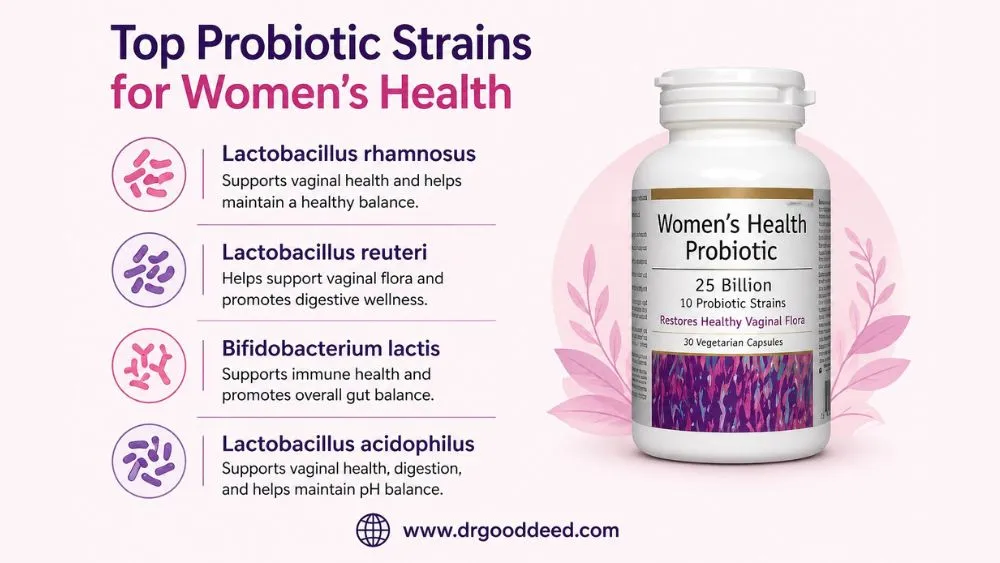
The top probiotic strains for women’s health are determined by peer-reviewed human trials in female subjects, not by ingredient list length. Most supplement labels include strains tested only in animal models or general adult populations. These four have direct published data in women.
Lactobacillus rhamnosus (Vaginal + Urinary Health)
L. rhamnosus GR-1 reduced bacterial vaginosis (BV) recurrence by 37% in a study published in FEMS Immunology & Medical Microbiology. It produces lactic acid that keeps vaginal pH below 4.5, which kills Gardnerella vaginalis and blocks common urinary pathogens from colonizing.
Lactobacillus reuteri (Immune + Gut Support)
L. reuteri RC-14 produces reuterin, a natural broad-spectrum antimicrobial compound. Paired with L. rhamnosus GR-1, this combination reduced BV and yeast infection recurrence better than single-strain products, per research in the Canadian Journal of Microbiology.
Bifidobacterium lactis (Digestion and Bloating Relief)
B. lactis Bl-04 improves carbohydrate fermentation in the colon, reducing gas at its source. Women taking it reported 40% less bloating after 4 weeks in a randomized controlled trial from Alimentary Pharmacology & Therapeutics.
Lactobacillus acidophilus (Microbial Balance)
L. acidophilus NCFM competes with harmful bacteria for attachment sites on the gut wall. After antibiotic use, it reduced antibiotic-associated diarrhea by 50% in women, per a meta-analysis in JAMA Internal Medicine.
Strains matter more than brand names. Two products labeled “women’s probiotic” with different strain codes produce different biological results. That distinction gets almost no attention on most supplement sites.
Why Women Need Specific Probiotics
The best probiotics for women target biology that general formulas are not built for. Two separate microbiomes, a hormonally responsive gut, and distinct life stages all create needs that standard products miss.
Differences in Gut and Vaginal Microbiome
A healthy vaginal microbiome is Lactobacillus-dominant. This is specific to women. Antibiotic use, pH changes, or hormonal fluctuations reduce Lactobacillus populations and allow Candida or Gardnerella to expand. The female gut also has a transit time roughly 13 hours longer than the male gut, which changes where probiotic bacteria establish and how well they colonize.
Hormonal Changes Affecting Gut Health
Hormonal changes affecting gut health operate through estrogen and progesterone receptors embedded directly in the gut lining. When estrogen drops, gut motility slows. When progesterone rises during the luteal phase or pregnancy, it relaxes smooth muscle in the digestive tract and slows down stool transit. The gut and the hormonal system function as connected networks, not separate ones.
Impact of Menstruation, Pregnancy, and Menopause
During menstruation, prostaglandins trigger gut contractions that cause cramping and loose stools. Probiotics during pregnancy, the microbiome shifts toward increased caloric absorption, worsening constipation and GERD. During menopause, estrogen decline reduces intestinal mucus production and lowers microbial diversity. Each phase creates a measurably different gut environment.
Key Benefits of Probiotics for Women
Improved Digestion and Reduced Bloating
B. lactis and L. acidophilus together improve fermentation efficiency, reducing the gas that causes abdominal bloating. Women with IBS who took a multi-strain probiotic reported 42% improvement in bloating in an 8-week trial published in Gut Microbes.
Better Immune Function
About 70% of immune activity originates in gut-associated lymphoid tissue. L. rhamnosus GG, the world’s most researched probiotic strain, shortened upper respiratory infection duration by 2 days in women in a placebo-controlled trial from Annals of Family Medicine.
Hormonal Balance Support
The gut contains a bacterial community called the estrobolome. It controls how much estrogen re-enters the bloodstream after liver processing. Women researching probiotics for hormonal imbalance symptoms often miss this pathway entirely. An imbalanced estrobolome recirculates excess estrogen, which connects to endometriosis and PCOS. Lactobacillus and Bifidobacterium supplementation directly supports estrobolome function.
Skin and Mood Benefits
A 2022 study in JAMA Dermatology found women with inflammatory acne had significantly lower gut microbial diversity than acne-free controls. Lactobacillus supplementation for 12 weeks reduced inflammatory acne lesions by 32%. On mood, L. rhamnosus reduces anxiety through GABA receptor modulation in the gut-brain axis, confirmed by Bravo et al. in PNAS (2011).
Probiotics for Hormonal Imbalance Symptoms
Probiotics for hormonal imbalance symptoms work through the estrobolome, not by directly raising or lowering hormone output. Results build over weeks, not days.
Gut-Hormone Connection (Estrogen Metabolism)
Beta-glucuronidase is an enzyme produced by certain gut bacteria that controls how much estrogen recirculates after liver processing. High activity of this enzyme, common in low-diversity microbiomes, drives elevated circulating estrogen. Lactobacillus and Bifidobacterium supplementation reduces this enzyme’s activity, allowing the liver to clear estrogen more efficiently.
PMS and Mood-Related Symptoms
Women with PMS show measurably lower Lactobacillus levels in gut and vaginal microbiome samples. A 2019 crossover trial found L. rhamnosus combined with B. longum reduced mood-related PMS symptoms by 29% in one full menstrual cycle.
Menopause-Related Digestive Changes
Hormonal changes affecting gut health intensify during menopause. Estrogen decline reduces intestinal mucus production, slowing bowel transit and increasing bloating frequency. Bifidobacterium longum BB536 improved bowel frequency in postmenopausal women in a trial from World Journal of Gastroenterology.
Probiotics for Urinary Tract Health
Probiotics for urinary tract health are one of the most evidence-backed applications in women’s health and one of the least covered in mainstream supplement content.
Preventing Harmful Bacteria Growth
L. crispatus produces hydrogen peroxide and lactic acid in the vaginal environment. Both compounds kill E. coli, which is responsible for 85% of UTIs in women. When L. crispatus populations drop, that chemical barrier is gone.
Supporting Vaginal Microbiome Balance
Antibiotics for UTIs eliminate protective Lactobacillus alongside harmful bacteria, creating a recurrence cycle. The urogenital tract loses its biological defense and reinfection follows within weeks. Probiotics with L. rhamnosus GR-1 and L. reuteri RC-14 restore Lactobacillus dominance and break that cycle.
Reducing Risk of Recurrent UTIs
A 2006 RCT in Clinical Infectious Diseases found women taking L. rhamnosus GR-1 and L. reuteri RC-14 had a 73% reduction in UTI recurrence over 12 months versus placebo. This remains the most cited trial for probiotics for urinary tract health, specifically in female subjects.
How to Choose the Best Probiotics for Women
The best probiotics for women require four specific checks before purchasing.
CFU Count (10-50 Billion Recommended)
Clinical trials for women’s health use doses in the 10-50 billion CFU range. Going above 100 billion CFU does not improve outcomes and sometimes causes initial digestive discomfort in sensitive individuals.
Multi-Strain vs. Targeted Formulas
Multi-strain products suit general gut and immune maintenance. Targeted dual-strain formulas, specifically L. rhamnosus GR-1 with L. reuteri RC-14, suit UTI prevention and vaginal microbiome restoration. The concern determines the formula, not the other way around.
Shelf-Stable vs. Refrigerated
Refrigeration extends shelf life. It does not guarantee survival through stomach acid. Enteric-coated or nested capsule delivery systems protect bacteria during digestion far more reliably than temperature storage alone.
Clinical Evidence and Quality
Look for specific strain designations after the species name: GR-1, NCFM, Bl-04. Avoid proprietary blends that hide individual CFU counts. NSF International and USP certifications confirm independent quality verification. The top probiotic strains for women’s health are all publicly documented; any product using them should list the codes transparently.
The best time to take probiotics for women is 30 minutes before the first meal of the day. Stomach acid is lower before eating, which improves bacterial survival into the intestines where colonization actually happens.
When to See a Doctor
The best probiotics for women support prevention and microbiome recovery. They are not a treatment for active infections. Active BV, confirmed yeast infections, or clinical UTIs require medical evaluation first. Probiotics become relevant after appropriate treatment, for prevention and recovery, not in place of it.
Women who are immunocompromised, pregnant with complications, or on immunosuppressant medications should consult a physician before starting any probiotic supplement.
FAQs
What are the best probiotics for women’s health?
The best probiotics for women contain L. rhamnosus GR-1 and L. reuteri RC-14 for vaginal and urinary health, plus B. lactis Bl-04 for digestion. In the US, Jarrow Fem-Dophilus and Seed DS-01 list their clinical strain codes and carry independent third-party quality verification.
Which probiotic strains are best for women?
The top probiotic strains for women’s health with published female-subject trial data are L. rhamnosus GR-1, L. reuteri RC-14, B. lactis Bl-04, and L. acidophilus NCFM. Each targets a different function: vaginal health, urinary protection, digestion, and gut microbial balance after antibiotic disruption.
Do probiotics help with hormonal imbalance symptoms?
Yes. Probiotics for hormonal imbalance symptoms reduce beta-glucuronidase enzyme activity in the gut, which lowers excess estrogen recirculation. A 2019 crossover trial found L. rhamnosus combined with B. longum reduced mood-related PMS symptoms by 29% within one menstrual cycle.
Can probiotics improve urinary tract health?
Yes. Probiotics for urinary tract health containing L. rhamnosus GR-1 and L. reuteri RC-14 reduced UTI recurrence by 73% over 12 months in a 2006 clinical trial. They restore vaginal Lactobacillus populations that physically block E. coli from adhering to the urinary tract wall.
What is the best time to take probiotics for women?
The best time to take probiotics is 30 minutes before a meal. Stomach acid peaks during and after eating. Taking probiotics before food exposes them to lower acid levels, significantly improving bacterial survival in the small intestine and colon.
How do hormonal changes affect gut health?
Hormonal changes affecting gut health operate through estrogen and progesterone receptors in the gut lining. Estrogen drop slows motility. Progesterone rise relaxes gut muscle and causes constipation. Menstrual prostaglandins trigger contractions and loose stools. Each hormonal shift produces documented, measurable changes in bowel function.
Are probiotics safe for daily use?
Yes. Daily probiotic use at 10-50 billion CFU is safe for healthy adults. Mild gas or bloating in the first 5-7 days is a normal microbiome adjustment response, not an adverse effect. Immunocompromised individuals should get physician clearance before starting.
How long do probiotics take to work for women?
Digestion and bloating improvements appear within 2-4 weeks. Vaginal and urinary health changes show up at 4-8 weeks based on clinical trial timelines. Hormonal and skin benefits require 8-12 weeks because they operate through the slower estrobolome and gut-skin pathways.
Can probiotics help with bloating and digestion?
Yes. B. lactis Bl-04 reduced bloating in women by 40% after 4 weeks in a published RCT. The best probiotics for women for digestive concerns should pair B. lactis with L. acidophilus NCFM. Together, they reduce colonic gas production more effectively than either strain alone.