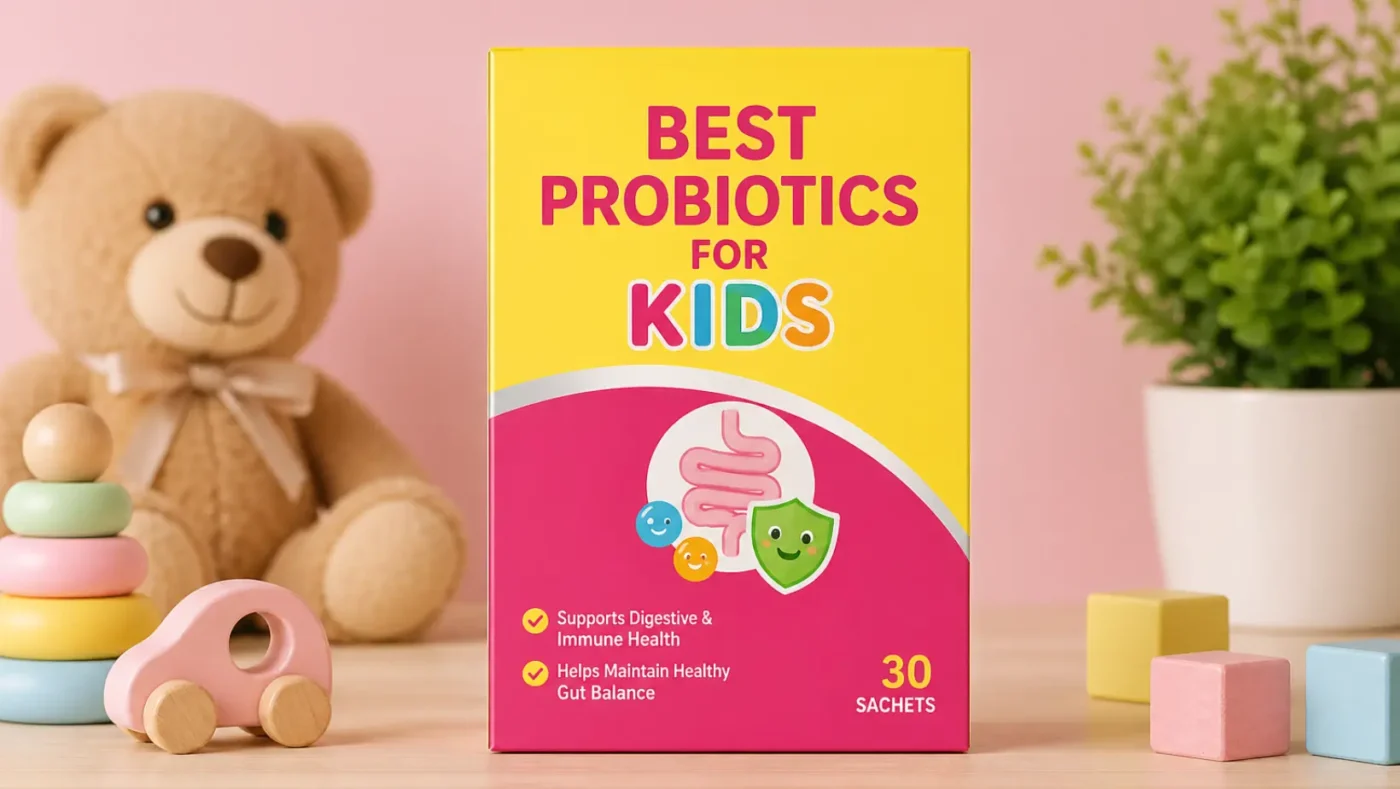

The best probiotics for kids are clinically tested bacterial strains that support digestion, immune function, and gut microbiome development in children aged 6 months through 12 years.
A 2020 systematic review in Pediatrics confirmed that Lactobacillus rhamnosus GG and Bifidobacterium lactis BB-12 are the two strains with the strongest pediatric safety record across published randomized controlled trials.
In the US, approximately 1 in 3 children experiences recurrent digestive complaints including constipation, bloating, and probiotic-related diarrhea, per the American Academy of Pediatrics. Strain selection, age-appropriate dosing, and delivery format determine whether a probiotic works for a child or does nothing at all.
Safe Probiotic Strains for Children
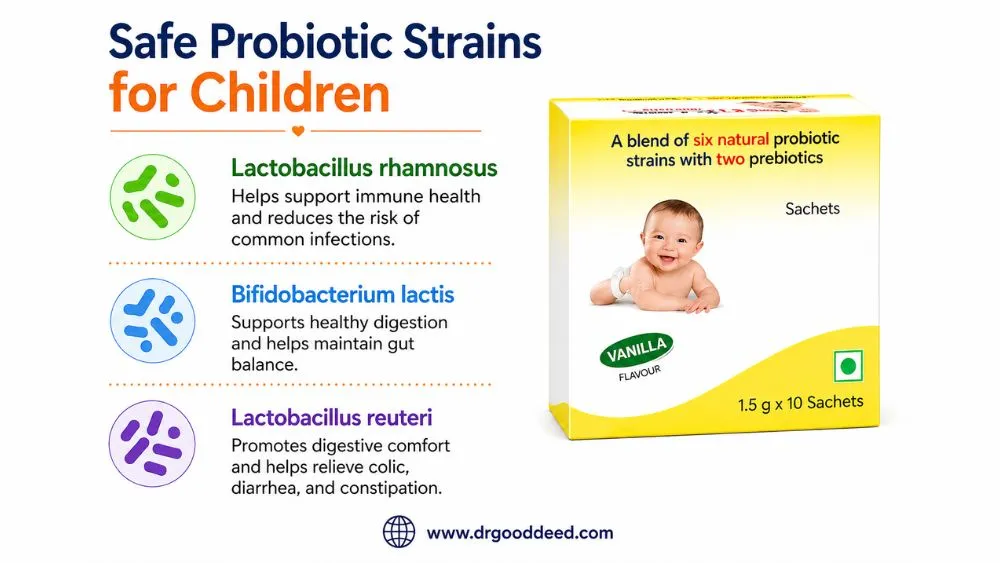
Safe probiotic strains for children are confirmed through randomized controlled trials specifically conducted in pediatric populations. Adult strain data does not automatically transfer to children. The strains below have published safety and efficacy data in children.
Lactobacillus rhamnosus (Immunity + Digestion)
L. rhamnosus GG is the most researched probiotic strain in pediatric medicine globally. A meta-analysis in Lancet covering 6 randomized trials found it reduced antibiotic-associated diarrhea in children by 72% compared to placebo. It is safe from infancy through adolescence and appears in products including Culturelle Kids, which lists strain code GG on the label.
Bifidobacterium lactis (Constipation Relief)
B. lactis BB-12 increased bowel movement frequency in constipated children from 3.4 to 5.3 times per week in a double-blind trial published in the Journal of Pediatric Gastroenterology and Nutrition. This strain also reduces intestinal permeability, which lowers systemic inflammation markers in children with gut-related immune issues.
Lactobacillus reuteri (Gut Balance and Colic Support)
L. reuteri DSM 17938 is the only probiotic strain with direct evidence for infant colic reduction. A 2014 meta-analysis in Pediatrics found it reduced daily crying time in breastfed infants with colic by an average of 49 minutes per day by week 3 of supplementation. It also supports intestinal motility in toddlers with slow gut transit.
Strain codes are not interchangeable. L. rhamnosus GG and L. rhamnosus GR-1 are different bacteria with different clinical applications. A children’s probiotic listing only “Lactobacillus rhamnosus” without a code cannot be evaluated for pediatric safety or effectiveness.
Benefits of Probiotics for Kids Health
The benefits of probiotics for kids health are well-documented across four specific areas in pediatric clinical research. These are not general wellness claims.
Improved Digestion and Reduced Bloating
Children with functional abdominal pain, a diagnosis affecting roughly 20% of US school-aged children, showed 52% reduction in pain episodes after 8 weeks on L. rhamnosus GG in a randomized trial from JAMA Pediatrics. The strain reduces gut hypersensitivity by lowering local inflammatory cytokines in the colon lining.
Stronger Immune System
Children in US daycare settings experience an average of 8-10 upper respiratory infections per year. L. rhamnosus GG supplementation for 6 months reduced daycare-related respiratory infections by 30% and cut the need for antibiotic prescriptions by 17% in a Finnish study of 571 children published in BMJ.
Better Gut Microbiome Balance
The pediatric gut microbiome reaches near-adult composition by age 3. Antibiotic exposure before age 3 disrupts this development and raises long-term asthma and allergy risk. Bifidobacterium supplementation after antibiotic courses restores microbial diversity faster, typically within 4 weeks versus 8-12 weeks without supplementation, per research in Cell Host & Microbe.
Reduced Risk of Infections
Probiotics for immunity in kids reduce rotavirus-related diarrhea severity and duration. A WHO-backed analysis of 34 trials found L. rhamnosus GG cut rotavirus diarrhea duration by 1.1 days and reduced hospitalization risk by 25% in children under 5.
Probiotics for Kids Constipation Relief
Probiotics for kids constipation relief address one of the most common pediatric digestive complaints in the US, affecting approximately 3% of all pediatric office visits, per the American College of Gastroenterology.
Improving Bowel Movement Frequency
B. lactis BB-12 at 10 billion CFU daily increased stool frequency from 3.4 to 5.3 per week in constipated children aged 3-16 in a controlled trial. Results were measurable at 2 weeks and statistically significant at 4 weeks of daily use.
Softening Stool Consistency
Probiotic bacteria produce short-chain fatty acids (SCFAs) during fermentation in the colon. SCFAs draw water into the stool, softening consistency without triggering urgency or cramping. This mechanism is different from laxatives and does not cause dependence.
Supporting Gut Motility
L. reuteri DSM 17938 increased colonic transit speed in children with functional constipation by modulating serotonin signaling in the gut wall. Serotonin controls the wave-like muscle contractions that move stool through the colon. Children in the L. reuteri trial group had measurably faster transit times after 4 weeks compared to the placebo group.
How to Choose Probiotics for Kids
To choose probiotics for kids correctly requires four specific checks that most product comparison guides skip entirely.
Age-Appropriate Formulation
Products labeled for infants (0-12 months), toddlers (1-3 years), and children (3-12 years) differ in CFU count, strain selection, and delivery method. Using an adult formulation for a toddler can cause temporary bloating and discomfort. Infant formulations are specifically tested for safety in pre-weaned and newly weaned gut environments.
CFU Count (5-10 Billion Typical Range)
Clinical trials for pediatric digestive conditions use 5-10 billion CFU per dose for children over 3 years. Infants receive 1-3 billion CFU. Products exceeding 20 billion CFU for children have no additional clinical benefit and carry a higher risk of temporary gas or bloating in smaller bodies.
Powder, Chewable, or Liquid Forms
- Powders and sachets: Best for infants and toddlers. Mix into breast milk, formula, or soft food at room temperature, not hot liquid, which kills live bacteria.
- Chewable tablets: Appropriate from age 3. Culturelle Kids Chewables and Garden of Life Dr. Formulated Kids are two US products with confirmed strain codes.
- Liquid probiotics: Convenient for children who refuse powders. BioGaia Protectis Drops, containing L. reuteri DSM 17938, is the most researched liquid pediatric probiotic available in US pharmacies.
Clinically Tested Strains
The label must list a specific strain code after the species name. GG, BB-12, DSM 17938 are examples. Avoid proprietary blends that group multiple strains under a single unlisted CFU count.
Best Forms of Probiotics for Kids
The best probiotics for kids come in three delivery formats, each with a different application based on age and the child’s ability to swallow or chew.
Powders and Sachets
Powders dissolve easily and deliver bacteria without binding agents or sweeteners. Florastor Kids (containing Saccharomyces boulardii CNCM I-745) and Culturelle Baby Grow + Thrive are two US powder options sold at major pharmacy chains. Mix into room-temperature liquid only.
Chewable Tablets
Chewable tablets work for children who can chew safely, typically age 3 and above. The chewing process does not destroy probiotic bacteria because the bacteria survive the mouth environment. Stomach acid is the main survival challenge, not the chewing process.
Liquid Probiotics
Liquid formats allow precise dosing for infants. BioGaia Protectis Drops deliver 100 million CFU of L. reuteri DSM 17938 per 5 drops. This dose is lower than tablet forms but matches the clinical dose used in infant colic and diarrhea trials.
Common Mistakes Parents Make
Parents choosing the best probiotics for kids frequently make errors that eliminate the product’s effectiveness before the child even benefits.
- Mixing probiotic powder into hot food or hot formula above 115°F, which kills all live bacteria before ingestion
- Giving probiotics at the same time as antibiotic doses, which eliminates live bacteria before gut colonization; separate them by at least 2 hours
- Selecting gummy probiotic products, which almost universally contain heat-processed bacteria with no verified live culture count at time of consumption
- Buying products without strain codes and assuming brand reputation equals clinical evidence
- Stopping supplementation after 1 week because no immediate change is visible; pediatric trials show measurable results at 2-4 weeks minimum
When Probiotics May Not Be Enough
The best probiotics for kids support functional gut health. They do not treat diagnosed conditions that require medical intervention. Probiotics for kids constipation relief address functional constipation caused by diet, microbiome imbalance, or antibiotic disruption. They do not address constipation from Hirschsprung’s disease, hypothyroidism, or spinal abnormalities.
Probiotics for immunity in kids reduce infection frequency in otherwise healthy children. They are not a substitute for vaccination schedules or medical treatment during active serious illness. If a child’s immune suppression results from a primary immunodeficiency, organ transplant, or chemotherapy, live bacterial supplements require physician approval before use.
When to See a Doctor
Contact a physician if a child shows any of these symptoms regardless of probiotic use.
- Blood in stool or black tarry stools
- Vomiting that does not resolve within 24 hours alongside diarrhea
- Fever above 102°F with abdominal pain
- Weight loss or failure to gain weight on expected growth curves
- No bowel movement for more than 5 days despite dietary changes
These are not resolved by choosing the best probiotics for kids. They require clinical evaluation first.
FAQs
What are the best probiotics for kids?
The best probiotics for kids with published pediatric trial data are Culturelle Kids (containing L. rhamnosus GG), BioGaia Protectis Drops (L. reuteri DSM 17938 for infants), and Garden of Life Dr. Formulated Kids (B. lactis BB-12). All three list specific strain codes and carry third-party quality verification available at US pharmacies.
Are probiotics safe for children?
Yes. A 2020 systematic review in Pediatrics covering 57 randomized controlled trials found L. rhamnosus GG and B. lactis BB-12 caused no serious adverse events in children from infancy through age 12. Mild gas or bloating in the first 5-7 days is a normal adjustment, not a safety concern.
Which probiotic strains are safe for kids?
Safe probiotic strains for children with the strongest evidence are L. rhamnosus GG (digestion, immunity, antibiotic diarrhea), B. lactis BB-12 (constipation), and L. reuteri DSM 17938 (colic, gut motility). These three strains appear in over 100 combined published pediatric trials.
Do probiotics help with constipation in kids?
Yes. Probiotics for kids constipation relief containing B. lactis BB-12 at 10 billion CFU increased bowel movement frequency from 3.4 to 5.3 per week in constipated children in a published double-blind trial. Results appeared at 2 weeks and strengthened at 4 weeks of daily use.
Can probiotics improve immunity in kids?
Yes. Probiotics for immunity in kids containing L. rhamnosus GG reduced respiratory infections in daycare children by 30% and cut antibiotic prescriptions by 17% over 6 months in a 571-child randomized trial published in BMJ. This is the largest pediatric immune trial on record for a single probiotic strain.
How to choose probiotics for kids?
To choose probiotics for kids correctly, confirm a strain code (GG, BB-12, DSM 17938) on the label; select 5-10 billion CFU for children over 3; choose format based on age (drops for infants, powder for toddlers, chewables from age 3); and verify NSF or USP third-party certification.
What is the best time to give probiotics to kids?
Give probiotics 30 minutes before the first meal of the day. Stomach acid is lowest before eating, which improves bacterial survival into the intestines. For antibiotic-related use, give the probiotic dose at least 2 hours after the antibiotic dose, not at the same time.
Are probiotic foods safe for children?
Yes. Plain yogurt with Live & Active Cultures seal and kefir are safe for children from age 1. These deliver L. acidophilus and B. lactis at 1-10 billion CFU per serving. Fermented foods like raw sauerkraut and kimchi are safe from age 2 but carry high sodium content, so limit portion sizes in toddlers.
How long do probiotics take to work in kids?
Colic improvement with L. reuteri DSM 17938 appears within 7-14 days in infants. Constipation relief with B. lactis BB-12 is measurable at 2 weeks. Immune and digestive benefits from L. rhamnosus GG build over 4-8 weeks of daily use. No probiotic for children produces results in under one week.
When should I consult a doctor before giving probiotics?
Consult a doctor before starting the best probiotics for kids if the child is immunocompromised, has a central venous catheter, is recovering from surgery, or has a diagnosed gastrointestinal disease like Crohn’s or celiac. In these cases, live bacterial supplements require individual clinical clearance before any use.