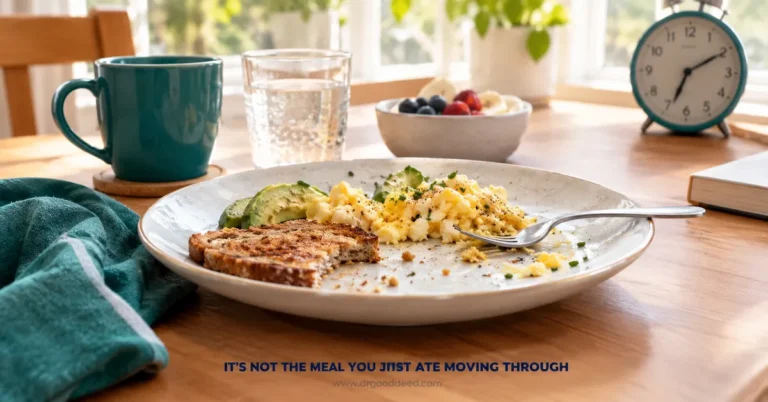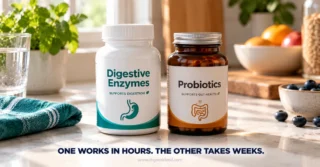

Picking the best digestive enzymes for bloating and gas depends on which food is actually triggering your symptoms. Lactase can help when lactose is the problem, while alpha-galactosidase may help digest certain carbohydrates in beans and other gas-producing foods; broader enzyme blends are not automatically better.
Before reaching for a supplement, it helps to understand signs of digestive problems that point to a food-specific enzyme gap versus something that needs medical evaluation.
Key Takeaways
- Different enzymes break down different nutrients, so the best digestive enzymes for bloating and gas depend on your specific trigger food, not a generic all-purpose blend.
- Enzyme potency should be measured in FCC activity units since two products with identical weights can have very different real-world strength.
- Digestive enzymes and simethicone solve different problems. Enzymes break down food; simethicone only collapses gas bubbles already formed.
- Choose products that clearly state the specific enzymes and their doses, and use them with the foods they are intended to digest.
- Bloating that is severe, worsening, or paired with weight loss may point to SIBO or pancreatic insufficiency rather than a simple enzyme shortfall.
How Do Digestive Enzymes Actually Work?
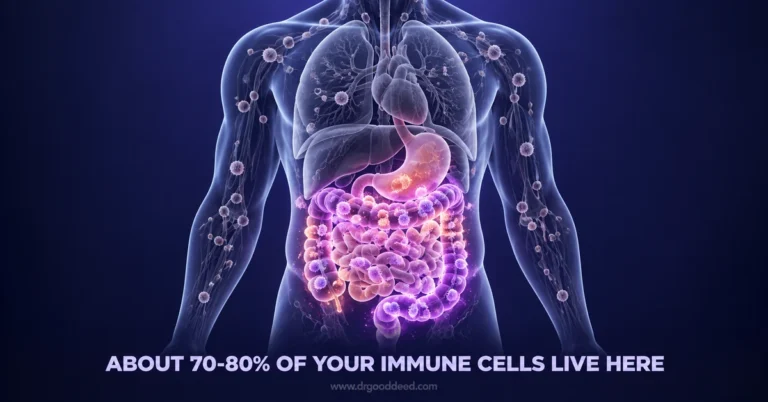
Digestive enzymes are proteins your pancreas, stomach, and small intestine produce to break food into absorbable pieces. Each enzyme targets one nutrient class: carbohydrates, proteins, or fats.
When a specific enzyme runs low, undigested food particles reach the colon, where gut bacteria ferment them and release gas, causing most of the bloating.
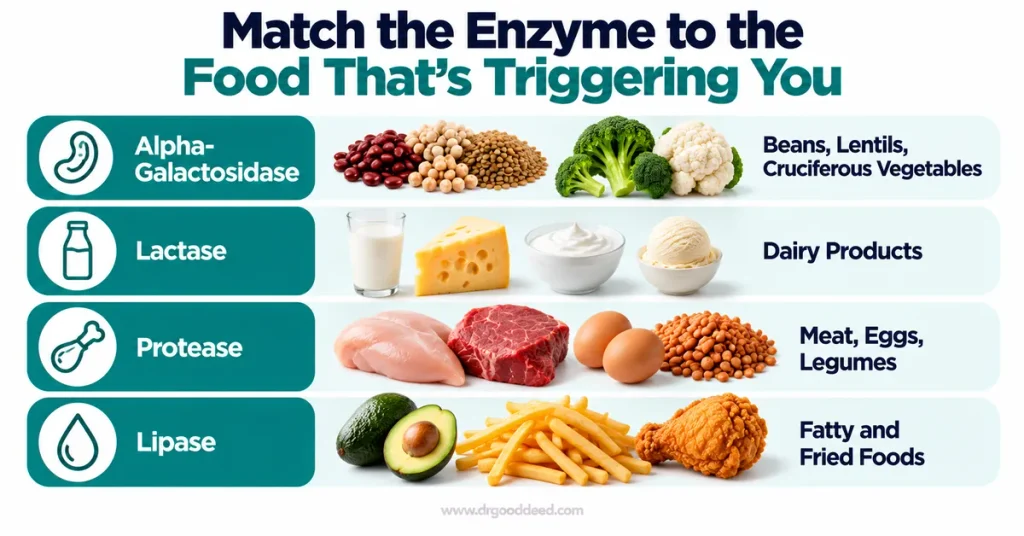
| Enzyme | Target Food Group | Digestive Sign It Addresses |
| Alpha-galactosidase | Beans, lentils, cruciferous vegetables (broccoli, cabbage) | Gas and bloating from complex carbohydrates |
| Lactase | Dairy products | Gas, bloating, and loose stools from lactose |
| Protease | Meat, eggs, dairy, legumes | Heaviness or bloating after high-protein meals |
| Lipase | Fatty and fried foods | Bloating, discomfort, or loose stools after fatty meals |
Pairing an enzyme strategy with proven home remedies for bloating, like smaller portions and slower eating, often works better than relying on a supplement alone.
Which Enzyme Do You Need for Your Trigger Food?
Match your symptom timing to the food group you ate beforehand. This narrows the enzyme category before you even read a supplement label.
Alpha-Galactosidase: Beans and Cruciferous Vegetables
Beans, lentils, chickpeas, cabbage, and broccoli contain raffinose and stachyose, complex sugars your small intestine cannot break down on its own.
- Alpha-galactosidase, the active ingredient in products like Beano, splits these sugars before bacteria in the colon can ferment them.
- Taking it with the first bite of a bean or cruciferous-heavy meal works better than taking it afterward, since it needs to act before fermentation starts.
Lactase: Dairy and Lactose
People with lactose intolerance lack enough lactase to break down the sugar in milk, cheese, and ice cream.
- Undigested lactose pulls water into the intestine and ferments rapidly, causing gas, cramping, and loose stools within thirty minutes to two hours.
- Lactase supplements taken right before dairy consumption replace the missing enzyme directly at the point of digestion.
Lipase and Protease: Fats and Protein
Fried foods, fatty cuts of meat, and rich sauces require lipase to break down fat molecules efficiently.
- Protease handles protein from meat, eggs, dairy, and legumes.
- A shortage of either can leave heavy, greasy residue in the gut, producing bloating, discomfort, or looser stools several hours after a rich meal.
What Should You Look for When Buying a Digestive Enzyme Supplement?
Two label details separate an effective product from a weak one: how the enzyme strength is measured, and whether the source matches your dietary needs.
Why FCC Activity Units Matter More Than Milligrams
FCC activity units, standardized by the Food Chemical Codex and the U.S. Pharmacopeia (USP), measure how much enzymatic work a supplement actually performs.
Two capsules can each weigh 200 milligrams yet have wildly different real-world potency if their FCC activity units differ. Look for lactase measured in ALU (acid lactase units), protease in HUT, and lipase in FIP units.
Plant-Based vs Animal-Based Enzymes: Does It Matter?
Plant-based and fungal-derived enzymes, often sourced from Aspergillus, tend to work across a broader pH range, meaning they stay active from the stomach through the small intestine.
Animal-derived enzymes, like pancreatin from porcine sources, closely mimic what the human pancreas naturally produces and are often prescribed for diagnosed pancreatic insufficiency.
For situational bloating from specific foods, plant-based digestive enzyme supplements are usually sufficient and suit vegetarian or vegan diets.
Digestive Enzymes vs Simethicone: What’s the Difference?
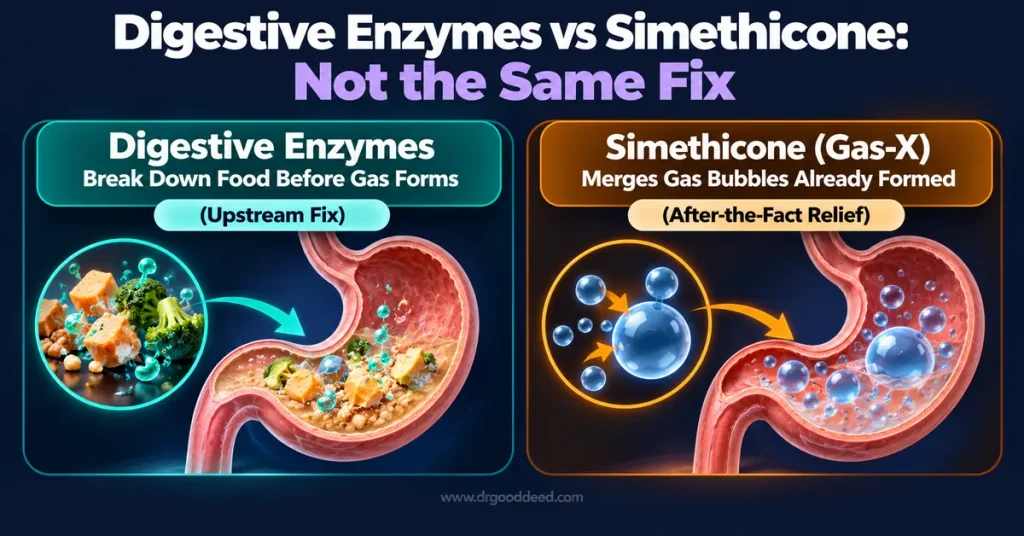
Simethicone, sold as Gas-X or Phazyme, does not digest anything. It is an anti-foaming agent that merges small gas bubbles already trapped in the gut into larger ones, making them easier to pass or burp out.
Digestive enzymes work upstream of that process, breaking down food before bacteria ferment it into gas in the first place. If bloating happens predictably after specific foods, an enzyme addresses the cause. If gas already feels trapped and uncomfortable, simethicone offers faster short-term relief.
Could It Be SIBO or Pancreatic Insufficiency Instead of a Simple Deficiency?
Persistent, severe, or worsening symptoms deserve a closer look. Small intestinal bacterial overgrowth (SIBO) causes bacteria to ferment food too early in the digestive tract, producing bloating that an over-the-counter enzyme cannot fix.
Pancreatic insufficiency, where the pancreas no longer produces enough digestive enzymes on its own, causes greasy stools, unintentional weight loss, and upper abdominal pain that requires prescription-strength enzyme replacement.
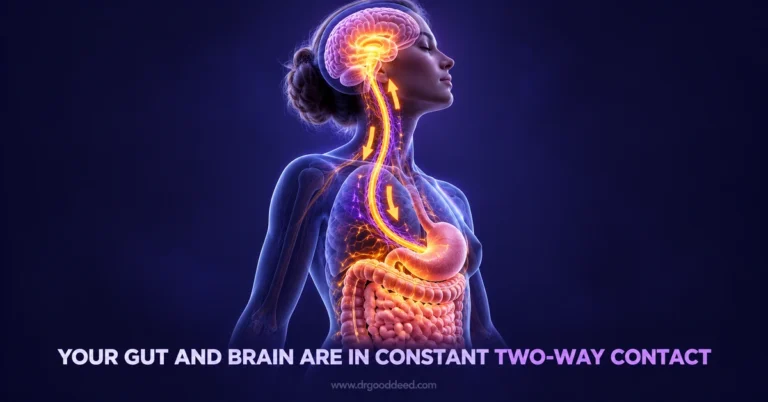
Low stomach acid tied to poor vagal tone is another overlooked cause; the vagus nerve and gut health connection explains why some people digest food slowly even without a diagnosed pancreatic insufficiency.
Should You Take Enzymes Daily or Just With Trigger Meals?
Daily use makes sense mainly for people with a diagnosed, ongoing deficiency, such as confirmed lactose intolerance or pancreatic insufficiency. Taking alpha-galactosidase or lactase daily when you rarely eat the trigger food offers no added benefit and adds unnecessary cost.
Pro Tip: Timing matters as much as the enzyme itself. Alpha-galactosidase and lactase work best taken with the very first bite of a trigger food because they need to act before bacterial fermentation begins in the colon.
When Should You See a Doctor?
See a doctor if bloating persists despite using the correct enzyme for your trigger food, or if it comes with any of these signs:
- Unintentional weight loss alongside ongoing bloating and gas
- Greasy, floating, or foul-smelling stools that suggest fat malabsorption
- Persistent upper abdominal pain, especially after eating
- Bloating that wakes you up at night or worsens progressively
- Blood in stool, persistent vomiting, or new symptoms after age 50
These signs move beyond what the best digestive enzymes for bloating and gas can resolve on their own and may indicate SIBO, pancreatic insufficiency, or another condition needing formal testing.
FAQs
Can you take digestive enzymes every day long-term?
Yes, for diagnosed conditions like pancreatic insufficiency. For occasional trigger-food bloating, situational use before meals works better and costs less than daily dosing.
Do digestive enzymes interact with medications?
Rarely, but pancreatic enzyme replacement drugs can interact with acid reducers and diabetes medications. Check with a pharmacist before combining prescription-strength enzymes with other drugs.
Can digestive enzymes help with IBS specifically?
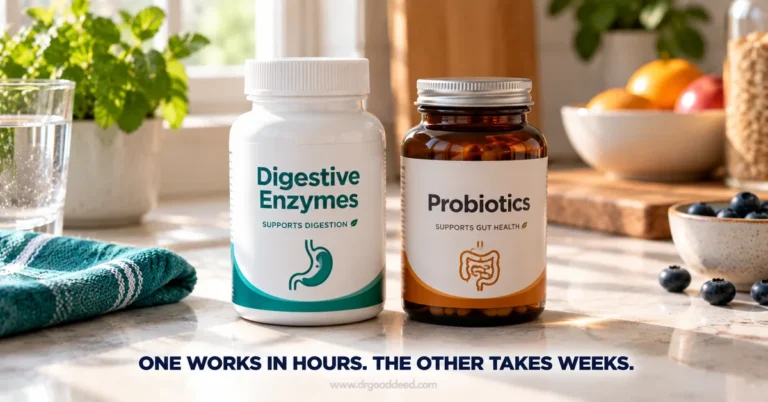
Sometimes, for enzyme-deficiency-driven bloating within IBS. Evidence is mixed overall, and comparing them against probiotics for bloating and gas is worth doing since mechanisms differ completely.
How quickly do digestive enzymes work?
Within 30 to 90 minutes for most people, since enzymes act during digestion itself. Alpha-galactosidase and lactase typically show results the same day they are taken correctly.
Can children take digestive enzyme supplements?
Only under pediatric guidance. Dosing differs significantly from adult formulations, and unsupervised use in children with undiagnosed digestive symptoms can mask a condition needing evaluation.
Sources
- National Institute of Diabetes and Digestive and Kidney Diseases (NIDDK): Digestive Enzymes link
- Mayo Clinic: Pancreatic Insufficiency and Enzyme Replacement Therapy link
- U.S. Pharmacopeia (USP): Food Chemical Codex Standards link
- American College of Gastroenterology (ACG): SIBO Guidelines link
- National Center for Biotechnology Information (NCBI/PubMed): Alpha-Galactosidase and Carbohydrate Fermentation link
- American Gastroenterological Association (AGA): Bloating and Gas link
Medical Disclaimer: This article is for general information only and is not medical advice. It does not replace a diagnosis, treatment plan, or guidance from a qualified healthcare professional. Always talk to your doctor about your own symptoms and before starting, stopping, or changing any treatment. If you think you may be having a medical emergency, call 911 or go to your nearest emergency room.