
Medically reviewed by Dr Chandril Chugh, Neurology
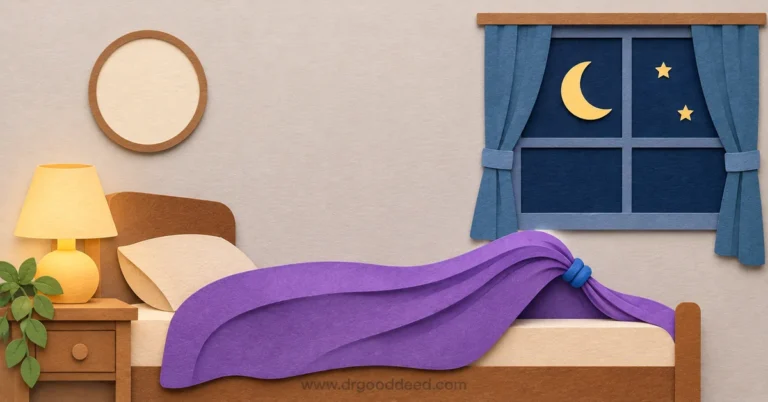
Sleep paralysis is a brief state of being awake but unable to move or speak, which happens as you fall asleep or wake up. You may feel someone is in the room, sense pressure on your chest, or experience a floating sensation. Although the experience can be frightening, it usually passes on its own. Understanding why it happens, what triggers it, and when to seek medical care can help you feel more in control.
Key Takeaways
- Sleep paralysis is a brief, usually harmless state where your mind wakes up before your body, leaving you unable to move or speak temporarily.
- REM sleep causes temporary muscle relaxation that can continue briefly after you regain awareness.
- Sleep deprivation, irregular sleep schedules, stress, and sleeping on your back may increase the likelihood of episodes.
- During an episode, focus on slow breathing, remind yourself it will pass, and try moving one finger or toe.
- Seek medical advice for frequent or distressing episodes. Call 911 if weakness, numbness, or speech problems persist after you are fully awake.
What Sleep Paralysis Feels Like
Sleep paralysis leaves you conscious but temporarily unable to move your body or speak. You may recognize your surroundings but feel trapped, frightened, or unsure whether you are awake or dreaming.
The experience can include hallucinations, which are vivid sensory experiences that feel real even though they are generated by the brain during the transition between sleep and wakefulness.
Common experiences include:
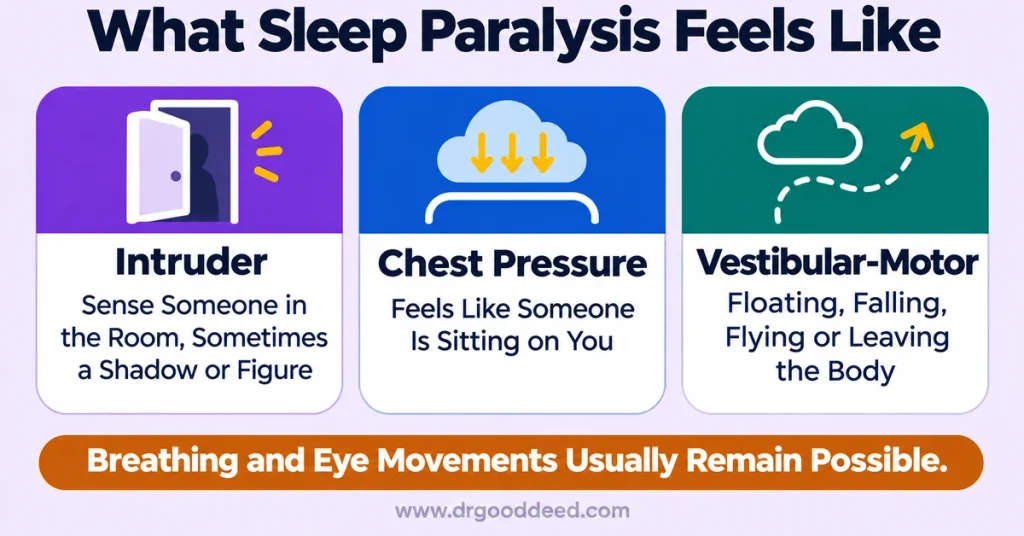
- Intruder hallucinations: You sense that someone or something threatening is in the room, sometimes appearing as a shadow or figure.
- Chest pressure hallucinations: You feel pressure on your chest or believe someone is sitting on you. This is sometimes called an incubus hallucination.
- Vestibular-motor hallucinations: You feel as though you are floating, falling, flying, or leaving your body.
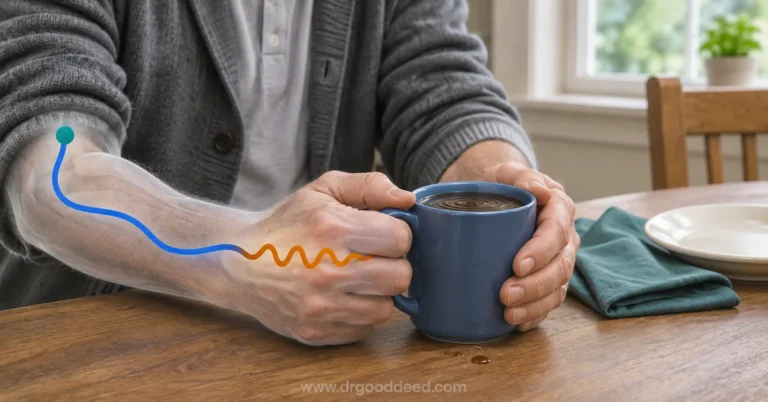
Other symptoms may include fear, difficulty speaking, and an inability to move your arms or legs. Breathing and eye movements usually remain possible, even when the rest of your body feels frozen.
An episode often lasts seconds to a minute or two, according to MedlinePlus (2025), although the Sleep Foundation (2025) reports that some episodes can last up to 20 minutes. Movement generally returns without treatment.
Some people also hear a loud bang or other sudden sound while falling asleep. This may be a separate sleep phenomenon called exploding head syndrome.
Why Sleep Paralysis Happens
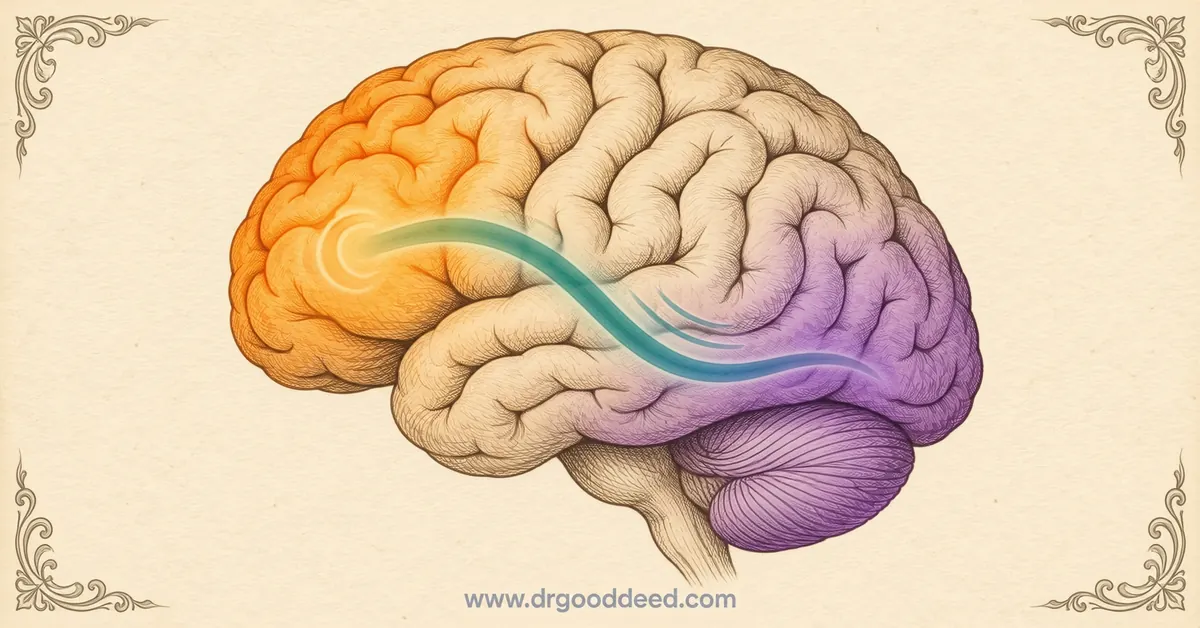
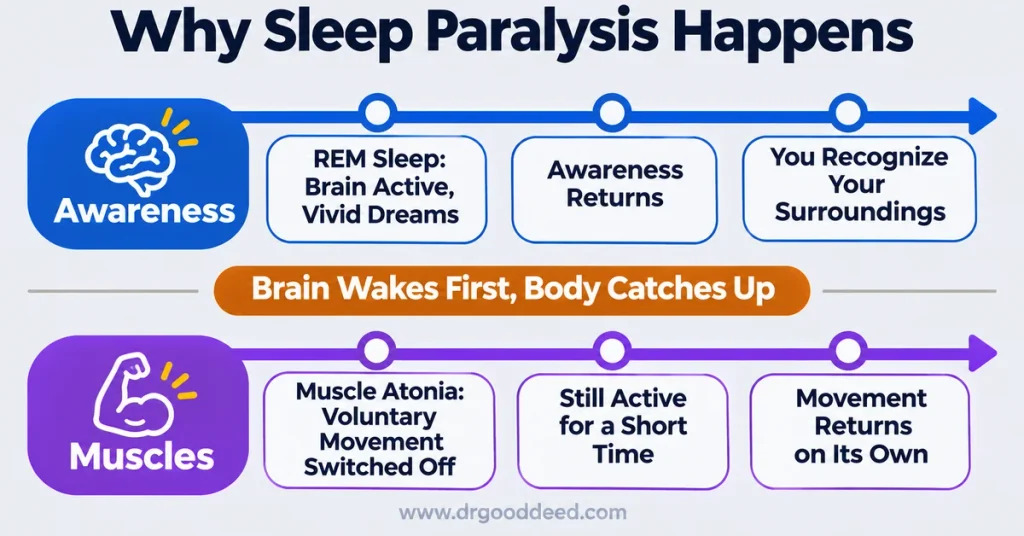
Sleep paralysis happens when your brain wakes up during rapid eye movement (REM) sleep while the muscle relaxation that prevents you from acting out dreams is still active.
During REM sleep, your brain is active, and dreams are often vivid. Your body temporarily switches off most voluntary muscle movement, a process called muscle atonia. This prevents you from physically acting out your dreams.
Sometimes, awareness returns before this muscle relaxation ends. You can recognize your surroundings but remain unable to move or speak for a short time. Dream-related sensations may continue into this waking state, explaining why some people see a figure, feel chest pressure, or sense movement around them.
Sleep paralysis is classified as a parasomnia, a group of sleep-related experiences or behaviors that occur during sleep or transitions between sleep and wakefulness. It does not mean that your body is permanently losing its ability to move.
What Causes Sleep Paralysis?
There is no single confirmed cause of sleep paralysis, but disrupted sleep patterns, insufficient sleep, stress, and certain sleep disorders can increase the likelihood of episodes.
Factors associated with sleep paralysis include:
- Sleep deprivation: Not getting enough sleep can disrupt the normal sleep cycle.
- Irregular sleep schedules: Shift work, frequent schedule changes, and inconsistent bedtimes may interfere with sleep timing.
- Stress and anxiety: Emotional stress may contribute to disturbed sleep and more frequent episodes.
- Sleeping on your back: Episodes are associated with the supine sleeping position in some people.
- Sleep disorders: Narcolepsy and obstructive sleep apnea may be associated with sleep paralysis.
- Other contributing factors: Some medications and substance use may affect sleep patterns. Discuss possible contributors with a healthcare professional rather than stopping prescribed treatment yourself.
If you frequently experience waking up at 3 AM, difficulty falling asleep again, or persistent sleep disruption, addressing these patterns may help reduce episodes.
Sleep paralysis can also occur without another medical condition. Having an episode does not automatically mean you have narcolepsy or another serious sleep disorder.
How Common Is Sleep Paralysis?
Sleep paralysis is relatively common, but prevalence estimates vary depending on the population studied and how researchers define and measure episodes.
Published sources report different estimates, so these figures should not be treated as directly interchangeable.
| Source | Reported prevalence | Population or context |
| Bhalerao et al., Cureus review (2024) | 7.6% | Lifetime prevalence in a pooled analysis of 35 studies involving 36,533 people |
| Bhalerao et al., Cureus review (2024) | About 28% | Students |
| Bhalerao et al., Cureus review (2024) | About 32% | Psychiatric patient populations |
| Sleep Foundation (2025) | About 20% | General estimate cited by the publication |
| Cleveland Clinic (2024) | About 30% | General estimate cited by the publication |
These figures differ because studies use different samples, survey methods, definitions, and observation periods. Lifetime prevalence measures whether someone has ever experienced sleep paralysis, while estimates from selected student or psychiatric populations reflect groups that may have different risk profiles.
The figures therefore describe different kinds of evidence rather than a single agreed-upon rate. A person may experience one episode in their lifetime, while another may have recurring episodes.
Is Sleep Paralysis Dangerous?
No, an ordinary episode of sleep paralysis is generally harmless and resolves on its own. However, repeated episodes can cause distress, disrupt sleep, and sometimes indicate an underlying sleep disorder.
Sleep paralysis does not usually cause physical injury, and the frightening sensations do not mean that a supernatural presence is actually in the room. The experience reflects a temporary overlap between dreaming and waking.
Keep these distinctions in mind:
- Occasional episodes: A brief episode without other concerning symptoms usually does not require emergency treatment.
- Recurrent episodes: Frequent episodes may lead to fear of sleeping, anxiety at bedtime, or ongoing sleep deprivation.
- Possible underlying conditions: Persistent daytime sleepiness, sudden muscle weakness, or symptoms of sleep-disordered breathing warrant medical evaluation.
- Emergency warning signs: Weakness or numbness that persists after you are fully awake, especially on one side of the body, or new difficulty speaking requires immediate assessment.
Sleep paralysis is different from a stroke. If you experience symptoms that could indicate a stroke, review what a stroke feels like only after arranging urgent care. Call 911 immediately for sudden weakness, numbness, or speech difficulty, even if the symptoms improve.
How to Stop and Prevent Sleep Paralysis
You may not be able to end sleep paralysis immediately, but staying calm and protecting your sleep schedule can help you manage episodes and potentially reduce their frequency.
What to do during an episode:
- Remind yourself what is happening: Tell yourself that this is a temporary sleep-related experience and that movement should return.
- Focus on breathing: Breathe slowly and steadily rather than struggling or panicking.
- Try a small movement: Focus on moving one finger or toe, then gradually try another small movement if possible.
- Reduce your fear response: Remind yourself that the images or sensations can occur during the transition between dreaming and waking.
- Allow the episode to pass: Avoid forcing your whole body to move; the episode usually resolves without intervention.
These techniques may help you cope with the experience, but they do not guarantee that an episode will end immediately.
How to reduce future episodes:
- Maintain a regular sleep schedule: Go to bed and wake up at consistent times, including on weekends.
- Get enough sleep: Most adults need at least seven hours of sleep each night (CDC, 2024), although individual needs vary.
- Create a relaxing bedtime routine: Reduce stimulating activities and give yourself time to wind down.
- Review your sleep environment: Keep your bedroom comfortable, quiet, and dark.
- Consider your sleeping position: If episodes occur frequently while sleeping on your back, try sleeping on your side.
- Address ongoing stress: Relaxation techniques and professional support may help when stress or anxiety affects your sleep.
- Seek help for persistent sleep problems: A healthcare professional can assess possible contributing conditions and discuss appropriate treatment.
Treatment is often unnecessary for isolated sleep paralysis. If episodes are linked to sleep deprivation or another underlying condition, addressing that problem may reduce their frequency.
When to See a Doctor About Sleep Paralysis
See a primary care doctor or sleep specialist if sleep paralysis happens frequently, causes significant distress, makes you afraid to sleep, or occurs alongside persistent daytime sleepiness or sudden muscle weakness.
A healthcare professional may ask about your sleep schedule, episode frequency, medications, stress levels, and other symptoms. Depending on your history, further assessment may include:
- Sleep history and symptom review: To identify sleep disruption, recurring episodes, and possible contributing factors.
- Evaluation for narcolepsy: Particularly if you have overwhelming daytime sleepiness or cataplexy, which is sudden muscle weakness triggered by emotions such as laughter.
- Sleep testing: An overnight sleep study or a multiple sleep latency test may be considered if symptoms suggest narcolepsy or another sleep disorder. Testing is not routinely necessary for every isolated episode.
Not everyone with sleep paralysis has narcolepsy. However, persistent daytime sleepiness and sudden emotion-triggered muscle weakness are reasons to seek further evaluation.
If you are sleeping too much and still feel excessively tired during the day, discuss these symptoms with a healthcare professional.
If fear or emotional distress becomes overwhelming, call or text 988 in the United States for immediate crisis support. Sleep paralysis itself is not an emergency, but if weakness, numbness, or trouble speaking is still present once you are fully awake, call 911.
Frequently Asked Questions
Can You Have Sleep Paralysis While Fully Awake?
Not in the usual sense. Sleep paralysis occurs as you fall asleep or wake up, although you may feel completely awake and aware of your surroundings. If you cannot move or speak outside these sleep transitions, or the symptoms persist after you are fully awake, seek medical evaluation.
What Is the Sleep Paralysis Demon?
A sleep paralysis demon is a figure or threatening presence experienced during an intruder hallucination. It can feel vivid and real because dream-related activity overlaps with waking awareness. The figure is a hallucination, not evidence of a supernatural presence, and it cannot physically touch or harm you.
Can You Open Your Eyes During Sleep Paralysis?
Often, yes. Eye movements and breathing usually remain possible during sleep paralysis, even though your arms, legs, and other voluntary muscles may feel temporarily immobile. Experiences vary, so some people may feel unable to open their eyes. The episode generally resolves on its own. This is different from sleeping with your eyes open, where the eyelids do not fully close.
Is Isolated Sleep Paralysis a Sign of Narcolepsy?
Not usually. Isolated sleep paralysis means episodes occur without narcolepsy or another associated sleep disorder. Narcolepsy can include sleep paralysis, but not everyone who experiences it has narcolepsy. Seek assessment if you also have excessive daytime sleepiness or sudden muscle weakness triggered by emotions.
Is It Safe to Wake Someone Having Sleep Paralysis?
Yes. Speaking gently to the person or lightly touching them may help end the episode. Avoid startling them unnecessarily. Sleep paralysis is temporary, and the person usually regains movement without medical intervention. If they remain weak, confused, or unable to speak after fully waking, call 911.
Sources
- Cureus, Recent insights into sleep paralysis: mechanisms and management (2024). link
- MedlinePlus, Sleep paralysis (2025). link
- Sleep Foundation, Sleep paralysis: causes, symptoms, and treatment (2025). link
- Cleveland Clinic, Sleep paralysis (2024). link
- Centers for Disease Control and Prevention, Signs and symptoms of stroke (2026). link
- Centers for Disease Control and Prevention, About sleep (2024). link
- Mayo Clinic, Narcolepsy: causes (2024). link
Medical Disclaimer: This article is for general information only and is not medical advice. It does not replace a diagnosis, treatment plan, or guidance from a qualified healthcare professional. Always talk to your doctor about your own symptoms and before starting, stopping, or changing any treatment. If you think you may be having a medical emergency, call 911 or go to your nearest emergency room.