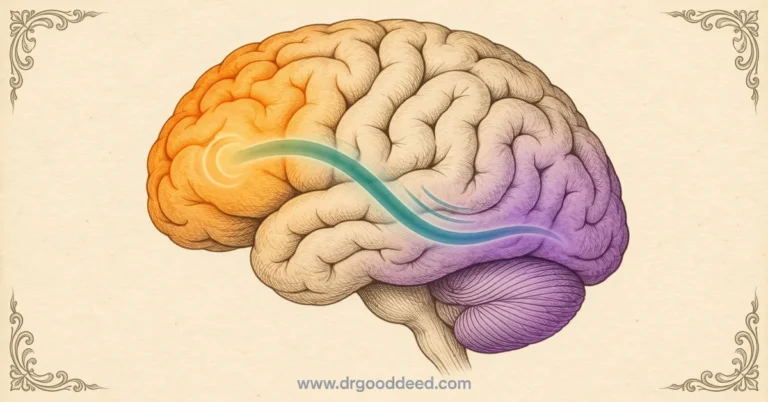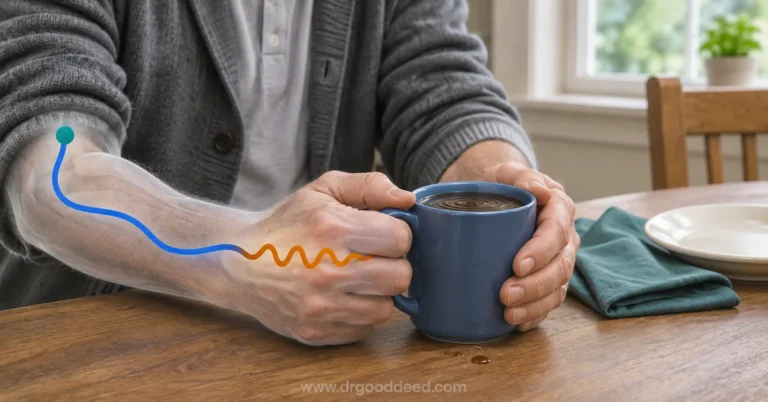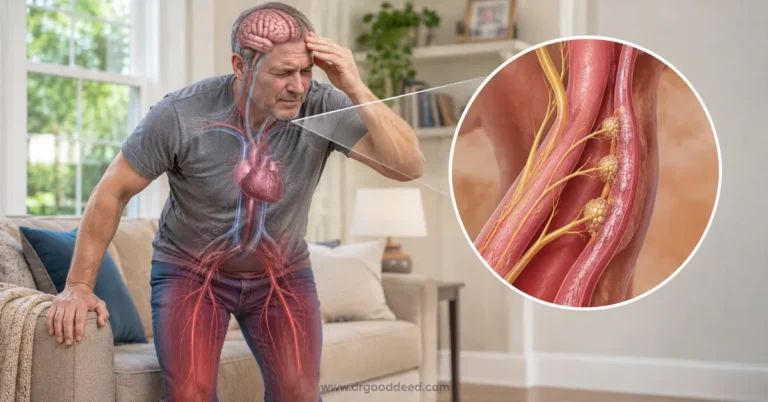

Leg cramps at night are sudden, painful tightenings of a muscle, most often the calf, and in most people they have no single clear cause. Your foot is pointing at the ceiling, the calf feels like a clenched fist, and all you can do is grab it and wait. Below: why this happens, how to get out of one quickly, what might help keep the next one away, and the leg symptoms that only look like cramps.
Key Takeaways
- Leg cramps at night are common, usually harmless calf muscle spasms linked to tired muscles and nerve signals, not usually to a serious illness.
- Causes: Most cases have no known cause, but tired muscles, long sitting, low fluids, age and pregnancy all raise the odds.
- Stopping one: Pull your toes toward your shin, rub the calf, then stand up and walk it off.
- Prevention: Stretch your calf briefly before bed, and move more during the day.
- Not a cramp: Swelling, warmth or redness in the calf needs same-day care. Breathlessness or chest pain means 911.
What Night Leg Cramps Feel Like
A night leg cramp is a sudden, hard, painful tightening, usually in the calf, that can wake you and leave the muscle sore for a while afterward. Sometimes the knot shows right through the skin.
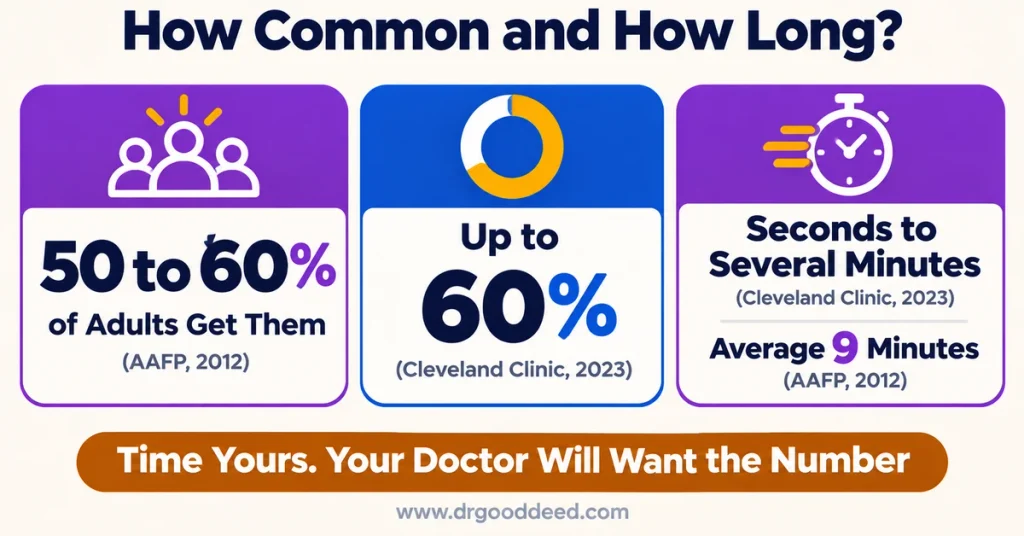
- Length is where the sources split. Cleveland Clinic (2023) says seconds to several minutes, while the American Family Physician review (2012) says nine minutes on average. Time yours. That’s the number your doctor will want.
- Plenty of adults get them: 50 to 60% by the AAFP (2012) count, up to 60% by Cleveland Clinic (2023), though Cleveland never says where its figure comes from.
- Older age and pregnancy raise the odds, according to Mayo Clinic.
Cramps break up sleep, but if you keep waking up at 3 AM without one, other causes are likely.
Common Causes of Leg Cramps at Night
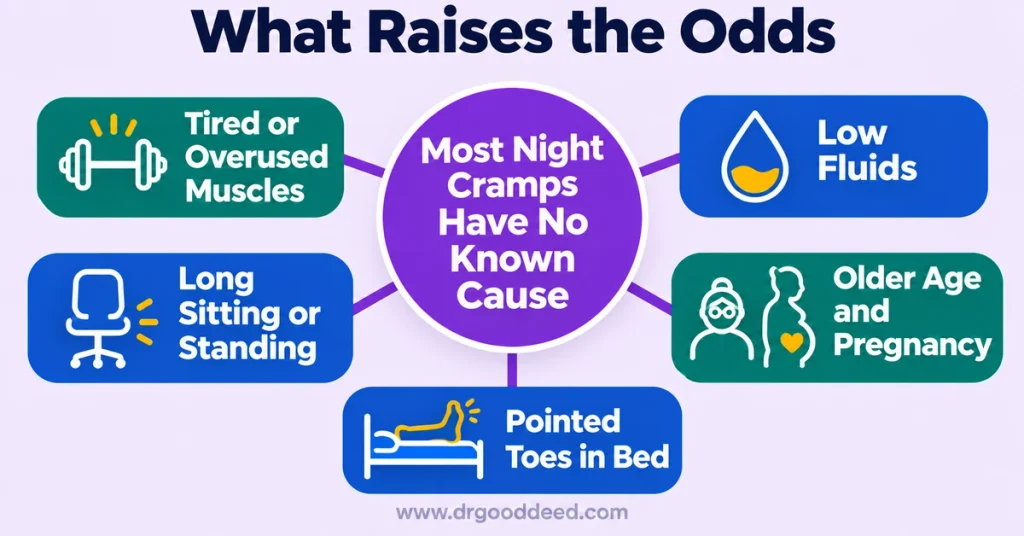
Leg cramps at night most often follow tired or overused muscles, long hours of sitting, low fluid intake, older age or pregnancy, though many have no known cause.
- Start with the unsatisfying answer. Mayo says most night cramps have no known cause, and tired muscles plus misbehaving nerves are the best explanation on offer.
- Muscle fatigue is the easy one to picture: a long day on your feet, then a calf that spasms at 2 a.m.
- Hours of sitting or standing in one position show up on both Mayo’s and Cleveland Clinic’s lists.
- Dehydration counts too. Hot nights drain fluid, and dehydration and sleep problems tend to show up together in summer.
- Older age and pregnancy both raise the risk. Cleveland Clinic (2023) says about 40% of pregnant people get cramps, with no source given.
- Pointed toes shorten the calf, and Cleveland Clinic and Banner Health both link that position to night cramps.
Health Conditions and Medicines Linked to Cramps
Frequent cramps can go with kidney, thyroid, nerve or circulation problems, and some medicines.
- What diseases start with leg cramps? It depends on what travels with them. Mayo’s list includes dialysis, diabetes, peripheral neuropathy and peripheral artery disease.
- MedlinePlus adds low sodium, potassium or calcium, kidney failure and hypothyroidism. Low minerals are one possible cause, not the standard one.
- Burning or numb feet alongside the cramps point toward neuropathy in feet symptoms worth getting checked.
- A few medicine classes show up as well, per Mayo: certain blood pressure, cholesterol, water and birth control medicines. Don’t stop any of them on your own. Ask whoever prescribed them.
How to Stop a Leg Cramp Fast
To stop leg cramps immediately, stretch the calf by pulling the toes toward the shin, then massage it and stand or walk. Cleveland Clinic and MedlinePlus both add heat while it’s cramping and ice afterward.
- Sit up or stand, and straighten the leg.
- Pull your toes toward your shin, or flex the foot. That’s the calf stretch. Hold it until the knot lets go.
- Rub the calf gently.
- Put weight on the leg and walk a few steps.
- Use heat while it’s tight. If it’s still sore later, ice it.
How to Prevent Leg Cramps at Night
To stop leg cramps at night, a short calf stretch before bed and more movement during the day are the most practical steps.
- Stretch your calf briefly before you get into bed.
- Move more in the daytime, especially if you sit a lot, and keep fluids going, since MedlinePlus (2024) counts dehydration among the causes.
- Loosen the sheets, and try sleeping with your toes up instead of pointed.
- One old malaria medicine was once tried for cramps. The AAFP (2012) says it isn’t advised anymore, and the FDA warned against it in 2010.
Pro Tip: Write down how long each cramp lasts and whether your toes were pointed when it hit. A few weeks of that gives a doctor far more than “I get cramps,” and it shows whether the 10-minute ER line ever applies to you.
Leg Cramp or Something Else?
A true cramp is a hard, visible knot that eases with stretching, and other leg problems feel and behave differently. A missed blood clot is the real danger, so here they are side by side.
| Problem | What it feels like | What gives it away | Where to go |
| Night leg cramp | Sudden hard knot in the calf, sore afterward | Eases with stretching | Primary care doctor if frequent |
| Restless legs syndrome | An urge to move the legs, not painful | Moving the legs brings relief | Primary care doctor |
| Blood clot (DVT) | Calf pain or cramping with swelling, warmth or color change | Swelling and warmth aren’t part of a simple cramp | Same-day care; breathlessness or chest pain is an emergency |
| Poor circulation | Calf pain or cramping when walking that eases with rest, from peripheral artery disease, which Mayo Clinic (2026) lists as a linked condition | Comes on with walking and eases with rest | Primary care doctor |
| Nerve pain | Burning or numb feet along with cramps, as in peripheral neuropathy | Feels different from a muscle knot | Primary care doctor or neurologist |
Read the table as tendencies, not a diagnosis. A doctor sorts these out. Numbness or tingling that comes and goes is a different problem, covered in why your leg falls asleep so easily.
Expert Insight: Getting this wrong only hurts in one direction. A clot mistaken for a cramp costs far more than a cramp mistaken for a clot, which is why swelling, warmth or color change in the calf deserves same-day attention even when the pain feels cramp-like (Mayo Clinic, 2022).
When to See a Doctor About Night Leg Cramps
See your primary care doctor if cramps are frequent, if they break up your sleep, or if they come with weakness. When to worry about leg cramps at night depends on what comes with them.
- Call a provider if cramps are severe or keep coming back. Expect questions first, and possibly blood tests.
- Calf pain with swelling, warmth, or redness needs same-day care.
- A cramp that lasts over 10 minutes or feels unbearable belongs in the ER. Mayo (2026) adds continuing severe cramps and toxin exposure.
- Cramps with weakness, or with muscle twitching all over the body, call for a neurologist.
Most leg cramps at night are harmless, but calf pain with swelling, warmth or redness needs same-day care, and sudden shortness of breath or chest pain means call 911.
Frequently Asked Questions
How Long Do Calf Cramps at Night Last?
Calf cramps at night usually ease within seconds to minutes, but sources differ on the average length, so note how long yours last. Cleveland Clinic (2023) says seconds to several minutes, while AAFP (2012) reports an average of nine minutes. Past 10 minutes, or if the pain is unbearable, go to the ER.
What Is Your Body Lacking When You Have Severe Leg Cramps?
Often nothing. No single deficiency explains most leg cramps at night, since Mayo Clinic (2026) says most have no known cause. Low sodium, potassium or calcium can contribute, and only a blood test shows whether electrolytes are involved. Severe cramps that keep happening need care.
What Drink Stops Leg Cramps?
No drink stops a leg cramp mid-spasm. Drinking fluids through the day helps prevent the dehydration-related kind, which MedlinePlus (2024) lists among the causes, but during a cramp the useful move is pulling the toes toward the shin and walking.
Why Are Leg Cramps Common in Pregnancy?
Pregnancy raises the risk of leg cramps at night, and Mayo Clinic (2026) lists it alongside older age as a known risk factor. Tell your OB if cramps are frequent, or if one calf swells or turns warm, since swelling and warmth are not part of a simple cramp.
Can Sleeping Position Cause Leg Cramps at Night?
Sleeping position may play a part in night cramps. Lying with the toes pointed keeps the calf short, so loose bedding and a toes-up position might help. The evidence is thin, so treat it as something to try, not a fix.
Sources
- American Family Physician (AAFP), Nocturnal Leg Cramps. link
- Mayo Clinic, Night leg cramps: Causes. link
- Cleveland Clinic, Leg Cramps. link
- MedlinePlus, Muscle cramps. link
- Mayo Clinic, Deep vein thrombosis (DVT). link
- Banner Health, Why Am I Getting Leg Cramps at Night? link
Medical Disclaimer: This article is for general information only and is not medical advice. It does not replace a diagnosis, treatment plan, or guidance from a qualified healthcare professional. Always talk to your doctor about your own symptoms and before starting, stopping, or changing any treatment. If you think you may be having a medical emergency, call 911 or go to your nearest emergency room.