
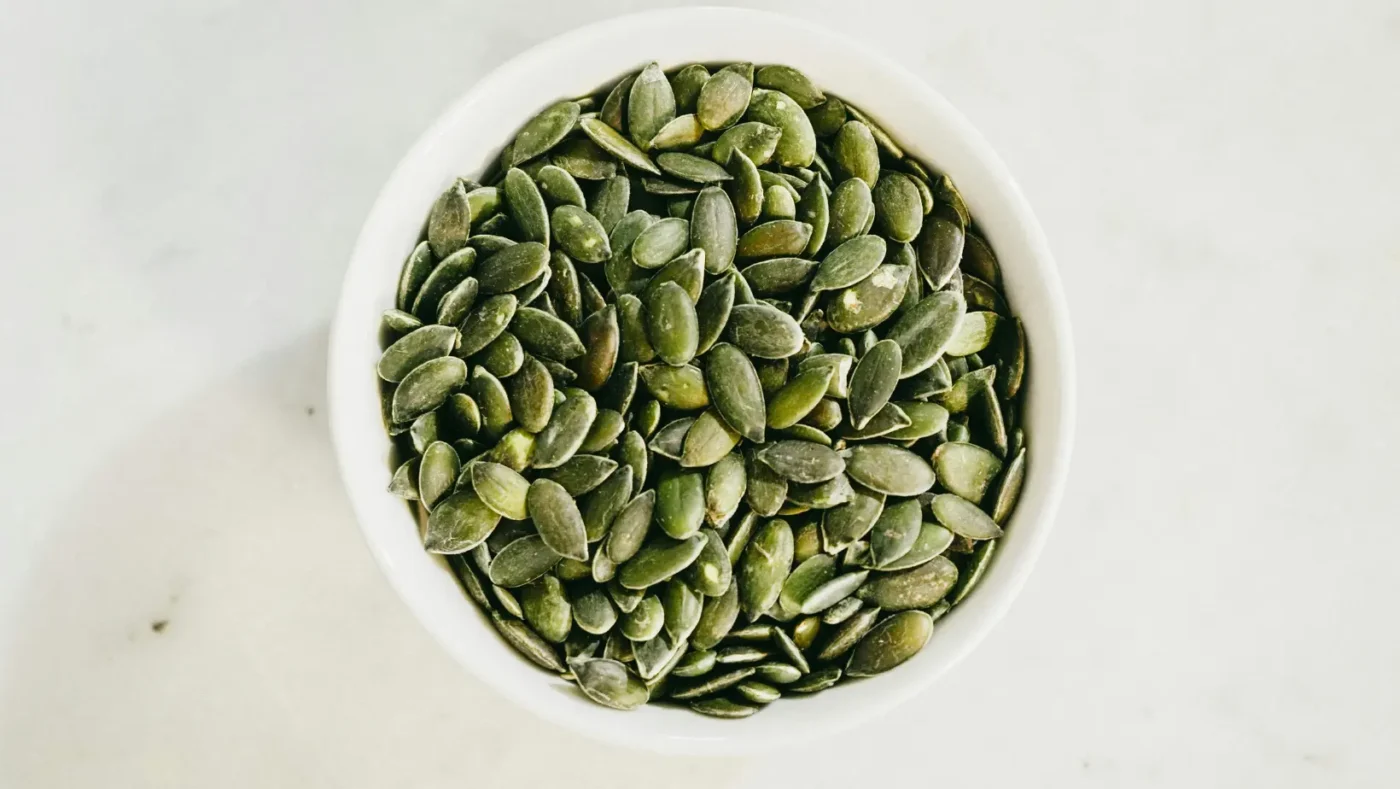

The health benefits of pumpkin seeds come from their high content of magnesium, zinc, healthy fats, and plant protein packed into one small, crunchy snack. Pumpkin seeds, also called pepitas, are the edible seeds found inside a pumpkin. People have eaten them for hundreds of years, and today nutrition experts call them a “nutrient-dense” food because a small handful gives you a big dose of vitamins and minerals compared to its low calorie count.
Whole pumpkin seeds still have their white outer shell, while pepitas are the shelled, olive-green seeds inside. Both come from pumpkin plants, but pepitas are softer to chew and are the type you usually find sold roasted or raw in stores. The whole seed has more fiber because of the shell, but pepitas are easier to eat by the handful.
A quarter cup gives you plant protein, iron, magnesium, zinc, and healthy unsaturated fats, along with antioxidants like vitamin E.
Health Benefits of Pumpkin Seeds
Pumpkin seeds support your heart, sleep, gut, bones, and immune system at the same time, which is unusual for a single snack food.
Support Heart Health
Pumpkin seeds for heart health work mainly through magnesium and healthy fats. Magnesium helps relax blood vessels, which supports normal blood pressure levels. Pumpkin seeds also contain plant compounds called phytosterols, which have a structure similar to cholesterol and may help lower how much cholesterol your gut absorbs from food.
The fat in pumpkin seeds is mostly unsaturated, the kind of fat linked to healthier cholesterol levels when it replaces saturated fat in your diet. This is one reason pumpkin seeds for heart health show up so often in heart-friendly eating plans, alongside foods like nuts, olive oil, and fatty fish.
Provide Plant-Based Protein
A quarter cup of pumpkin seeds has close to 9 grams of protein, which is high for a plant food this size. This makes pumpkin seeds useful for women’s health, especially for those who eat little or no meat and need extra iron and protein sources.
The seeds also carry a good amount of iron, a mineral many women need more of because of monthly blood loss. For pumpkin seeds for men’s health, the protein and zinc combination supports muscle repair after exercise and normal testosterone production, both of which depend on having enough zinc in the diet.
Support Better Sleep Quality
Pumpkin seeds for sleep benefits come from an amino acid called tryptophan, the same compound found in turkey that people blame for post-dinner sleepiness. Your body uses tryptophan to make serotonin, and serotonin gets converted into melatonin, the hormone that controls your sleep cycle.
Pumpkin seeds also contain magnesium, which calms the nervous system and may help muscles relax before bed. Eating a small handful of pumpkin seeds a few hours before sleep, paired with a small carbohydrate like a banana, may help your body use the tryptophan more effectively for pumpkin seeds for sleep support.
Promote Healthy Digestion
Pumpkin seeds for gut health center on fiber. A quarter cup of whole pumpkin seeds gives you around 2 grams of fiber, which feeds the good bacteria living in your gut. These bacteria break down fiber into short-chain fatty acids, compounds that keep the lining of your gut healthy and reduce inflammation.
Fiber also adds bulk to your stool, which helps keep bowel movements regular. For pumpkin seeds for gut health benefits, choosing whole seeds with the shell instead of pepitas gives you more fiber per serving, since the outer shell itself is a fiber source.
Provide Essential Minerals
Pumpkin seeds are one of the richest plant sources of magnesium, packing close to 40% of your daily need into just a quarter cup. This matters for pumpkin seeds for bone health, since magnesium works with calcium and vitamin D to keep bones strong and helps your body absorb calcium properly.
Zinc is another standout mineral, supporting wound healing, taste, and smell along with bone strength. There’s also early interest in pumpkin seeds for blood sugar control, since magnesium plays a role in how your body uses insulin, though pumpkin seeds should never replace prescribed diabetes treatment.
Support Immune Function
Pumpkin seeds for immunity benefits mostly trace back to zinc, a mineral your immune cells need to grow and function properly. Zinc deficiency is linked to weaker immune responses and slower healing from infections.
Pumpkin seeds also contain vitamin E and small amounts of iron, both of which support the cells that fight off germs. Adding a handful of seeds to your daily meals is a simple way to support pumpkin seeds for immunity without changing your whole diet.
Whole Pumpkin Seeds, Pepitas, Roasted or Pumpkin Seed Oil, Which Is Best?
The right form of pumpkin seed depends on what you want from it: more fiber, more convenience, or more healthy fat. Whole seeds, pepitas, roasted seeds, and pumpkin seed oil each offer a different piece of the same nutrition profile. The table below breaks down what each form gives you and where it falls short.
| Form | Benefits | Limitations |
| Whole seeds | More fiber from the shell | Harder to chew, tougher texture |
| Pepitas | Easier to eat, softer texture | Slightly less fiber than whole seeds |
| Dry roasted | Convenient, longer shelf life | Some heat-sensitive nutrients reduced |
| Pumpkin seed oil | Rich in healthy fats | No fiber or protein content |
If your main goal is digestion or pumpkin seeds for weight loss through fullness, whole seeds or raw pepitas are the better pick because fiber keeps you full longer. If you want a quick snack without much prep, dry roasted pepitas work well. Pumpkin seed oil is better used in cooking or dressings when you want the fat benefits without eating the whole seed.
How to Add Pumpkin Seeds to Your Diet
Pumpkin seeds fit into almost any meal without needing special recipes or cooking skills. You can eat them raw, roasted, ground into powder, or pressed into oil, and each method keeps most of the nutrition intact. Here’s how to work them into your day.
Eat Them as a Healthy Snack
A small handful of raw or roasted pumpkin seeds, about a quarter cup, makes an easy snack between meals. This portion gives you protein and healthy fat that digest slowly, which helps control hunger better than snacks high in refined sugar.
Add Them to Salads and Smoothies
Sprinkle pepitas over salads for crunch, or blend a spoonful into a smoothie for extra protein and pumpkin seeds for brain health support, since the zinc and omega-3 fats in the seeds play a role in normal brain function and memory. Ground pumpkin seed powder mixes smoothly into shakes without changing the taste much.
Include Them in Breakfast Foods
Stir pumpkin seeds into oatmeal, yogurt, or cereal for a simple protein boost in the morning. This is an easy way to support pumpkin seeds for brain health early in the day, since your brain uses steady fuel from protein and fat better than a sugar-only breakfast.
Choose the Right Portion Size
Stick to about one ounce, roughly a quarter cup, per serving. This portion gives you the mineral and protein benefits without piling on extra calories, since pumpkin seeds are calorie-dense despite their small size.
Things to Consider Before Eating Pumpkin Seeds
Pumpkin seeds are safe for most people, but a few things are worth knowing before you start eating them daily.
High Calorie Content
A quarter cup of pumpkin seeds has around 180 calories, mostly from fat. Eating large amounts without paying attention to portion size can add up quickly, working against goals like pumpkin seeds for weight loss if you’re not tracking how much you eat.
Added Salt in Packaged Varieties
Many store-bought roasted pumpkin seeds are coated in salt, which can be a problem if you’re watching your sodium intake for blood pressure reasons. Choosing raw or unsalted roasted seeds gives you the same nutrition without the extra sodium.
Possible Digestive Discomfort
Because pumpkin seeds are high in fiber and fat, eating too many at once may cause bloating or an upset stomach, especially if your body isn’t used to a high-fiber diet. Starting with a small portion and drinking enough water helps your gut adjust.
FAQs
What are the main health benefits of pumpkin seeds?
The health benefits of pumpkin seeds include better heart health from magnesium and healthy fats, stronger immunity from zinc, improved sleep from tryptophan, and better digestion from fiber, all in one small snack.
How many pumpkin seeds should I eat per day?
Most adults do well with about one ounce, or a quarter cup, daily. This portion delivers roughly 150 to 180 calories along with meaningful amounts of magnesium, zinc, and protein without excess calorie intake.
Are pumpkin seeds good for weight loss?
Yes. Pumpkin seeds for weight loss work through fiber and protein, which slow digestion and reduce hunger between meals, though portion control matters since the seeds are calorie-dense.
Are pumpkin seeds good for men’s health?
Yes. Pumpkin seeds for prostate health benefits come from zinc, a mineral concentrated in prostate tissue that supports normal prostate size and function as men age, based on current nutrition research.
Can you eat pumpkin seeds every day?
Yes, in moderation. A daily quarter-cup portion supports the health benefits of pumpkin seeds like heart and immune support, but larger daily amounts can add unwanted calories and sodium if seeds are salted.





2 Comments
Comments are closed.