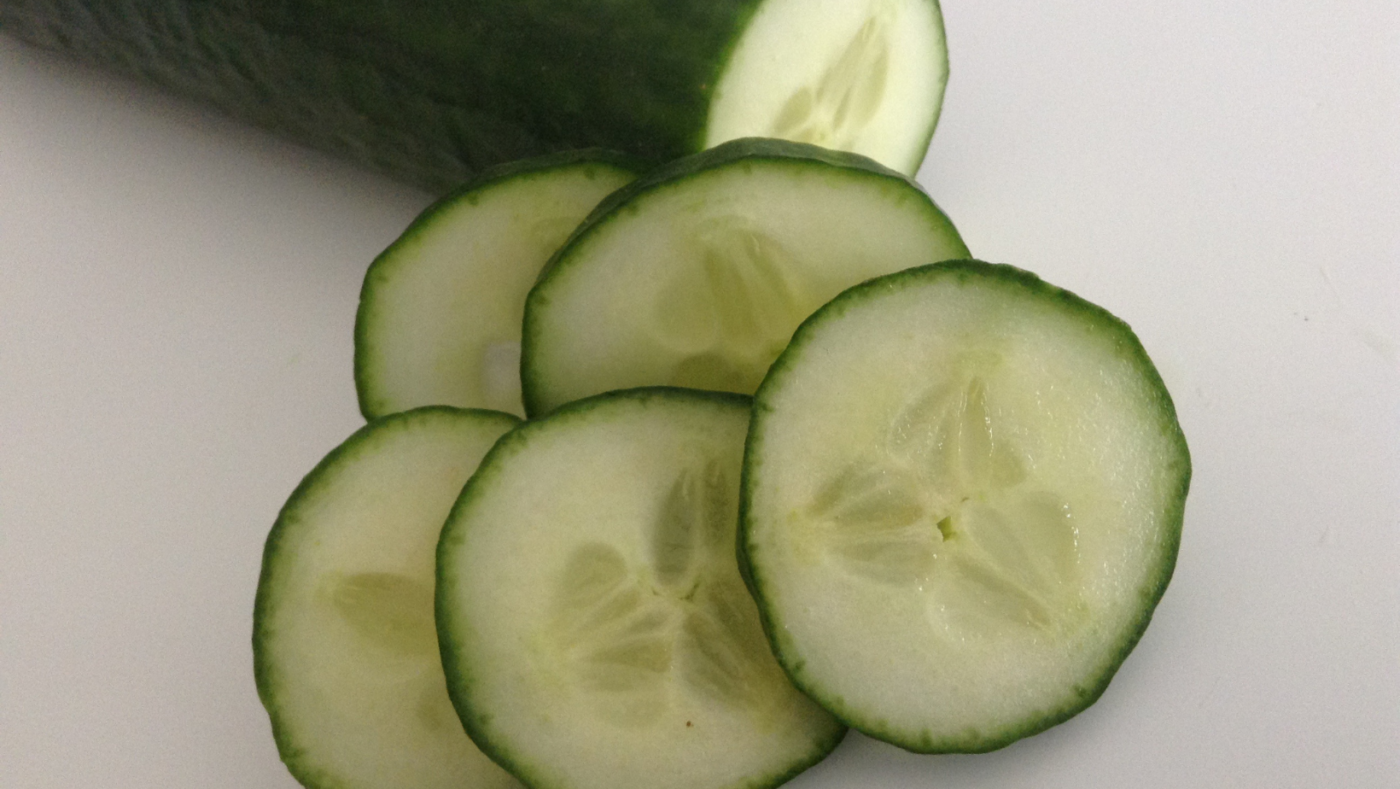

Cucumber is 95% water, and that single fact explains most of the health benefits of cucumber. A 100-gram serving has just 15 calories, 0.5 grams of fiber, and small but real amounts of vitamin K, vitamin C, and potassium. It is safe for most healthy adults to eat every day, and it fits almost any diet, from low-carb to plant-based.
Health Benefits of Cucumber
The health benefits of cucumber come from a rare mix of high water content, low calories, and a set of plant compounds you will not find explained clearly anywhere else. Below is what the science actually shows, not just what gets repeated on other sites.
Supports Hydration
Cucumber is about 95% water by weight, based on USDA data. That makes it one of the most water-dense foods you can eat, closer to drinking a glass of water than eating a typical vegetable. Cucumber hydration benefits show up because your body absorbs water from food more slowly than water from a glass, which means cucumber can help spread out fluid intake across the day instead of dumping it all at once.
This matters more than people think. On hot days, or after a workout, eating water-rich food alongside plain water helps you hold onto that fluid better, since food naturally comes with small amounts of sodium and potassium that help your body retain water instead of flushing it out fast.
Provides Antioxidants
Cucumber contains cucurbitacins, lignans, and flavonoids such as quercetin and kaempferol. These compounds are grouped as antioxidants because they neutralize free radicals, the unstable molecules that damage cells over time and contribute to chronic disease. A 2021 review in the International Journal of Molecular Sciences found that lignans, one of the main antioxidant groups in cucumber, show anti-inflammatory and antioxidant effects in lab and animal studies. A separate 2022 review in Current Medicinal Chemistry found similar anti-inflammatory and immune-modulating effects from cucurbitacins specifically.
None of this means cucumber cures disease. But it does mean the antioxidant content is backed by real, published research on the specific compounds cucumber contains.
Supports Digestive Health
Cucumber is a low-FODMAP food, meaning it is unlikely to trigger the bloating and gas that high-FODMAP vegetables can cause in people with irritable bowel syndrome. The skin holds most of the fiber, so eating cucumber with peel adds a small but useful amount of insoluble fiber, the type that adds bulk to stool and supports regular bowel movements.
Cucumber for digestion works best as part of a fiber-rich meal. One cup of sliced cucumber has under 1 gram of fiber, so pairing it with beans, whole grains, or leafy greens gives your gut more to work with.
May Help With Weight Management
Cucumber for weight loss works through a concept called energy density, not magic. Energy density means the number of calories per gram of food. Water has zero calories per gram, so foods that are mostly water, like cucumber, let you eat a large volume for very few calories. Research published in Nutrition Bulletin in 2017 confirmed that increasing water-rich foods in the diet lowers overall energy density and helps people eat less without feeling hungrier.
Cucumber alone will not cause weight loss. It is very low in protein and fiber, the two nutrients that keep you full longest. The real benefit shows up when you swap a calorie-dense side dish, like chips or crackers, for sliced cucumber. That swap cuts calories while keeping your plate full.
Supports Heart Health
Cucumber contains potassium, about 147 milligrams per 100 grams, which helps balance sodium levels and supports normal blood pressure. It is also virtually free of saturated fat and sodium, two things the American Heart Association recommends limiting for heart health. The fiber in cucumber peel, though modest, adds to your daily total, and higher fiber intake is linked to lower LDL cholesterol in multiple long-term studies.
Cucumber will not replace medication or a heart-healthy diet on its own. But swapping salty, fried snacks for cucumber slices removes sodium and saturated fat from your day, which adds up over weeks and months.
The Bioactive Compounds in Cucumber
| Compound | Where It’s Found | What Research Shows |
| Cucurbitacins | Skin and flesh, more concentrated near the stem | Anti-inflammatory and antioxidant activity in lab studies (Curr Med Chem, 2022) |
| Lignans (pinoresinol, lariciresinol) | Seeds and flesh | Antioxidant and hormone-related activity (Int J Mol Sci, 2022) |
| Flavonoids (quercetin, kaempferol, apigenin) | Skin | Free radical scavenging, tied to lower inflammation markers |
| Vitamin K | Skin and flesh | Supports blood clotting and bone mineral density |
| Silica | Skin | Traditionally linked to connective tissue support, though human trial data is limited |
Cucurbitacins are also what make some cucumbers taste bitter, especially near the stem end. That bitterness is a natural plant defense compound, and cutting off the stem end usually removes most of it.
Cucumber With Peel vs Peeled: Which Is Actually Healthier?
Peeled cucumber loses most of its fiber, a large share of its vitamin K, and nearly all of its flavonoids, since these concentrate in the skin. Peeling only helps in two situations: the cucumber is heavily waxed, or you have a digestive condition where your doctor has advised avoiding skins and seeds. For most healthy adults, eating the peel is the better choice nutritionally.
Wash the cucumber well under running water and scrub gently with a produce brush before eating it with the skin on. This removes surface wax, dirt, and much of the pesticide residue without stripping away the nutrients underneath.
Raw, Pickled, Juiced, or Infused: Which Form Offers the Most Nutrition?
Raw cucumber with the peel on keeps the most fiber, vitamin C, and antioxidants intact, since heat and processing break some of these down. Here is how the other common forms compare:
- Pickled cucumber keeps most of the vitamin K but loses vitamin C during processing, and the sodium content rises sharply because of the brine. A single pickle spear can carry over 300 milligrams of sodium.
- Juiced cucumber removes almost all the fiber, since fiber stays behind in the pulp. You keep the water content and some vitamin C, but you lose the digestive benefit entirely.
- Infused water (cucumber slices left in water) adds flavor and trace minerals but transfers very little of the actual nutrition, since most nutrients stay in the cucumber flesh rather than dissolving into water.
If your goal is nutrition, raw cucumber wins. If your goal is flavor or hydration variety, infused water and juicing both work, just do not expect the same nutrient payoff as eating it whole.
How to Add Cucumber to Your Diet
Small, consistent changes work better than trying to eat a whole cucumber at once. Here is how to make it a daily habit.
Eat Cucumber as a Fresh Snack
Slice a whole cucumber and keep it in a sealed container in the fridge. Having it pre-cut removes the main barrier to snacking on it, since most people skip vegetables when they require extra prep time in the moment.
Pair Cucumber with Healthy Fats
Cucumber has almost no fat-soluble vitamins to absorb, but pairing it with hummus, guacamole, or olive oil-based dressing improves the absorption of other nutrients in the same meal, since vitamins A, D, E, and K need fat present to be absorbed properly.
Use Cucumber in Smoothies or Infused Water
Blending a peeled or unpeeled cucumber into a green smoothie adds volume and hydration without adding much sugar or calories, unlike most fruits used in smoothies. This is one of the easiest ways to eat more cucumber without noticing the taste much, since it blends into a mild, neutral base.
Keep the Peel for Added Nutrients
Buy organic or well-washed cucumbers specifically so you feel comfortable eating the skin. This single habit change captures most of the fiber and antioxidant content that gets thrown away when people peel it out of habit.
Things to Consider Before Eating Cucumber
Cucumber is safe for most people, but it is not risk-free for everyone. Here is what actually matters.
Possible Digestive Discomfort
Cucurbitacins, the same compounds responsible for cucumber’s antioxidant activity, can cause burping, bloating, or mild stomach discomfort in some people, especially when eaten on an empty stomach in large amounts. This is more common with older or larger cucumbers, since cucurbitacin concentration rises as the fruit matures.
Allergic Reactions in Some People
People allergic to ragweed pollen can develop oral allergy syndrome, also called pollen-food allergy syndrome, when eating raw cucumber. Symptoms include itching or mild swelling in the mouth and throat within minutes of eating it. This reaction is caused by proteins in cucumber that resemble ragweed pollen proteins, not a true cucumber allergy, and cooking the cucumber usually breaks down those proteins enough to prevent the reaction.
Choosing Fresh and Properly Washed Cucumbers
Pick cucumbers that feel firm with no soft spots, and avoid ones with a yellow tint, which signals overripeness and higher cucurbitacin content. Store cucumbers in the refrigerator crisper drawer, since room temperature storage speeds up spoilage and vitamin loss.
FAQs
What are the main health benefits of cucumber?
Cucumber supports hydration, provides antioxidants like cucurbitacins and lignans, aids digestion through low-FODMAP fiber, and helps with weight management by adding volume for very few calories.
Is cucumber good for weight loss?
Yes. At 15 calories per 100 grams and 95% water, cucumber for weight loss works by replacing higher-calorie snacks, not by burning fat directly.
How much cucumber should I eat daily?
One medium cucumber (about 300 grams) daily is a safe, well-tolerated amount for most healthy adults and provides meaningful hydration and antioxidant intake without excess sodium or sugar.
Is cucumber good for hydration?
Yes. Cucumber hydration benefits come from its 95% water content, which the body absorbs gradually alongside natural potassium and sodium that help retain fluid.
Is it better to eat cucumbers with the peel?
Yes. The peel holds most of the fiber, vitamin K, and flavonoid antioxidants, so eating cucumber unpeeled after washing it gives you more nutrition than peeled cucumber.
Sources
- USDA FoodData Central: Cucumber, with peel, raw
- American Heart Association: Sodium and Blood Pressure
- Asthma and Allergy Foundation of America: Oral Allergy Syndrome
- Centers for Disease Control and Prevention: Low-Energy-Dense Foods and Weight Management
- Rolls BJ. Dietary energy density: Applying behavioural science to weight management. Nutrition Bulletin, 2017
- Jang WY et al. Antioxidant, anti-inflammatory, anti-menopausal, and anti-cancer effects of lignans and their metabolites. International Journal of Molecular Sciences, 2022
- Silvestre GFG et al. Cucurbitacins and the immune system: update in research on anti-inflammatory, antioxidant, and immunomodulatory mechanisms. Current Medicinal Chemistry, 2022
- National Institutes of Health, Office of Dietary Supplements: Vitamin K
- Monash University FODMAP Diet Research