


Brain fog and bloating can happen together because the gut and brain are connected, and some digestive conditions can cause both symptoms. Conditions such as irritable bowel syndrome (IBS), celiac disease, and small intestinal bacterial overgrowth (SIBO) may contribute, but the underlying cause varies. A doctor can help identify the cause and recommend appropriate treatment.
Understanding the possible causes, recognizing warning signs, and seeking appropriate medical advice can help you find the right next step.
Key Takeaways
- Brain fog and bloating can share an underlying cause, but the symptoms alone cannot identify a specific condition.
- SIBO, celiac disease, IBS, food intolerance, and constipation are possible explanations for digestive symptoms.
- The research linking probiotics to brain fog is very limited, and causation has not been established.
- Seek medical attention for prolonged bloating, unplanned weight loss, or blood in the stool.
- Seek emergency medical attention for sudden changes in mental function, slurred speech, or unilateral weakness.
How Are the Gut and Brain Connected?
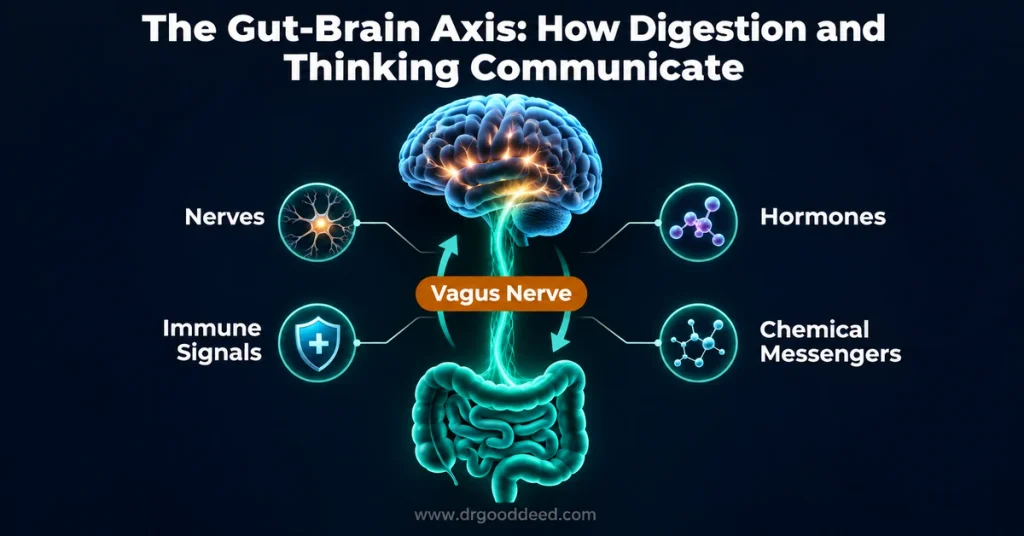
The gut and brain communicate through a network called the gut-brain axis. It uses nerves, hormones, immune signals, and chemical messengers to coordinate digestion and communicate information between the digestive system and the brain.
The vagus nerve is one of the main communication pathways in this network. Signals from the gut can influence how the brain processes sensations, while stress and other brain signals can affect gut movement and sensitivity.
The gut-brain connection may help explain why some people experience bloating alongside brain fog. However, researchers are still not sure why indigestion may be associated with hazy or difficulty concentrating thoughts (The New York Times, 2026). Bloating alone does not necessarily mean that digestive problems are causing brain fog.
Stress can also affect digestive symptoms, although it does not explain every case. Read more about the impact of stress on gut health to understand how stress and digestion may interact.
What Causes Brain Fog and Bloating?
Brain fog and bloating can occur together for several reasons, including digestive conditions that cause gastrointestinal symptoms. However, for most of these conditions, the evidence linking them to brain fog is limited.
| Possible cause | Common digestive symptoms | What to know about brain fog |
| SIBO | Bloating, gas, abdominal discomfort | A small study reported an association, but causation is unproven. |
| Celiac disease | Bloating, diarrhea, constipation | Cognitive symptoms, including brain fog, have been reported. |
| IBS | Bloating, abdominal pain, altered bowel habits | Some people report difficulty concentrating, but it is not diagnostic. |
| Food intolerance | Gas, bloating, abdominal discomfort | The available evidence does not establish a direct connection with brain fog. |
| Constipation or slow gut movement | Abdominal fullness, bloating, difficulty passing stool | Brain fog may have another cause and should not automatically be attributed to constipation. |
Can SIBO Cause Brain Fog?
Small intestinal bacterial overgrowth (SIBO) occurs when excessive bacteria are present in the small intestine. It can contribute to bloating, gas, abdominal discomfort, and changes in bowel habits.
A 2018 observational study by Rao et al. reported a possible association between brain fog, small intestinal bacterial overgrowth (SIBO), probiotic use, and D-lactic acidosis. However, a published commentary questioned these findings, highlighting that further research is needed to determine whether these factors directly contribute to brain fog.
This study does not prove that SIBO causes brain fog or that it is the reason for your symptoms. It can be a possibility if a person has similar symptoms to those of the people in the study, and it is something that a doctor would take into consideration.
Can Celiac Disease Cause Brain Fog?
Celiac disease is an immune-mediated condition in which eating gluten damages the small intestine. It can cause bloating, abdominal discomfort, diarrhea, constipation, and problems with nutrient absorption.
A 2022 narrative review explored the topic of brain fog as one of the cognitive symptoms experienced by people with celiac disease. While some patients report that their cognitive function begins to improve following the initiation of a gluten-free diet that is medically indicated, the impact of dietary interventions on cognition is still debated.
Get tested before removing gluten from your diet. Avoiding gluten before celiac testing can affect the accuracy of certain diagnostic tests. A healthcare professional can determine whether testing is appropriate.
Is Brain Fog and Bloating a Sign of IBS?
Irritable bowel syndrome (IBS) is a digestive disorder that can cause recurrent abdominal pain, bloating, gas, diarrhea, constipation, or alternating bowel patterns.
A 2024 study by El Halabi and colleagues examined brain fog in people evaluated for small intestinal bacterial overgrowth (SIBO), gastroparesis, and irritable bowel syndrome (IBS). Among 102 patients, 54% reported brain fog, which was more common in those with gastroparesis and IBS, but was not significantly associated with SIBO or intestinal methanogen overgrowth based on breath test results. These findings suggest a possible association between certain digestive conditions and brain fog, but do not establish a cause-and-effect relationship.
If you have been diagnosed with IBS, the duration and pattern of your symptoms can help guide further assessment. See how long an IBS flare-up can last for more information about symptom patterns.
Can Food Intolerance Cause Brain Fog and Bloating?
Food intolerance can contribute to bloating, gas, and abdominal discomfort. However, the direct relationship between food intolerance and brain fog is less clearly established.
Feeling mentally sluggish after a meal does not identify a particular food as the cause. The timing of symptoms, your medical history, and other digestive symptoms can help a clinician decide whether further investigation is needed.
If discomfort repeatedly occurs after eating, you may also find it helpful to read about why your stomach hurts after eating.
Avoid starting a restrictive diet without medical guidance, particularly if celiac disease is a possibility.
Can Constipation Cause Bloating and Fatigue?
Constipation can cause abdominal fullness, bloating, and discomfort when stool moves slowly through the digestive tract or becomes difficult to pass.
Bloating and fatigue may occur together, but constipation does not necessarily explain brain fog. Sleep problems, medication effects, anemia, and other medical conditions may also contribute to tiredness or difficulty concentrating.
Persistent symptoms, especially a change from your usual bowel habits, deserve medical assessment.
Can Probiotics Trigger Brain Fog?
Probiotics are live microorganisms used in certain foods and supplements. Their effects vary, so they should not be assumed to improve every digestive problem.
A small 2018 observational study by Rao and colleagues reported an association between probiotic use, SIBO, and brain fog in people experiencing bloating. The researchers also investigated D-lactic acidosis. However, the study could not establish that probiotics caused the symptoms.
D-lactic acidosis is a metabolic disturbance involving D-lactic acid. The proposed connection with brain fog in this study does not mean that ordinary bloating or difficulty concentrating indicates this condition.
There is insufficient evidence on probiotics and brain fog. Do not start or stop taking probiotics, antibiotics, or other medications based on this study. Consult your clinician about your symptoms and any products or medicines you are using.
For a more focused discussion of digestive symptoms, read probiotics for bloating and gas.
What Tests Can Find the Cause?
There is no single test that identifies every cause of brain fog and bloating. Your clinician will select investigations based on your symptoms, medical history, physical examination, and suspected condition.
Possible steps are as follows:
- Symptom and medication: Reviewing the nature and frequency of symptoms and how they affect daily life, including bowel movements, diet, supplements, and medications.
- Blood tests: Based on medical history and symptoms, blood tests could be considered to rule in or out iron deficiency, anemia, or other potential issues.
- Celiac testing: Blood tests could also be done to check for tissue transglutaminase antibodies; however, if positive, a referral to a specialist could be considered to discuss next steps.
- SIBO breath test: Based on a discussion of symptoms, a healthcare professional could consider a breath test to rule in or out SIBO.
- Further investigation: Other tests could be considered depending on the history and symptoms.
Not everyone needs every test. Commercial microbiome scores and food-specific IgG panels should not be treated as established ways to diagnose the cause of brain fog and bloating.
Your clinician can explain which tests are appropriate, what their results mean, and whether further assessment is necessary.
How Can You Manage These Symptoms Safely?
The most useful next step is to understand what may be causing the symptoms rather than assume that a single gut treatment will resolve both.
- Track your symptoms: write down when the bloating and brain fog happen, how long they last, and whether they are related to eating or a change in bowel habits.
- Report all medications and supplements to your clinician: don’t experiment on yourself. That means including any probiotics you’re taking, rather than shopping around for different ones.
- Don’t go for detoxes or other unproven therapies: these can waste your time and money and may even delay treatment for a more serious condition. The same goes for spending money on “GI testing” and other “gut health” services that claim to identify an imbalance in your microbiome as the cause of your symptoms.
- Unless you’ve been instructed otherwise, don’t go on a gluten-free diet: this can make it harder to diagnose celiac disease if you have it. That means no self-diagnosis or self-prescribed “elimination” diets, either.
- Talk to your doctor about ongoing bloating and brain fog. If it’s happening often or not improving after making dietary changes, it’s best to have it evaluated by a healthcare professional.
Treatment depends on the underlying condition. There is currently no established gut-based treatment that reliably resolves brain fog across all digestive disorders.
If difficulty concentrating is your main concern, read natural remedies for brain fog for related information. Persistent or worsening symptoms still require appropriate medical assessment.
When Should You Seek Medical Help?
Knowing when to seek help matters because recurring digestive symptoms may need investigation, while sudden neurological symptoms can indicate a medical emergency.
When Should You Book a Doctor’s Appointment?
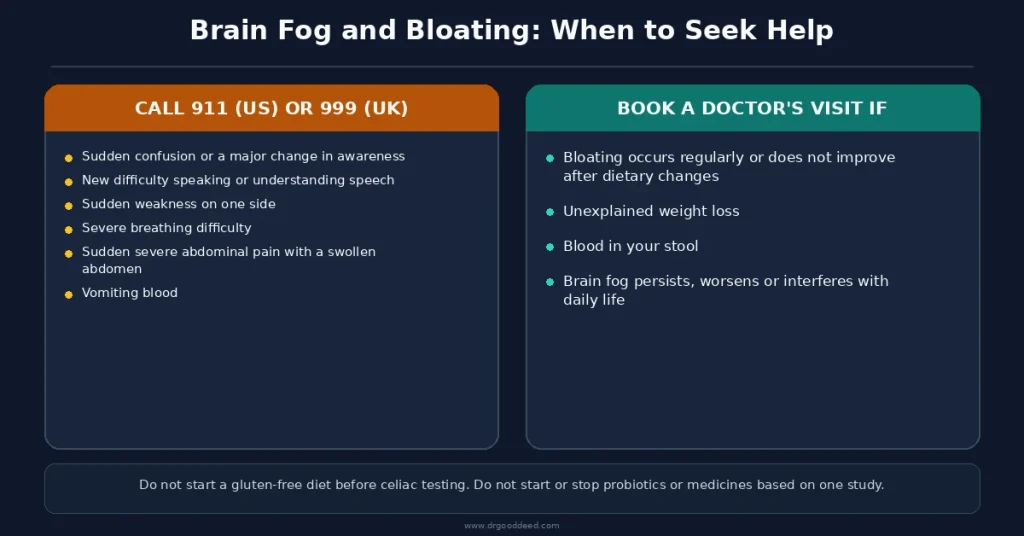
According to the NHS, contact your GP in the UK or your primary care clinician or gastroenterologist in the US if you experience the following symptoms:
- Bloating occurs regularly.
- Bloating does not improve after dietary changes.
- You experience unexplained weight loss.
- You notice blood in your stool.
- Brain fog persists, worsens, or interferes with everyday activities.
These symptoms do not necessarily indicate a serious condition, but they should not be ignored.
When Do You Need Urgent Medical Advice?
In the UK, contact your GP urgently or NHS 111 if bloating occurs with vomiting, fever, an abdominal lump, or difficulty passing stool or gas. Seek emergency care if symptoms become severe.
In the US, contact your primary care doctor the same day for worsening abdominal symptoms or persistent vomiting. Go to urgent care or the emergency department if symptoms are severe. Dr. Chugh should confirm the wording for neurological emergencies before publication.
Which Symptoms Require Emergency Care?
Call 911 in the US or 999 in the UK, or go to an emergency department, for:
- Sudden confusion or a major change in awareness.
- New difficulty speaking or understanding speech.
- Sudden weakness on one side of the body.
- Severe breathing difficulty.
- Sudden, severe abdominal pain with a swollen abdomen.
- Vomiting blood.
Do not assume sudden neurological symptoms are caused by a digestive problem. These warning signs need immediate assessment.
Conclusion
Brain fog and bloating can occur together for several reasons, but identifying the underlying cause is more useful than assuming that all symptoms originate in the gut. Digestive conditions such as SIBO, celiac disease, and IBS may be relevant, yet the evidence connecting each condition with cognitive symptoms is not equally strong. Probiotic-related explanations also remain uncertain.
If these symptoms keep returning, affect your daily activities, or occur with unexplained weight loss or blood in your stool, arrange a medical appointment. Seek emergency care for sudden confusion, speech difficulties, one-sided weakness, or severe abdominal symptoms. A healthcare professional can help determine which investigations are appropriate and whether the symptoms may have a cause outside the digestive system.
Frequently Asked Questions
Can leaky gut cause brain fog?
The term “leaky gut” describes increased intestinal permeability, but it is not an established standalone medical diagnosis. Although research has explored links between intestinal permeability, inflammation, and cognitive symptoms, evidence does not establish that leaky gut directly causes brain fog.
What tests can help identify the cause of brain fog and bloating?
A clinician may review your symptoms, medical history, diet, and medications before recommending tests. Depending on the suspected cause, testing may include blood tests for anemia or celiac disease, breath tests for SIBO, or other digestive investigations. The appropriate tests depend on your symptoms and clinical assessment.
When should you see a doctor for brain fog and bloating?
Consult a healthcare professional if brain fog and bloating persist, recur frequently, or interfere with daily activities. Seek urgent medical care for severe abdominal pain, persistent vomiting, blood in your stool, or sudden confusion or other new neurological symptoms.
Why do I have brain fog and bloating at the same time?
Possible explanations include SIBO, celiac disease, IBS, food intolerance, or constipation. Other causes of brain fog may also need consideration.
Can SIBO cause brain fog?
A small 2018 study found an association between SIBO and brain fog in some probiotic users. It did not prove that SIBO causes brain fog.
Can probiotics cause brain fog and bloating?
Limited research has reported an association in some people. The evidence does not establish that probiotics cause these symptoms.
Can celiac disease cause brain fog?
Brain fog has been reported among the cognitive symptoms associated with celiac disease. Testing should be considered before removing gluten.
Medical Disclaimer: This article is for informational and educational purposes only and does not replace professional medical advice, diagnosis, or treatment. Always consult a qualified healthcare professional about your symptoms or health concerns.
Sources:
1. Rao SSC, Rehman A, Yu S, Andino NM. Clinical and Translational Gastroenterology. Brain fogginess, gas and bloating: a link between SIBO, probiotics and metabolic acidosis. 2018. PubMed. link
2. Giuffrè M, Gazzin S, Zoratti C, et al. International Journal of Molecular Sciences. Celiac Disease and Neurological Manifestations: From Gluten to Neuroinflammation. 2022. P1. Rao SSC, Rehman A, Yu S, Andino NM. Clinical and Translational Gastroenterology. Brain fogginess, gas and bloating: a link between SIBO, probiotics and metabolic acidosis. 2018. PubMed link
2. Giuffrè M, Gazzin S, Zoratti C, et al. International Journal of Molecular Sciences. Celiac Disease and Neurological Manifestations: From Gluten to Neuroinflammation. 2022. PubMed. link
3. NHS. Bloating. NHS website. link
4. National Institute of Diabetes and Digestive and Kidney Diseases (NIDDK). Diagnosis of Celiac Disease. NIDDK website. link
5. Annual Review of Medicine. Article on gut–brain interactions and digestive disease link
Medical Disclaimer: This article is for general information only and is not medical advice. It does not replace a diagnosis, treatment plan, or guidance from a qualified healthcare professional. Always talk to your doctor about your own symptoms and before starting, stopping, or changing any treatment. If you think you may be having a medical emergency, call 911 or go to your nearest emergency room.