
Why your stomach hurts after eating is one of the most common health questions in the US. The CDC estimates that digestive diseases account for over 100 million clinic visits annually. Most causes, including gas, food intolerances, and acid reflux, are manageable. Reviewed by Dr. Nivedita Pandey (MD, Gastroenterology), this article covers 12 causes, timing clues, red flags, and home relief options.
What Does Stomach Pain After Eating Feel Like?
Stomach pain after eating presents differently depending on the cause and location. Identifying the type and location of pain before reading the causes helps narrow things down significantly.
By pain type:
- Burning: acid reflux, gastritis, peptic ulcer
- Sharp: gallstones, gas, appendicitis (lower right)
- Cramping: IBS, food intolerance, constipation
- Dull pressure: overeating, slow digestion
- Bloating: gas, IBS, lactose intolerance
By location:
- Upper middle: gastritis, acid reflux, peptic ulcer
- Upper right: gallstones
- Lower middle: IBS, constipation, stomach cramps after eating
- Lower right: appendicitis, Crohn’s disease
- Lower abdominal pain after eating broadly: IBS, constipation, food intolerance
12 Common Reasons Your Stomach Hurts After Eating
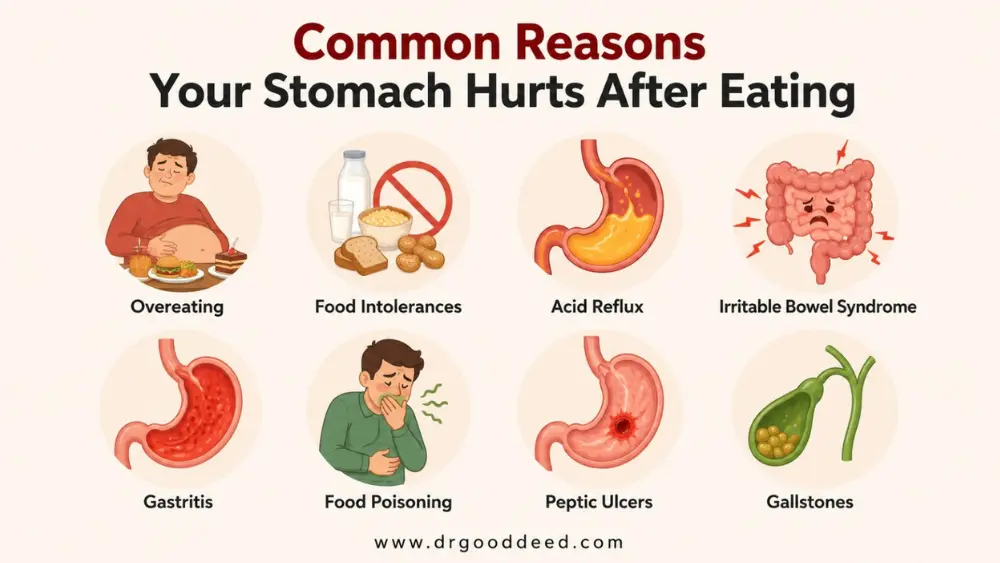
Why your stomach hurt after eating has 12 well-documented causes. Most are benign, but knowing which one applies changes how you manage it.
1. Overeating
The stomach holds roughly 1 liter comfortably. Overfilling stretches the stomach wall, triggering pain through the vagus nerve. The pain feels like pressure immediately after eating and fades within 1 to 2 hours.
2. Food Intolerances (Lactose, Gluten)
Lactose intolerance affects 36% of US adults. Undigested lactose ferments in the colon, producing gas, bloating, and cramping within 30 minutes to 2 hours of eating dairy. Gluten sensitivity causes similar symptoms after eating wheat, rye, or barley. Food intolerance causes gut symptoms only. Food allergy triggers immune system reactions throughout the body.
3. Acid Reflux or GERD
Acid reflux causes burning in the upper stomach and lower chest. The lower esophageal sphincter weakens, allowing stomach acid to move upward. Triggers include fatty foods, spicy food, chocolate, caffeine, and lying down within 30 minutes of eating. GERD affects 20% of the US population.
4. Irritable Bowel Syndrome (IBS)
IBS affects 10 to 15% of US adults and is diagnosed by the Rome IV criteria. It causes stomach cramps after eating, bloating, and alternating constipation and diarrhea. Triggers include beans, onions, garlic, wheat, and dairy (high-FODMAP foods). Symptoms typically start 15 to 30 minutes after eating trigger foods.
5. Gastritis
Gastritis is inflammation of the stomach lining, most often caused by H. pylori bacteria or long-term NSAID use (ibuprofen, aspirin). It causes burning pain in the upper middle abdomen, nausea, and early fullness. Pain may ease briefly after eating, then return 1 to 2 hours later.
6. Food Poisoning
Stomach pain after eating from food poisoning appears within 1 to 6 hours of contaminated food. Common culprits include Salmonella (poultry, eggs), E. coli (ground beef, leafy greens), and Norovirus (shellfish). Vomiting, diarrhea, and fever accompany the pain. Most cases resolve within 24 to 72 hours.
7. Peptic Ulcers
Peptic ulcers are open sores in the stomach lining or upper small intestine. Why your stomach hurt after eating and then again 2 to 3 hours later is a classic peptic ulcer pattern. Eating buffers stomach acid briefly and relieves pain; then the pain returns. H. pylori infection causes 70% of peptic ulcers.
8. Gallstones
Gallstones cause upper stomach pain after eating after fatty or fried meals specifically. The gallbladder contracts to release bile for fat digestion. When stones block the bile duct, intense pain develops in the upper right abdomen. The pain radiates to the right shoulder or upper back and lasts 30 minutes to several hours.
9. Gas and Bloating
Stomach cramps after eating from gas happen when bacteria ferment undigested carbohydrates in the colon. Beans, lentils, carbonated drinks, and cruciferous vegetables produce the most gas. The average person passes gas 13 to 21 times per day. Gas pain moves around the abdomen and eases after passing gas or a bowel movement.
10. Constipation
Eating triggers the gastrocolic reflex, a wave of muscle contractions moving food through the colon. When stool is backed up, this reflex creates pain and cramping rather than a bowel movement. Fewer than 3 bowel movements per week with straining confirms constipation.
11. Anxiety and Stress
The gut contains 500 million nerve cells connected directly to the brain. Chronic stress releases cortisol, which slows gastric emptying and tightens intestinal muscles. Why your stomach hurts after eating on stressful days, even with normal food, is a direct result of this. People with anxiety disorders report gut symptoms in 40 to 60% of cases, including lower abdominal pain after eating.
12. Food Allergies
Why your stomach hurts after eating with hives, swelling, or throat tightness points to a food allergy, not intolerance. Common allergens include peanuts, shellfish, tree nuts, milk, and wheat. Symptoms appear within minutes to 2 hours. Anaphylaxis is life-threatening and requires an EpiPen and ER visit immediately.
How Soon After Eating Does The Pain Start?
Timing helps identify the likely cause. Note: timing alone cannot confirm a diagnosis, as symptoms can overlap across conditions.
| Timing | Likely Cause |
| Within 30 minutes | Food allergy, acid reflux, overeating, lactose intolerance |
| 30 to 60 minutes | IBS, gastritis, food poisoning onset |
| 1 to 2 hours | Peptic ulcer (partial relief then return), gastritis flare |
| 2 to 3 hours | Peptic ulcer (empty stomach pain), slow gastric emptying |
| After fatty meals specifically | Gallstones |
When Should You See A Doctor For Stomach Pain After Eating?
Why your stomach hurts after eating becomes a medical concern when any of the following symptoms appear alongside the pain.
See a doctor if you have:
- Pain worsening over days or weeks
- Blood in stool (red or black tarry) or blood in vomit
- Unintentional weight loss over 5% in 30 days
- Pain that wakes you from sleep (suggests peptic ulcer or gallstones)
- Fever of 100.4°F or higher with abdominal pain
- Stomach pain after eating lasting more than 2 consecutive weeks
- Difficulty swallowing or food feeling stuck in the throat
Emergency Warning Signs, Go To The ER Immediately
- Sudden severe abdominal pain with no relief
- Hard or rigid abdomen when touched
- Signs of shock: dizziness, rapid heartbeat, cold sweaty skin
- Vomiting blood or passing black, tarry stool
These combinations suggest perforation, internal bleeding, or appendicitis, which are medical emergencies.
How To Relieve Stomach Pain After Eating At Home
Why your stomach hurt after eating from benign causes respond well to these home strategies.
- Eat smaller meals: Portions under 500 calories reduce stomach stretch pain and acid reflux
- Eat slowly: 20 minutes per meal lets satiety signals reach the brain before overfilling
- Stay upright 30 minutes after eating: Prevents acid from moving upward; critical for GERD
- Ginger tea: 1 cup after meals reduces nausea and accelerates gastric emptying
- Peppermint capsules: Menthol relaxes colonic smooth muscle; reduces IBS cramping by 40% per a 2014 meta-analysis
- Warm compress: 15 minutes of abdominal heat reduces cramping by increasing blood flow
- Food diary: Track food, pain onset, and duration; patterns emerge within 2 to 3 weeks
Trigger foods to avoid: Fried foods, spicy food, dairy (if lactose intolerant), gluten (if sensitive), carbonated drinks, alcohol, artificial sweeteners (sorbitol, mannitol), and cruciferous vegetables in excess.
Foods Most Likely To Cause Stomach Pain
| Food Category | Why It Causes Pain |
| Fried and fatty foods | Slow gastric emptying; trigger gallbladder contractions |
| Spicy food | Capsaicin irritates stomach lining and esophagus |
| Dairy (lactose-sensitive) | Undigested lactose ferments in colon, produces gas |
| Gluten (gluten-sensitive) | Triggers intestinal inflammation and bloating |
| Carbonated drinks | Carbon dioxide gas distends the stomach |
| Alcohol | Irritates stomach lining; increases acid production |
| Artificial sweeteners | Sorbitol and mannitol are poorly absorbed, ferment in colon |
| Cruciferous vegetables | High raffinose content; ferments and produces excess gas |
FAQs
Is it normal for your stomach to hurt after every meal?
No. Why your stomach hurts after eating every single meal points to a consistent trigger, not random digestion. Recurring post-meal pain lasting over 2 weeks needs medical evaluation. Causes include IBS, GERD, gastritis, food intolerance, or peptic ulcer, none of which resolve on their own long-term.
Why does my stomach hurt after eating but I’m not sick?
Stomach pain after eating without nausea, vomiting, or fever is most often caused by food intolerance (lactose or gluten), IBS, acid reflux, or gas. These conditions cause pain without making you “sick” in the traditional sense. A 2-week food diary identifying what you ate before each pain episode identifies the trigger in most cases.
Can anxiety cause stomach pain after eating?
Yes. The gut has 500 million nerve cells directly connected to the brain. Cortisol from chronic stress delays gastric emptying and tightens intestinal muscles. Stomach cramps after eating worsen on high-stress days even without dietary changes. In clinical studies, 55% of IBS patients have a diagnosable anxiety disorder, and treating anxiety reduced gut symptoms measurably.
Why does my upper stomach hurt after eating?
Upper stomach pain after eating in the upper middle abdomen suggests gastritis, acid reflux, or peptic ulcer. Upper stomach pain after eating in the upper right specifically after fatty meals points to gallstones. Pain that burns and travels to the chest suggests GERD. Upper pain with early fullness and no appetite warrants H. pylori testing.
What is the fastest way to relieve stomach pain after eating?
For gas and bloating: simethicone (over-the-counter) provides relief within 15 to 30 minutes. For acid reflux: an antacid (calcium carbonate) works within 5 minutes. For IBS cramping: peppermint oil capsules reduce lower abdominal pain after eating within 30 minutes. For all types: staying upright, sipping warm ginger tea, and applying a warm compress provide fast non-drug relief.
Conclusion
Why your stomach hurts after eating has a clear answer for most people: a food trigger, a digestive condition like GERD or IBS, or benign gas. Tracking symptoms with a food diary and eating smaller meals resolves most cases within 2 to 3 weeks.
If pain is persistent, severe, or comes with blood, weight loss, or fever, get medical evaluation. For related reading: the IBS guide, the acid reflux guide, and the gut health diet plan.