
The best supplements for gut health include probiotics, prebiotics, psyllium husk fiber, digestive enzymes, and glutamine, each targeting a different layer of digestive function and microbial balance.
According to the Global Wellness Institute, the gut health supplement market in the U.S. exceeded $15.9 billion in 2023, driven by rising rates of irritable bowel syndrome (IBS), antibiotic overuse, and processed food consumption. The American Gastroenterological Association estimates that 60 to 70 million Americans experience digestive disease annually.
Natural Supplements for Gut Health
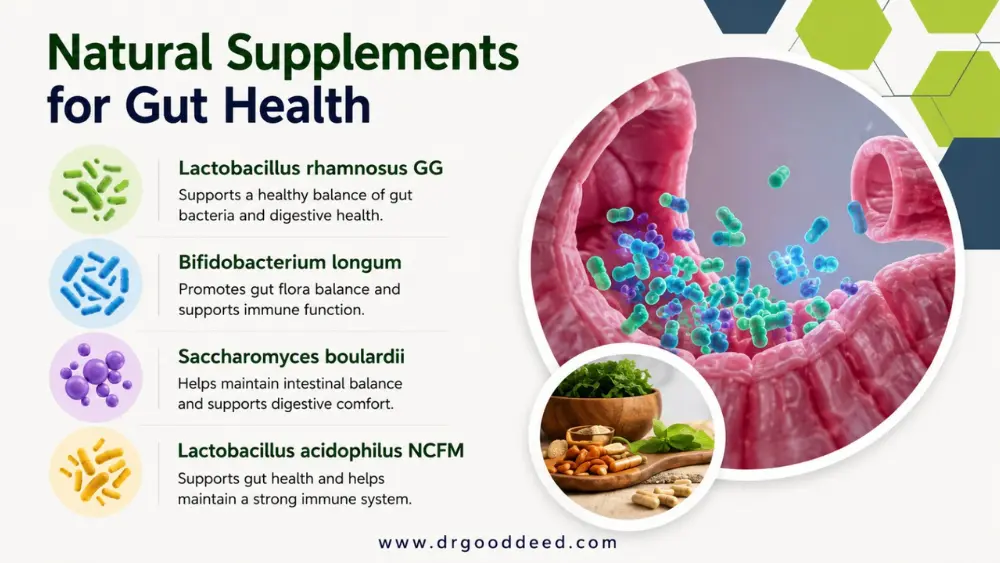
Natural supplements for gut health work by either introducing beneficial bacteria, feeding existing good bacteria, breaking down food more efficiently, or repairing the intestinal lining. These four functions target the most common root causes of digestive dysfunction.
Probiotics Supporting Healthy Bacteria
Probiotics are live microorganisms that, when consumed in adequate amounts, provide a measurable health benefit to the host. That definition comes directly from the World Health Organization and Food and Agriculture Organization (2001 joint report).
The most clinically studied probiotic strains include:
- Lactobacillus rhamnosus GG: reduces antibiotic-associated diarrhea duration by 60%, per a 2012 Cochrane meta-analysis
- Bifidobacterium longum 35624: reduces IBS symptom severity scores in randomized controlled trials
- Saccharomyces boulardii: a yeast-based probiotic that survives antibiotic treatment because antibiotics target bacteria, not yeast
- Lactobacillus acidophilus NCFM: improves lactose digestion and reduces bloating after dairy consumption
Strain names matter. “Lactobacillus” is the genus. “Rhamnosus” is the species. “GG” is the strain. Research is always strain-specific. A product labeled “contains Lactobacillus” without specifying the strain is clinically meaningless.
Prebiotics Feeding Gut Microbes
Prebiotics are non-digestible fibers that selectively feed beneficial bacteria. The most studied prebiotics are inulin, fructooligosaccharides (FOS), and galactooligosaccharides (GOS).
Inulin from chicory root specifically increases Bifidobacterium counts. A 2017 randomized trial in the American Journal of Clinical Nutrition (Dahl et al.) showed that 12 grams of chicory inulin daily increased Bifidobacterium by 40% over three weeks. That bacterial growth correlates with increased butyrate production, which repairs the colon lining.
Fiber Supplements and Digestive Health
Fiber supplements and digestive health are directly connected. Psyllium husk is the most clinically documented fiber supplement. It is the active ingredient in Metamucil and functions as both a soluble and insoluble fiber source.
- Psyllium reduces LDL cholesterol (FDA-approved health claim at 7 grams daily)
- Psyllium reduces IBS symptom severity by 54% at 10 grams per day, per a 2009 BMJ trial (Bijkerk et al.)
- Methylcellulose (Citrucel) is a synthetic fiber that produces less gas than psyllium, useful for people with gas-dominant IBS
Digestive Enzymes and Nutrient Breakdown
Digestive enzymes break down food components that the body struggles to process independently. Key enzymes in supplement form:
- Lactase: breaks down lactose; clinically proven to reduce bloating and diarrhea from dairy
- Alpha-galactosidase (Beano): breaks down oligosaccharides in legumes and cruciferous vegetables; reduces gas within 30 minutes of consumption
- Pancreatin: a full-spectrum enzyme blend (amylase, lipase, protease) used clinically for exocrine pancreatic insufficiency
Digestive enzyme supplements benefit people with confirmed enzyme deficiencies more than healthy adults. If you digest food normally, enzyme supplements produce minimal additional benefit.
How to Choose a Probiotic Supplement
Choosing a probiotic supplement requires reading beyond the front label. Most of the information that determines effectiveness is buried in fine print.
Colony-Forming Units (CFUs) Explained
CFUs measure the number of live bacteria per dose. Most supplements list 1 billion to 100 billion CFUs. Higher is not always better. L. rhamnosus GG produces maximum clinical benefit at 10 billion CFUs. Pushing to 100 billion CFUs with the same strain doesn’t double the benefit. Match the CFU count to the strain’s documented effective dose.
Strain Diversity and Targeted Benefits
Single-strain probiotics outperform multi-strain formulas for specific conditions like C. difficile-associated diarrhea (where S. boulardii alone is the evidence-backed choice). Multi-strain formulas (10+ strains) show better results for general microbiome diversity and IBS management. The principle: more strains work better for complex, systemic gut goals; fewer targeted strains work better for specific diagnoses.
Shelf Stability and Storage Factors
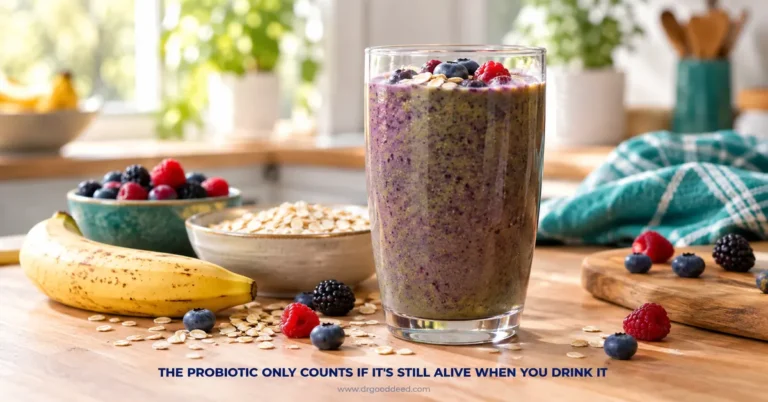
Many probiotic bacteria die at room temperature within months. Check for:
- Enteric coating: protects bacteria from stomach acid, increasing delivery to the intestine by up to 10 times
- Guaranteed CFUs “at expiration” not “at manufacture” (bacteria die over time; the latter number is meaningless)
- Refrigeration requirement: not all probiotics need refrigeration, but those that do lose 30 to 50% viability when stored at room temperature for 30 days
Choosing Supplements Based on Symptoms
| Symptom | Best-Evidenced Supplement | Clinical Evidence Source |
| Antibiotic diarrhea | S. boulardii + L. rhamnosus GG | Cochrane Review 2012 |
| IBS-C (constipation) | Psyllium husk 10g/day | BMJ 2009 |
| IBS-D (diarrhea) | Bifidobacterium longum 35624 | American Journal of Gastroenterology |
| Bloating from legumes | Alpha-galactosidase | Multiple RCTs |
| Post-antibiotic recovery | L. rhamnosus GG + inulin | Gut journal 2016 |
Antibiotics Disrupting Gut Bacteria
Antibiotics disrupting gut bacteria is one of the most clinically documented and least discussed consequences of antibiotic prescribing in the United States. Americans fill 270 million antibiotic prescriptions annually (CDC, 2022). Each course alters the microbiome.
How Antibiotics Affect the Microbiome
Broad-spectrum antibiotics like amoxicillin-clavulanate and ciprofloxacin eliminate both pathogenic and beneficial bacteria. A 2018 study in Nature (Palleja et al.) showed that a single 4-day course of broad-spectrum antibiotics reduced gut bacterial diversity by 25% and left the microbiome measurably altered for up to 6 months in some participants.
Clindamycin causes the highest rate of Clostridium difficile overgrowth among commonly prescribed antibiotics because it suppresses Bacteroides species that normally inhibit C. difficile colonization.
Temporary Digestive Changes After Antibiotics
Common post-antibiotic symptoms include:
- Diarrhea (affects 5 to 35% of antibiotic users depending on the drug)
- Bloating and excess gas as surviving bacteria shift metabolic output
- Constipation from reduced bacterial motility signals
- C. difficile infection in 1 in 30 hospitalized patients who receive antibiotics
Supporting Recovery of Healthy Bacteria
After a course of antibiotics, the best supplements for gut health for recovery are S. boulardii (starts immediately during antibiotic course), inulin or FOS prebiotics (begin after completing the course), and fermented foods like kefir and kimchi (add at any point). This combined approach restores Bifidobacterium and Lactobacillus faster than either diet or supplements alone.
Probiotic Timing With Antibiotics
Take probiotics 2 hours after antibiotic doses, not simultaneously. Antibiotics taken at the same time kill the probiotic bacteria before they reach the intestine. S. boulardii is the exception; as a yeast, it resists antibiotic killing and can be taken at any time relative to the antibiotic dose.
Best Time to Take Gut Health Supplements
Best time to take gut health supplements depends on the supplement type, its formulation, and what you’re eating alongside it.
Taking Probiotics With or Without Food
Acid-sensitive strains like Lactobacillus and Bifidobacterium survive best when taken 30 minutes before a meal. Food consumption raises stomach pH from 1.5 (fasting, highly acidic) to 3.5 to 4.5, significantly improving bacterial survival through the stomach. Enteric-coated capsules bypass this requirement and can be taken any time.
Timing Fiber Supplements During the Day
Take fiber supplements and digestive health products at least 30 to 60 minutes away from other supplements or medications. Psyllium husk forms a gel that physically traps other compounds and reduces their absorption. Morning, with 12 to 16 ounces of water, before breakfast, is the most practical and effective timing for most people.
Consistency and Digestive Routine Benefits
Probiotic supplementation produces measurable changes in fecal microbiome composition within 1 to 2 weeks of daily use, but these changes reverse within 2 to 4 weeks of stopping (Suez et al., Cell, 2019). Consistency matters more than timing precision. Missing one day is less harmful than stopping entirely for a week.
Avoiding Supplement Interactions
- Fiber supplements reduce iron absorption; take iron supplements 2 hours apart
- Fat-soluble vitamins (A, D, E, K) absorb poorly with fiber; separate them
- Calcium supplements bind to some probiotic cell walls; take 2 hours apart
Supplements That May Support Specific Digestive Problems
Bloating and Gas Support
Alpha-galactosidase (Beano) works specifically for gas caused by legumes, broccoli, and cabbage. It must be taken at the start of the meal, not after. Simethicone addresses gas that is already formed; it doesn’t prevent gas production. These two supplements target different stages of the same problem.
Peppermint oil capsules (enteric-coated) relax intestinal smooth muscle and reduce bloating in IBS patients. A 2014 meta-analysis in the Journal of Clinical Gastroenterology (Khanna et al.) found peppermint oil reduced global IBS symptoms by 40% compared to placebo.
Constipation-Focused Supplements
- Psyllium husk (soluble fiber): softens stool by drawing water; 10 to 15 grams daily is the effective dose
- Magnesium citrate: draws water into the colon osmotically; 300 to 400 mg at bedtime produces a bowel movement within 6 to 8 hours
- Bifidobacterium lactis BB-12: reduces intestinal transit time in constipation-dominant IBS
Gut Support After Illness or Antibiotics
L-glutamine (5 grams daily) is an amino acid that fuels intestinal epithelial cells. After illness or antibiotic use, the gut lining often becomes more permeable. A 2019 randomized trial in Nutrients showed that glutamine supplementation reduced intestinal permeability markers in post-illness patients within 4 weeks.
Zinc carnosine (75 mg twice daily) repairs tight junction proteins in the gut lining. Studies from Tokyo Medical and Dental University confirmed it reduces intestinal permeability after NSAID-induced gut damage.
IBS-Related Digestive Support
The best supplements for gut health in IBS are evidence-ranked:
- Psyllium husk (strongest evidence, both IBS-C and IBS-D)
- Peppermint oil enteric-coated capsules (IBS global symptoms)
- Bifidobacterium longum 35624 (IBS symptom severity)
- Low-dose naltrexone (prescription only; emerging evidence for IBS-D)
Common Mistakes People Make With Gut Supplements
Most people buying the best supplements for gut health make at least one of these errors that completely undermines effectiveness.
- Buying by CFU count rather than strain: 50 billion CFUs of a clinically unstudied strain is worth less than 10 billion CFUs of L. rhamnosus GG
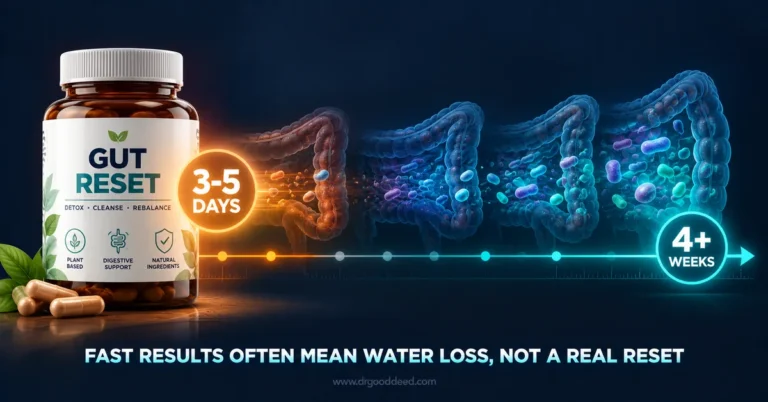
- Stopping after 2 weeks: most probiotics need 4 to 8 weeks to produce measurable symptom changes
- Skipping water with fiber supplements: psyllium without adequate water creates a thick gel that worsens constipation instead of relieving it; minimum 250 ml per dose
- Taking all supplements simultaneously: fiber, calcium, and iron taken together reduce absorption of each other significantly
- Refrigerating non-refrigeration-required probiotics: condensation from temperature changes destroys more bacteria than room temperature storage does
- Choosing supplements without identifying the actual problem: a probiotic for constipation may worsen bloating if the underlying issue is SIBO (small intestinal bacterial overgrowth), where adding bacteria makes symptoms worse
FAQs
What are the most commonly used supplements for gut health?
The best supplements for gut health used clinically are psyllium husk, Lactobacillus rhamnosus GG, Saccharomyces boulardii, inulin-type prebiotics, and peppermint oil (enteric-coated). These five have the strongest randomized controlled trial evidence across IBS, antibiotic recovery, constipation, and general microbiome support.
How do probiotics support digestion and healthy gut bacteria?
Probiotics introduce specific bacterial strains that compete with harmful bacteria for intestinal space, produce short-chain fatty acids (butyrate, propionate), and strengthen tight junction proteins in the gut lining. L. rhamnosus GG specifically reduces diarrhea duration by 60% because it produces anti-inflammatory compounds that suppress pathogenic bacteria directly.
What should be considered when choosing a probiotic supplement?
Verify the exact strain name (genus, species, and strain code), confirm CFU count is guaranteed at expiration not at manufacture, check for enteric coating if you have low stomach acid issues, and match the strain to your specific symptom. A product without strain codes on the label cannot be evaluated against clinical research.
How do fiber supplements help with constipation and digestion?
Fiber supplements and digestive health work through two mechanisms: psyllium draws water into the colon to soften stool (effective within 12 to 72 hours at 10g daily), while insoluble fiber like wheat bran adds bulk that stimulates intestinal contractions. Psyllium at 10g daily produced 54% IBS symptom reduction in the 2009 BMJ Bijkerk trial.
Can antibiotics disrupt healthy gut bacteria balance?
Yes. A single 4-day broad-spectrum antibiotic course reduces gut bacterial diversity by 25% and leaves measurable microbiome changes for up to 6 months, per a 2018 Nature study. Clindamycin carries the highest risk of C. difficile overgrowth. Taking S. boulardii during antibiotic treatment reduces antibiotic-associated diarrhea risk by 57%.
What is the best time to take probiotics and fiber supplements?
Take acid-sensitive probiotics 30 minutes before a meal (stomach pH rises from 1.5 to 4.5 with food, improving bacterial survival). Take fiber supplements and digestive health products 30 to 60 minutes away from medications and other supplements. Enteric-coated probiotics can be taken any time because the coating bypasses stomach acid.
Can gut health supplements cause temporary bloating or gas?
Yes. Starting probiotics causes temporary bloating and gas in 15 to 25% of users during the first 1 to 2 weeks, as new bacterial strains compete and produce gas during colonization. Starting fiber supplements too fast (above 5g increase per week) causes the same effect. Both resolve without stopping the supplement if you reduce the dose and increase gradually.
Which foods work best alongside gut health supplements?
Fermented foods (kefir, kimchi, yogurt with live cultures) amplify probiotic supplements by introducing additional bacterial strains. Prebiotic foods (Jerusalem artichokes, leeks, green bananas) enhance inulin supplements by providing complementary fermentable substrates. The 2021 Stanford Cell trial showed fermented foods alone increased microbiome diversity by 19%, outperforming supplementation without dietary support.
How do stress and sleep affect the gut microbiome?
Cortisol from chronic stress increases intestinal permeability within hours and reduces Lactobacillus populations measurably. Sleep under 6 hours per night suppresses Lactobacillus and increases pro-inflammatory gut bacteria, per Benedict et al. (Molecular Metabolism, 2016). The best supplements for gut health produce weaker results in people with untreated chronic stress and poor sleep.
When should digestive symptoms be medically evaluated?
See a gastroenterologist when symptoms persist beyond 4 weeks despite supplement use, stress blood appears in stool, when unintended weight loss exceeds 5% in 30 days, or when abdominal pain wakes you from sleep. These symptoms go beyond microbiome imbalance and require evaluation for IBD, colorectal cancer, or SIBO.