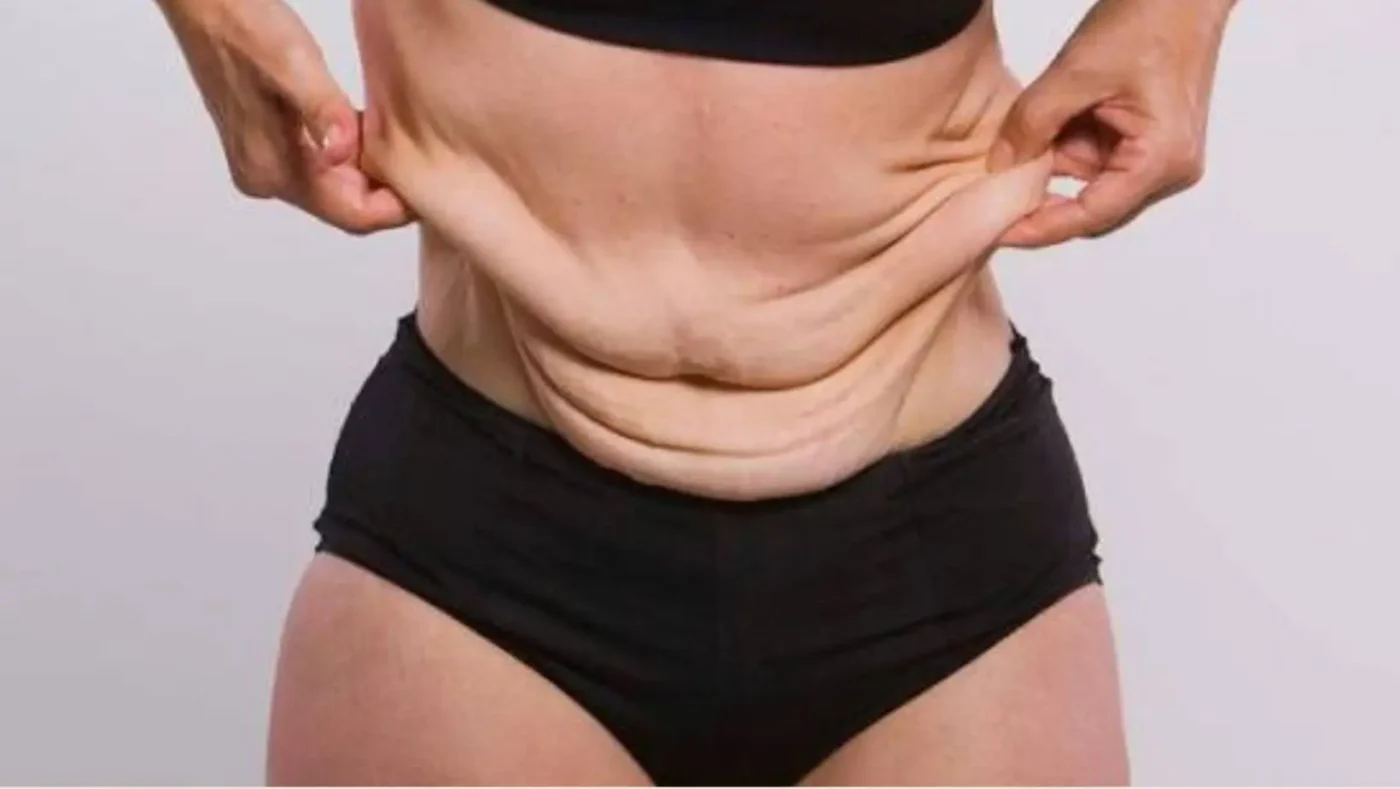

You can partly tighten loose skin after weight loss through muscle building, nutrition, and non-surgical skin treatments, but severe skin laxity usually needs surgery to fully resolve. Loose skin forms when collagen and elastin fibers in the dermis stretch beyond their ability to snap back. The amount of weight lost, your age, and genetics decide how much skin recovers on its own.
This guide covers why skin sags after weight loss, which natural methods actually help, what non-surgical treatments can realistically fix, and when surgery becomes the better option.
What Causes Loose Skin After Weight Loss?
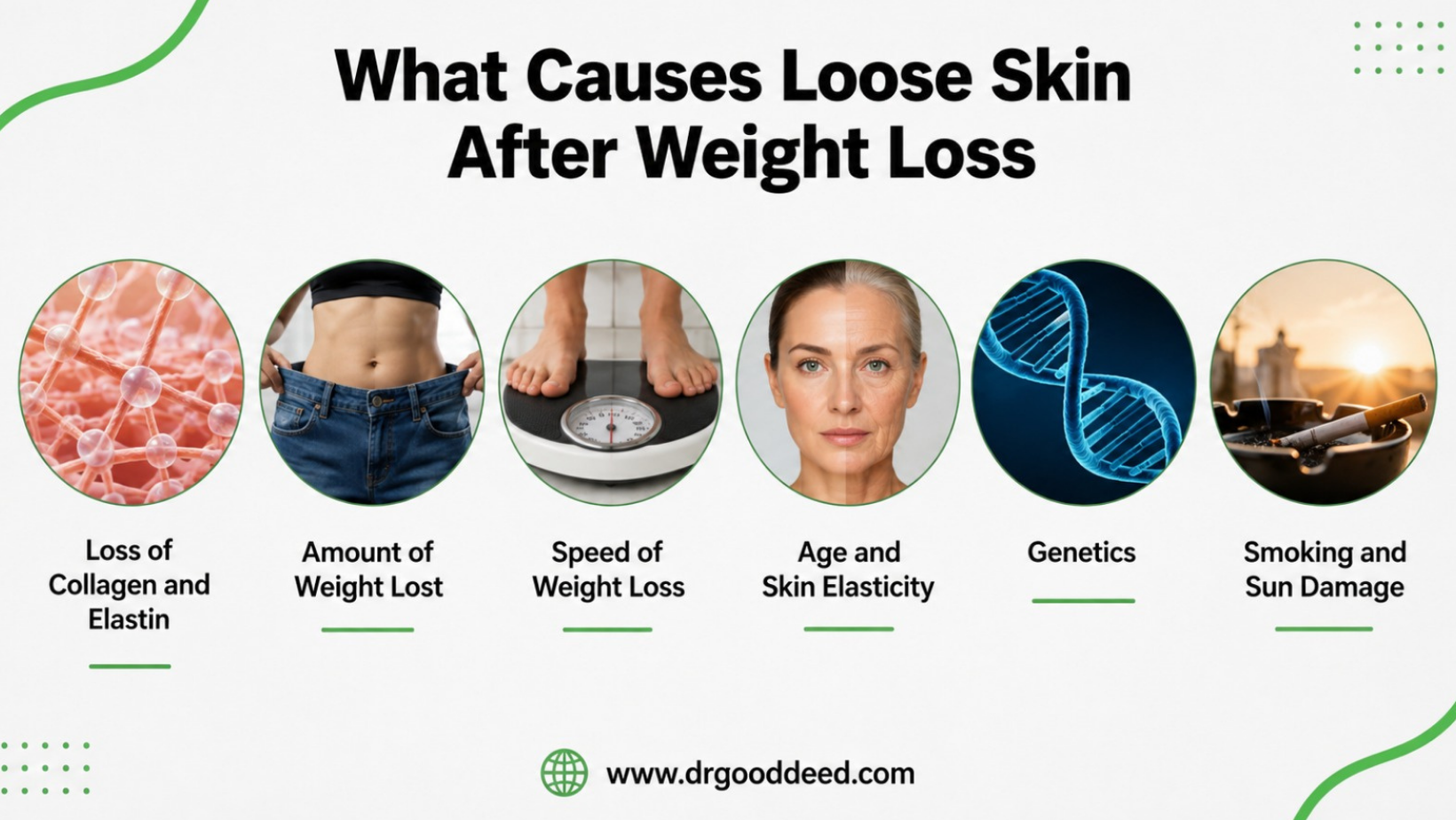
Loose skin happens when collagen and elastin fibers in the dermis become stretched, thinned, and disorganized during weight gain, then fail to fully rebound once the fat underneath disappears. Six factors control how much this happens to your body.
Loss of Collagen and Elastin
Collagen gives skin its structure. Elastin gives skin its snap-back. A 2021 study in Obesity Surgery took skin biopsies before and after massive weight loss and found a shift away from thick, organized collagen bundles toward thin, disorganized fibers. Elastin synthesis mostly shuts down after puberty, so damaged elastin rarely fully repairs itself.
Amount of Weight Lost
More fat loss means more skin has to shrink. Patients who lose 100 pounds or more typically develop more noticeable skin laxity than those who lose 30 to 50 pounds, according to dermatology practice data.
Speed of Weight Loss
Rapid weight loss remains debated. Some dermatologists say fast loss gives skin less time to contract. A 2021 review by WeightWatchers’ Science Team, however, found no strong evidence that speed alone predicts loose skin. Total weight lost and age matter more.
Age and Skin Elasticity
Collagen production drops steadily after your mid-20s. Skin in patients over 40 retracts less easily after weight loss compared with skin in younger patients, since there’s simply less collagen available to rebuild structure.
Genetics
Some people inherit denser, more elastic skin. Genetics determines your baseline collagen quality and how efficiently your fibroblasts, the cells that build new collagen, respond to stretching and shrinking.
Smoking and Sun Damage
Smoking accelerates collagen breakdown and increases oxidative stress, which weakens the dermis further. UV radiation from sun exposure activates enzymes called matrix metalloproteinases that actively degrade existing collagen and elastin.
The 6 Factors That Determine Whether Skin Tightens
Not every factor carries equal weight. This table ranks them by real-world impact based on clinical and dermatology sources.
| Factor | Impact |
| Amount of weight lost | Very High |
| Age | High |
| Genetics | High |
| Time spent overweight | High |
| Smoking history | Moderate |
| Nutrition | Moderate |
Amount of weight lost ranks highest because it directly determines how much excess skin surface exists. Age and genetics rank high because they set the ceiling on how much collagen your body can rebuild, regardless of effort. Nutrition ranks moderate: it supports the process but can’t override a low collagen ceiling set by genetics and age.
Best Ways to Tighten Loose Skin Naturally
These best ways to tighten loose skin naturally work by filling space beneath the skin with muscle and feeding the body the raw materials collagen needs. None of them eliminate large amounts of excess skin, but all support what skin you have left.
Build Lean Muscle
Muscle fills the space fat used to occupy, giving loose skin a firmer surface to rest against. A 2023 study in Scientific Reports, using 56 sedentary middle-aged women in a 16-week trial, found resistance training significantly improved skin elasticity and increased dermal thickness. Strength training to tighten loose skin works even independent of visible muscle growth, since the training itself changes gene expression in skin cells.
Prioritize Adequate Protein Intake
Collagen is a protein, built from amino acids like glycine and proline. Without enough dietary protein, your body prioritizes muscle and organ repair over collagen synthesis. Aim for 1.2 to 1.6 grams of protein per kilogram of body weight daily during and after weight loss.
Stay Hydrated, Avoid Smoking, and Get Enough Sleep
Dehydrated skin looks thinner and less resilient. Smoking directly destroys collagen and raises your vitamin C needs. Sleep is when skin repair processes, including collagen remodeling, run at their highest rate.
Eat Nutrients Involved in Collagen Synthesis
Vitamin C activates the enzymes that stabilize new collagen strands. Zinc and copper both function as cofactors that trigger collagen-processing enzymes, without which collagen fibers stay weak and poorly cross-linked.
Nutrients That Support Skin Elasticity
Nutrients that support skin elasticity work together, not alone. Skipping one weakens the whole collagen-building chain.
- Protein: Supplies glycine and proline, the amino acids that form collagen’s triple-helix structure.
- Vitamin C: Required cofactor for collagen synthesis; found in citrus fruit, bell peppers, and broccoli.
- Zinc: Activates collagenase and other enzymes needed to process new collagen; found in oysters, red meat, and beans.
- Copper: Powers lysyl oxidase, the enzyme that cross-links collagen fibers for strength; found in nuts, seeds, and leafy greens.
- Omega-3 Fatty Acids: Reduce inflammation that would otherwise break down existing collagen; found in salmon, walnuts, and flaxseed.
- Healthy Fats: Support cell membrane health in skin cells and help absorb fat-soluble vitamins like A and E.
Case Study: Rebuilding Skin Structure After a 140-Pound Loss
Melissa Grant, a 38-year-old teacher from Columbus, Ohio, lost 140 pounds over 20 months following bariatric surgery. Loose skin on her abdomen and upper arms left her frustrated even after reaching her goal weight.
Her dermatologist ran a simple test most articles skip: a skin pinch and recoil timing check, measuring how many seconds her skin took to flatten after being pinched and released. At month one, her skin took over 3 seconds to recoil, a sign of significant elastin damage. She started a structured resistance training program 3 times weekly, added 100 grams of daily protein, and began twice-yearly radiofrequency sessions. By month eight, her recoil time dropped to under 2 seconds, and her arm skin visibly firmed, though her lower abdominal apron of skin did not resolve without a later panniculectomy.
Name and identifying details have been altered to protect privacy.
Non-Surgical Treatments: What Can They Realistically Improve?
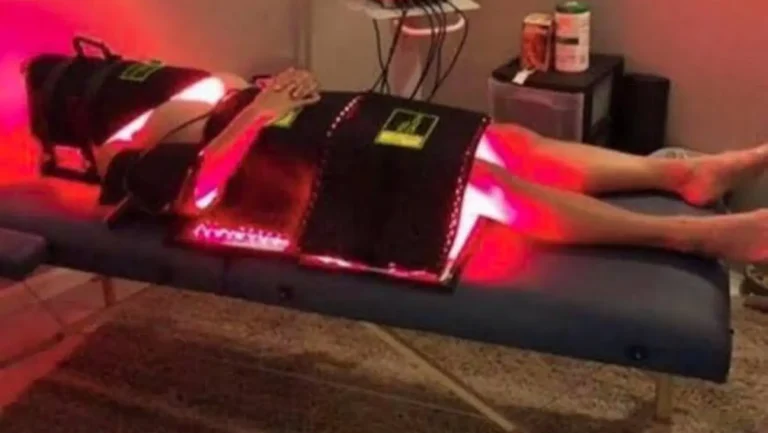
Non-surgical options work through heat and controlled injury that stimulate new collagen. They cannot remove excess skin, only tighten what’s already there to a modest degree.
| Treatment | Best For | Limitation |
| Radiofrequency | Mild laxity | Won’t remove excess skin |
| Ultrasound | Mild tightening | Requires multiple sessions |
| Microneedling | Texture improvement | Limited effect on large folds |
| Laser treatments | Surface quality | Not for major excess skin |
Radiofrequency and ultrasound devices, such as those referenced by the American Society of Plastic Surgeons, heat the dermis to trigger new collagen production over 3 to 6 months. They work best for people with mild to moderate laxity and healthy skin quality to begin with.
Microneedling creates controlled micro-injuries that trigger a wound-healing response, improving surface texture more than deep folds. Laser treatments resurface the top skin layers and improve tone, but none of these methods remove the actual excess skin hanging after massive weight loss. The American Society of Plastic Surgeons states that nonsurgical options are generally less effective than surgery and require more sessions to reach a patient’s goals.
FAQ
How can I tighten loose skin after weight loss naturally?
Combine resistance training 3 times weekly with 1.2 to 1.6 g/kg daily protein and collagen-supporting nutrients. This improves mild to moderate laxity but won’t remove large excess skin folds.
Does strength training help tighten loose skin?
Yes. A 2023 Scientific Reports trial found 16 weeks of resistance training increased dermal thickness and skin elasticity in middle-aged women, independent of muscle size gains.
Can loose skin go away without surgery?
Only mild laxity improves without surgery. Significant excess skin, especially after losses over 50 pounds, typically requires a skin removal procedure like abdominoplasty or a body lift.
Does collagen help tighten loose skin?
Possibly, modestly. A 2019 randomized trial found collagen peptide supplements improved skin elasticity and hydration after 12 weeks, but effects were measured with instruments, not visible to the eye.
How long does it take for skin to tighten after weight loss?
Natural retraction happens mainly in the first 12 to 18 months after reaching a stable weight. Non-surgical treatments show visible results in 3 to 6 months of consistent sessions.
Can rapid weight loss increase loose skin?
Evidence is mixed. A 2021 WeightWatchers Science Team review found no strong link between weight loss speed and skin laxity; total weight lost and age matter more than pace.
When is surgery recommended for excess loose skin?
Surgery is recommended once weight has stabilized for 3 to 6 months and skin folds cause rashes, infection, or mobility issues that non-surgical treatments cannot resolve.
Do skin-tightening creams really work?
No, not for structural sagging. Topical creams with retinol or vitamin C can improve surface texture slightly but cannot penetrate deep enough to rebuild dermal collagen structure.
Can hydration improve skin elasticity?
Yes, modestly. Well-hydrated skin cells function better and appear plumper, but hydration alone cannot rebuild damaged collagen or elastin fibers.
Is loose skin after weight loss permanent?
Often, yes, for major weight loss. Skin with severely damaged elastin rarely fully retracts on its own; surgical removal is the only method that reliably eliminates significant excess skin.
Sources
- Body Contouring Procedures Following Weight Loss, American Society of Plastic Surgeons
- Body Contouring, American Society of Plastic Surgeons
- Resistance Training Rejuvenates Aging Skin by Reducing Circulating Inflammatory Factors and Enhancing Dermal Extracellular Matrices, PMC
- A Collagen Supplement Improves Skin Hydration, Elasticity, Roughness, and Density, PMC
- Loose Skin After Weight Loss: Causes and Treatment Options, GoodRx Health
- How Weight Loss Affects Your Skin, WeightWatchers
- Loose Skin After Weight Loss, WebMD
- Sagging Skin After Weight Loss? Here’s What You Can Do, U.S. Dermatology Partners
- Post-Bariatric Plastic Surgery: Abdominoplasty, the State of the Art in Body Contouring, PMC
- How to Tighten Loose Skin After Weight Loss, Forbes Health
Medical Disclaimer: This article is for general educational purposes only. It does not replace advice from a board-certified dermatologist or plastic surgeon. Talk to a doctor before starting supplements, treatments, or surgery for loose skin.