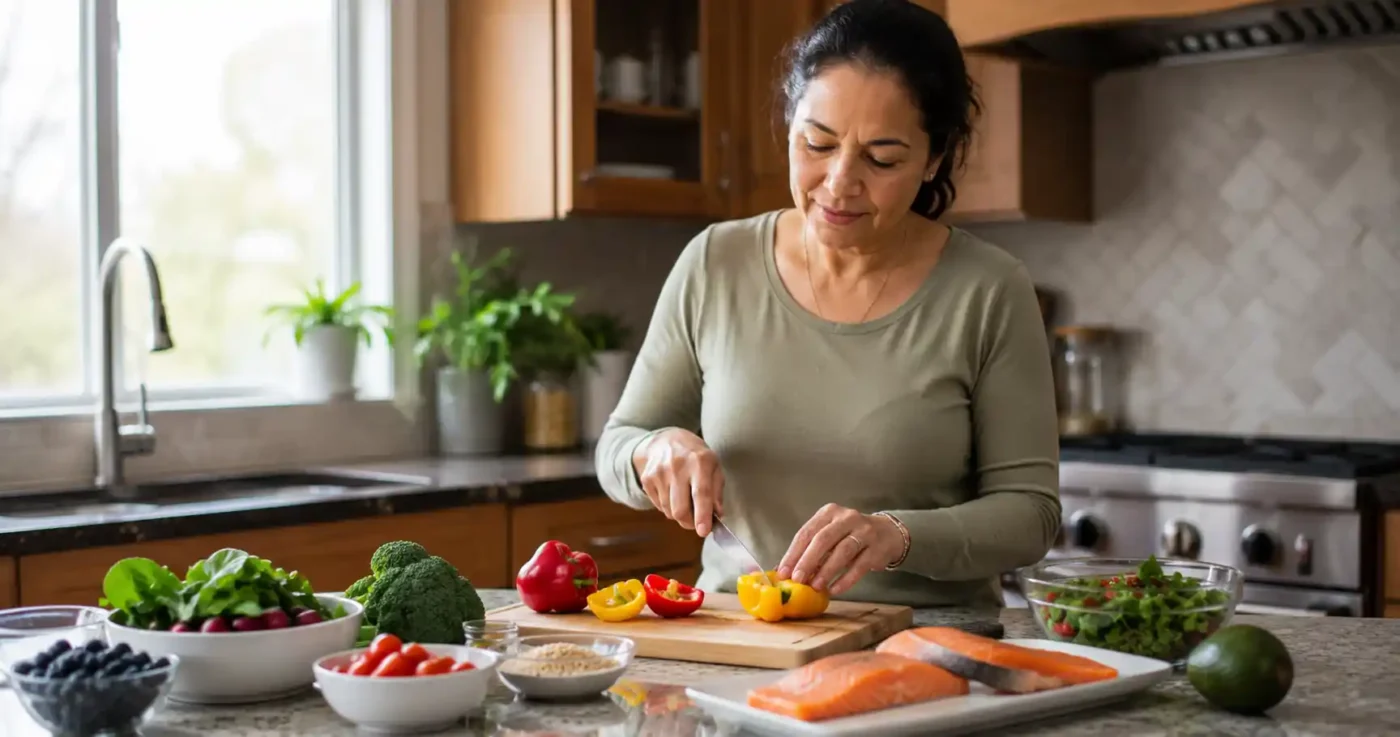

A menopause diet built around whole foods, adequate calcium, and fewer processed triggers can ease hot flashes, protect bone density, and support long-term heart health. Food will not stop menopause. But specific choices around soy, caffeine, alcohol, and calcium change how rough the transition feels week to week. This guide covers what may help, what commonly makes symptoms worse, and whether supplements deserve a spot in your routine.
Key Takeaways
- A Mediterranean or DASH-style eating pattern, built on vegetables, fish, and whole grains, is the closest thing to an evidence-backed menopause diet.
- Soy and other phytoestrogens menopause research covers may ease hot flashes for some women, but response varies sharply based on gut bacteria.
- Caffeine, alcohol, spicy food, and ultra-processed snacks are the most commonly reported triggers for hot flashes and night sweats.
- Calcium and menopause go together for a reason: bone loss accelerates once estrogen drops, so intake matters more after 50.
- Most menopause supplements lack strong clinical evidence. Talk to your doctor before starting one, and treat this as food guidance, not a weight-loss plan.
Why Diet Matters More During Menopause
Estrogen decline changes how the body stores fat, handles blood sugar, and maintains bone density. Our companion article on why menopause causes weight gain explains that metabolic shift in detail.
Diet will not reverse the hormonal shift itself, but the right food choices reduce how many symptoms you feel and protect your bones and heart over decades, not just months. Because menopause often overlaps with broader hormonal imbalance, a stable eating pattern matters more now than it did in your 30s.
Foods That May Help With Symptoms
Certain nutrients directly counter the physical effects of estrogen loss. Calcium and vitamin D slow bone loss, omega-3s support heart and mood, and fiber steadies blood sugar. Building what to eat during menopause around these categories addresses the downstream effects of the transition, not just hot flashes.
- Calcium-rich foods (dairy, canned salmon with bones, fortified plant milk, leafy greens like kale and bok choy) support bone density. Women over 50 need about 1,200 mg of calcium daily, per the National Institutes of Health Office of Dietary Supplements, and most people fall short through diet alone.
- Vitamin D (fatty fish, egg yolks, fortified milk, sensible sun exposure) helps the body absorb that calcium. The National Academy of Medicine sets the target at 600 to 800 IU per day for adults over 50.
- Omega-3 fatty acids (salmon, sardines, walnuts, flaxseed) support cardiovascular health, which becomes a bigger concern once estrogen’s protective effect on the heart fades after menopause.
- Fiber (oats, beans, lentils, vegetables, whole grains) slows blood sugar spikes and feeds the gut bacteria involved in processing plant compounds like soy isoflavones, covered below.
- Lean protein (poultry, fish, eggs, legumes, tofu) helps preserve muscle mass, since women lose muscle faster after menopause.
| Nutrient | Daily target (ages 51+) | Common food sources |
| Calcium | 1,200 mg | Dairy, canned salmon with bones, fortified plant milk, kale |
| Vitamin D | 600 to 800 IU | Fatty fish, egg yolks, fortified milk, sunlight |
Expert Insight: Bone density loss moves fastest in the first five to seven years after your final period, not gradually across decades. That narrow window is when calcium and vitamin D intake matters most, before the rate of loss slows closer to typical age-related decline.
The Truth About Phytoestrogens and Soy
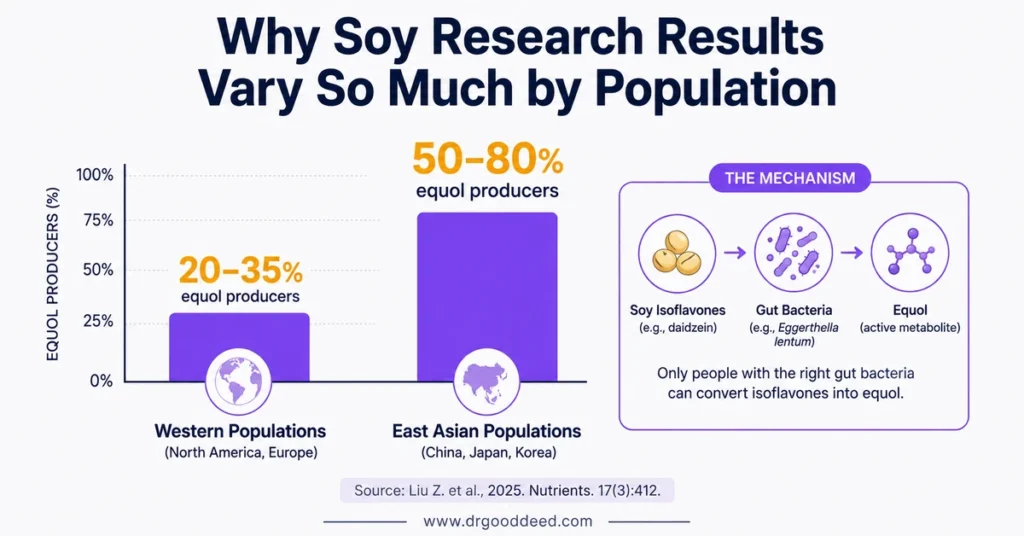
Soy and other phytoestrogens menopause guides mention, like isoflavones in tofu, edamame, and flaxseed, structurally resemble estrogen and may ease hot flashes for some women.
- Isoflavones must be converted by gut bacteria into a compound called equol before they become fully active in the body.
- Only about 20 to 35 percent of women in Western populations produce equol efficiently, compared with 50 to 80 percent in East Asian populations, according to 2025 research published in Frontiers in Nutrition.
- Women who are eqauol producers tend to report better hot flash relief and stronger bone-protective effects than non-producers, according to research published in the American Journal of Clinical Nutrition.
- There is no reliable at-home test to confirm whether you are an equol producer, so your response to soy remains genuinely a matter of trial and observation.
Cleveland Clinic’s Dr. Pattimakiel has pointed to this individual variation as the reason soy works well for some women and does nothing for others. If soy foods do not noticeably ease your hot flashes within a few weeks, that does not mean your menopause diet has failed. It likely means your gut bacteria are not converting isoflavones into their active form.
Foods and Drinks That Commonly Worsen Symptoms
While triggers differ by person, several foods to avoid menopause flare-ups fall into consistent categories mentioned below.
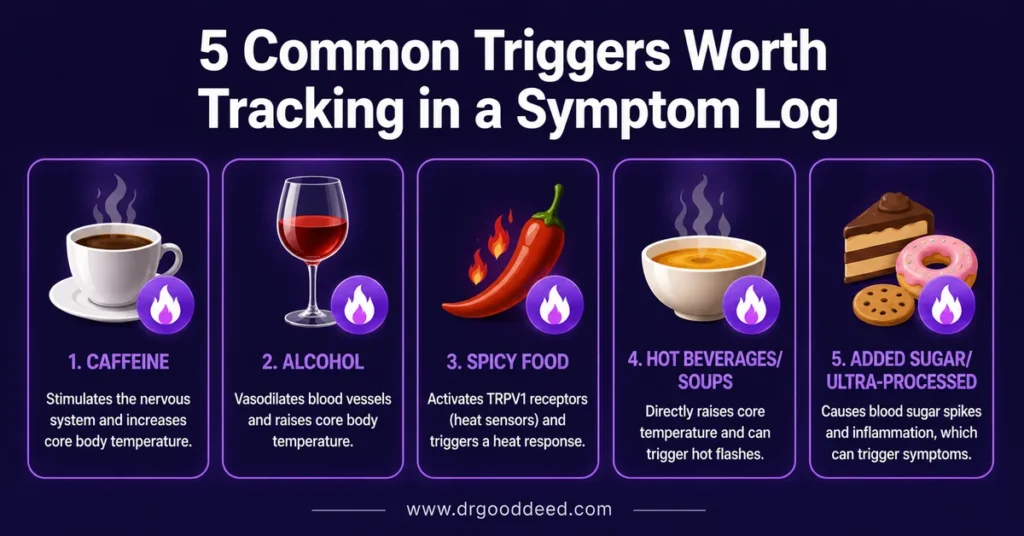
- Caffeine: A Mayo Clinic study of more than 1,800 women found caffeine intake was associated with more bothersome hot flashes and night sweats, though the researchers describe the link as preliminary and still developing.
- Alcohol: Alcohol widens blood vessels and disrupts temperature regulation, which can trigger or worsen hot flashes. The effect is stronger with more than one drink daily.
- Spicy food: Capsaicin, the compound that makes chili peppers hot, raises core body temperature and can set off a flash in someone already prone to temperature swings.
- Hot beverages and soups: Anything that raises internal temperature, even without caffeine, can trigger a flash in sensitive individuals.
- Added sugar and ultra-processed foods: These contribute to blood sugar swings and low-grade inflammation, both of which are increasingly linked to worse foods for hot flashes research points to as symptom amplifiers, not just weight gain.
Most women do better identifying their own specific triggers through a simple food and symptom log rather than eliminating all five categories at once.
Should You Take Supplements for Menopause?
According to Henry Ford Health, caution first. Menopause supplements make up a global market Harvard Health estimates at $17 billion, growing more than 5 percent yearly through 2030, and most products lack strong clinical evidence behind their marketing claims.
Henry Ford Health explicitly warns patients to be wary of any supplement, pill, or potion promising to balance hormones, relieve hot flashes, or boost metabolism, and to talk to a doctor first instead of self-prescribing.
- Black cohosh, one of the most searched menopause supplements, is not FDA-approved. Hence, limit use to six months at most, with medical supervision.
- Herbal blends marketed as hormone balancing often list proprietary formulas without disclosing individual ingredient amounts, which makes dosing and safety hard to evaluate.
- Dietary supplements are regulated only for known toxins under the Dietary Supplement Health and Education Act. A product being sold legally does not confirm it works.
- Nutrient-specific supplementation, such as calcium or vitamin D, makes sense mainly when blood testing confirms an actual deficiency, per Henry Ford Health dietitians.
- Fish oil and magnesium have limited evidence for symptom relief. The Menopause Charity notes there is very little evidence supporting magnesium specifically for menopause symptoms.
If you are considering any menopause supplements, bring the exact product and dose to your next doctor visit rather than starting on your own.
Pro Tip: Ask your doctor for a blood panel checking vitamin D, calcium, and thyroid function before buying any menopause supplement. Fatigue and brain fog often overlap between menopause and thyroid dysfunction, and testing catches that distinction in one visit instead of months of guessing.
Building a Sustainable Eating Pattern, Not a Strict Diet
A menopause diet works best as a long-term pattern. The Mediterranean and DASH eating styles, both built on vegetables, whole grains, fish, and healthy fats, are the patterns most consistently linked to better outcomes at this stage of life.
- Build meals around vegetables and whole grains first, then add lean protein and healthy fats, rather than centering meals on refined carbohydrates.
- Swap one processed snack a day for a whole-food option, like fruit with nuts, instead of eliminating entire food groups at once.
- Stay consistent with hydration. Dehydration can worsen fatigue and headaches that already overlap with menopause symptoms.
- For broader, non-restrictive lifestyle strategies, see our guide on natural weight loss tips, which covers sustainable habits beyond diet alone.
Small, consistent swaps outperform strict elimination diets for most women managing menopause nutrition changes over the long run.
When to Talk to a Doctor or Dietitian
See a doctor or registered dietitian if hot flashes disrupt sleep most nights, if you notice unexplained weight changes, or if you are considering a supplement alongside prescription medication.
A dietitian can test for nutrient deficiencies before setting calcium and vitamin D targets specific to your bone density results. If diet changes alone are not managing symptoms after several weeks, hormone therapy and non-hormonal prescription options are worth discussing directly with your provider.
Sources
- Henry Ford Health. What To Eat (or Not) During Menopause. link
- Cleveland Clinic. Menopause Diet: What to Eat to Help Manage Symptoms. link
- Cleveland Clinic. What to Eat When You Have Hot Flashes. link
- Mayo Clinic. Hot flashes: Diagnosis and treatment. link
- Mayo Clinic News Network. Study Suggests Caffeine Intake May Worsen Menopausal Hot Flashes, Night Sweats. link
- National Institutes of Health, Office of Dietary Supplements. Calcium: Health Professional Fact Sheet. link
- U.S. Preventive Services Task Force. Vitamin D, Calcium, or Combined Supplementation for the Primary Prevention of Falls and Fractures. link
- Harvard Health Publishing. Menopause supplements: Effective relief or empty promises? link
- Frontiers in Nutrition. S-equol status modulates skin response to soy isoflavones in postmenopausal women. link
- American Journal of Clinical Nutrition. Is equol the key to the efficacy of soy foods? link
Medical disclaimer: This article is for general educational purposes and does not replace personalized medical or nutrition advice. Talk to your doctor or a registered dietitian before making major dietary changes or starting any supplement.