
Signs you may need hormone replacement therapy (HRT) depend on the type of hormone deficiency, but common signs include persistent hot flashes or night sweats, irregular or absent periods, vaginal dryness, reduced libido, sleep problems, mood changes, fatigue, difficulty concentrating, and symptoms associated with low testosterone, such as reduced muscle mass or sexual function.
HRT may be appropriate for some people, particularly when symptoms are related to menopause or medically confirmed hormone deficiency, but these symptoms can have other causes, so a healthcare professional should evaluate your symptoms and medical history before starting treatment.
Key Takeaways
- Hot flashes, night sweats, and vaginal dryness are the most common signs you need hormone replacement therapy, but severity and frequency matter more than any single symptom.
- Symptoms alone don’t decide the treatment. Age, years since your last period, and personal health history all factor into whether HRT fits your case.
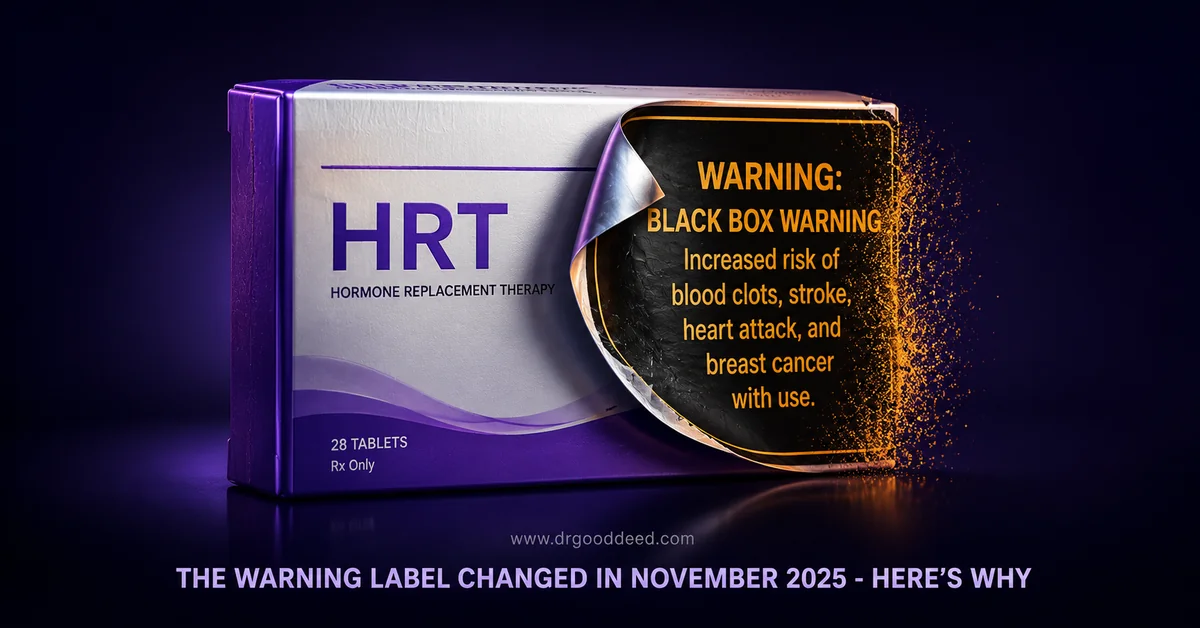
- The FDA removed the black box warning from menopausal hormone therapy in November 2025, based on updated evidence and the timing hypothesis.
- HRT is generally safest when started within 10 years of menopause or before age 60. It is not the right fit for everyone.
- Talk with your doctor about your specific history before deciding. This is a shared decision, not a self-diagnosis.
Common Signs That Point to HRT
Recognizing the signs you need hormone replacement therapy starts with tracking how often symptoms disrupt daily life. Vasomotor symptoms, the clinical term for hot flashes and night sweats, affect up to 80% of women during the menopause transition, according to Harvard Health.
- Hot flashes and night sweats: Sudden heat, flushing, and sweating that disrupt work, sleep, or sleep quality several times a week point toward a hormonal cause rather than stress or diet.
- Vaginal dryness and painful sex: Estrogen decline thins vaginal tissue. Many women mistake this for a yeast infection because that’s what similar symptoms meant earlier in life, when the real cause now is estrogen loss.
- Fragmented sleep: Waking repeatedly, independent of night sweats, reflects estrogen’s role in regulating sleep architecture, not just temperature control.
- New or worsening mood changes: Irritability, anxiety, or low mood that appears alongside irregular periods often tracks hormonal fluctuation rather than a standalone mental health shift.
- Bone density concerns: A DEXA scan showing early bone loss, or a family history of osteoporosis, is itself a clinical sign worth discussing, even without obvious daily symptoms.
Multiple overlapping symptoms, especially ones that interfere with sleep, work, or relationships, are what typically prompt a doctor to evaluate HRT candidacy in detail.
Symptoms Alone Don’t Decide This, Here’s What Actually Does
Symptoms open the conversation; they don’t finish it. Whether I need hormone replacement therapy has a “yes” answer depends on a broader clinical picture.
- Age at treatment start: Women who begin therapy before age 60 tend to see the strongest benefit-to-risk ratio, according to Menopause Society guidance summarized by AJMC.
- Years since your final period: Starting within 10 years of menopause onset carries a substantially different risk profile than starting a decade or more later, the basis of the timing hypothesis.
- Personal and family health history: A history of blood clots, stroke, hormone-sensitive cancer, or liver disease shifts the calculation regardless of how severe symptoms feel.
- Cardiovascular and metabolic status: Blood pressure, cholesterol, and diabetes status affect which formulation and delivery route (oral versus transdermal) a doctor recommends.
- Symptom severity and quality-of-life impact: Two women with identical hot flash frequency can have very different candidacy profiles once the rest of their health picture is factored in.
HRT candidates are identified through this combined assessment. A woman with mild hot flashes and a clean cardiovascular history may be a stronger candidate than one with severe symptoms and a clotting history.
Understanding the Real Risk Picture (What Changed in November 2025)
HRT black box warning removal is the single biggest shift in menopause care since the 2002 Women’s Health Initiative (WHI) trial first triggered widespread fear of hormone therapy. On November 10, 2025, the FDA announced it would remove black box warnings covering cardiovascular disease, breast cancer, and probable dementia from menopausal hormone therapy labels, according to the FDA’s own press release.
- What drove the original warning: The 2002 WHI trial linked combined hormone therapy to elevated risks. The average participant age was 63, over a decade past typical menopause onset, a detail that got lost in two decades of blanket caution.
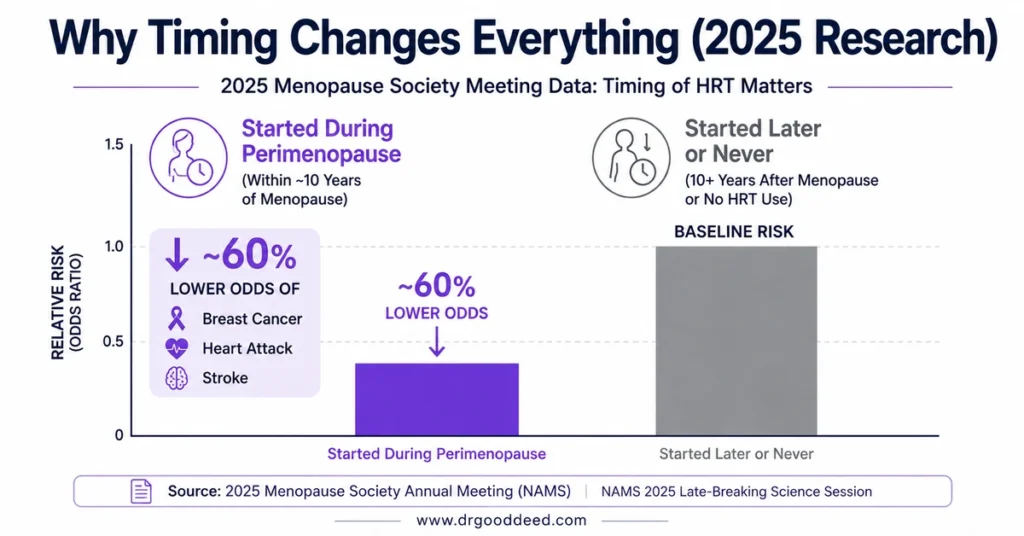
- The timing hypothesis: Research presented at the Menopause Society’s 2025 Annual Meeting found women who started estrogen therapy during perimenopause had roughly 60% lower odds of breast cancer, heart attack, and stroke than those who started later or never used hormones.
- What the FDA changed: Labels are being rewritten with age-specific guidance, noting potential long-term benefit when hormone therapy starts within 10 years of menopause or before age 60, per Harvard Health’s coverage of the announcement.
- What didn’t change: Real risks still exist and still vary by individual history. The FDA’s action reflects updated evidence stratified by age and timing, not a blanket declaration that HRT is risk-free for everyone.
This site’s own coverage of stroke risk and hormone therapy cites a 31% increase in ischemic stroke risk tied to combined estrogen-progestin therapy from the original WHI data. That figure describes a population with an average age of 63, more than a decade past typical menopause onset. It does not describe the risk profile for women starting therapy in the window guidelines now recommend.
Pro Tip: Ask your doctor specifically which WHI-era statistic they’re referencing and at what age that data was collected. A stroke or clotting risk figure calculated in women averaging 63 years old tells you little about your risk if you’re 51 and two years past your last period.
Who Should Not Consider HRT Right Now
Certain personal or family health histories shift the risk-benefit balance enough that most clinicians will steer toward non-hormonal options instead.
- History of blood clots or stroke: A prior deep vein thrombosis, pulmonary embolism, or stroke generally rules out systemic estrogen therapy without further specialist input.
- Active or recent hormone-sensitive cancer: This includes certain breast cancer risk factors already tied to estrogen exposure, along with a personal history of estrogen-receptor-positive breast cancer or endometrial cancer.
- Uncontrolled cardiovascular disease: Unmanaged high blood pressure, recent heart attack, or unstable coronary artery disease typically requires stabilization before HRT is reconsidered.
- Unexplained vaginal bleeding: This needs diagnostic workup first. Starting hormone therapy before identifying the cause can mask a serious underlying condition.
- Active liver disease: Oral estrogen is metabolized through the liver, so significant liver impairment usually points toward non-oral options or avoiding systemic therapy altogether.
If any of these apply to you, it means the conversation with your doctor needs to go deeper than a standard symptom checklist before any prescription gets written.
Local vs Whole-Body Treatment: Not the Same Decision
Systemic vs local hormone therapy is one of the most misunderstood distinctions in this entire topic, and conflating the two leads to unnecessary hesitation.
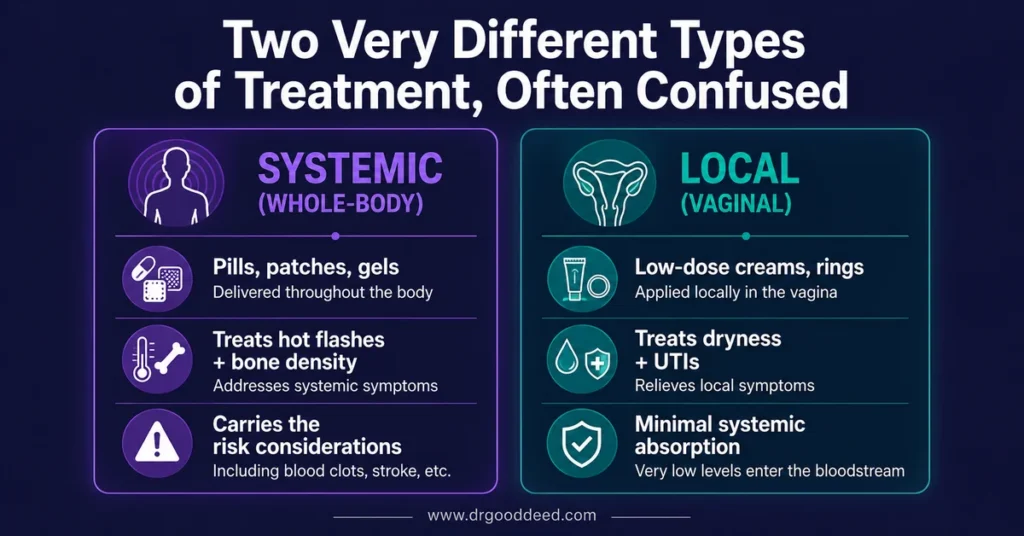
- Systemic (whole-body) therapy: Pills, patches, gels, or sprays that circulate estrogen throughout the body. This treats hot flashes, night sweats, and bone density loss, and it’s the option carrying the risk considerations discussed above.
- Local (vaginal) estrogen: Low-dose creams, rings, or tablets placed directly in the vagina. This treats dryness, painful sex, and recurrent urinary tract infections tied to genitourinary syndrome of menopause.
- Why the risk profile differs: Local vaginal estrogen delivers a small fraction of the dose that reaches systemic circulation, which is why the FDA’s black box warning removal extended to topical vaginal estrogen products specifically, according to CancerNetwork’s coverage of the labeling update.
- Why this matters for candidacy: A woman ruled out for systemic therapy due to a clotting history may still be a reasonable candidate for local vaginal estrogen, since the two carry meaningfully different risk calculations.
If hot flashes aren’t your main issue but vaginal dryness is, that’s a narrower and generally lower-risk conversation to have with your doctor.
What to Expect If You Start HRT
Most women notice hot flash and night sweat improvement within two to four weeks of starting systemic therapy, though full effect can take up to three months. Vaginal symptoms treated with local estrogen often improve on a similar timeline, sometimes faster.
- Early side effects can include breast tenderness, bloating, or spotting as your body adjusts, most of which settle within the first few cycles.
- Your doctor will likely start at the lowest effective dose and adjust based on symptom response and any side effects.
- A follow-up visit within three months is standard, to reassess dosing, confirm symptom improvement, and check for any new health concerns.
- Ongoing use is reevaluated periodically, not set on autopilot. Duration is a decision you and your doctor revisit together, not a fixed prescription length.
Expect this to be iterative. Finding the right formulation and dose sometimes takes more than one adjustment before symptoms settle into meaningful relief.
How to Talk to Your Doctor About It
Track your hot flash frequency, sleep disruption, and any bleeding changes for two to three weeks before your appointment. Mention your family history of clots, cancer, or heart disease directly, since these details shape the entire conversation. Ask where you fall relative to the 10-year, age-60 treatment window, and ask specifically whether systemic or local therapy fits your symptoms. If your doctor hasn’t mentioned the FDA’s November 2025 labeling update, bring it up.
For broader context on how hormone shifts show up beyond menopause, see our guide on hormonal imbalance. If sleep disruption is a major symptom for you, our piece on sleep apnea in women covers a related pattern worth ruling out.
Sources
- FDA: HHS Advances Women’s Health, Removes Misleading FDA Warnings on Hormone Replacement Therapy link
- Harvard Health: FDA Removes Menopause Hormone Therapy Black Box Warnings link
- NBC News: Hormone Replacement Therapy Will No Longer Carry a Warning Label, FDA Says link
- CNN: HRT Black Box Safety Warning to Be Removed From Hormone Therapy for Menopause link
- CancerNetwork: FDA Removes Black Box Warning for Breast Cancer and Other Indications on HRT Products link
- AJMC: Hormone Therapy for Menopause: Timing, Safety, and Best Candidates link
- The ObG Project: The Menopause Society Hormone Therapy Statement link
- Hone Health: Menopause Society Meeting 2025, Longevity and Hormone Insights link
- PMC: Menopausal Hormone Therapy, Risks, Benefits and Emerging Options, A Narrative Review link
- The Lancet Diabetes & Endocrinology: Is It Time to Revisit the Recommendations for Initiation of Menopausal Hormone Therapy? link