
Stomach pain after drinking coffee rarely comes down to caffeine alone. Coffee contains several compounds that stimulate acid production, speed up colon activity, and irritate an already sensitive gut lining. These effects overlap with broader signs of digestive problems, so recognizing which mechanism applies to you makes treatment far more targeted than simply cutting caffeine.
Key Takeaways
- Coffee triggers acid release through chlorogenic acids and N-alkanoyl-5-hydroxytryptamides, not just caffeine, so switching brands rarely solves stomach pain after drinking coffee on its own.
- Coffee activates the gastrocolic reflex, a normal digestive response that can feel urgent but is not a disorder.
- Decaf coffee still contains the acid-stimulating plant compounds, so it can cause stomach pain after drinking coffee even without caffeine.
- Dark roast coffee contains more N-methylpyridinium (NMP), a compound that actually suppresses acid production.
- Drinking coffee on an empty stomach worsens irritation because there is no food to buffer the acid surge.
Why Does Coffee Stimulate Excess Stomach Acid?
Coffee stimulates gastric acid secretion mainly through chlorogenic acids and N-alkanoyl-5-hydroxytryptamides, compounds found in both caffeinated and decaffeinated beans.
These compounds act directly on acid-producing parietal cells in the stomach lining, independent of caffeine’s own mild stimulant effect.
- Chlorogenic acids increase gastrin release, a hormone that signals the stomach to produce more acid.
- N-alkanoyl-5-hydroxytryptamides directly stimulate acid-secreting cells, adding a second irritation pathway beyond caffeine.
- Caffeine itself relaxes the lower esophageal sphincter, letting acid move upward and worsening upper abdominal pain.
- People with existing gastritis or a sensitive stomach lining absorb this acid surge more intensely.
Because multiple compounds drive acid release at once, cutting caffeine while keeping regular coffee intake often fails to relieve symptoms fully.
Why Does Coffee Give You an Urgent Need to Poop?
Coffee, hot or cold, caffeinated or not, activates the gastrocolic reflex, a normal physiological response where food or liquid entering the stomach signals the colon to contract. It explains why urgency after coffee happens even on an empty stomach.
If you want to know the full retraining approach, read need to poop right after eating for step-by-step guidance.
- The gastrocolic reflex is strongest in the morning, which is why many people feel it right after their first cup.
- Coffee’s acidity and warmth both intensify colon motility compared with room-temperature water.
- People with irritable bowel syndrome often report a stronger and faster gastrocolic response to coffee.
- This reflex is protective, not harmful, though frequent urgency can disrupt daily routines.
Is It the Caffeine, or Can Decaf Also Cause Stomach Pain?
Decaf coffee retains most of the chlorogenic acids and N-alkanoyl-5-hydroxytryptamides that stimulate stomach acid, so it can still cause stomach pain after drinking coffee despite containing under 3% of the original caffeine.
- Decaffeination removes caffeine but not the plant acids responsible for gastrin release.
- Some decaf processing methods concentrate certain acids depending on bean origin and roast profile.
- People with caffeine sensitivity may feel calmer overall on decaf, but acid-related burning can persist unchanged.
- True relief usually requires reducing total coffee volume or switching roast type, not just removing caffeine.
Does Dark Roast Really Cause Less Stomach Irritation Than Light Roast?
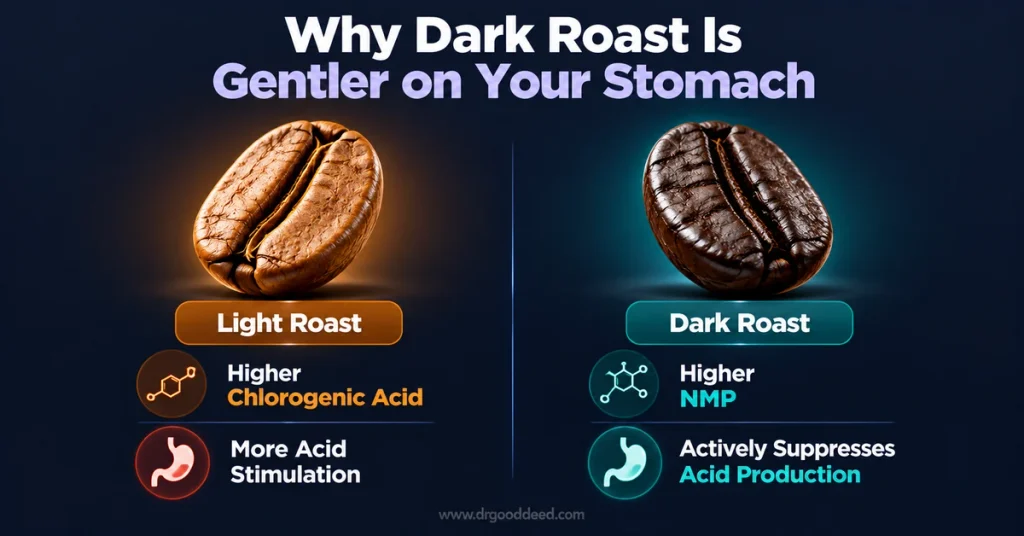
Yes, dark roast coffee generally causes less stomach irritation than light roast because roasting increases N-methylpyridinium (NMP), a compound shown to suppress acid-producing cells.
- NMP forms during the roasting process and increases with roast intensity and duration.
- Higher NMP levels actively inhibit acid secretion from stomach cells rather than simply diluting existing acid.
- Dark roast coffee also contains slightly less chlorogenic acid than light roast, further reducing acid stimulation.
- The bitterness of dark roast comes from different compounds unrelated to its gentler digestive effect.
Is Coffee on an Empty Stomach Worse?
Yes, coffee on an empty stomach worsens stomach pain after drinking coffee because there is no food present to buffer the acid surge or slow gastric emptying. Caffeine also directly relaxes the lower esophageal sphincter, causing acid reflux.
- Food dilutes stomach acid and slows the rate at which it contacts the stomach lining.
- Coffee before breakfast produces a sharper, faster acid spike than coffee taken after a meal.
- People prone to acid reflux often notice symptoms are worse specifically on empty-stomach mornings.
- Adding even a small snack, like toast, meaningfully reduces peak acid exposure.
Could Your Coffee Pain Be a Sign of an Ulcer or GERD?
Stomach pain after drinking coffee does not always mean a stomach ulcer or GERD, but coffee commonly worsens existing cases by increasing acid production and relaxing the esophageal sphincter.
- Burning pain that worsens with coffee and improves briefly with food may indicate a stomach ulcer.
- Chest burning after coffee that worsens when lying down is a common GERD symptom pattern.
- Coffee-triggered pain accompanied by black stools or vomiting needs urgent medical attention.
- H. pylori infection and NSAID use are the leading causes of ulcers, with coffee acting as an aggravating factor rather than a root cause.
How to Fix Your Coffee Routine to Avoid Stomach Irritation
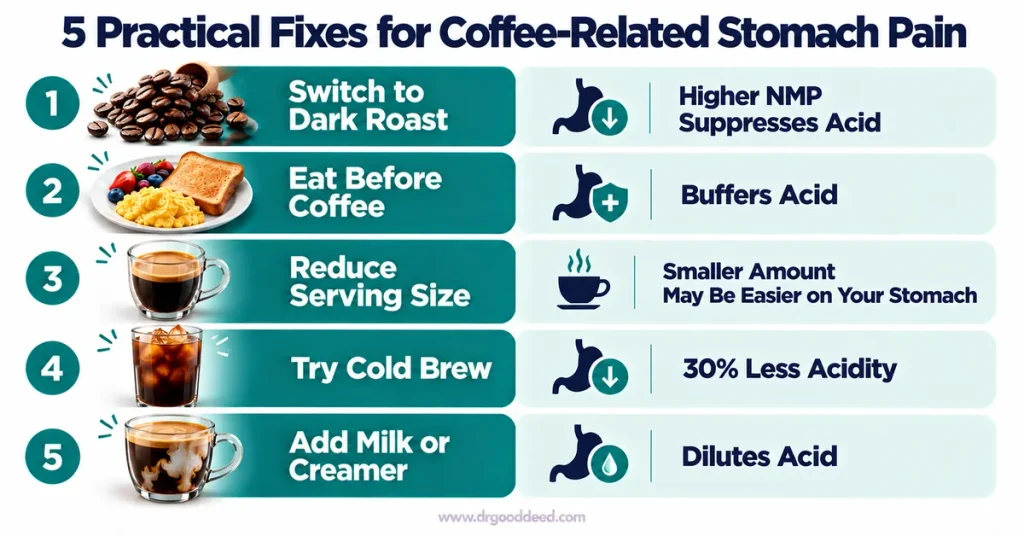
| Change | Why It Helps |
| Switch to dark roast | Higher NMP suppresses acid production |
| Eat before coffee | Food buffers acid and slows gastric emptying |
| Reduce serving size | Less total acid-stimulating compound exposure |
| Try cold brew | Lower acidity due to brewing method |
| Add milk or a plant-based creamer | Dilutes acid concentration reaching the stomach lining |
Knowing how much caffeine is in a cup of coffee also helps identify whether caffeine load, rather than acid, is driving your symptoms.
Pro Tip: Track whether your stomach pain after drinking coffee happens within 15 minutes versus after 30 to 60 minutes. Fast-onset pain usually points to direct acid irritation, while delayed pain paired with cramping more often reflects the gastrocolic reflex reaching the colon.
When Should You See a Doctor?
See a doctor if coffee-related pain occurs daily, worsens over weeks, or comes with weight loss, black stools, vomiting, or difficulty swallowing. These signs suggest an underlying condition like a stomach ulcer or GERD that needs evaluation rather than dietary adjustment alone.
FAQs
Can you build a tolerance to coffee’s stomach effects over time?
Yes, regular drinkers often develop partial tolerance to coffee’s acid-stimulating effects over several weeks, though the gastrocolic reflex response typically stays consistent regardless of how long someone has been drinking coffee.
Does adding milk or cream help reduce stomach irritation?
Yes, milk and cream dilute the acid concentration reaching the stomach lining and slightly slow gastric emptying, which can meaningfully reduce burning sensations compared with drinking coffee completely black.
Can cold brew be gentler on the stomach than hot coffee?
Yes, cold brew typically contains 30% less acidity than hot-brewed coffee because the cold extraction process draws out fewer acidic compounds, though it can still contain irritating chlorogenic acids.
How long does coffee-related stomach pain typically last?
Acid-driven pain usually resolves within 30 to 90 minutes as stomach contents move into the small intestine, while gastrocolic reflex symptoms typically pass within 20 to 40 minutes after a bowel movement.
Can coffee worsen an existing ulcer?
Yes, coffee stimulates acid production that can intensify pain from an existing stomach ulcer, though it does not create new ulcers; H. pylori infection and NSAID use remain the primary causes.
Sources
- National Institute of Diabetes and Digestive and Kidney Diseases (NIDDK) – Peptic Ulcer Disease link
- American College of Gastroenterology – GERD Guidelines link
- Journal of Agricultural and Food Chemistry – Coffee Roasting and NMP Formation link
- American Chemical Society – Dark Roast Coffee and Stomach Acid Research link
- National Institutes of Health – Caffeine and Gastroesophageal Reflux link
- Harvard Health Publishing – Coffee and Digestive Health link
- U.S. Food and Drug Administration – Caffeine Content Chart link
Medical Disclaimer: This article is for general information only and is not medical advice. It does not replace a diagnosis, treatment plan, or guidance from a qualified healthcare professional. Always talk to your doctor about your own symptoms and before starting, stopping, or changing any treatment. If you think you may be having a medical emergency, call 911 or go to your nearest emergency room.