
Medically reviewed by Dr Chandril Chugh, Neurology
An electric shock in the neck that shoots down your spine when you bend your head forward is often a symptom called Lhermitte’s sign. It can occur when the nerves in your spinal cord are irritated or damaged. Multiple sclerosis (MS) is a common cause, but neck arthritis, vitamin B12 deficiency, and previous injuries can also trigger it. Knowing what the shock feels like, what causes it, and when to seek medical care can help you decide what to do next.
Key Takeaways
- An electric shock in the neck when you bend your head is usually Lhermitte’s sign, from irritated spinal cord nerves; see a doctor.
- Multiple sclerosis is a common cause, but Lhermitte’s sign does not automatically mean you have MS.
- Neck arthritis, spinal cord compression, low vitamin B12, cancer treatment, and neck injuries are other possible causes.
- Each shock usually lasts seconds, although episodes may recur until the underlying cause improves.
- Call 911 after a serious head or neck injury or if you develop sudden weakness or loss of bladder or bowel control.
What Lhermitte’s Sign Feels Like
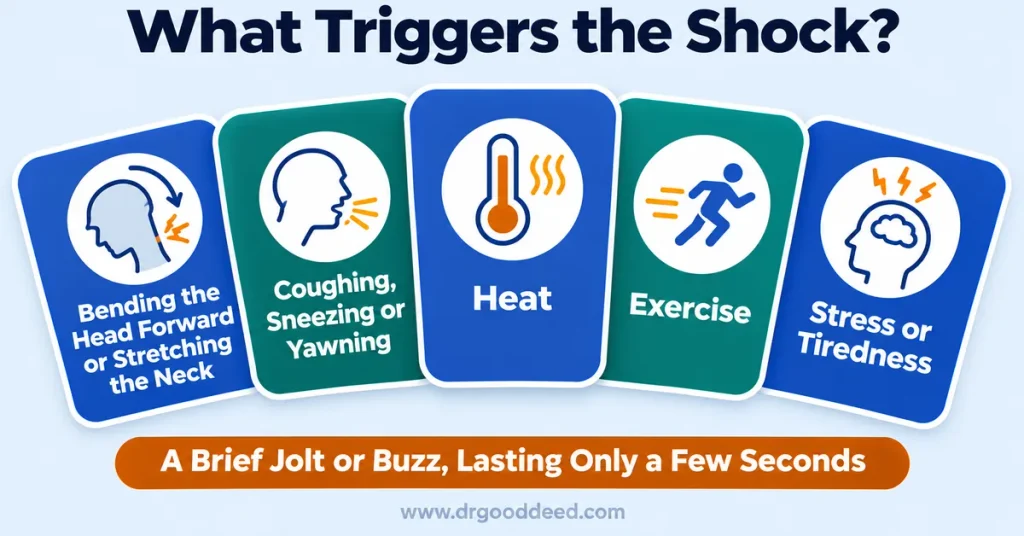
Lhermitte’s sign feels like a brief electric jolt or buzzing sensation that travels from your neck down your spine when you bend your head forward. The sensation may extend into your arms or legs and last only a few seconds.
You may notice it when looking down, bending your neck, coughing, or sneezing. Some people experience repeated shocks throughout the day.
Common triggers include:
- Bending your head forward or stretching your neck.
- Coughing, sneezing, or yawning.
- Heat, exercise, stress, or tiredness.
The sensation can be uncomfortable, but the shock itself does not necessarily indicate permanent damage. Lhermitte’s sign is a symptom, not a disease, so identifying its underlying cause is important.
It is also different from brain zaps, which are brief electrical sensations often associated with changes in certain medications.
Why Bending Your Neck Triggers the Shock
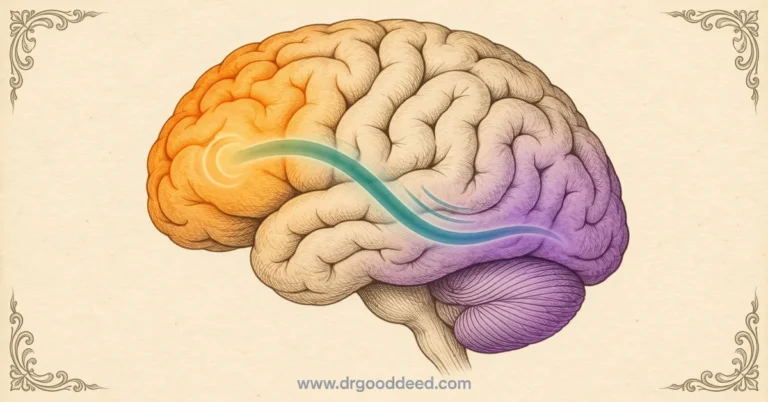
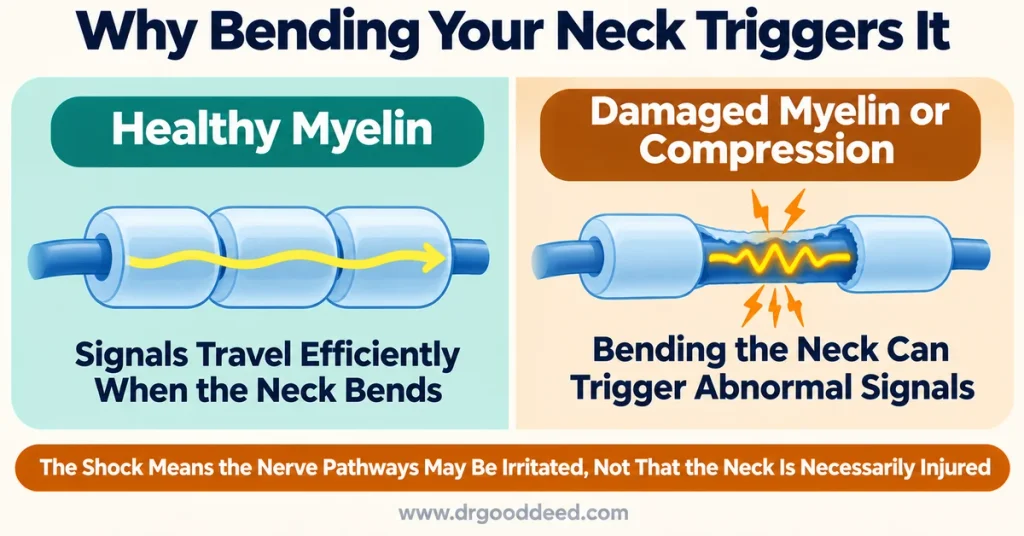
Bending your neck can stretch sensitive nerve pathways in the cervical spinal cord, triggering a sudden electrical sensation that travels down your spine.
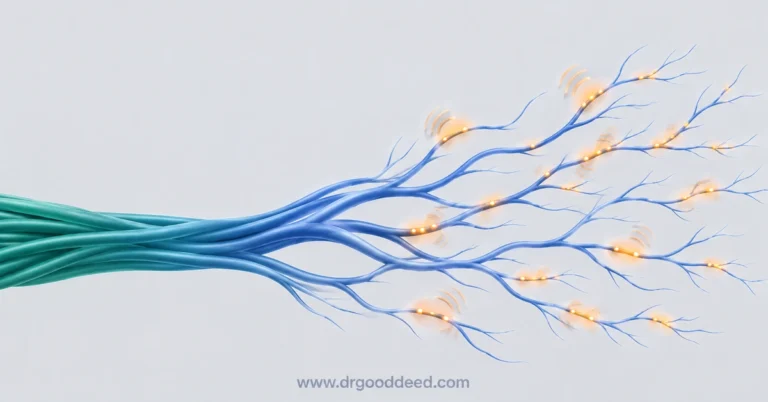
The spinal cord contains nerve fibers surrounded by myelin, a protective coating that helps electrical signals travel efficiently. When myelin is damaged, or the spinal cord is compressed, bending the neck can trigger abnormal nerve signals.
This process is called demyelination when the protective myelin coating is damaged. The resulting sensation may travel from the neck down the back and into the arms or legs.
The shock does not mean your neck is necessarily injured. It indicates that the nerves or spinal cord pathways may be irritated, which is why a medical assessment is important.
Causes of an Electric Shock in the Neck
An electric shock in the neck most often points to multiple sclerosis, but neck arthritis pressing on the spinal cord, low vitamin B12, previous cancer treatment, or an injury can cause it too. The cause cannot be confirmed from the sensation alone.
Multiple Sclerosis
Multiple sclerosis is a neurological condition in which the immune system damages myelin in the brain and spinal cord. This damage can disrupt nerve signaling and produce Lhermitte’s sign.
MS is the most common cause identified in clinical references, but not everyone who experiences the symptom has MS. Reported prevalence among people with MS ranges from 9% to 41% in the StatPearls review by Teoli and colleagues (2023). A 2015 study cited in the same review found the symptom in about 16% of nearly 700 people with MS.
Other possible MS symptoms include numbness, weakness, vision changes, fatigue, and balance problems. If you notice these symptoms alongside recurring shocks, a neurologist can assess whether MS or another condition may be responsible. Learn more about what is neuroimmunology and its role in understanding immune-related neurological conditions.
Neck Arthritis and Spinal Cord Compression
Cervical spondylosis, commonly called neck arthritis, can cause changes in the bones and discs of the neck. Bone spurs or narrowed spaces may compress the cervical spinal cord, producing Lhermitte’s sign or other neurological symptoms.
Signs of possible spinal cord compression include:
- Clumsiness when using your hands or handling small objects.
- Numbness or weakness in your arms or hands.
- Difficulty walking or maintaining balance.
- Changes in coordination that gradually worsen.
These symptoms may indicate cervical myelopathy, a condition involving spinal cord dysfunction. A doctor may recommend an MRI to check for compression. Early assessment matters because untreated compression can lead to worsening neurological problems.
Low Vitamin B12
Vitamin B12 helps maintain healthy nerves and supports normal myelin function. A deficiency can damage nerve pathways and cause tingling, numbness, weakness, or balance difficulties.
A blood test can help identify low vitamin B12 levels. Your doctor may consider this possibility if the shock occurs with other nerve symptoms or if your medical history suggests a deficiency.
Treating the underlying deficiency may improve symptoms, although recovery depends on the severity and duration of nerve damage.
Cancer Treatment and Injury
Radiation therapy and chemotherapy can sometimes damage nerve pathways, while a neck or spinal cord injury can directly affect the structures responsible for transmitting nerve signals.
Other less common causes include transverse myelitis, neuromyelitis optica, Chiari malformation, and nitrous oxide misuse, which can interfere with vitamin B12 function.
The timing of your symptoms can provide useful clues. Tell your doctor if the shocks began after cancer treatment, a neck injury, or exposure to nitrous oxide. These details can help guide further testing.
Lhermitte’s Sign or a Pinched Nerve?
Lhermitte’s sign usually causes a shock that travels down the spine when you bend your neck, while a pinched nerve in the neck more often causes pain, tingling, or numbness that radiates into one arm.
The two can overlap, so symptoms alone cannot always distinguish them.
| Feature | Lhermitte’s sign | Pinched nerve in the neck |
| Typical sensation | Electric shock down the spine | Pain, tingling, or numbness |
| Common trigger | Bending the head forward | Turning or tilting the head, or certain arm positions |
| Where it travels | Down the spine, sometimes into the arms or legs | Often from the neck into one shoulder or arm |
| Possible cause | Spinal cord irritation or myelin damage | Compression or irritation of a nerve root |
| Evaluation | Neurological examination and possible MRI | Examination and possible imaging, depending on symptoms |
A pinched nerve can occur with conditions such as neuroforaminal stenosis, which narrows the openings through which nerve roots leave the spine.
A sudden electric shock feeling in the neck when turning your head may have a different cause from a shock triggered by bending forward. Do not try to diagnose the problem by repeatedly provoking the sensation.
How Doctors Find the Cause
Doctors identify the cause of Lhermitte’s sign through your symptom history, a neurological examination, and tests when needed. An MRI of the cervical spine and blood tests may help identify spinal cord compression, inflammation, or vitamin B12 deficiency.
Your evaluation may involve these steps:
- Medical history: Your doctor asks when the shocks began, how often they occur, what triggers them, and whether you have other symptoms or a history of injury.
- Neurological examination: The doctor checks strength, sensation, reflexes, coordination, and balance.
- MRI of the cervical spine: Imaging can show spinal cord compression, structural changes, or lesions affecting the cervical spinal cord.
- Blood tests: Testing may include vitamin B12 levels when a deficiency is suspected.
- Further neurological testing: Depending on your symptoms and MRI findings, a neurologist may recommend additional investigations to assess for MS or other neurological conditions.
Not everyone needs every test. Your doctor will choose investigations based on your examination and medical history.
How Lhermitte’s Sign Is Treated
Lhermitte’s sign treatment focuses on the underlying cause rather than the shock itself. The sensation may ease over weeks or months as the condition improves (StatPearls, 2023), although recovery varies from person to person.
Treatment options depend on the diagnosis and may include:
- Treating the underlying condition: Managing MS, correcting vitamin B12 deficiency, or addressing another identified cause may reduce symptoms.
- Relieving spinal cord compression: Neck arthritis or structural problems may require specialist treatment, particularly when neurological function is worsening.
- Physical therapy: A clinician may recommend an individualized program to support safe movement and function.
- A soft neck collar: In selected cases, a clinician may recommend temporary support to limit neck movement that triggers symptoms.
Do not force your neck through movements that trigger shocks or attempt neck manipulation. Follow your healthcare professional’s advice, particularly if spinal cord compression or an injury is suspected.
When to See a Doctor or Call 911
See a doctor for any new, unexplained electric shock in the neck, especially if it keeps returning. Seek prompt assessment if your hands become clumsy, your balance worsens, or you develop numbness or weakness.
Contact a primary care doctor or neurologist if the shocks recur, spread into your limbs, or occur alongside other neurological symptoms. A doctor can determine whether you need imaging or further testing.
Call 911 or seek emergency care if you experience:
- A head, neck, or back injury followed by shock-like sensations or numbness.
- Sudden or worsening weakness or loss of control of your limbs.
- Loss of bladder or bowel control.
- Severe neurological symptoms or difficulty breathing.
These symptoms can indicate a serious spinal cord or neurological problem that needs immediate assessment.
New weakness or muscle twitching all over the body alongside these shocks also warrants prompt medical evaluation.
If an electric shock in the neck follows an injury or comes with weakness or loss of bladder or bowel control, call 911.
Frequently Asked Questions
Can You Have Lhermitte’s Sign Without MS?
Yes. Lhermitte’s sign can occur without MS. Other causes include neck arthritis that compresses the spinal cord, low vitamin B12, previous radiation or chemotherapy, and neck injuries. A medical assessment can help identify the cause rather than assuming the symptom means you have MS.
How Long Does Lhermitte’s Sign Last?
Each electric shock usually lasts only a few seconds, but episodes may recur many times. The overall pattern can improve over weeks or months as the underlying cause is treated, according to StatPearls (2023). The duration varies depending on the cause and whether nerve damage persists.
Is an Electric Shock in the Neck Dangerous?
The shock itself is not usually harmful, but it can signal irritation or damage involving the spinal cord. Arrange a medical assessment for a new or recurring symptom. Call 911 if it follows a serious injury or occurs with sudden weakness or loss of bladder or bowel control.
Can Stopping an Antidepressant Cause Shocks Like This?
Stopping some antidepressants can cause brief electrical sensations, often described as brain zaps. These are different from the shock that travels down the spine when you bend your neck. Never stop or change a prescribed medication without discussing it with your healthcare professional.
Why Is It Worse When I Am Hot or Tired?
Heat, stress, exercise, and tiredness may make Lhermitte’s sign more noticeable in some people. These factors can affect symptoms when nerve pathways are already irritated or damaged. Track your triggers and discuss recurring episodes with your doctor rather than deliberately testing what brings them on.
Sources
- StatPearls, Lhermitte Sign (2023). link
- Cleveland Clinic, Lhermitte’s Sign (2023). link
- American Academy of Orthopaedic Surgeons, Cervical Spondylotic Myelopathy (Spinal Cord Compression). link
- MedlinePlus, Vitamin B12 Level (2026). link
- MedlinePlus, Numbness and Tingling (2025). link
- Healthline, Lhermitte’s Sign (2025). link
- Medical News Today, Lhermitte’s Sign: What It Is, Causes and Treatment (2023). link
Medical Disclaimer: This article is for general information only and is not medical advice. It does not replace a diagnosis, treatment plan, or guidance from a qualified healthcare professional. Always talk to your doctor about your own symptoms and before starting, stopping, or changing any treatment. If you think you may be having a medical emergency, call 911 or go to your nearest emergency room.