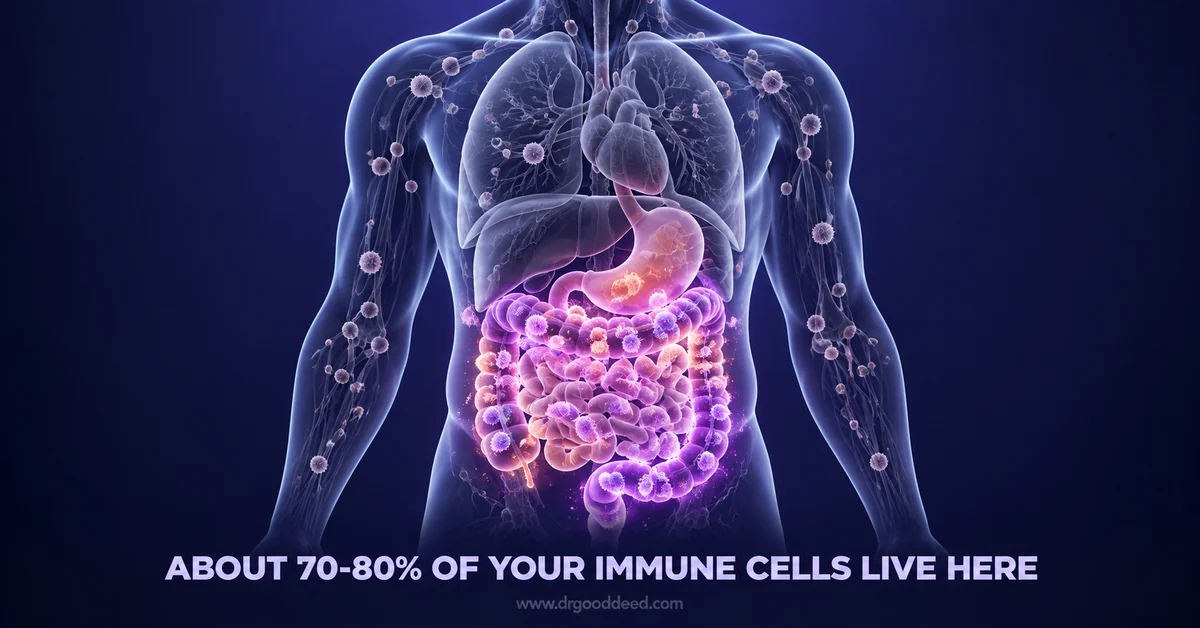

The gut health and immune system connection explains why most immune cells live in your gut. About 70 to 80 percent of immune cells sit in gut-associated lymphoid tissue, based on peer-reviewed immunology research. This affects how you fight colds, recover from infections, and develop conditions like allergies or autoimmune disease.
Noticing signs of digestive problems early often reveals immune trouble before blood tests do. This guide covers the mechanisms, the research, and practical steps for supporting both systems together.
Key Takeaways
- About 70 to 80 percent of immune cells reside in gut-associated lymphoid tissue (GALT), including Peyer’s patches in the small intestine wall.
- Gut bacteria produce short-chain fatty acids and secretory IgA antibodies that teach immune cells to recognize real threats instead of overreacting.
- A damaged gut lining raises intestinal permeability, letting bacterial fragments enter the bloodstream and trigger low-grade inflammation.
- Poor gut health shows documented associations with autoimmune conditions, including celiac disease, type 1 diabetes, and Hashimoto’s thyroiditis.
- Chronic stress raises cortisol, which loosens tight junctions in the gut lining and reduces beneficial bacterial diversity within days.
Why Most of Your Immune System Lives in Your Gut
Gut-associated lymphoid tissue, or GALT, holds the largest concentration of immune cells in the body. The gut health and immune system connection starts here, because the gut lining sits between the outside world and your bloodstream.
- Peyer’s patches: clusters of lymphoid tissue in the small intestine wall that sample gut contents through specialized M cells, then trigger targeted antibody responses.
- Mesenteric lymph nodes: the largest lymph node network in the body, filtering immune signals from the intestine before they reach systemic circulation.
- Dendritic cells and macrophages: patrol the gut lining, capturing bacterial and food antigens so they can teach T cells which particles are safe.
- Constant antigen exposure: the gut processes more foreign material daily, from food and microbes, than any other organ, which explains why so much immune tissue concentrates there.
The gut faces the heaviest microbial and dietary load of any surface in the body, so it needs a dedicated defense network on-site rather than relying on distant lymph nodes alone.
How Gut Bacteria Train Your Immune Cells to Spot Real Threats
Your gut microbiome, the trillions of bacteria living in your intestines, does more than digest fiber. It produces metabolites that directly instruct immune cells on how to respond. This training process, called immune education, runs continuously from infancy through adulthood as bacterial populations shift with diet and age.
- Short-chain fatty acids (SCFAs) like butyrate, propionate, and acetate form when gut bacteria ferment fiber; these compounds fuel colon cells and promote regulatory T cells that prevent immune overreaction.
- Secretory IgA (sIgA) is an antibody made by gut immune cells that coats bacteria and toxins, neutralizing them without triggering full-blown inflammation.
- Immune tolerance develops when healthy gut bacteria teach the immune system to ignore harmless food proteins and resident microbes, lowering food allergy risk.
- Pathogen recognition improves with bacterial diversity, helping immune cells distinguish beneficial microbes from disease-causing ones and sharpening the response to genuine infections.
Butyrate is the primary fuel source for colon lining cells and directly supports the gut barrier that keeps this whole system functioning.
How a Damaged Gut Lining Can Trigger Immune Overreaction
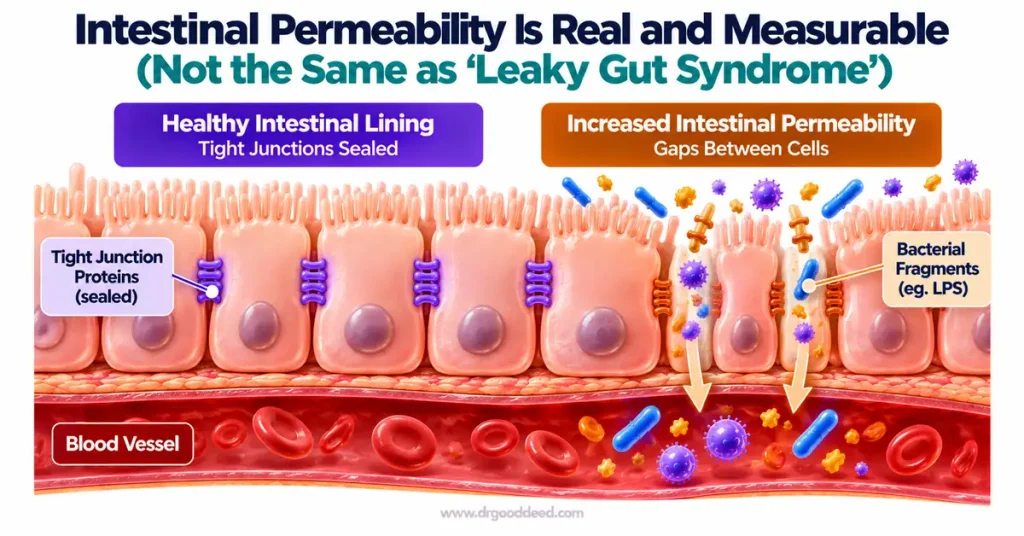
A healthy gut lining works like a selective filter, absorbing nutrients while blocking harmful particles. When tight junctions weaken, intestinal permeability increases, and bacterial fragments cross into the bloodstream. This measurable, documented phenomenon differs from “leaky gut syndrome,” a term without formal medical recognition.
- Tight junction proteins sit between intestinal cells and control what passes through; stress hormones and chronic inflammation can loosen them over time.
- Zonulin, a protein identified by researcher Dr. Alessio Fasano, regulates tight junction opening and rises in celiac disease and type 1 diabetes.
- Lipopolysaccharide (LPS) translocation occurs when bacterial fragments called LPS enter circulation, triggering a systemic inflammatory response known as endotoxemia.
- Intestinal permeability versus leaky gut syndrome: increased permeability is real and measurable on lab markers.
Can Poor Gut Health Contribute to Autoimmune Conditions?
Growing research links intestinal permeability to autoimmune disease, though the relationship is an association. Zonulin research connects a compromised gut barrier to conditions where the immune system attacks the body’s own tissue, alongside genetic and environmental triggers.
- Celiac disease: gluten triggers zonulin release in genetically susceptible people, increasing intestinal permeability and setting off an autoimmune attack on the small intestine lining.
- Type 1 diabetes: studies have found elevated zonulin levels in patients before diagnosis, suggesting gut barrier changes may precede autoimmune onset rather than only follow it.
- Hashimoto’s thyroiditis: some research connects gut dysbiosis and gluten sensitivity to autoimmune thyroid inflammation, an example of the gut-immune connection in endocrine disorders.
- Rheumatoid arthritis and lupus: elevated zonulin markers appear in some patients, though researchers still debate whether permeability drives disease activity or results from it.
Does Chronic Stress Weaken This Connection?
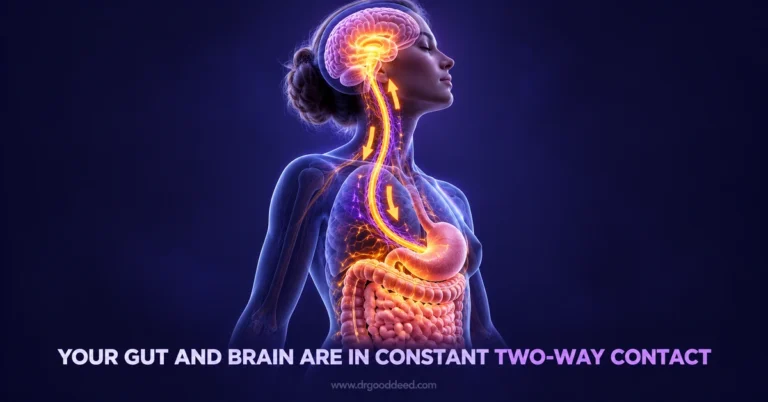
Stress does not just affect mood. It changes gut bacteria composition within days and weakens the intestinal barrier through cortisol. The vagus nerve and gut health connection explains part of this: chronic stress lowers vagal tone, slowing digestion and disrupting the anti-inflammatory signaling that normally keeps gut inflammation in check.
- Cortisol and tight junctions: chronically elevated cortisol loosens tight junction proteins, increasing intestinal permeability during prolonged periods of stress.
- Reduced microbial diversity: stress hormones alter the gut environment, favoring less beneficial bacteria and lowering short-chain fatty acid production.
- Vagal tone: the vagus nerve carries anti-inflammatory signals from brain to gut; chronic stress lowers this tone and weakens the body’s ability to dampen inflammation.
- Sleep disruption: poor sleep, often driven by stress, independently reduces gut bacterial diversity within just a few nights, based on microbiome research.
Pro Tip: Morning cortisol naturally peaks within 30 minutes of waking, so gut-focused stress techniques, like slow breathing or early daylight exposure, work best when timed to that window. Tracking bowel habits alongside stress levels for two weeks often reveals patterns that routine checkups miss.
How to Support Both Your Gut and Immune System Together
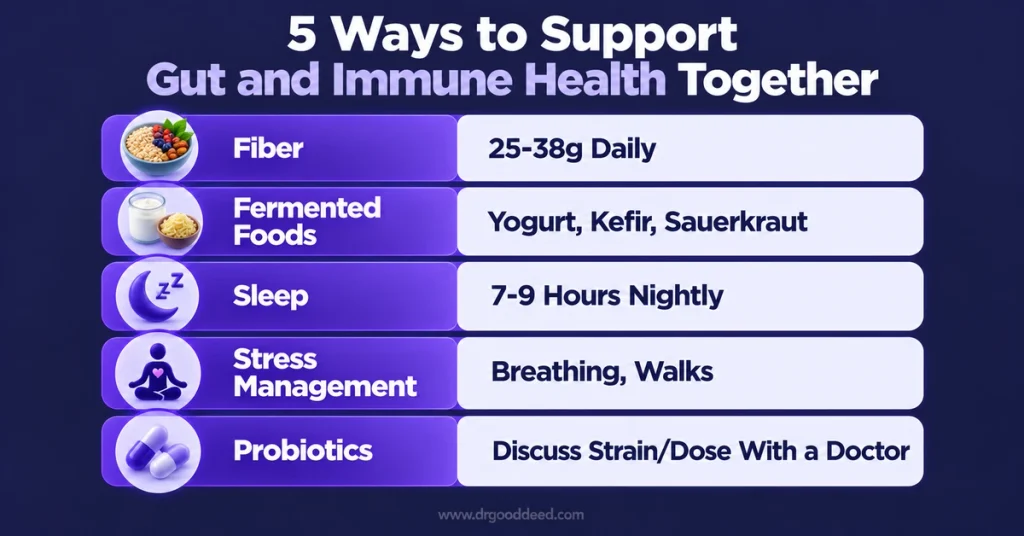
Supporting the gut health and immune system connection does not require restrictive diets or expensive supplements. Fiber, fermented foods, sleep, and stress management address both systems at once because they target the same mechanisms: bacterial diversity, SCFA production, and gut barrier integrity.
| Strategy | How It Helps | Practical Example |
| Fiber intake | Feeds bacteria that produce short-chain fatty acids | 25 to 38 grams daily from vegetables, legumes, whole grains |
| Fermented foods | Adds live bacterial strains and boosts diversity | Yogurt, kefir, sauerkraut, kimchi |
| Sleep | Restores microbial diversity disrupted by stress | 7 to 9 hours nightly, consistent schedule |
| Stress management | Improves vagal tone and lowers cortisol | Breathing exercises, short walks, therapy |
| Probiotics | May help specific situations, like antibiotic-associated diarrhea | Discuss strain and dose with a doctor first |
Fiber and fermented foods feed the gut microbiome directly. Probiotics are not a universal fix, and strain selection matters more than the word “probiotic” on a label.
When Should You See a Doctor?
Most digestive discomfort resolves with diet and lifestyle changes within a few weeks. Certain symptoms signal something beyond routine gut health and deserve medical evaluation rather than home management.
- Unexplained weight loss alongside digestive symptoms that last more than two weeks.
- Blood in stool, persistent diarrhea, or severe abdominal pain that disrupts daily activities.
- Frequent infections combined with chronic fatigue, joint pain, or skin rashes, which may suggest autoimmune involvement.
- Family history of celiac disease, inflammatory bowel disease, or autoimmune thyroid disease alongside new digestive symptoms.
FAQs
Can probiotics actually prevent colds or flu?
No. Probiotics do not prevent infection outright. Strains like Lactobacillus rhamnosus GG may modestly shorten cold duration in some clinical trials, but they are not a preventive shield.
How many weeks does it take for gut health changes to improve immunity?
Microbiome shifts from diet changes appear within 3 to 5 days. Immune-relevant benefits, like improved antibody response, typically take 4 to 8 weeks of consistent habits.
Can a single round of antibiotics permanently weaken immune function?
No. One antibiotic course disrupts gut bacteria for weeks to months. Most healthy adults recover baseline bacterial diversity within about 6 months, without permanent immune damage.
Is “leaky gut” an officially recognized medical diagnosis?
No. Increased intestinal permeability is real and measurable. “Leaky gut syndrome” is not recognized as a standalone diagnosis by mainstream gastroenterology organizations, including the Cleveland Clinic.
Can early childhood gut health affect immune development?
Yes. Microbiome exposure during the first 1,000 days shapes immune tolerance. Early antibiotic use or cesarean delivery is linked to higher asthma and allergy risk later.
Sources
- Frontiers in Cellular and Infection Microbiology: The Microbiota and Immune System Crosstalk in Health and Disease link
- Journal of Autoimmunity: Systemic Instruction of Cell-Mediated Immunity by the Intestinal Microbiome link
- Microorganisms Journal: Gut Microbiota and Immune System Interactions (PubMed) link
- Cleveland Clinic: Leaky Gut Syndrome link
- NIH National Center for Complementary and Integrative Health: Probiotics, What You Need To Know link
- Harvard T.H. Chan School of Public Health: The Microbiome link
- Clinical Gastroenterology and Hepatology: Intestinal Permeability and Its Regulation by Zonulin (Fasano) link
- Harvard Health Publishing: The Gut-Brain Connection link
- NIDDK: Your Digestive System and How It Works link
Medical Disclaimer: This article is for general information only and is not medical advice. It does not replace a diagnosis, treatment plan, or guidance from a qualified healthcare professional. Always talk to your doctor about your own symptoms and before starting, stopping, or changing any treatment. If you think you may be having a medical emergency, call 911 or go to your nearest emergency room.