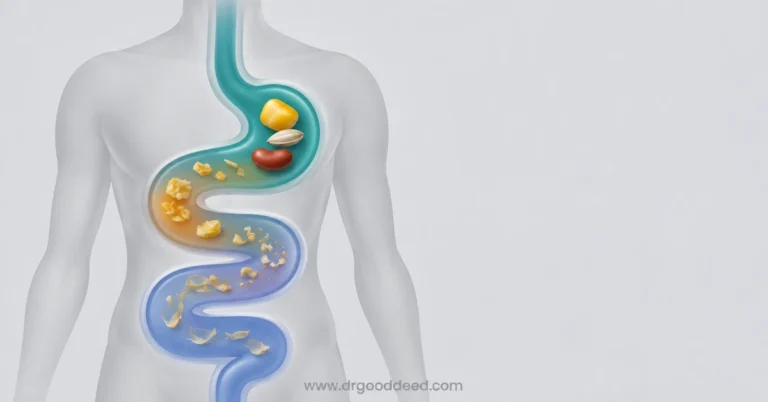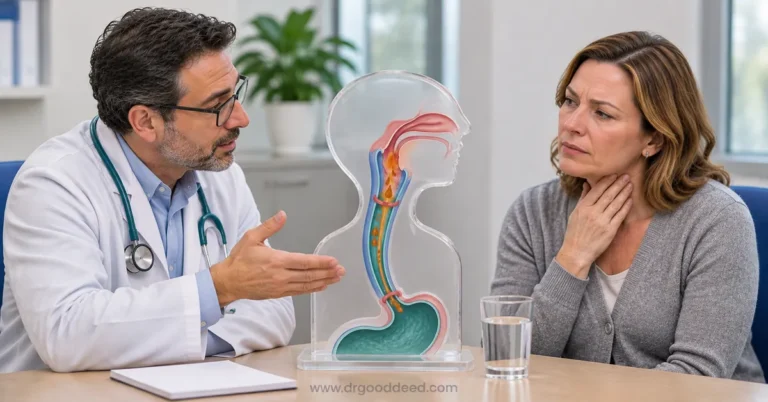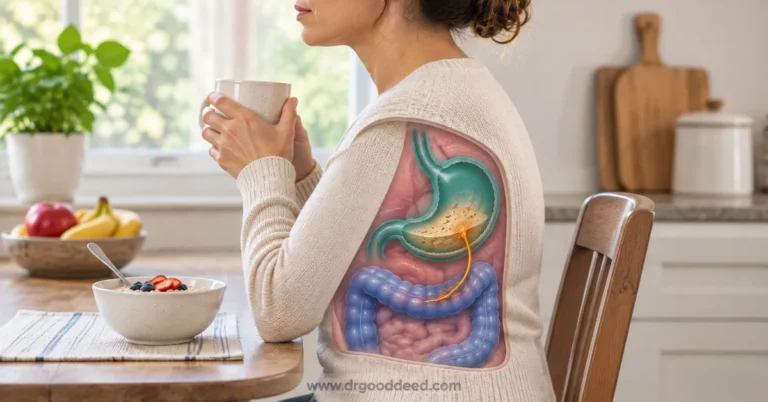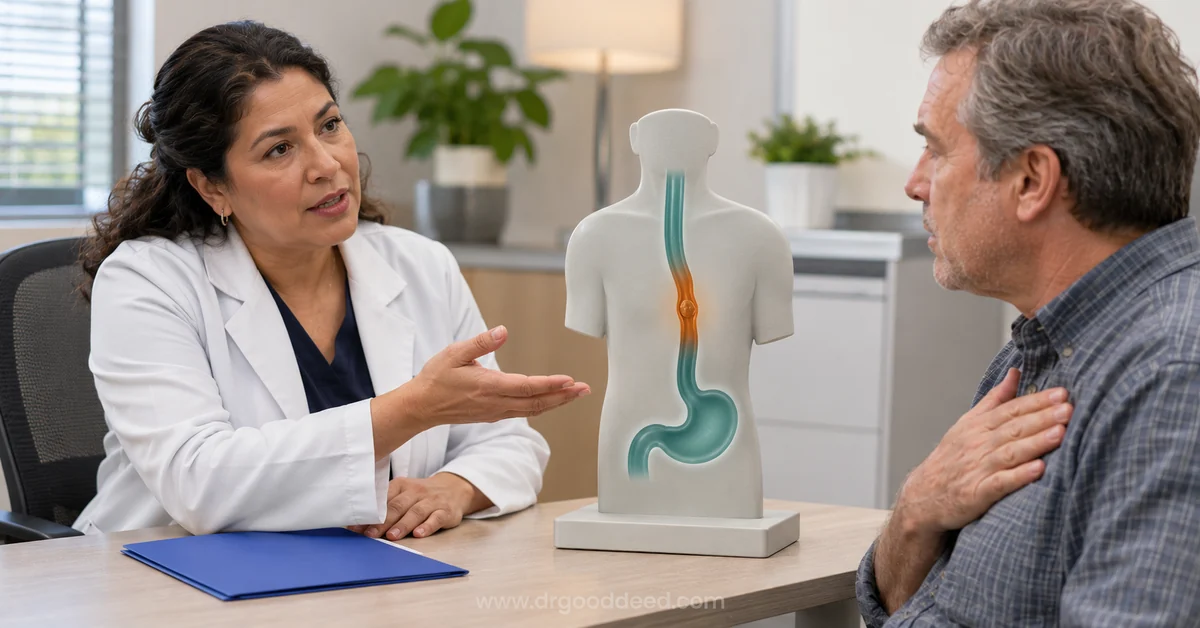

Food stuck in the chest is an uncomfortable feeling that can happen when food moves slowly or gets caught behind the breastbone when swallowing. Doctors call this esophageal dysphagia (Mayo Clinic). It can come from inflammation, narrowing of the esophagus, problems with the swallowing muscles or acid reflux, and a doctor can usually find the cause.
Some causes are treatable, but if swallowing is a problem that continues to happen, it should not be ignored. If you cannot swallow your saliva, have trouble breathing or have severe chest pain, get emergency care right away.
Knowing what health issues might be involved, what signs to look for and which tests are used for diagnosis can aid you in determining when to see a doctor.
Key Takeaways
- Food stuck in the chest when swallowing is usually esophageal dysphagia, from narrowing or poor movement in the esophagus; some cases are emergencies.
- If you can’t swallow saliva, you have trouble breathing or have severe pain with food and drink, seek emergency evaluation.
- Causes include esophageal narrowing, inflammation such as eosinophilic esophagitis, swallowing-muscle disorders and acid reflux; only tests can show which.
- Any repeated swallowing difficulty should be checked out, even if it is intermittent.
- To find out what is causing the problem, a doctor might use an upper endoscopy, a barium swallow or esophageal manometry.
What Should You Do If Food Is Stuck in Chest?
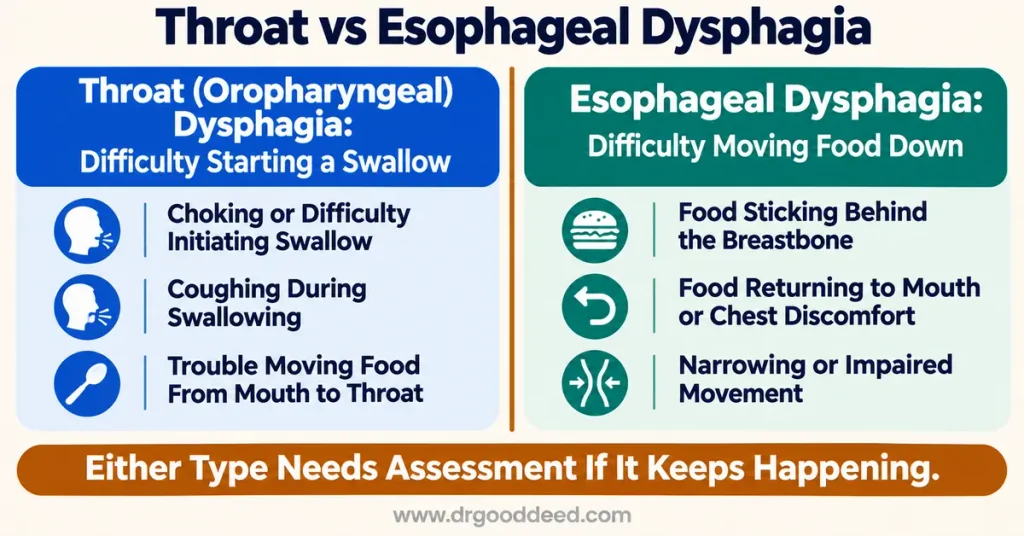
Get emergency help if you cannot swallow your saliva, are drooling, cannot breathe, or have food stuck in your esophagus with severe pain. Call 911 or go to the ER in the US, or call 999 or go to A&E in the UK.
Chest pain with sweating, breathlessness, lightheadedness or pain spreading to the arm or jaw also needs emergency care. Do not assume chest pain with swallowing comes from the esophagus; the heart must be checked first. Read more about left-side chest pain.
Do not try to push the food down with more food, drinks or home remedies. If you can still swallow your saliva and the feeling keeps coming back, see a doctor soon.
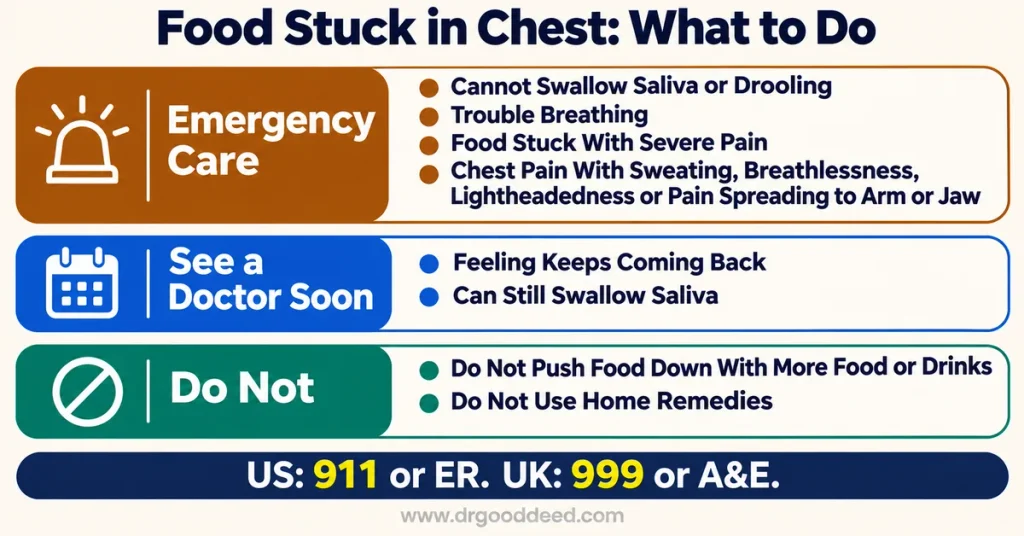
Throat vs Esophageal Dysphagia: How They Differ
| Feature | Throat (oropharyngeal) dysphagia | Esophageal dysphagia |
| Main problem | Difficulty starting a swallow | Difficulty moving food down the esophagus |
| Typical sensation | Difficulty initiating swallowing or choking | Food sticking behind the breastbone |
| Possible associated signs | Coughing during swallowing | Food returning to the mouth or chest discomfort |
| Common concern | Difficulty transferring food from the mouth to the throat | Narrowing or impaired movement of food through the esophagus |
| Recommended action | Seek medical assessment for persistent symptoms | Seek medical assessment for recurring or worsening symptoms |
Why Does Food Feel Stuck in Chest When Swallowing?
The sensation of food stuck in the chest when swallowing is commonly associated with esophageal dysphagia. The esophagus is a tube of muscle that leads from the throat to the stomach. The normal movement of the swallowed food is downwards due to coordinated muscle contraction.
If this is impaired, food will get stuck in the chest area because the esophagus becomes narrowed, may become inflamed or simply does not move the food properly.
What Causes Food Stuck in Chest?
Acid Reflux and Esophageal Stricture
Gastroesophageal reflux disease (GERD) is a condition in which the stomach contents keep coming back up into the esophagus. Chronic inflammation may lead to scarring and narrowing of the esophagus (esophageal stricture). This can make it hard to swallow solid foods.
If you also have stomach pain after eating, read about why your stomach hurts after eating.
Eosinophilic Esophagitis Symptoms
Eosinophilic esophagitis (EoE) is a chronic condition that occurs when the esophagus becomes inflamed due to an allergy. Eosinophilic esophagitis signs and symptoms can involve difficulty swallowing, recurrent blocks of food in the esophagus and a feeling of food becoming lodged in the esophagus. People with EoE often also have allergic conditions such as asthma or eczema (AFP, 2021).
Esophageal Rings and Webs
Narrowing of tissue (thin tissue membranes) may decrease the internal diameter through which food can flow. These changes in the esophagus can lead to episodes of choking on solid foods, although liquids may flow better.
Achalasia and Esophageal Spasms
Achalasia involves an injury to the nerves and muscles that move food into the stomach. Esophageal spasms are when the muscle of the esophagus contracts abnormally. Both can make it hard to swallow and may lead to discomfort in the chest.
Food Impaction and Esophageal Tumors
Food impaction is when food gets stuck in the esophagus (swallowing tube). If swallowing is blocked or extreme pain occurs, it should be evaluated for emergency treatment.
Narrowing of the esophagus can also occur from tumors. One possible cause is cancer, but many other causes can cause problems when it comes to swallowing. When symptoms persist, a doctor needs to investigate the cause.
If the person cannot breathe, speak or cough, call 911 in the US or 999 in the UK right away.
Can Acid Reflux Cause Food Stuck in Chest?
It can. Long-term reflux can inflame and scar the esophagus, causing a narrowing (esophageal stricture) that makes solid food stick (Mayo Clinic). The feeling alone cannot show that reflux is the cause, so a doctor needs to check.
Can Anxiety Cause Food Sticking in Chest?
The chest tightness or a lump-like feeling can be caused by anxiety. But when food is interfering with swallowing, it’s not necessarily anxiety, and this should not be taken as a given. Physical causes should be ruled out first if symptoms recur, worsen, or impair swallowing. Read whether anxiety can cause chest pain.
What Are the Symptoms of Esophageal Dysphagia?
Difficulty swallowing solids is a common sign of esophageal dysphagia. Symptoms can include:
- Food that is moving slowly or is stuck behind the breastbone.
- Trouble swallowing solid foods, especially bread or meat.
- Trouble swallowing liquids as well as solids.
- Food coming back up into the mouth (regurgitation) or vomiting.
- Weight loss or dehydration that isn’t explained.
- Although these symptoms can be signs of esophageal dysphagia, they are not sufficient to establish a diagnosis.
How Is Food Stuck in Chest Diagnosed?
A doctor evaluates symptoms, medical history and swallowing problems and selects the tests that seem appropriate.
Medical History and Physical Examination
A doctor asks when symptoms began, whether solids or liquids get stuck, and about weight loss or vomiting.
Upper Endoscopy
A flexible scope is used to look in the esophagus to see if it is swollen, constricted, blocked or if there is abnormal tissue. A biopsy can aid in diagnosing EoE.
Barium Swallow Test
This uses X-rays to help visualize the movement of the swallowed barium through the esophagus.
Esophageal Manometry
This procedure uses a thin, pressure-sensing tube that is inserted into the esophagus to assess muscle contractions and determine if there are movement disorders.
If symptoms recur, then the cause should be evaluated as it may be treatable.
What Complications Can Difficulty Swallowing Cause?
Dehydration, malnutrition and unintended weight loss are possible complications of untreated swallowing problems. Aspiration pneumonia is an infection of the lungs that can result from the inhalation of food or fluid into the airway. Repeated choking or frequent chest infections can also be a sign of a swallowing problem (NHS 111 Wales).
If swallowing difficulties continue or are a problem eating and drinking, do not delay assessment.
Explore our chest pain guides for more information about different types of chest discomfort.
Food Stuck in Chest: When to See a Doctor
See a doctor soon if swallowing becomes a recurring, worsening or problematic issue when accompanied by unexplained weight loss, vomiting, regurgitation, dehydration, malnutrition, black stools, or blood in vomit. If a person continues to have trouble swallowing fluids, they should also be evaluated.
In the US, see your primary care doctor. In the UK, ask for an urgent GP appointment or call NHS 111 for advice. If you are unable to breathe or swallow your saliva, call 911 or 999, or go to the ER or A&E.
Frequently Asked Questions
What Is Dysphagia?
Dysphagia means trouble swallowing. It can start in the throat (oropharyngeal dysphagia) or in the esophagus (esophageal dysphagia), where food can feel stuck in the chest.
Is Food Stuck in the Chest an Emergency?
It can be. If swallowing saliva is difficult, or if breathing is impaired or blocked, it may be an emergency and should be assessed.
What Should You Do If Food Is Stuck in Your Esophagus?
If the food is stuck and you cannot swallow, go to the nearest ER or A&E. Do not try to force it down using food or drinks.
Can Trouble Swallowing Be a Sign of Cancer?
It can be. Esophageal cancer can make it hard to swallow, but most causes of trouble swallowing are not cancer. If you have a problem with swallowing that persists or gets worse, you should get medical advice.
What Is the Difference Between Throat and Esophageal Dysphagia?
Throat dysphagia is when problems happen at the beginning of swallowing. Esophageal dysphagia is trouble moving food down the esophagus (food pipe), which often feels like food is stuck in the chest.
Sources
Mayo Clinic, Dysphagia: Diagnosis and Treatment. link
Cleveland Clinic, Dysphagia. link
NHS, Swallowing Problems (Dysphagia). link
American College of Gastroenterology, Dysphagia. link
NHS 111 Wales, Dysphagia. link
Medical Disclaimer: This article is for general information only and is not medical advice. It does not replace a diagnosis, treatment plan, or guidance from a qualified healthcare professional. Always talk to your doctor about your own symptoms and before starting, stopping, or changing any treatment. If you think you may be having a medical emergency, call 911 or go to your nearest emergency room.