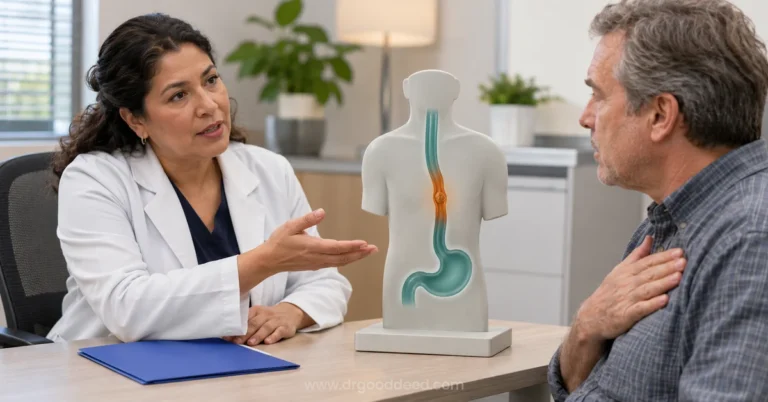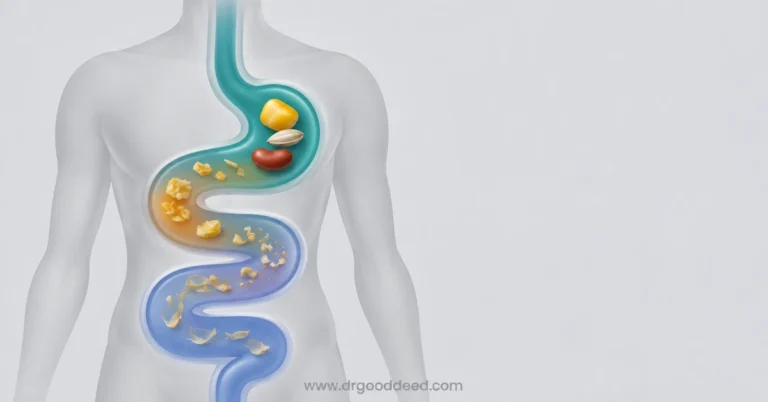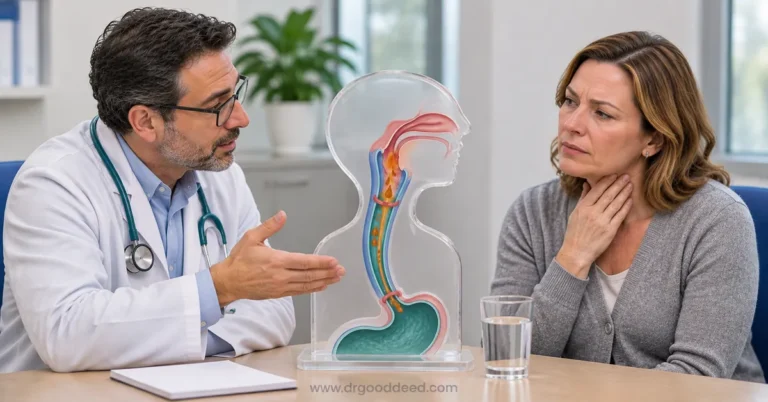

Stomach pain after ibuprofen happens because the medicine lowers the substances that protect your stomach lining, so acid can irritate it. It can be a common side effect, but it can also signal an ulcer or bleeding in the digestive tract.
How severe the pain is, what else you feel, your history and your other medicines decide the next step. Black stools, vomiting blood or sudden severe pain is an emergency: call 911 or go to the ER.
Key Takeaways
- Stomach pain after ibuprofen usually means the drug has irritated your stomach lining; stop taking it and call your doctor if pain continues.
- Ibuprofen is an NSAID. NSAIDs lower prostaglandins, which help protect the stomach lining (Medical News Today, 2023).
- Ibuprofen stomach bleeding signs: black or tarry stool, red or coffee-ground vomit, dizziness or fainting. Call 911 or go to the ER.
- Take ibuprofen with food or milk, at the lowest dose for the shortest time, and ask your doctor before using it long term.
Why Does Ibuprofen Cause Stomach Pain?
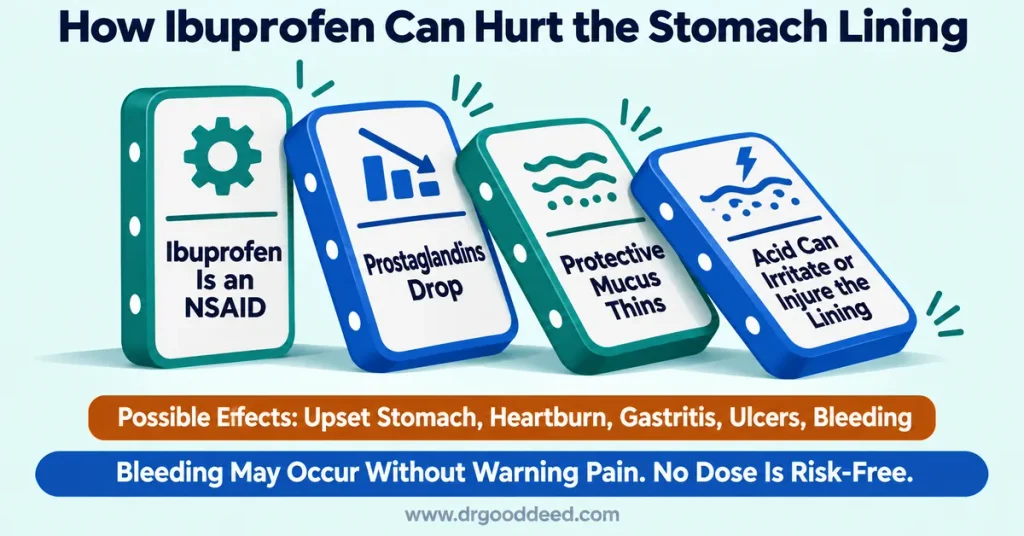
Ibuprofen is a nonsteroidal anti-inflammatory drug (NSAID) that lowers prostaglandins, substances that help protect the stomach lining, so acid can irritate or injure it (Medical News Today, 2023; Mayo Clinic, 2024). Dosage varies by person and condition, and no dose is risk-free.
- The mechanism: With fewer prostaglandins, mucus and protective substances thin, and acid can damage the lining (Medical News Today, 2023).
- What it can cause: NSAID stomach pain, ibuprofen upset stomach, ibuprofen heartburn and ibuprofen gastritis (inflammation of the stomach lining) are the effects, along with ulcers and bleeding (Cleveland Clinic, 2023; Healthline, 2025).
- After one dose: Discomfort can occur after a single dose. Not every episode means the lining is damaged.
- Without warning: Bleeding may occur without warning pain (Cleveland Clinic, 2023).
- Ulcers: Regular NSAID use is one of the two most common causes of peptic ulcers, with H. pylori infection (Mayo Clinic, 2024; NIDDK, 2022; NHS, 2025).
What Does Ibuprofen Stomach Pain Feel Like?
Most people feel a dull ache, burning or heartburn in the upper belly; black stools or bloody vomit point to bleeding (NIDDK, 2022). Sort your symptoms into three tiers, and treat bleeding signs as emergencies. Do not assume mild pain is definitely harmless, because NSAID ulcers and bleeding can occur without warning.
- Mild or less concerning: Indigestion, nausea or mild discomfort with no warning signs may be medication-related, such as ibuprofen gastritis. Severity and persistence still matter.
- Prompt assessment: Pain that persists, worsens or returns, or comes with loss of appetite, early fullness, unintended weight loss, trouble swallowing, persistent vomiting or constant tiredness (NHS, 2025). NSAID ulcer symptoms include dull or burning upper belly pain, bloating, belching and nausea, and pain may be worse between meals or at night (Mayo Clinic, 2024; NIDDK, 2022).
- Emergency: Ibuprofen stomach bleeding signs include vomiting blood or coffee-ground vomit, ibuprofen black stool (black, tarry or very smelly), red or maroon blood in stool, sudden severe pain, belly pain on touch, sudden chest pain, dizziness or fainting, or a rapid pulse (NHS, 2025; NIDDK, 2022). Call 911 or go to the ER.
For chest pain, see warning signs of a heart attack.
A dose taken before breakfast can add to stomach pain in the morning, when the stomach has been empty all night.
Expert Insight: Bleeding from an NSAID ulcer may occur without warning pain (Cleveland Clinic, 2023), so feeling fine does not rule it out. Stool color and vomit appearance are the objective clues, which is why black stool or coffee-ground vomit needs emergency care even when the stomach hardly hurts.
How Long Does Stomach Pain After Ibuprofen Last?
Mild stomach pain after ibuprofen often settles once you stop the drug, but pain that lingers or keeps coming back can mean gastritis or an ulcer. How long it takes varies from person to person, and many people with ulcers have no symptoms until a complication appears (NIDDK, 2022).
What to Do If Ibuprofen Upsets Your Stomach
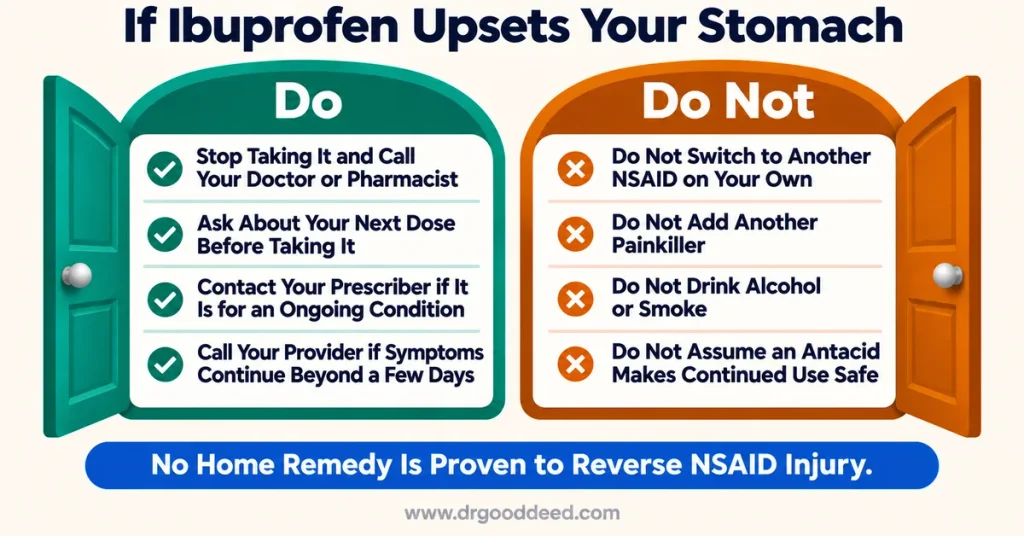
Stop taking it and call your doctor or pharmacist, and do not switch to another NSAID on your own (MedlinePlus, 2023). Match your action to how the pain behaves, and leave decisions about the medicine to a pharmacist or clinician who knows your history. No home remedy is proven to reverse NSAID injury.
Step 1: Do Not Take Another Ibuprofen Dose Until You Have Assessed The Pain
Ask a pharmacist or clinician about your next dose before taking it. If a prescriber gave it for an ongoing condition, contact them promptly.
- The NHS lists changing medicines that worsen symptoms as part of treatment (2025).
- Cleveland Clinic says to call your provider if symptoms continue beyond a few days (2023); severe pain or black stools need 911 or the ER.
Step 2: Choose The Right Level Of Medical Help
When to worry about stomach pain after ibuprofen depends on the tier you are in.
- Emergency: Severe pain, vomiting blood, black stools, or signs of significant bleeding. Call 911 or go to the ER.
- Prompt clinical advice: Pain that persists, worsens, recurs after doses or comes with other concerning symptoms.
- Pharmacist or clinician: Mild symptoms that settle but raise questions about future painkillers.
Step 3: Avoid Remedies That Can Make The Problem Worse
- Other painkillers: Using more than one NSAID raises risk (Mayo Clinic, 2024; NIDDK, 2022), so ask before adding any painkiller.
- Alcohol and smoking: Both worsen ulcers (Mayo Clinic, 2024). Avoid alcohol while the cause is being assessed.
- Antacids: An antacid or acid-suppressing medicine does not make continued use safe. Ask a pharmacist.
How to Take Ibuprofen More Safely
Take it with food or milk, use the lowest dose for the shortest time, and skip alcohol (MedlinePlus, 2023; Powers Health, 2023). If you are 75 or older, talk to your doctor before taking ibuprofen (MedlinePlus, 2023).
When an NSAID must continue in someone at risk, a clinician may consider a stomach-protecting medicine. These do not remove every risk and are not a reason to self-treat unexplained pain while continuing ibuprofen. Long-term users can also ask about an H. pylori test (Powers Health, 2023).
If you also get stomach pain after drinking coffee, avoid taking ibuprofen with your morning cup.
Who Is Most at Risk?
Older age, a past ulcer, higher doses and combining certain medicines raise risk (Mayo Clinic, 2024; NIDDK, 2022).
Ibuprofen can cause stomach ulcers in anyone, but these factors raise the odds.
- History: A previous ulcer or gastrointestinal bleed.
- Age: Older than 60 (Mayo Clinic, 2024). Medical News Today says older than 65 (2023), so the cutoff differs by source.
- Dose and duration: Higher doses, long or repeated use, or more than one NSAID.
- Other medicines: Blood thinners, steroids, some antidepressants (SSRIs) or some osteoporosis drugs.
- Lifestyle and infection: Smoking, heavy alcohol and H. pylori infection.
Ibuprofen-related stomach pain in these groups deserves advice before another dose. Risk factors raise concern but do not make a diagnosis.
When to See a Doctor
Call 911 or go to the ER for vomiting blood, black tarry stools or sudden severe belly pain. Give the clinician a clear timeline, because it helps separate ibuprofen-induced upset stomach from NSAID ulcer symptoms.
- The medicine: How many doses you took and when.
- With food or not: Whether you took it with food or on an empty stomach.
- The pain: Location, severity, onset and how it has changed, including worse between meals or at night.
- Other symptoms: Vomiting, dizziness, black stools or weight loss.
- Everything else: All other medicines, alcohol, and any past ulcer or bleeding.
A clinician reviews your medicines, assesses for bleeding and may test for H. pylori or arrange an endoscopy (a camera exam of the stomach) when indicated. Not everyone needs one. Other causes of upper stomach pain include reflux, gallbladder problems and pancreatitis. See upper abdominal pain and upper left abdominal pain under the ribs.
If someone took too much ibuprofen, call Poison Control at 1-800-222-1222 (MedlinePlus, 2023).
If your stomach hurts after eating even on days without ibuprofen, read why your stomach hurts after eating and mention it to your doctor.
If stomach pain after ibuprofen does not ease once you stop it, or you need the drug most days, see your doctor to check your stomach lining.
Frequently Asked Questions
Should I Keep Taking Ibuprofen If My Stomach Hurts?
No. Stop taking it and call your doctor; do not switch to another NSAID on your own (MedlinePlus, 2023). Mild indigestion may settle, but Cleveland Clinic says to call your provider if symptoms continue beyond a few days (2023). Severe pain or black stools need 911 or the ER.
Can Ibuprofen Cause Stomach Pain After Just One Dose?
Yes, discomfort can occur after one dose. The number of doses cannot rule out ulcers or bleeding, which may occur without warning pain (MedlinePlus, 2023). Stop taking it and call your doctor if the pain starts, and call 911 or go to the ER for black stools or vomiting blood.
Should I Take Ibuprofen With Food to Prevent Stomach Pain?
Possibly for indigestion, not for ulcers. Cleveland Clinic advises taking NSAIDs with food (2023), but it does not prevent ulcers or bleeding. MedlinePlus (2023) also says to take ibuprofen with food or milk. Ask a pharmacist, and stop and call your doctor if stomach pain starts.
Can I Take an Antacid for Stomach Pain After Ibuprofen?
Ask a pharmacist first. An antacid may ease ibuprofen heartburn or indigestion for some people, but it cannot reliably prevent or treat NSAID ulcers or bleeding. Stop taking ibuprofen and call your doctor if you have stomach pain (MedlinePlus, 2023), because pain can be the first sign of an ulcer.
Is Stomach Pain After Taking Ibuprofen Serious?
It can be; stomach pain after taking ibuprofen is often mild irritation, but it can also be the first sign of an ulcer or bleeding (NIDDK, 2022). Pain alone cannot confirm an ulcer (Mayo Clinic, 2024). Persistent pain or any warning sign needs assessment.
When Should I Go to the ER for Stomach Pain After Ibuprofen?
Go for vomiting blood or coffee-ground vomit, black tarry stools, sudden severe abdominal pain or chest pain. Call 911 or go to the ER. Dizziness, fainting or a rapid pulse also need care right away (NIDDK, 2022). If someone took too much ibuprofen, call Poison Control at 1-800-222-1222 (MedlinePlus, 2023).
Sources
- Mayo Clinic, Peptic Ulcer: Symptoms and Causes (2024). link
- NHS, Stomach Ulcer (2025). link
- NIDDK, Symptoms and Causes of Peptic Ulcers (2022). link
- Cleveland Clinic, NSAIDs: Nonsteroidal Anti-Inflammatory Drugs (2023). link
- Medical News Today, What to Know About Ibuprofen Ulcers (2023). link
- Healthline, The Link Between Ibuprofen and Ulcers (2025). link
- MedlinePlus (NIH), Ibuprofen (2023). link
- Powers Health (HealthDay), How to Stop Stomach Pain From Ibuprofen (2023). link
Medical Disclaimer: This article is for general information only and is not medical advice. It does not replace a diagnosis, treatment plan, or guidance from a qualified healthcare professional. Always talk to your doctor about your own symptoms and before starting, stopping, or changing any treatment. If you think you may be having a medical emergency, call 911 or go to your nearest emergency room.