
This article is for general information only. It does not replace advice from a doctor. If your pain is severe, sudden, or paired with fever, vomiting blood, or a rigid belly, get emergency care right away.
The most common causes of stomach pain in the morning are an empty stomach, acid reflux, gas, constipation, and stress hormones that spike before you wake up. Your gut is most sensitive right after sleep because your stomach has been empty for hours and your body’s stress hormone, cortisol, naturally peaks around dawn. Doctors call this the “cortisol awakening response,” and it can make your gut lining more reactive to acid and gas.
Once you know which of the causes of stomach pain in the morning fits your pattern, you can usually fix it with small changes to your evening routine. If you have already searched what causes abdominal pain after waking up, this guide breaks down all 18 triggers, plus real steps for how to relieve morning stomach pain starting tonight.
18 Causes of Stomach Pain in the Morning

Morning belly pain rarely has one single trigger. It’s usually a mix of what you ate the night before, how your gut moved while you slept, and hormone shifts that happen before sunrise. Below are the 18 most common causes of stomach pain in the morning, ranked from the mildest to the ones that need medical attention.
Several of them connect to what you ate at dinner, so knowing the right food to avoid if you wake up with stomach pain can prevent more than half of these triggers.
Hunger Pangs (Empty Stomach)
After 7 to 9 hours without food, your stomach releases acid on a schedule set by your body clock. That acid has nothing to digest, so it irritates the stomach lining and causes a gnawing ache. This is one of the simplest answers to what causes abdominal pain after waking up, and it’s usually the easiest to fix.
Acid Reflux (GERD)
Lying flat all night lets stomach acid flow backward into your esophagus. This is one of the clearest cases of acid reflux causing morning stomach pain, especially if you ate a heavy or spicy dinner late at night.
Gastritis
This means the stomach lining is inflamed, often from long-term use of painkillers like ibuprofen, heavy alcohol use, or an infection called H. pylori. Morning pain from gastritis often comes with nausea and a burning feeling.
Peptic Ulcers
These are open sores in the stomach or upper small intestine lining. Pain from an ulcer often gets worse on an empty stomach, which is why it hits hardest in the early morning before breakfast.
Indigestion (Dyspepsia)
Eating too fast, too much, or too late can leave food sitting in your stomach overnight. You wake up with fullness, mild cramping, or a burning sensation in the upper belly. Fatty and fried dinners top the list of food to avoid if you wake up with stomach pain from indigestion.
Constipation
Stool that builds up overnight puts pressure on your intestines. Your gut is also most active in the first hour after waking, a reflex called the gastrocolic reflex, which can turn a full colon into sharp morning cramps.
Gas and Bloating
Swallowed air, carbonated drinks, or gas-producing foods eaten at dinner can trap air in your intestines overnight. You wake up feeling tight, bloated, and crampy until you pass gas or use the bathroom.
Irritable Bowel Syndrome (IBS)
IBS makes the gut extra sensitive to normal digestion signals. Many people with IBS report their worst cramping right after waking, tied to the same gastrocolic reflex that affects constipation.
Food Intolerances
Lactose, gluten, or high-FODMAP foods eaten at dinner can ferment in your gut for hours. By morning, that fermentation causes gas, cramping, and sometimes diarrhea.
Food Poisoning
Bacteria like Salmonella or E. coli from undercooked food can trigger pain, vomiting, and diarrhea within hours. Symptoms often show up overnight and are at their worst when you wake up.
Viral Gastroenteritis (Stomach Flu)
A stomach virus inflames your intestinal lining and usually brings cramping, watery diarrhea, and nausea. It spreads easily and tends to hit hardest in the morning after a restless night.
Inflammatory Bowel Disease (IBD)
Crohn’s disease and ulcerative colitis cause ongoing inflammation in the digestive tract. Morning pain paired with blood in the stool, weight loss, or fatigue needs a gastroenterologist’s evaluation, not home remedies.
Gallstones
Hardened deposits in the gallbladder can block bile flow, especially after a fatty dinner the night before. This pain usually sits in the upper right belly and can shoot toward your back or shoulder blade.
Kidney Stones
A stone moving through the urinary tract causes sharp, wave-like pain in the side or lower back that can radiate to the lower belly. It often gets noticed first thing in the morning because pain interrupts sleep.
Stress and Anxiety
Your gut and brain are directly connected through the vagus nerve. Waking up anxious about the day ahead can trigger real, physical cramping, even without anything wrong in your digestive tract.
Pregnancy-Related Abdominal Pain
Hormonal shifts slow digestion and relax the valve between your stomach and esophagus, which explains a lot of the lower abdominal pain after waking up that pregnant women report, especially in the first and third trimesters.
Menstrual Cramps or Ovulation Pain
Prostaglandins released before and during a period cause uterine cramping that can radiate into the lower belly. Ovulation pain, sometimes called mittelschmerz, causes a similar one-sided ache around mid-cycle.
Appendicitis
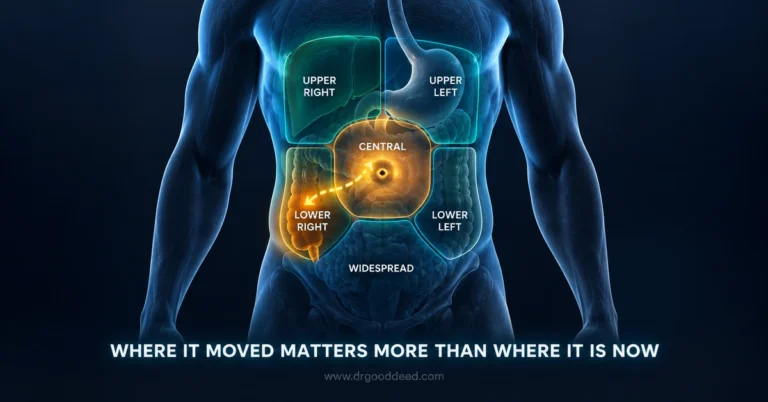
Pain that starts near the belly button and moves to the lower right side, worsening over hours, can signal a swollen appendix. This is a medical emergency, not something to wait out until your next meal.
Practical Ways to Reduce Morning Stomach Pain
Most causes of stomach pain in the morning respond well to changes you make the night before, not the morning of. The six steps below cover how to relieve morning stomach pain using habits that address digestion, gut movement, and stress together. Try them for two weeks before assuming you need medication.
Step 1: Keep a symptom diary. Write down what you ate, when you ate it, and how you felt when you woke up. Patterns show up within a week and point you toward the exact trigger.
Step 2: Avoid long overnight fasting. Going more than 10 to 12 hours without food lets stomach acid build up unopposed. A small protein-based snack before bed, like yogurt or a handful of nuts, can prevent that morning burn.
Step 3: Review late-evening habits. Alcohol, caffeine, spicy food, and eating within 3 hours of bedtime all raise your risk of acid reflux causing morning stomach pain. Cutting these back is often the single biggest fix people find.
Step 4: Improve bowel regularity. Fiber, water, and a short walk after dinner keep stool moving so it doesn’t build up overnight. This directly reduces the pressure behind constipation-related morning cramps.
Step 5: Reduce stomach irritation. Limit painkillers like ibuprofen and aspirin unless a doctor has told you to take them regularly, since they wear down the stomach lining. Knowing the right food to avoid if you wake up with stomach pain matters here too: skip fried food, citrus, tomato-based sauces, and carbonated drinks at dinner. These same foods sit near the top of nearly every list of causes of stomach pain in the morning tied to diet.
Step 6: Seek medical evaluation if symptoms persist, worsen, or recur despite lifestyle changes. Pain that keeps coming back after two to three weeks of these steps, or that comes with weight loss, blood in stool, fever, or vomiting, needs a doctor’s evaluation rather than more home fixes. Not all causes of stomach pain in the morning clear up with diet and timing alone, and a doctor can rule out ulcers, gallstones, or IBD with simple tests.
FAQs
Why does my stomach hurt after I wake up?
Your stomach has been empty for hours, and acid builds up with nothing to digest. Cortisol also peaks near dawn, making your gut more reactive. Reflux, gas, and constipation are the next most common causes of stomach pain in the morning.
Can an empty stomach cause abdominal pain?
Yes. Stomach acid keeps releasing on a schedule even without food present. That acid irritates the stomach lining, causing a gnawing or burning ache that often eases once you eat breakfast.
Why do I have lower abdominal pain after waking up?
The gastrocolic reflex activates your bowel right after waking, pushing stool through your colon. This is the top reason for lower abdominal pain after waking up, alongside IBS, constipation, and menstrual cramping.
Can IBS cause stomach pain in the morning?
Yes. IBS makes your gut overreact to the gastrocolic reflex that naturally triggers bowel movement after waking. It sits among the causes of stomach pain in the morning that need long-term management, not a one-time fix.
When should I worry about stomach pain in the morning?
Worry if pain is severe, lasts more than a few weeks, or comes with fever, blood in stool, unexplained weight loss, or vomiting. Pain moving to the lower right belly needs same-day medical care.
Can stress cause stomach pain after waking up?
Yes. The vagus nerve links your brain and gut directly, so morning anxiety can trigger real cramping without any physical damage. This is one of the most overlooked causes of stomach pain in the morning.
Is morning stomach pain a sign of a stomach ulcer?
It can be. Ulcer pain classically worsens on an empty stomach and eases briefly after eating. A doctor confirms this with an endoscopy or a breath test for H. pylori bacteria.
Can constipation cause morning abdominal pain?
Yes. Stool buildup, combined with the gastrocolic reflex, creates pressure and cramping right after waking. Adding fiber, water, and morning movement usually relieves this within a few days. Fixing this is one of the most reliable ways to relieve morning stomach pain long-term.