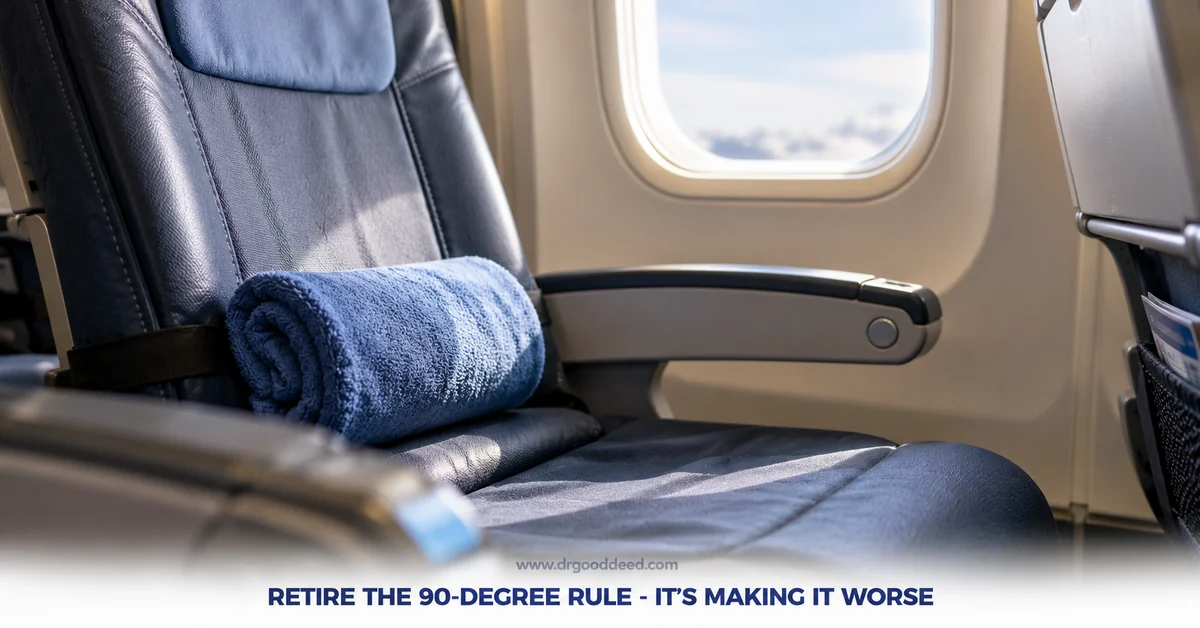

Travelling with sciatica is manageable when you control three things: seat angle, vibration, and how often you move. Sciatica is pain from an irritated sciatic nerve (the long nerve running from the lower back down each leg). Sitting raises lumbar disc pressure by roughly 40% compared with standing. Open your hip angle beyond 90 degrees, and stand or walk regularly.
For wider travel habits, read how to stay healthy while traveling. This guide covers seat angle, movement timing, flare-up care, and emergency signs.
Key Takeaways
- Traveling with sciatica can be uncomfortable, especially during long flights or car rides, because prolonged sitting can increase pressure on the lower back and irritate the sciatic nerve.
- Choose a supportive seat, keep your lower back properly supported, avoid sitting with your legs crossed, and change position or walk around every 30–60 minutes when possible.
- The best seat position for sciatica travel opens your hip angle to roughly 100 to 115 degrees, not a rigid 90.
- Gentle stretches, regular movement, comfortable footwear, and staying hydrated may also help.
- If your doctor has recommended medication, carry it as prescribed. Seek urgent medical care if you develop new leg weakness, loss of bladder or bowel control, or numbness around the groin or inner thighs.
- How often to move with sciatica on a flight: at least once an hour, or every 1 to 2 hours in a car.
Why Sitting Is Genuinely Harder on Sciatica Than Standing
Sitting places significantly more pressure on your lumbar discs than standing, which is why sciatica often worsens on long trips. That makes a sciatica flare-up during travel common.
Classic disc pressure measurements by orthopedic researcher Alf Nachemson put the increase at roughly 40%, and higher with slouching.
- What sciatica is: Irritation or compression of the sciatic nerve roots (called radiculopathy), usually at the L4-L5 or L5-S1 levels of the lower spine. It causes pain, tingling, or numbness down one leg. These same nerve levels are covered in more detail in lower back pain when standing.
- Why sitting loads the discs: Sitting bends the lumbar spine forward, which can push disc material toward the nerve roots.
- Slouching adds more: Slumped, unsupported sitting raises disc pressure further than sitting tall.
- Travel stacks the factors: Fixed posture, tight legroom, cold muscles, and lifting luggage all pile onto the same spot.
- Standing is not a cure: Standing lowers disc pressure, but changing positions matters more than holding any single one.
For anyone travelling with sciatica, the next step is setting up the seat itself.
The Right Way to Sit: Seat Angle, Lumbar Support, and Wallet Placement
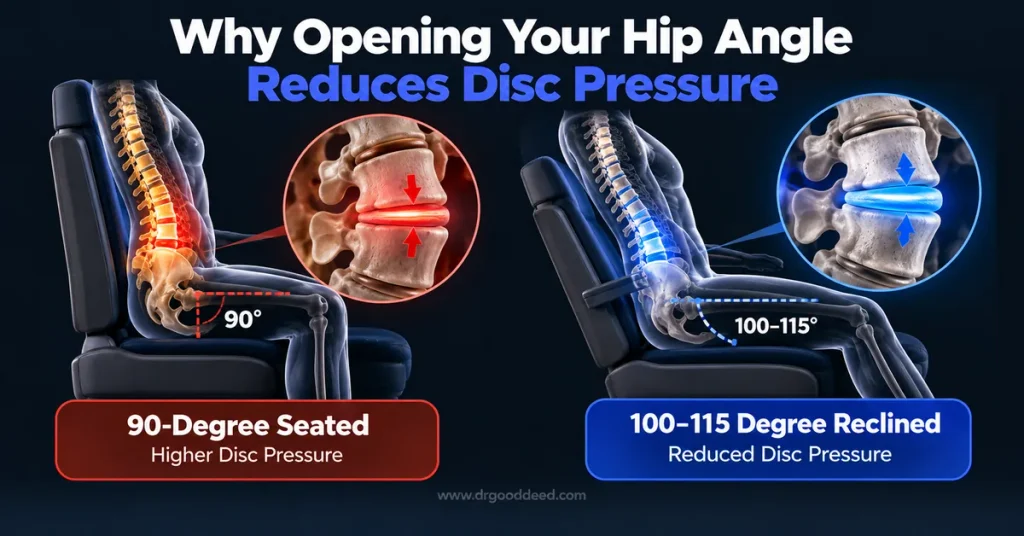
The best seat position for sciatica travel opens the hip angle, the angle between your torso and thighs, to roughly 100 to 115 degrees.
- Retire the 90-degree rule: Opening the angle beyond 90 measurably reduces disc pressure.
- How to get there: Tilt the backrest about 10 to 25 degrees past vertical. On a plane, use the recline button if the seat allows it.
- Support the curve: Place a small rolled towel or lumbar pillow at your belt line, in the inward curve of the lower back.
- Knees and feet: Keep knees level with or slightly below your hips, and feet flat or on a bag. Avoid crossing your legs.
- Empty your back pockets: Sitting on a wallet or thick phone tilts the pelvis and creates uneven pressure that can irritate the sciatic nerve directly. Move it to a front pocket or bag.
- Car setup: Use these sciatica car ride tips at the wheel: adjust the seat before you start, use cruise control on highways so your right leg can rest, and share the driving.
Good setup for travelling with sciatica takes five minutes and pays off for hours. But even a perfect seat fails if you never leave it.
How Often You Actually Need to Move (and Why)
Stand or walk at least once an hour on a flight, and stop every 1 to 2 hours on a drive.
Vibration is the second reason to move. Whole-body vibration transmitted through a vehicle or aircraft seat is a well-documented occupational risk factor for disc problems, separate from static sitting pressure.
Occupational data on truck drivers illustrate this, though an occasional traveler’s exposure is far lower, so treat it as an example.
- In a car: Stop every 1 to 2 hours and walk for a few minutes.
- On a flight: Walk the aisle at least hourly when the seatbelt sign is off.
- In between: Shift your pelvis or weight every 20 to 30 minutes. Ergonomic guidance often suggests this interval, though evidence for an exact number is limited. This same movement-break guidance is covered in the complete guide to lower back pain.
- Choose an aisle seat: It makes standing easy without disturbing neighbors.
- Avoid rough roads: Smoother routes and slower speeds reduce vibration where possible.
Pro Tip:
Walk and stretch at the gate before boarding and again right after landing, instead of sitting through the wait. Gate time adds hours of disc loading before and after the flight itself.
Managing a Flare-Up Mid-Trip
A sciatica flare-up during travel usually eases with gentle position changes, short walks, and doctor-approved pain relief. Staying in one position rarely helps, so keep moving within your comfort.
- Change position slowly: Stand, walk, or lean against a wall, then return to the seat with your lumbar support.
- Heat or ice: Heat relaxes tight muscles, and ice may calm sharp pain. Evidence for choosing one is limited, so use whichever feels better, in short sessions with a cloth barrier.
- Anti-inflammatories: Doctors usually approve over-the-counter options like ibuprofen or naproxen only after checking for ulcers, kidney disease, blood thinners, or pregnancy. Dosage varies by person, so get approval before you leave.
- Lift luggage safely: Bend your knees, keep the bag close, use wheels, and ask for help with overhead bins.
- At the hotel: Lie on your side with a pillow between your knees, and avoid prolonged bed rest.
A flare-up that follows these steps usually settles. If it does not, or new symptoms appear, the next section applies.
When Travel-Related Sciatica Is a Medical Emergency
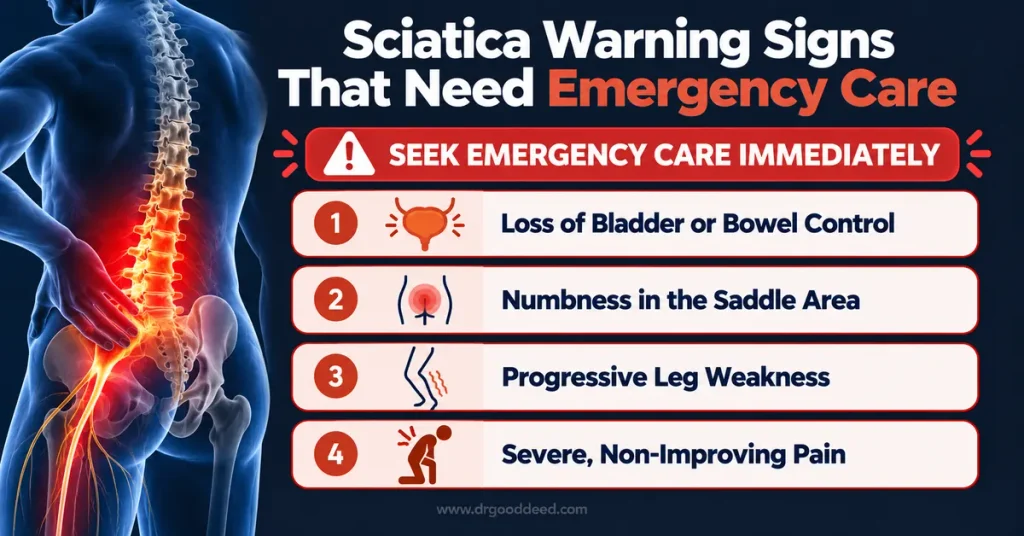
Most travel-related sciatica flare-ups are uncomfortable but not dangerous, but specific symptoms mean you need emergency care immediately. Anyone travelling with sciatica should know these signs before departure.
- Loss of bladder or bowel control, including being unable to urinate.
- Numbness in the saddle area (inner thighs, groin, and buttocks).
- Progressive weakness in one or both legs, such as a dragging foot.
- Severe pain that is not improving with position changes or rest.
The first three can signal cauda equina syndrome, compression of the nerve bundle at the base of the spinal cord. Delay risks permanent damage, so do not wait to see if it passes. Go to the nearest emergency department or call 911 (999 in the UK). For severe pain alone, call your doctor the same day or use urgent care (NHS 111 in the UK).
| Expert Insight: Pain intensity is a poor guide to urgency in sciatica. New weakness, saddle numbness, or bladder and bowel changes matter far more than how severe the pain feels, because they signal nerve compromise that needs treatment within hours.One more warning: swelling, warmth, and pain in one calf is a possible blood clot, and needs same-day care. |
FAQs
Does an aisle seat genuinely help with sciatica on a flight?
Yes, mainly because an aisle seat lets you stand without disturbing neighbors, which supports the hourly movement that matters for travelling with sciatica. The seat itself gives no spinal benefit, so pair it with a lumbar roll.
Can a long car ride actually cause sciatica, or only worsen it?
Yes, but rarely from one trip. Years of long driving and vibration are linked to disc herniation, while a single drive usually aggravates an existing problem. Try sciatica car ride tips like stopping every 1 to 2 hours.
Is it safe to take anti-inflammatory medication before a long flight?
Yes, for many adults, but only with prior approval. Ibuprofen and naproxen can irritate the stomach and strain kidneys. People with ulcers, kidney disease, or blood thinners need doctor’s advice first. Ask before travelling with sciatica.
Can travel constipation feel like sciatica?
Yes. Severe constipation can cause pain that mimics sciatica through the sacral nerve plexus, via referred pain from bowel distension. It does not worsen actual sciatic nerve compression. Constipation with bladder changes or saddle numbness needs emergency care.
Can poor posture on a plane also contribute to tension headaches?
Yes. Hours of forward head posture and raised shoulders strain neck muscles, a plausible trigger for tension-type headaches. This mechanism is separate from sciatica, but both improve with position changes. Use a neck pillow when travelling with sciatica.
Sources
- Mayo Clinic: Sciatica link
- NHS: Sciatica link
- NHS: Cauda Equina Syndrome link
- CDC NIOSH: Workplace Safety and Health link
Medical Disclaimer: This article is for general information only and is not medical advice. It does not replace a diagnosis, treatment plan, or guidance from a qualified healthcare professional. Always talk to your doctor about your own symptoms and before starting, stopping, or changing any treatment. If you think you may be having a medical emergency, call 911 or go to your nearest emergency room.