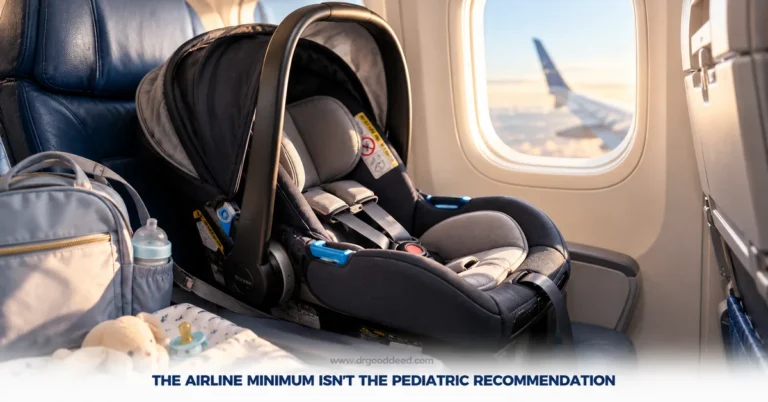


For most healthy pregnancies, travel is generally possible, but what is comfortable and appropriate can change by trimester. Airlines usually stop accepting pregnant passengers after 36 weeks, and earlier for twins or triplets. The two real medical concerns are blood clots and being far from your care team late in pregnancy.
Always check with your obstetrician before long-distance or international travel. For the wider basics, see our guide on how to stay healthy while traveling.
Key Takeaways
- Most healthy women can manage travel during pregnancy, and the best trimester to travel is usually the second (weeks 14 to 28).
- It is usually safe to fly while pregnant, and how many weeks pregnant you can fly depends on the airline; generally, 36 weeks or 32 to 33 weeks with multiples.
- The first trimester may bring nausea and fatigue, so shorter trips, frequent breaks, hydration, and easy-to-digest foods can help.
- The second trimester is often more comfortable for travel, although regular movement and hydration remain important, especially on long journeys.
- During the third trimester, travel may become more difficult and some airlines or healthcare providers may recommend restrictions as the due date approaches.
- Blood clot risk during pregnancy travel is higher than usual, but simple habits lower it.
- TSA body scanners are considered safe, though frequent flyers should discuss cumulative radiation exposure.
- Confirm every trip with your own OB-GYN or midwife before booking.
Is It Safe to Travel While Pregnant? The Short Answer
Yes, air travel is generally considered safe throughout a healthy pregnancy, according to OB-GYN guidance, though every pregnancy is different. Kenneth Johnson, DO, an OB-GYN says flying is generally fine but points to reduced circulation and clot risk as the real concerns.
- Cabin pressure is set to roughly 6,000 to 8,000 feet of altitude, which a healthy mother and baby tolerate well.
- Anemia (low red blood cell count) or sickle cell disease can make lower cabin oxygen matter more, so ask your doctor first.
- Road trips count as travel during pregnancy too, and stopping to walk every couple of hours helps circulation.
- Wear the lap belt low, under your belly and across your hips, in planes and cars.
- Good travel during pregnancy planning changes by trimester, because a trip that suits you at 20 weeks may not suit you at 34.
The Best (and Riskiest) Trimester to Travel
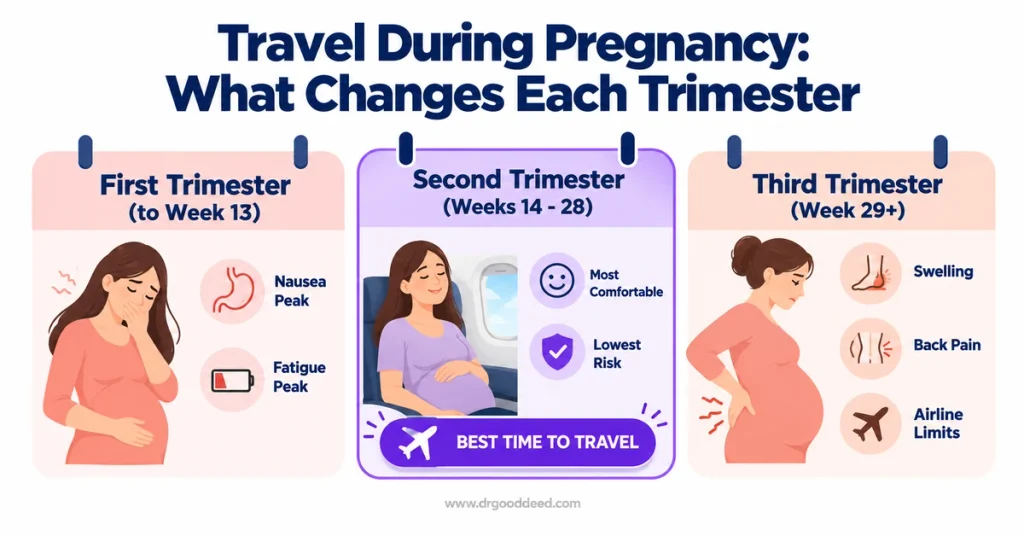
The second trimester, roughly weeks 14 to 28, is generally considered the best trimester to travel. Morning sickness has usually eased, your energy is back, and your belly is not yet in the way. Miscarriage risk is lower than in the first trimester, and preterm labor (labor before 37 weeks) is less likely than in the third.
| Stage | What travel usually looks like |
| First trimester (to week 13) | Nausea and tiredness peak. Ectopic pregnancy (a pregnancy growing outside the womb) should be ruled out first. |
| Second trimester (weeks 14 to 28) | Most comfortable, with the lowest overall risk for most women. |
| Third trimester (week 29 on) | More swelling and back pain, a higher chance of labor starting far from your hospital, and airline limits. |
The Real Week Limits Airlines Use
Most airlines discourage travel after 36 weeks of pregnancy, and multiple pregnancies face earlier limits, generally starting around the 32nd to 33rd week. These are airline rules, not medical laws, so confirm the cutoff with your carrier before booking. Airlines set the line because they cannot provide obstetric care mid-flight, and labor becomes more likely late in pregnancy. Your doctor may set a stricter limit, especially in a high-risk pregnancy.
Airlines usually judge you by your gestational age (weeks since your last period) on the last flight of the trip, so the return leg matters as much as the outbound one. Long international routes often have stricter cutoffs than short domestic hops. Planning travel during pregnancy around these rules starts with a few questions:
- Ask for the exact cutoff week on your route.
- Ask whether a doctor’s letter is needed, and how recent.
- Ask what the cutoff is for twins or triplets.
- Check your return date, since you will be further along.
- Ask about change and refund rules if your health changes.
Some airlines start asking for a letter around 28 weeks, and international carriers often want it dated within days of departure.
Blood Clot Risk and How to Reduce It
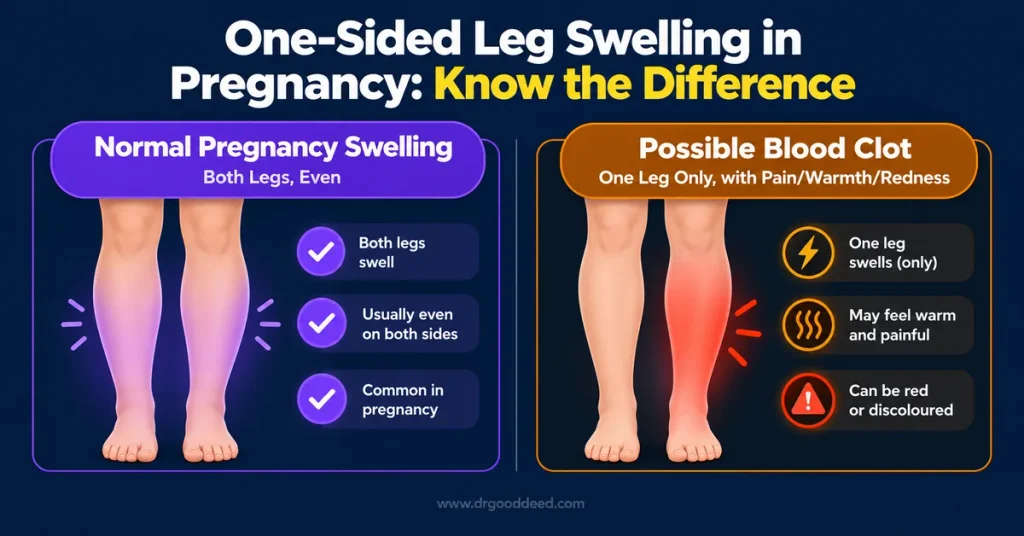
Pregnancy naturally increases clotting factors in the blood, a state called hypercoagulability (a higher than normal tendency to clot), and combined with hours of immobility on a flight, this raises blood clot risk further.
Pregnancy alone raises the odds of deep vein thrombosis (DVT, a clot in a deep leg vein) roughly four to five times compared with non-pregnant women, and the risk stays raised for weeks after birth. Your growing uterus also presses on leg veins and slows blood flow back to the heart.
Trips of about four hours or more add to the effect, though most travelers never develop a clot. A clot that reaches the lungs (pulmonary embolism) can cause sudden breathlessness or chest pain, and that means calling emergency services at once. If you have had a clot before, ask your doctor about extra prevention, since doctors may prescribe blood thinners in that case. These habits make long-distance travel during pregnancy safer:
- Wear graduated compression socks, snug at the ankle and looser higher up.
- Stand and walk the aisle every hour or two.
- Flex and rotate your ankles while seated.
- Sip water steadily through the flight.
- Book an aisle seat for easier movement.
- Wear loose clothing and avoid crossing your legs.
Compression socks, already covered for travel-related swelling in home remedies for swollen feet, are genuinely useful here too.
| Expert Insight: Normal pregnancy swelling usually affects both ankles, so swelling, pain, warmth, or redness in just one calf is the pattern clinicians take seriously as a possible deep vein thrombosis. It needs same-day medical assessment, not a wait-and-see approach.Pro Tip: Put compression socks on in the morning before your feet swell, ideally before getting out of bed. Socks pulled over already puffy ankles fit poorly and work less well. |
Airport Security and Radiation: What TSA Actually Says
The millimeter wave scanners used in US airports today use non-ionizing radiation (low-energy waves that do not damage cells the way X-rays can) and are considered safe during pregnancy.
- The older backscatter X-ray scanners did use ionizing radiation, which is exactly why they were phased out of all US airports by 2013.
- Only millimeter wave machines are in current use.
- Screening is a small part of travel during pregnancy, and if you would rather skip the machine, TSA lets you opt for a pat-down.
The flight itself is the larger radiation source. At cruising altitude, you receive more cosmic radiation (natural radiation from space), and for an occasional traveler the amount is very small. Pilots, flight attendants, and frequent business travelers can build up a higher cumulative dose over many flights, so they should discuss limits with their doctor and employer.
Questions to Ask Your OB-GYN Before Booking
Bring specific questions to your prenatal visit so your OB-GYN can judge your exact trip. Even in the best trimester to travel, a checkup first is sensible, and it turns travel during pregnancy plans into something concrete.
- Do my gestational age and health support this planned trip?
- Does my destination carry risks, such as Zika, malaria, or limited maternity care?
- Do any medications or vaccinations need adjusting before I go?
- Should I wear compression stockings, and which strength?
- Which symptoms should send me to a doctor while I’m away?
- Which hospital near my destination handles obstetric emergencies?
Also ask for a copy of your prenatal records, and check the CDC Travel Health Notices page for your destination before travel during pregnancy begins.
When Travel Isn’t Recommended
Travel may be inadvisable with certain pregnancy risks, and your provider, not an airline, makes that call. Reviewing travel during pregnancy with your doctor is especially important if any of these apply:
- High blood pressure, diabetes, or preeclampsia (high blood pressure in pregnancy that can strain organs such as the kidneys).
- Placenta previa (a placenta covering the cervix, which can cause heavy bleeding) or cervical insufficiency (a cervix that opens too early).
- A history of ectopic pregnancy.
- A first pregnancy at 35 or older, or at 15 or younger.
- Any complication your provider has flagged as high-risk.
Some women with them still go with approval, so travel during pregnancy decisions here stay individual.
When to See a Doctor Before You Book
Talk to your OB-GYN or midwife before booking travel, regardless of how far along you are. An OB-GYN handles medical and surgical care in pregnancy, while a midwife provides prenatal care and delivers babies in low-risk pregnancies. Either route works, so use whoever follows your pregnancy.
Seek care fast while away for vaginal bleeding, leaking fluid, regular contractions, reduced baby movement, severe headache, vision changes, sudden breathlessness, or chest pain. Knowing your destination hospital before travel during pregnancy begins makes those moments far less stressful. Once your trip is approved, our travel pharmacy checklist covers what to pack.
FAQs
Do you need a doctor’s note to fly while pregnant?
No, not for most flights before about 28 weeks. Many airlines then ask for a letter, often dated within days of departure on international routes. Check your carrier’s rule for travel during pregnancy.
Is international travel riskier than domestic travel during pregnancy?
Yes, usually. International travel during pregnancy adds earlier airline cutoffs, longer flights, and destination risks like Zika (a mosquito-borne virus that can harm a developing baby) or malaria. Check CDC Travel Health Notices first.
Can you travel while pregnant with a high-risk pregnancy?
Yes, in some cases, but only with your specialist’s approval. Placenta previa, preeclampsia, or cervical insufficiency usually rule out flying. Ask about travel during pregnancy before booking anything.
Sources
- Transportation Security Administration (TSA) link
- US Environmental Protection Agency (EPA) link
- CDC Travel Health Notices link
- WebMD link
Medical Disclaimer: This article is for general information only and is not medical advice. It does not replace a diagnosis, treatment plan, or guidance from a qualified healthcare professional. Always talk to your doctor about your own symptoms and before starting, stopping, or changing any treatment. If you think you may be having a medical emergency, call 911 or go to your nearest emergency room.