

PCOS diet choices can directly affect insulin levels, inflammation, and hormonal imbalance in women with polycystic ovary syndrome. Specific eating patterns targeting insulin resistance and chronic inflammation help reduce irregular cycles, excess androgen levels, and metabolic complications without requiring extreme restriction.
Women with PCOS face unique metabolic challenges. Insulin resistance affects up to 70% of those diagnosed, creating a cycle where the body produces more insulin than needed, triggering the ovaries to release excess testosterone. This hormonal imbalance causes irregular periods, acne, unwanted hair growth, and difficulty maintaining a healthy weight. The right foods break this cycle by improving how cells respond to insulin and reducing systemic inflammation.
Best Diet for PCOS Management
The best diet for PCOS management centers on stabilizing blood sugar, reducing inflammation, and supporting hormone regulation through whole foods. Your meals need adequate protein, fiber from vegetables and whole grains, healthy fats that calm inflammation, and minimal processed foods that spike blood sugar.
Balanced meals supporting hormone health
Building balanced plates means combining three macronutrients at every meal. Protein slows digestion and prevents blood sugar crashes. Fiber from vegetables keeps you full and supports gut bacteria that help metabolize estrogen. Healthy fats reduce inflammation and help absorb fat-soluble vitamins needed for hormone production.
- A balanced breakfast might include scrambled eggs with spinach and avocado on whole grain toast.
- Lunch could feature grilled chicken over mixed greens with chickpeas, olive oil, and quinoa.
- Dinner might combine baked salmon with roasted Brussels sprouts and sweet potato.
Low glycemic foods for PCOS
Low glycemic foods release glucose slowly into your bloodstream, preventing the insulin spikes that worsen PCOS symptoms. These foods score 55 or below on the glycemic index. Examples include steel-cut oats, lentils, most non-starchy vegetables, berries, and nuts.
Choosing these foods helps manage insulin resistance, which sits at the core of PCOS metabolic dysfunction. When insulin levels stay moderate and steady throughout the day, the ovaries produce less testosterone. This improves cycle regularity and reduces other androgen-related symptoms.
Anti-inflammatory eating patterns
Chronic inflammation worsens insulin resistance and hormonal imbalances in PCOS. Anti-inflammatory eating emphasizes colorful vegetables rich in antioxidants, omega-3 fatty acids from fish and walnuts, and polyphenols from berries and green tea.
Inflammation markers drop when you reduce refined carbohydrates, excess omega-6 oils from processed foods, and added sugars. Studies tracking women who adopted anti-inflammatory eating patterns showed improvements in menstrual regularity within three to six months, even without significant weight loss.
High-protein meal plan for PCOS
A high-protein meal plan for PCOS typically includes 25-30% of daily calories from protein sources. This supports satiety, preserves muscle mass during weight management, and moderates blood sugar responses after meals. Protein also requires more energy to digest than carbohydrates or fats, slightly boosting metabolic rate.
Low Glycemic Foods for PCOS
Low glycemic foods for PCOS form the foundation of blood sugar stability. These foods prevent the rapid glucose absorption that triggers excessive insulin production. The glycemic index measures how quickly foods raise blood sugar compared to pure glucose.
Whole grains and fiber-rich carbohydrates
Steel-cut oats, quinoa, barley, and bulgur wheat provide slow-releasing energy with high fiber content. One cup of cooked quinoa delivers 5 grams of fiber and 8 grams of protein. Fiber slows carbohydrate absorption and feeds beneficial gut bacteria.
Brown rice scores lower on the glycemic index than white rice. Switching from refined grains to whole grains can improve insulin sensitivity by 20-30% over several months. The fiber content also supports regular bowel movements, helping the body eliminate excess hormones.
Non-starchy vegetables and legumes
Leafy greens, broccoli, cauliflower, bell peppers, and zucchini contain minimal carbohydrates while providing vitamins, minerals, and phytonutrients. Legumes like lentils, black beans, and chickpeas combine protein with resistant starch that feeds healthy gut bacteria.
A half-cup of cooked lentils contains 9 grams of protein and 8 grams of fiber with a glycemic index of just 32. These foods fill you up without triggering insulin spikes. They also provide magnesium, which many women with PCOS lack. Low magnesium levels correlate with worse insulin resistance.
Fruits with lower glycemic impact
Berries, cherries, apples, pears, and citrus fruits score lower on the glycemic index than tropical fruits like pineapple or watermelon. A medium apple with skin provides 4 grams of fiber that slows sugar absorption. Berries contain anthocyanins that improve insulin sensitivity.
Pairing fruit with protein or fat further reduces glycemic impact. Greek yogurt with berries or apple slices with almond butter prevents blood sugar spikes while satisfying sweet cravings naturally.
Why stable blood sugar matters in PCOS
Blood sugar stability directly affects hormone balance in PCOS. When glucose enters the bloodstream slowly and steadily, the pancreas releases insulin in moderate amounts. Cells respond appropriately, taking in glucose for energy.
Rapid blood sugar spikes trigger insulin surges. Over time, cells become resistant to insulin’s signals. The pancreas compensates by producing even more insulin. High insulin levels signal the ovaries to produce excess testosterone. This creates the characteristic PCOS symptoms of irregular periods, acne, and hirsutism.
High Protein Meal Plan for PCOS
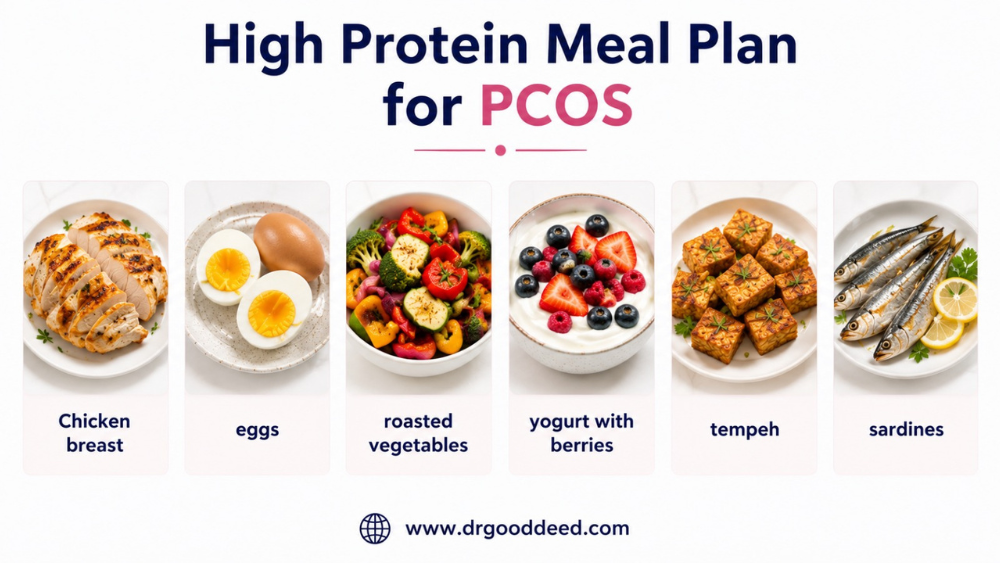
Protein plays multiple roles in PCOS management. It stabilizes blood sugar, supports metabolic function, and helps maintain lean muscle mass during weight management efforts.
Protein supporting satiety and energy
Protein triggers the release of satiety hormones that signal fullness to your brain. Meals with adequate protein prevent the mid-afternoon energy crashes and cravings that lead to poor food choices. Protein also has the highest thermic effect of all macronutrients, meaning your body burns more calories digesting it.
Women with PCOS who increase protein intake to 25-30% of daily calories report better appetite control and fewer carbohydrate cravings. This makes sustainable eating patterns easier to maintain long-term.
Lean meats, eggs, tofu, and legumes
Chicken breast, turkey, lean beef, and pork loin provide complete proteins without excess saturated fat. Eggs offer all essential amino acids plus choline for liver health. One egg contains 6 grams of protein.
Plant proteins like tofu, tempeh, and edamame work equally well. Tofu provides protein without saturated fat and contains isoflavones that may help with hormonal balance. Legumes combine protein with fiber, creating double benefits for blood sugar control.
Combining protein with fiber-rich foods
Pairing protein with fiber creates the most stable blood sugar response. Grilled chicken with quinoa and roasted vegetables combines all three macronutrients effectively. Greek yogurt with berries and chia seeds provides protein, fiber, and healthy fats in one bowl.
This combination keeps insulin levels moderate for hours after eating. It prevents the hunger that typically strikes two hours after carbohydrate-heavy meals.
Protein intake and blood sugar balance
Protein slows gastric emptying, meaning food leaves your stomach more gradually. This creates a slower, more controlled release of glucose into the bloodstream. Amino acids from protein also help maintain muscle mass, which acts as a glucose reservoir and improves overall insulin sensitivity.
Foods That May Help Support Hormone Balance
Certain nutrients show particular promise for improving hormonal patterns in PCOS beyond basic blood sugar control.
Omega-3 rich foods and healthy fats
Fatty fish like salmon, sardines, and mackerel contain EPA and DHA omega-3 fatty acids that reduce inflammation. Women with PCOS who consume fish twice weekly have lower inflammatory markers and improved lipid profiles.
Walnuts, flaxseeds, and chia seeds provide ALA omega-3s that the body converts to EPA and DHA at lower rates. Avocados and olive oil supply monounsaturated fats that reduce insulin resistance. Aim for two servings of fatty fish weekly or consider algae-based omega-3 supplements.
Magnesium-rich foods and inflammation support
Spinach, pumpkin seeds, almonds, and dark chocolate contain magnesium that improves insulin sensitivity. Women with PCOS often show lower magnesium levels than those without the condition. One ounce of pumpkin seeds provides 150 mg of magnesium, about 40% of daily needs.
Magnesium helps over 300 enzyme systems function properly, including those involved in blood sugar regulation and protein synthesis. Adequate intake correlates with better menstrual regularity.
Probiotic foods for gut health
Yogurt, kefir, sauerkraut, kimchi, and other fermented foods contain beneficial bacteria that support gut health. The gut microbiome affects hormone metabolism, inflammation levels, and even insulin sensitivity. Women with PCOS show different gut bacteria patterns compared to those without the condition.
Regular consumption of probiotic-rich foods may improve metabolic markers. The bacteria help break down and eliminate excess estrogen, preventing hormonal imbalances.
Hydration and metabolic function
Water supports every metabolic process in your body. Adequate hydration helps flush excess hormones through the kidneys, supports digestion and nutrient absorption, and prevents false hunger signals. Aim for eight glasses daily, more if exercising or in hot weather.
Herbal teas like spearmint show specific benefits for PCOS. Drinking spearmint tea twice daily for several months reduced testosterone levels and hirsutism in research studies.
Foods That May Worsen PCOS Symptoms
Some foods consistently trigger inflammation and insulin spikes that worsen PCOS symptoms.
Sugary beverages and refined carbohydrates
Soda, fruit juice, sweetened coffee drinks, and energy drinks cause rapid blood sugar spikes followed by crashes. These drinks contain no fiber or protein to slow absorption. A 12-ounce soda delivers about 40 grams of sugar directly into your bloodstream within minutes.
White bread, white rice, pastries, and sugary cereals have similar effects. The refining process removes fiber and nutrients, leaving pure starch that converts quickly to glucose.
Ultra-processed foods and inflammation
Foods with long ingredient lists containing additives, preservatives, artificial flavors, and industrial seed oils promote inflammation. These foods typically combine refined carbohydrates, excess sodium, unhealthy fats, and added sugars in combinations that override natural satiety signals.
Processed meats, packaged snack foods, frozen meals, and fast food fall into this category. They provide calories without nutrients and worsen insulin resistance over time.
Excess trans fats and fried foods
Trans fats increase inflammation and LDL cholesterol while lowering beneficial HDL cholesterol. Although banned in many countries, trans fats still appear in some processed foods. Fried foods cooked in reused oils contain oxidized fats that damage cells and promote inflammation.
These fats interfere with insulin signaling and worsen metabolic dysfunction in PCOS. Check labels for partially hydrogenated oils and avoid fried restaurant foods when possible.
Skipping meals and overeating cycles
Irregular eating patterns worsen blood sugar control. Skipping breakfast triggers cortisol release and makes you more likely to overeat later. Going too long between meals causes blood sugar drops that trigger intense cravings for quick carbohydrates.
This pattern creates blood sugar roller coasters that stress your metabolic system. Eating at consistent times throughout the day maintains more stable insulin levels.
Healthy Eating Tips for PCOS
Sustainable eating patterns matter more than perfect individual meals. These healthy eating tips for PCOS create long-term success.
Eating meals consistently
Eating every 3-4 hours maintains steady blood sugar and prevents extreme hunger. Consistent meal timing helps regulate circadian rhythms that affect hormone production. Your body adapts to predictable eating patterns by optimizing digestion and metabolism.
Skipping meals seems tempting for weight loss, but backfires by slowing metabolism and triggering compensatory overeating. Regular meals support hormonal balance better than irregular eating.
Building balanced plates
Visualize your plate divided into sections. Fill half with non-starchy vegetables, one quarter with lean protein, and one quarter with whole grains or starchy vegetables. Add healthy fats through cooking methods or toppings like nuts, seeds, or avocado.
This simple template ensures adequate fiber, protein, and nutrients without complicated tracking. Balanced plates stabilize blood sugar and provide satisfaction.
Managing cravings and emotional eating
Sugar cravings often indicate blood sugar imbalances or nutrient deficiencies. Protein-rich snacks like hard-boiled eggs, Greek yogurt, or hummus with vegetables help manage cravings. Magnesium-rich foods reduce chocolate cravings specifically.
Stress triggers cortisol release that increases appetite and cravings for comfort foods. Finding stress management techniques besides eating helps break emotional eating patterns. Walking, meditation, or calling a friend provides alternatives to food-based coping.
Portion awareness without extreme restriction
Understanding appropriate portions helps without requiring rigid measuring. A protein portion roughly matches your palm size. Fats should equal your thumb. Carbohydrate portions match your cupped hand. This flexible approach prevents both under-eating and over-eating.
Extreme restriction triggers biological responses that increase hunger hormones and decrease metabolism. Moderate portions of nutrient-dense foods work better long-term than severe calorie cutting.
Easy PCOS Friendly Recipes
These easy PCOS-friendly recipes follow the principles above while remaining simple and delicious.
High-protein breakfast ideas
- Greek yogurt parfait: Layer plain Greek yogurt with mixed berries, ground flaxseed, and chopped walnuts. This provides 20 grams of protein plus omega-3s and fiber.
- Veggie omelet: Whisk two eggs with spinach, mushrooms, and bell peppers. Cook in olive oil and serve with whole-grain toast. This delivers protein, vegetables, and sustained energy.
- Overnight oats: Mix steel-cut oats with chia seeds, cinnamon, and unsweetened almond milk. Top with sliced apple and almond butter in the morning.
Balanced lunch meal bowls
Mediterranean bowl: Combine quinoa, chickpeas, cucumber, tomatoes, olives, and feta cheese. Dress with olive oil and lemon juice. This provides complete protein, fiber, and anti-inflammatory fats.
Asian-inspired bowl: Layer brown rice with edamame, shredded cabbage, carrots, and grilled tofu. Drizzle with ginger-sesame dressing.
Anti-inflammatory dinner recipes
Baked salmon with roasted vegetables: Season salmon with herbs and bake alongside Brussels sprouts, sweet potato, and red onion drizzled with olive oil.
Turkey and vegetable stir-fry: Sauté ground turkey with broccoli, bell peppers, snap peas, and garlic in avocado oil. Serve over cauliflower rice.
Lentil soup: Simmer lentils with vegetable broth, tomatoes, carrots, celery, and spices. This protein and fiber-rich meal freezes well for quick dinners.
PCOS-friendly snacks and smoothies
Snack ideas: Apple slices with almond butter, celery with hummus, hard-boiled eggs, or mixed nuts with dark chocolate.
Green smoothie: Blend spinach, frozen berries, Greek yogurt, ground flaxseed, and unsweetened almond milk for a nutrient-dense drink containing protein and fiber.
PCOS and Weight Management
Weight management in PCOS differs from typical weight loss advice due to underlying insulin resistance and hormonal factors.
Why weight gain can happen in PCOS
Insulin resistance makes weight gain easier and weight loss harder. High insulin levels signal the body to store fat, particularly around the abdomen. Elevated testosterone also affects body composition and fat distribution.
Chronic inflammation promotes fat storage through various hormonal pathways. Many women with PCOS describe feeling like their bodies resist weight loss despite consistent efforts.
Insulin resistance and fat storage
When cells resist insulin’s signals, the pancreas produces more insulin to compensate. High insulin levels activate enzymes that promote fat storage while inhibiting fat breakdown. This metabolic state makes losing weight extremely difficult.
Improving insulin sensitivity through PCOS diet changes often precedes weight loss. As insulin levels normalize, the body becomes more willing to release stored fat for energy.
Sustainable lifestyle changes vs crash diets
Restrictive diets slow metabolism and increase stress hormones that worsen PCOS symptoms. Rapid weight loss often triggers rebound weight gain plus additional pounds. Sustainable approaches focus on gradual changes that become permanent habits.
Losing 5-10% of body weight through sustainable methods significantly improves insulin sensitivity, menstrual regularity, and fertility in women with PCOS. Quality of food matters more than extreme calorie restriction.
Lifestyle Habits That Support PCOS Management
Diet alone cannot fully manage PCOS. Supporting lifestyle factors amplify dietary improvements.
Exercise and insulin sensitivity
Physical activity improves insulin sensitivity independent of weight loss. Both cardio and strength training benefit PCOS management. Strength training builds muscle mass that acts as a glucose reservoir, improving overall metabolic health.
Aim for 150 minutes of moderate activity weekly. Even short 10-minute walks after meals reduce post-meal blood sugar spikes effectively.
Sleep quality and hormonal regulation
Poor sleep worsens insulin resistance and increases cortisol levels. Sleep deprivation also disrupts hunger hormones, making you hungrier the next day. Women with PCOS often experience sleep apnea due to hormonal factors and weight distribution.
Prioritize 7-9 hours of quality sleep nightly. Consistent sleep schedules support circadian rhythms that regulate hormone production.
Stress management and cortisol balance
Chronic stress elevates cortisol, which raises blood sugar and promotes abdominal fat storage. Cortisol also interferes with other hormone pathways, potentially worsening PCOS symptoms.
Stress management techniques like meditation, yoga, deep breathing, or therapy help regulate cortisol levels. Finding effective stress outlets improves both mental health and physical PCOS symptoms.
Consistent daily routines
Regular sleep schedules, meal times, and exercise patterns help synchronize circadian rhythms. Your body functions optimally when daily patterns remain consistent. Hormones follow circadian cycles, so regular routines support hormonal balance.
Consistency also reduces decision fatigue, making healthy choices easier to maintain long-term.
Common Diet Mistakes People Make With PCOS
Women managing PCOS through diet often fall into patterns that seem helpful but actually worsen symptoms or prove unsustainable.
- Eliminating entire food groups unnecessarily: Cutting out all carbohydrates or fats creates nutritional deficiencies and proves impossible to maintain. Balanced approaches work better than extreme elimination.
- Following generic weight loss advice: Standard calorie restriction without addressing insulin resistance fails for PCOS. The metabolic dysfunction requires specific dietary strategies targeting blood sugar stability.
- Expecting immediate results: Hormonal changes take months to manifest. Cycle improvements typically appear after three to six months of consistent dietary changes.
- Perfectionism preventing consistency: Obsessing over perfect food choices creates stress that worsens PCOS. Consistent good-enough eating beats occasional perfect days followed by giving up.
- Ignoring hunger and fullness signals: Strict rules override natural body cues. Learning to eat when hungry and stop when satisfied creates sustainable patterns.
- Relying on supplements instead of food: While some supplements help PCOS, they cannot replace nutrient-dense whole foods. Real food provides compounds that work synergistically better than isolated nutrients.
FAQs
What is the best diet approach for managing PCOS symptoms?
The most effective PCOS diet combines low-glycemic foods, adequate protein, anti-inflammatory meal , and minimal processed foods. Focus on blood sugar stability through balanced meals every 3-4 hours rather than following extreme restrictions that prove unsustainable.
Why are low glycemic foods recommended for PCOS?
Low glycemic foods for PCOS prevent insulin spikes that worsen symptoms. They release glucose slowly, reducing the excessive insulin production that signals ovaries to produce excess testosterone. This improves cycle regularity and reduces androgen-related symptoms.
How does insulin resistance affect hormone balance in PCOS?
Insulin resistance forces the pancreas to produce excess insulin. High insulin levels directly stimulate the ovaries to release more testosterone while decreasing sex hormone-binding globulin, leaving more active testosterone circulating. This creates irregular periods, acne, and hirsutism.
Which high-protein foods may support PCOS management?
A high-protein meal plan for PCOS includes eggs, Greek yogurt, chicken, fish, tofu, legumes, and lean beef. These foods stabilize blood sugar, increase satiety, and preserve muscle mass during weight management, improving overall insulin sensitivity.
Can processed foods worsen inflammation and PCOS symptoms?
Ultra-processed foods contain refined carbohydrates, unhealthy fats, and additives that trigger inflammation and insulin spikes. They provide empty calories without nutrients, worsen metabolic dysfunction, and create blood sugar instability that amplifies PCOS symptoms significantly.
How does sleep affect hormones and cravings in PCOS?
Poor sleep worsens insulin resistance and elevates cortisol levels while disrupting hunger hormones ghrelin and leptin. This combination increases next-day appetite, particularly for carbohydrates and sweets, making dietary management more difficult and worsening metabolic function.
What are simple beginner-friendly PCOS meal ideas?
Easy PCOS-friendly recipes include Greek yogurt parfaits with berries, veggie omelets with whole grain toast, quinoa bowls with chickpeas and vegetables, baked salmon with roasted vegetables, and lentil soups. These meals combine protein, fiber, and healthy fats simply.
Can hydration and fiber help improve digestion in PCOS?
Adequate water intake supports hormone elimination through kidneys and prevents constipation. Fiber from vegetables, whole grains, and legumes feeds beneficial gut bacteria, slows sugar absorption, promotes regular bowel movements, and helps the body eliminate excess estrogen effectively.
Why do restrictive diets often fail in long-term PCOS management?
Extreme restriction slows metabolism, increases stress hormones, and creates unsustainable patterns. The resulting deprivation triggers binge cycles and rebound weight gain. Moderate, consistent healthy eating tips for PCOS that focus on food quality over extreme calorie restriction prove more effective.
How can stress influence appetite and hormonal symptoms in PCOS?
Chronic stress elevates cortisol, which raises blood sugar, promotes abdominal fat storage, and increases cravings for comfort foods. Cortisol also interferes with reproductive hormones, potentially worsening cycle irregularity. Managing stress through non-food methods improves both symptoms and eating patterns.