
PCOS diagnosis involves meeting at least two of three specific criteria: irregular or absent ovulation, clinical or biochemical signs of excess androgens (male hormones), and polycystic ovaries visible on ultrasound imaging. Diagnosis requires ruling out conditions with similar symptoms like thyroid dysfunction, elevated prolactin, or adrenal disorders.
Medical professionals use the Rotterdam criteria established in 2003 as the standard diagnostic framework. These guidelines recognize that PCOS presents differently across individuals. Some women experience all three criteria while others show only two. No single test confirms PCOS alone. Doctors combine physical examination findings, symptom history, blood work results, and imaging studies to reach an accurate diagnosis.
PCOS Diagnosis Criteria
The PCOS diagnosis criteria follows the Rotterdam consensus requiring two of three key features for confirmation. This internationally recognized standard helps doctors identify PCOS while accounting for its varied presentations across different women.
Irregular ovulation or missed periods
Irregular ovulation means the ovaries fail to release eggs consistently each month. This manifests as menstrual cycles shorter than 21 days, longer than 35 days, or fewer than eight periods annually. Some women experience complete absence of periods (amenorrhea) for months.
Normal menstrual cycles occur every 21-35 days with 2-7 days of bleeding. PCOS disrupts the hormonal cascade needed for regular ovulation. Elevated insulin and androgens prevent proper follicle development. The ovarian follicles start maturing but never fully develop to release an egg.
Signs of excess androgen hormones
Androgen excess appears through physical symptoms (clinical hyperandrogenism) or elevated hormone levels in blood tests (biochemical hyperandrogenism). Physical signs include excess hair growth on face, chest, back, or abdomen (hirsutism), severe acne particularly on jawline and chin, and male-pattern hair loss from the scalp.
Blood tests measure testosterone, androstenedione, and DHEA-S levels. Elevated readings confirm biochemical hyperandrogenism even without visible symptoms. Some women have normal testosterone levels but elevated free testosterone, the active form not bound to proteins. About 60-80% of women with PCOS show some degree of androgen excess.
Ultrasound findings of polycystic ovaries
An ultrasound scan for polycystic ovaries reveals 12 or more follicles measuring 2-9mm in diameter per ovary, or increased ovarian volume exceeding 10 cubic centimeters. These small follicles represent immature eggs that started developing but stopped growing due to hormonal imbalances.
The “polycystic” not true cysts but arrested follicles. Not every woman with PCOS shows this ultrasound pattern. About 20-30% of women without PCOS have polycystic-appearing ovaries on ultrasound. This is why ultrasound findings alone cannot diagnose PCOS without other criteria present.
Early Diagnosis of PCOS Symptoms
Early diagnosis of PCOS symptoms helps prevent long-term complications like type 2 diabetes, cardiovascular disease, and endometrial cancer. Recognizing warning signs during teenage years or early twenties allows earlier intervention when lifestyle changes prove most effective.
Irregular menstrual cycles
Most young women establish regular cycles within 2-3 years after their first period. Persistent irregularity beyond this window warrants evaluation. Cycles consistently shorter than 21 days or longer than 35 days signal potential ovulation problems.
Missing periods for several months without pregnancy suggests anovulation. Some teenagers dismiss this as normal, delaying diagnosis for years. Tracking cycles on a calendar or app helps identify patterns worth discussing with healthcare providers.
Acne and oily skin changes
PCOS-related acne differs from typical teenage breakouts. It concentrates along the jawline, chin, and lower face rather than the forehead. The acne persists into the twenties and thirties when most people see improvement. It often resists standard acne treatments.
Excessive oil production makes skin appear shiny constantly despite washing. This results from androgen stimulation of sebaceous glands. The same hormones cause enlarged pores and blackheads concentrated in the T-zone.
Excess facial or body hair growth
Hirsutism means coarse, dark hair growing in male-pattern areas: upper lip, chin, chest, lower abdomen, inner thighs, or back. This differs from fine, light vellus hair most women have. Hirsutism affects 70% of women with PCOS, varying by ethnicity.
The hair grows thicker and darker over time as androgen exposure continues. Many women spend significant time and money on hair removal before seeking medical evaluation. This symptom causes considerable emotional distress and reduced quality of life.
Weight gain and insulin resistance
About 50-70% of women with PCOS struggle with weight gain, particularly around the abdomen. Insulin resistance makes losing weight extremely difficult despite diet and exercise efforts. The body produces excess insulin to compensate for cells not responding properly to insulin’s signals.
High insulin levels signal the ovaries to produce more testosterone. This creates a cycle where insulin resistance worsens PCOS symptoms, which further worsens insulin resistance. Weight gain also increases insulin resistance, perpetuating the pattern.
Difficulty with fertility and ovulation
Ovulation problems in PCOS account for approximately 70% of anovulatory infertility cases. Women trying to conceive notice absent or irregular periods indicating infrequent ovulation. Tracking basal body temperature shows no clear temperature shift that marks ovulation.
Ovulation predictor kits may show positive results without actual egg release, or never show positive results due to hormonal imbalances. Some women with PCOS ovulate occasionally, making conception possible but unpredictable. Others require medical intervention to achieve ovulation and pregnancy.
Tests Used to Diagnose PCOS
Tests used to diagnose PCOS include multiple blood tests measuring hormone levels, metabolic function, and ruling out similar conditions. No single test confirms PCOS, but together they create a diagnostic picture.
Hormone blood tests
Total and free testosterone measurements identify androgen excess. Free testosterone represents the biologically active portion not bound to sex hormone-binding globulin (SHBG). DHEA-S testing distinguishes ovarian from adrenal androgen production. Androstenedione provides additional androgen assessment.
Luteinizing hormone (LH) and follicle-stimulating hormone (FSH) tests often show elevated LH-to-FSH ratios in PCOS, typically 2:1 or 3:1. Anti-Müllerian hormone (AMH) levels run higher than normal in PCOS, reflecting the numerous small follicles. These tests require specific cycle timing for accurate interpretation.
Blood sugar and insulin testing
Fasting glucose and insulin levels assess metabolic function. Glucose levels between 100-125 mg/dL indicate prediabetes. Levels at 126 mg/dL or higher suggest diabetes. Fasting insulin above 25 mIU/L suggests insulin resistance, though interpretations vary by lab.
The 2-hour oral glucose tolerance test (OGTT) provides more comprehensive metabolic assessment. It measures glucose and insulin at fasting, then 30 minutes, 1 hour, and 2 hours after consuming 75 grams of glucose. This reveals how effectively the body processes sugar and produces insulin. Hemoglobin A1C testing shows average blood sugar over the past 3 months.
Thyroid function evaluation
Thyroid-stimulating hormone (TSH) testing rules out hypothyroidism, which causes similar symptoms to PCOS. Hypothyroidism creates irregular periods, weight gain, fatigue, and difficulty losing weight. Free T4 and free T3 measurements provide additional thyroid assessment when TSH appears abnormal.
Thyroid disorders affect 10-30% of women with PCOS, higher than the general population. Some research suggests links between thyroid dysfunction and PCOS development. Treating thyroid problems improves PCOS symptoms in affected women.
Cholesterol and metabolic health assessment
Lipid panel testing measures total cholesterol, LDL cholesterol, HDL cholesterol, and triglycerides. Women with PCOS often show elevated triglycerides and LDL with decreased HDL. This lipid pattern increases cardiovascular disease risk.
Liver function tests assess nonalcoholic fatty liver disease (NAFLD), which affects 30-50% of women with PCOS. Elevated liver enzymes signal liver inflammation from fat accumulation. Vitamin D testing reveals deficiencies common in PCOS that worsen insulin resistance and inflammation.
Ovulation Problems in PCOS
Ovulation problems in PCOS stem from disrupted hormonal signals that prevent regular egg maturation and release. Understanding ovulation dysfunction helps explain fertility difficulties and irregular cycles.
Irregular ovulation explained
Normal ovulation requires precisely timed hormone release. FSH stimulates follicle growth, rising estrogen triggers LH surge, and the LH surge causes egg release. PCOS disrupts this sequence through elevated insulin and androgens that interfere with normal hormone patterns.
High insulin levels reduce SHBG production, increasing free testosterone. Elevated androgens prevent proper follicle development. Multiple follicles begin maturing but arrest at early stages rather than one dominant follicle developing fully. Without a mature follicle, no LH surge occurs, preventing ovulation.
Missed periods and fertility effects
Missed periods result from anovulation, not ovulation. Without ovulation, the uterine lining continues building without the progesterone surge that follows egg release. Eventually the lining sheds irregularly, causing unpredictable heavy bleeding or prolonged absent periods.
This anovulation directly impacts fertility. Pregnancy requires a mature egg released at the right time to meet sperm. Irregular ovulation makes timing intercourse extremely difficult. Even when ovulation occurs, the hormonal imbalances may affect egg quality or endometrial receptivity.
Hormonal disruptions affecting egg release
The LH-to-FSH ratio imbalance characteristic of PCOS prevents follicle maturation. Elevated LH stimulates androgen production rather than supporting follicle development. Low FSH relative to LH means insufficient stimulation for follicles to mature.
AMH produced by small follicles remains elevated because numerous arrested follicles constantly produce this hormone. High AMH further inhibits FSH release, perpetuating the cycle. Insulin directly stimulates ovarian cells to produce more androgens, compounding the problem.
Conditions That Can Mimic PCOS Symptoms
Several conditions present symptoms similar to PCOS, requiring exclusion before confirming diagnosis. This differential diagnosis process ensures accurate identification.
Thyroid disorders and menstrual irregularities
Hypothyroidism causes irregular periods, weight gain, fatigue, and difficulty losing weight like PCOS. Hyperthyroidism creates lighter, irregular periods and weight loss. Both affect ovulation and fertility. Thyroid hormone regulates metabolism and reproductive function.
Hashimoto’s thyroiditis, an autoimmune thyroid condition, particularly mimics PCOS symptoms. It causes gradual thyroid failure with fluctuating hormone levels. Testing TSH, free T4, and thyroid antibodies distinguishes thyroid problems from PCOS.
Elevated prolactin levels
Hyperprolactinemia (elevated prolactin) causes irregular or absent periods similar to PCOS. Prolactin suppresses ovulation by interfering with FSH and LH release. It may cause breast milk production in non-pregnant women.
Causes include pituitary tumors (usually benign), certain medications, hypothyroidism, or stress. Simple blood testing measures prolactin levels. Treating the underlying cause restores normal ovulation and cycles.
Adrenal hormone disorders
Congenital adrenal hyperplasia (CAH) causes androgen excess through adrenal glands rather than ovaries. It produces similar symptoms including hirsutism, acne, and irregular periods. The 21-hydroxylase deficiency form appears most commonly.
Cushing’s syndrome from excess cortisol production causes weight gain, irregular periods, and sometimes androgen excess. Testing 17-hydroxyprogesterone identifies CAH. Cortisol testing and imaging studies diagnose Cushing’s syndrome.
Stress and weight-related hormone changes
Functional hypothalamic amenorrhea results from stress, excessive exercise, or low body weight suppressing reproductive hormones. The hypothalamus stops sending signals for ovulation. Periods disappear but androgen levels remain normal.
Significant weight changes in either direction disrupt ovulation temporarily. Rapid weight gain from any cause can mimic PCOS symptoms. Detailed history helps distinguish temporary hormone changes from true PCOS.
How Doctors Evaluate PCOS Symptoms
PCOS diagnosis involves comprehensive evaluation combining medical history, physical examination, and laboratory testing. This multifaceted approach ensures accurate diagnosis.
Medical history and cycle tracking
Doctors ask detailed questions about menstrual patterns, age at first period, cycle regularity, flow duration and heaviness, and symptoms throughout the cycle. Family history of PCOS, diabetes, or thyroid disease provides genetic context.
Questions about weight changes, diet, exercise habits, stress levels, and previous treatments help assess contributing factors. Fertility history including time trying to conceive and any pregnancies or miscarriages provides important diagnostic information.
Physical signs of hormonal imbalance
Physical examination assesses hirsutism using the Ferriman-Gallwey scoring system rating hair growth in nine body areas. Acne severity and distribution patterns are documented. Scalp examination checks for male-pattern hair loss.
Abdominal examination notes central obesity patterns. Skin examination looks for acanthosis nigricans (dark, velvety patches in skin folds indicating insulin resistance). Blood pressure measurement identifies hypertension common in PCOS. Body mass index calculation assesses weight status.
Long-term metabolic health risks
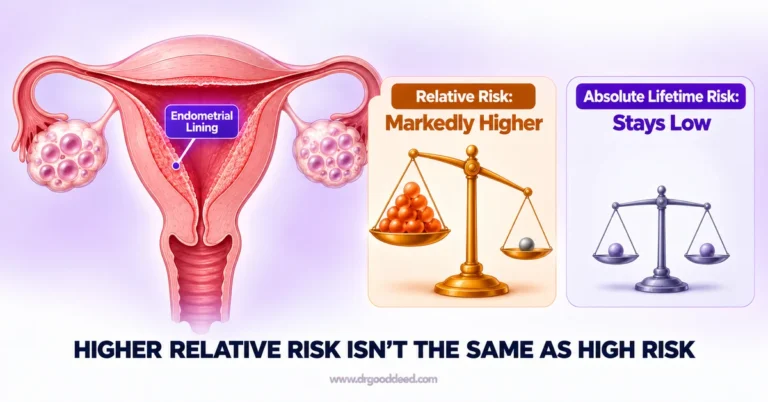
Doctors discuss increased risks for type 2 diabetes, with 50% of women with PCOS developing diabetes by age 40. Cardiovascular disease risk rises due to lipid abnormalities, hypertension, and inflammation. Endometrial cancer risk increases from prolonged unopposed estrogen exposure without regular periods.
Sleep apnea affects 30-40% of women with PCOS, particularly those with obesity. Depression and anxiety occur more frequently in PCOS. Discussing these risks motivates early intervention and regular monitoring.
Why Early Diagnosis of PCOS Matters
Early detection of PCOS enables timely intervention preventing long-term complications. Women diagnosed in their teens or twenties benefit most from lifestyle modifications that improve insulin sensitivity before metabolic damage progresses. Identifying PCOS early allows monitoring for glucose intolerance progression, implementing preventive strategies for diabetes and cardiovascular disease, and addressing fertility concerns before conception attempts.
- Type 4 diabetes develops in 50% of women with untreated PCOS by age 40 compared to 15-20% without PCOS
- Regular screening catches prediabetes when lifestyle changes prove most effective
- Early treatment prevents endometrial hyperplasia from prolonged unopposed estrogen exposure
- Addressing hormonal imbalances improves mental health outcomes reducing depression and anxiety
- Fertility preservation strategies work best before advanced age compounds ovulation difficulties
- Metabolic syndrome prevention through diet and exercise succeeds better in younger women
Lifestyle Factors That Influence PCOS Symptoms
Diet quality, physical activity levels, stress management, and sleep patterns directly affect PCOS symptom severity. Approximately 5-10% body weight loss improves insulin sensitivity by 30-40% in overweight women with PCOS. Refined carbohydrates and sugar consumption worsen insulin resistance while whole foods improve metabolic markers. Regular exercise independent of weight loss enhances insulin function and reduces androgens.
- Mediterranean-style eating patterns reduce inflammation and improve ovulation rates
- Resistance training builds muscle mass that improves glucose uptake and insulin sensitivity
- Chronic stress elevates cortisol levels that worsen insulin resistance and abdominal fat storage
- Poor sleep quality (less than 7 hours nightly) increases insulin resistance by 20-30%
- Vitamin D supplementation improves insulin sensitivity in deficient individuals
- Limiting alcohol consumption supports liver function and hormonal balance
FAQs
What tests are commonly used to diagnose PCOS?
Tests used to diagnose PCOS include total and free testosterone, DHEA-S, LH, FSH, fasting glucose, fasting insulin, TSH, and prolactin blood tests. Pelvic ultrasound examines ovaries for polycystic appearance. Lipid panels and hemoglobin A1C assess metabolic health comprehensively.
Can PCOS be diagnosed without an ultrasound?
Yes. PCOS is diagnosed when two of three Rotterdam criteria are met. Women with irregular ovulation plus clinical or biochemical androgen excess meet diagnostic requirements without ultrasound. However, ultrasound provides valuable information about ovarian morphology and rules out other conditions.
Why do irregular periods happen in PCOS?
Ovulation problems in PCOS stem from elevated insulin and androgens disrupting normal follicle development. Multiple follicles start maturing but arrest before producing a dominant follicle. Without ovulation, no progesterone surge occurs, preventing regular menstrual shedding and causing unpredictable irregular bleeding patterns.
How does insulin resistance relate to PCOS symptoms?
Insulin resistance forces the pancreas to produce excess insulin. High insulin levels directly stimulate ovarian cells to produce more testosterone while reducing SHBG, increasing free testosterone. This worsens acne, hirsutism, and ovulation dysfunction while promoting abdominal weight gain that further worsens resistance.
Can thyroid disorders mimic PCOS symptoms?
Yes. Hypothyroidism causes irregular periods, weight gain, fatigue, and difficulty losing weight identical to PCOS symptoms. Thyroid testing (TSH, free T4) distinguishes between conditions. About 10-30% of women with PCOS also have thyroid disorders, requiring treatment of both conditions simultaneously.
What hormone levels are usually checked during diagnosis?
PCOS is diagnosed by checking testosterone (total and free), DHEA-S, androstenedione, LH, FSH, AMH, TSH, and prolactin. These distinguish PCOS from thyroid disorders, adrenal conditions, and hyperprolactinemia. The LH-to-FSH ratio often shows 2:1 or 3:1 elevation in PCOS patients.
Why is early diagnosis of PCOS important for long-term health?
Early diagnosis of PCOS symptoms prevents type 2 diabetes development in 50% of untreated women by age 40. Timely intervention reduces cardiovascular disease risk, prevents endometrial cancer from unopposed estrogen, and addresses fertility concerns before advanced age compounds ovulation difficulties significantly.
Can lean individuals also develop PCOS?
Yes. Approximately 20-30% of women with PCOS have normal BMI (lean PCOS). They still experience insulin resistance, irregular cycles, and androgen excess despite healthy weight. Lean women with PCOS face similar long-term metabolic and cardiovascular risks as those with obesity.
How do ovulation problems affect fertility in PCOS?
Ovulation problems in PCOS cause 70% of anovulatory infertility cases. Irregular or absent ovulation means unpredictable egg release, making conception timing extremely difficult. Even when ovulation occurs, hormonal imbalances may affect egg quality and endometrial receptivity, reducing pregnancy success rates significantly.
When should irregular menstrual cycles be medically evaluated?
Menstrual irregularity persisting beyond 2-3 years after first period warrants evaluation. Cycles consistently shorter than 21 days, longer than 35 days, or fewer than eight periods annually require assessment. How PCOS is diagnosed starts with medical evaluation when patterns suggest ovulation dysfunction potentially indicating underlying conditions.