

Post-vacation fatigue is usually due to jet lag, a physical body clock mismatch, or the psychological letdown of returning to routine. Jet lag takes roughly one day per time zone crossed to clear. The letdown usually fades within days to about two weeks. Each needs a different fix. For broader trip health habits, read how to stay healthy while traveling.
Key Takeaways
- Post-vacation fatigue is usually one of two problems.
- Jet lag is physical and circadian (tied to the body’s 24-hour clock), needing roughly one day per time zone crossed.
- Post-vacation blues is a real, documented psychological letdown.
- Natural daylight on your first day is the most effective single jet lag reset tool.
- Fatigue lasting well beyond two weeks deserves a medical evaluation, not more rest.
Is It Jet Lag or Something Else? Why This Distinction Matters
Post-vacation fatigue is usually one of two distinct problems: physical jet lag or the psychological letdown known as post-vacuation blues, and they respond to different fixes.
Check two things first: how many time zones you crossed, and whether your mood dipped when the trip ended.
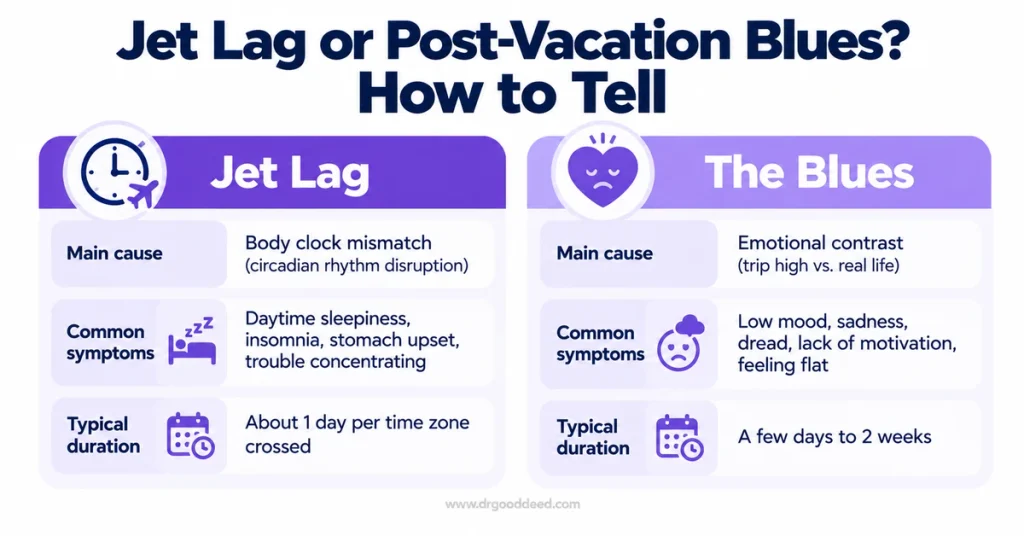
| Jet lag | The blues | |
| Cause | Body clocks out of sync with local time | Emotional contrast between trip and routine |
| Needs a time zone change? | Yes, usually two or more zones | No, any trip can trigger it |
| Main signs | Daytime sleepiness, night insomnia, poor focus, stomach upset | Low mood, restlessness, dreading routine |
| Typical length | About one day per zone crossed | Days to about two weeks |
| Best fix | Light, meal timing, sleep schedule | Anticipation, processing the trip, buffer time |
Lying in a dark room for a mood dip does nothing for a shifted body clock, and forcing daylight will not lift dread about Monday. You can also have both, and a road trip or staycation in one time zone rules jet lag out entirely.
- Late nights and alcohol: These add sleep debt (accumulated missed sleep) that looks like jet lag but is not.
- Sleeping in on vacation: Shifting your schedule by a few hours creates a mild version of jet lag, called social jet lag, even without a flight.
Working out which problem you have is step one, and step two is the timeline.
The Physical Fatigue: How Long Jet Lag Actually Takes to Resolve
Jet lag comes from your body’s peripheral circadian clocks, in organs like the liver and gut, falling out of sync with your brain’s master clock after crossing time zones. This mismatch is real and measurable.
- The master clock: A small brain region called the suprachiasmatic nucleus tracks light and resets first, and the clocks in the liver and gut follow more slowly. That lag helps explain the stomach upset many travelers feel.
- Direction matters: Eastward trips are usually harder than westward ones, because the body clock runs slightly longer than 24 hours and finds it easier to stay up later than to fall asleep earlier.
- Daylight is the strongest tool: Natural daylight exposure on the first day is the most effective single way to reset the circadian clock.
- Symptoms: Daytime fatigue, disturbed sleep, poor concentration, and digestive upset. Post-travel brain fog is largely this mix of clock mismatch and lost sleep.
- Shorter shifts: Crossing just one or two zones may cause little more than a few off days.
This same circadian mechanism, including the concept of social jet lag, is covered in more depth in tips to sleep better in summer.
Pro Tip:
After a large eastward trip, roughly eight or more time zones, early morning light at the destination can land during what your body clock still treats as late night. That may nudge the clock the wrong way, so ask a doctor or sleep specialist about light timing before such trips.
The Psychological Letdown: Why “Post-Vacation Blues” Is Real
Post-vacation blues is a real, documented phenomenon, distinct from jet lag, caused by the emotional contrast between an anticipated, relaxing trip and the return to routine. It generally resolves within days to about two weeks on its own.
- Anticipation effect: Looking forward to a trip lifts mood beforehand, so the high often peaks before departure.
- Contrast effect: Home and work feel duller right after novelty, freedom, and rest.
- Adaptation: Vacation happiness fades within days or weeks of returning, which is normal.
- Backlog stress: A full inbox and piled-up chores make the first workday heavier.
- Physical intensifiers: Jet lag and sleep debt worsen mood, so the two problems feed each other.
A few days of flatness is ordinary. Low mood that deepens, or stays past about two weeks, is a different situation, covered in the last section.
How to Recover From Both at Once
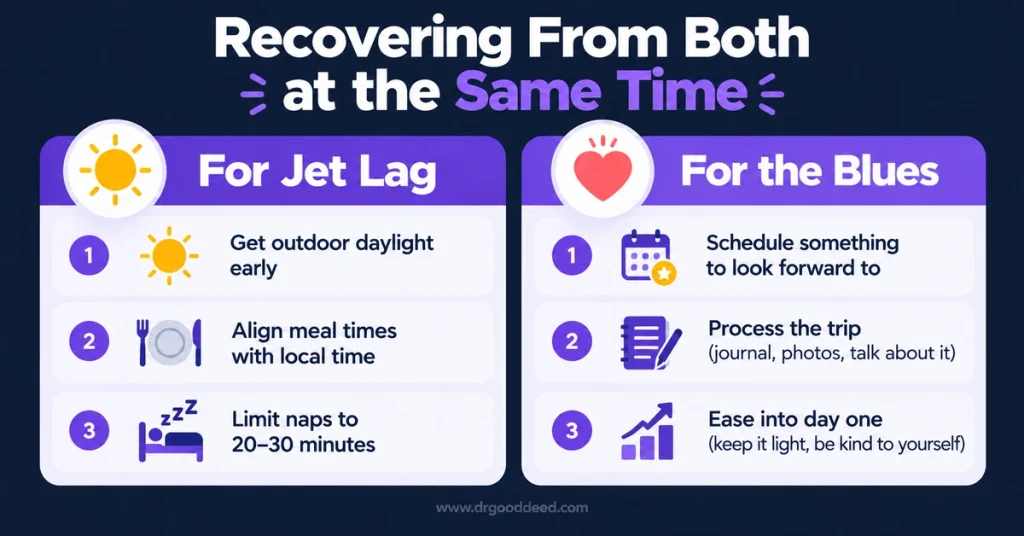
Treat the body clock and the mood dip separately, and start both on the first day home. The physical steps reset timing, while the psychological steps soften the landing.
For jet lag:
- Get outdoor daylight as early as possible each day.
- Keep meal times aligned to your new local schedule.
- Avoid heavy caffeine late in the day while adjusting.
- Limit naps to 20 or 30 minutes, early in the afternoon.
- Allow roughly one day of recovery per time zone crossed.
- Ask your doctor whether timed melatonin suits you, since dose and timing vary.
For the blues:
- Schedule something to look forward to soon after returning.
- Process the trip actively with photos, journaling, or telling someone.
- Give yourself one buffer day before returning to work if possible.
- Ease into the first workday with a lighter task list.
A morning walk outside counts twice, since it supplies daylight and lifts mood. Most people feel back to normal within a week or two using these steps.
When Fatigue Isn’t Just Post-Vacation Adjustment
Fatigue that lasts well beyond two weeks, or comes with other symptoms, deserves a medical evaluation rather than more rest.
- Thyroid dysfunction: An underactive thyroid can bring fatigue, feeling cold, and weight gain.
- Sleep apnea: Breathing pauses during sleep cause daytime sleepiness, loud snoring, and morning headaches. Alcohol relaxes throat muscles and can worsen it.
- Anemia: Low red blood cells cause tiredness, pale skin, and breathlessness.
- Depression: Low mood or lost interest most of the day, nearly every day, for two weeks or more.
- Travel infections: Fever after visiting a malaria-risk region needs urgent evaluation, even weeks after returning. Diarrhea lasting over two weeks also needs testing.
Start with your primary care doctor. See a mental health professional for persistent low mood, and a travel medicine clinic if you returned from a tropical region. Seek emergency care for sudden breathlessness, chest pain, or one swollen, painful calf.
FAQs
How many days does it typically take for post-vacation fatigue to clear?
Jet lag takes about one day per time zone crossed, so a 6-hour shift takes roughly six days. The emotional letdown usually fades within days to two weeks. Beyond two weeks, post-vacation fatigue needs a medical check.
Can travel-related gut issues make post-vacation brain fog worse?
Yes. Traveler’s diarrhea causes dehydration and broken sleep, which worsen post-travel brain fog. Diarrhea lasting over two weeks needs stool testing, since parasites like Giardia can linger. That gut trouble also deepens post-vacation fatigue.
Is it normal to feel physically achy after a long flight, not just tired?
Yes, for a day or two. Long sitting, cramped posture, dry cabin air, and dehydration cause stiffness. Pain in one calf with swelling or warmth needs same-day care, since it can signal a clot.
Sources
- Mayo Clinic: Jet Lag link
- CDC Yellow Book: Health Information for International Travel link
- CDC: Malaria Information for Travelers link
Medical Disclaimer: This article is for general information only and is not medical advice. It does not replace a diagnosis, treatment plan, or guidance from a qualified healthcare professional. Always talk to your doctor about your own symptoms and before starting, stopping, or changing any treatment. If you think you may be having a medical emergency, call 911 or go to your nearest emergency room.