

Yes, you can have high lipase without pancreatitis: kidney problems, other gut and gallbladder conditions, some medicines and serious illness can all raise lipase. This article explains what your result may mean, which tests usually come next and which symptoms need care right away.
Key Takeaways
- You can have high lipase without pancreatitis; doctors diagnose pancreatitis only when lipase, symptoms and scans line up.
- Other causes: Lipase over three times normal can also come from kidney, gut, gallbladder and other conditions (Hameed et al., 2014).
- Lab ranges: Normal lipase ranges differ by lab, so compare your result with the upper limit printed on your report (Cleveland Clinic, 2024).
- Urgent signs: Severe belly pain, vomiting, fever or yellow skin needs medical care right away (NIDDK, 2017).
Can You Have High Lipase Without Pancreatitis?
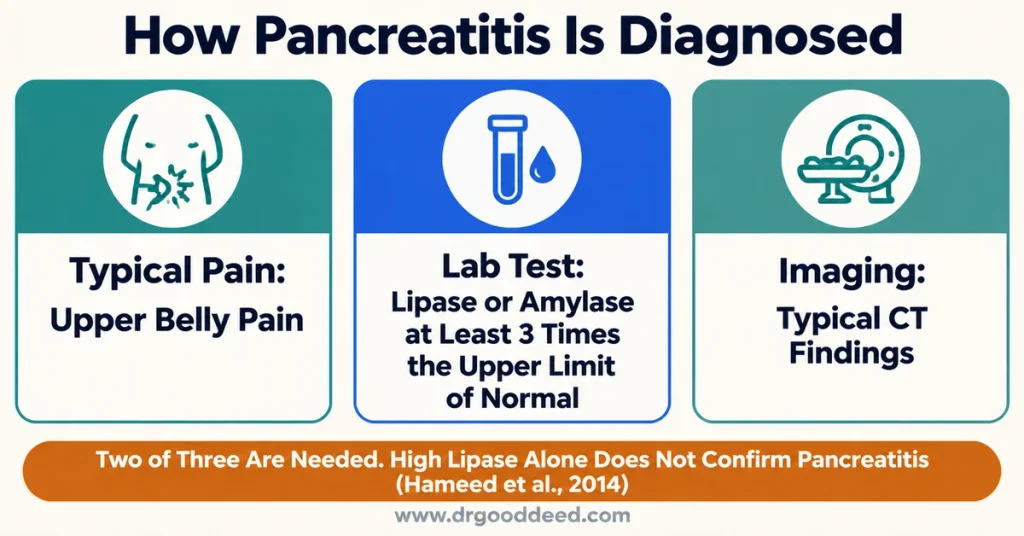
Yes. High lipase without pancreatitis is well recognized, because pancreatitis is diagnosed only when at least two of three signs are present: typical belly pain, very high lipase or characteristic scan findings (Hameed et al., 2014).
Lipase is an enzyme that helps your body digest fat, and most of it is made in the pancreas (MedlinePlus, 2025). Other organs make smaller amounts. A high blood level may signal pancreatic inflammation, but it can also happen when another condition affects how lipase is released or cleared.
Doctors use three main criteria to diagnose acute pancreatitis:
- Typical pain: Pain in the upper belly, often severe and sometimes spreading to the back.
- Blood test: Lipase or amylase at least three times the upper limit of normal.
- Imaging: Findings on a CT scan that are typical of pancreatitis.
A person generally needs at least two of these three criteria for a diagnosis (Hameed et al., 2014). A high lipase result alone does not confirm pancreatitis.
| Lipase pattern | What it may suggest | Usual next step |
| Three times or more the upper limit, with typical pain | Acute pancreatitis is a possibility | Urgent clinical assessment and tests |
| Three times or more the upper limit, with no pain and normal imaging | A non-pancreatic cause may be present | Review symptoms, kidney function, medicines and other causes |
| Mildly high, with no symptoms | A temporary change, medicine effect or another condition | Review the result and consider repeat testing |
| Lipase stays high for months | A persistent cause, including kidney problems or macrolipase, may need evaluation | Further blood tests and specialist review |
A systematic review of 58 studies found that lipase above three times the upper limit of normal can have causes other than pancreatitis, including kidney impairment, other digestive conditions, critical illness, diabetes, medicines and infections (Hameed et al., 2014).
What Counts as a High Lipase Level?
A high lipase level is one that exceeds the upper limit of normal on your lab report. The pancreatitis criteria use a level of three or more times that limit (Hameed et al., 2014), but this number does not confirm the diagnosis by itself.
Lipase normal range: Labs use different testing methods and reference ranges. Cleveland Clinic (2024) lists a range of 0 to 160 U/L, while Chemocare (undated) lists 12 to 70 U/L, so these ranges are not interchangeable.
- Read your report: Check the result and the reference range printed beside it.
- Understand the cutoff: Three times the upper limit is one of the criteria used to diagnose pancreatitis (Hameed et al., 2014).
- Know its limits: A systematic review found that the three-times cutoff had 99% to 100% specificity for pancreatitis in the studies it covered, but other conditions can still cause a high result (Hameed et al., 2014).
The term hyperlipasemia means a higher-than-normal level of lipase in the blood. Doctors interpret it alongside your symptoms, medical history and other test results.
What Causes High Lipase Without Pancreatitis?
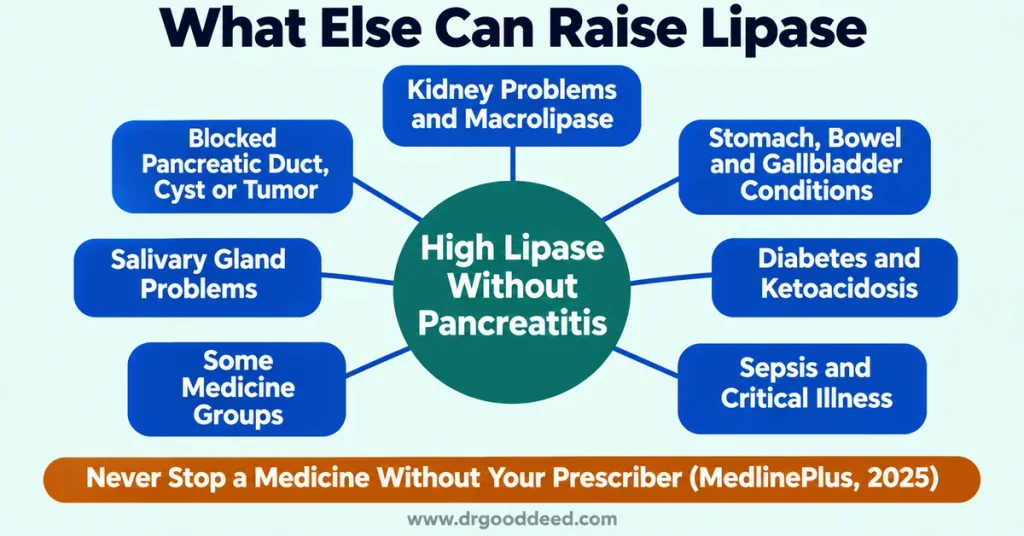
The most common non-pancreatic causes include kidney problems, other gut and gallbladder conditions, serious illness and some medicines (Hameed et al., 2014; MedlinePlus, 2025). These conditions can affect how lipase enters the blood or how the body clears it.
- Kidney problems and macrolipase: The kidneys help clear lipase from the blood, so reduced kidney function, including chronic kidney disease, can cause levels to rise (MedlinePlus, 2025). Macrolipase is a form of lipase that attaches to another protein, making it harder for the body to clear (Hameed et al., 2014).
- Stomach, bowel and gallbladder conditions: Peptic ulcers, bowel blockage, inflammation of the gallbladder and other digestive conditions can raise lipase. A gallstone or bile duct obstruction can also raise the result and may show up on imaging.
- Diabetes and ketoacidosis: Diabetes, including diabetic ketoacidosis, may be associated with elevated lipase. Doctors need to assess the overall clinical picture rather than assume the pancreas is inflamed.
- Sepsis and critical illness: Severe infections and other critical illnesses can raise lipase. In a 2024 hospital study of 808 patients with lipase at least three times the upper limit, about half had a non-pancreatic cause, most often acute kidney injury or sepsis (Feher et al., 2024). These figures come from hospitalized patients and do not apply directly to everyone with a high result.
- Medicine groups: Some diuretics, cholesterol medicines, birth control pills and opioid pain medicines can affect lipase levels (MedlinePlus, 2025). Do not stop or change a medicine without talking to the prescriber.
- Salivary glands: Problems affecting the salivary glands can also raise lipase (MedlinePlus, 2025).
- Pancreatic duct, cyst or tumor: A blocked pancreatic duct or a pancreatic condition can cause high lipase (MedlinePlus, 2025). These possibilities may need further tests, depending on your symptoms and medical history.
Most high lipase results do not mean cancer. However, your doctor may consider pancreatic or other cancers when the result, symptoms or imaging suggest a reason to investigate.
Can Pancreatitis Happen Without Pain?
Acute pancreatitis usually causes upper belly pain, but some people with chronic pancreatitis have no pain (NIDDK, 2017). That is why doctors consider the full clinical picture instead of relying on symptoms alone.
- Acute pancreatitis: Usually causes pain in the upper belly. Other symptoms can include nausea, vomiting, fever and a fast heartbeat (NIDDK, 2017).
- Chronic pancreatitis: Some people with long-term inflammation of the pancreas do not have pain. Others may have ongoing or repeated symptoms.
- Why doctors still check: A high lipase result may need follow-up even if you feel well. Your doctor may check other blood tests or order imaging to look for a cause.
What Tests Come Next?
Your doctor may repeat the lipase test, check kidney function and other blood tests, review your medicines and consider imaging (NIDDK, 2017). The next steps depend on how high the result is, whether it persists and whether you have symptoms.
- Repeat lipase: A repeat test can help show whether the result was temporary or remains high.
- Kidney and other blood tests: These may help identify kidney problems, diabetes or other conditions that could explain the result.
- Medicine review: Your doctor will check whether any medicine you take could affect lipase.
- Imaging: An ultrasound, CT scan or MRCP may be considered to look at the pancreas, gallbladder and bile ducts. The right test depends on your symptoms and other findings.
- Specialist referral: If lipase remains high without a clear cause, your doctor may refer you to a gastroenterologist for further evaluation.
If your doctor is concerned about a pancreatic condition, they may also consider endoscopic ultrasound. The choice and order of tests depend on your individual situation.
Most high results are not cancer, but our guide to the signs of pancreatic cancer covers what doctors look for.
When to Worry About High Lipase
Worry less about the number alone and more about symptoms and the condition behind it. A high lipase result needs medical follow-up, but certain symptoms need care right away.
Seek medical care right away if you have any of these signs (NIDDK, 2017):
- Severe or worsening belly pain
- Repeated vomiting
- Fever or chills
- A fast heartbeat
- Shortness of breath
- Yellowing of the skin or eyes
Call 911 if you faint or become confused.
If pain starts, our abdominal pain location chart can help you describe where you feel it. Do not delay care if symptoms are severe or worsening.
If you have high lipase without pancreatitis and no clear cause, ask your primary care doctor or a gastroenterologist about repeat testing and imaging.
Frequently Asked Questions
Can Stress Cause High Lipase Levels?
Stress is not a known cause of high lipase: it is not listed by MedlinePlus (2025) or by a systematic review of 58 studies (Hameed et al., 2014). If your result is high, your doctor should look for other explanations, such as kidney problems, digestive conditions, diabetes, medicines or infection.
How Do You Bring Lipase Levels Down?
The way to address high lipase is to find and treat the cause. There is no proven diet or supplement that safely lowers lipase on its own. Do not stop a prescribed medicine or start a supplement to change the result without talking to your healthcare provider.
Is Elevated Lipase Without Pancreatitis Dangerous?
Elevated lipase without pancreatitis is not harmful by itself, but the condition behind it can be, so it still needs an explanation. In hospitalized patients, causes such as sepsis and kidney injury can carry serious risks (Feher et al., 2024). Your doctor will interpret your result with your symptoms and other tests.
Can High Lipase Come Back Down on Its Own?
Often, once the cause settles or is treated. In a 2023 case series of four patients with high lipase and a normal pancreas on imaging, levels came down after the underlying cause, such as kidney disease, was treated (George et al., 2023). Ongoing kidney problems may keep it high, so your doctor may repeat the test.
Do I Need to Fast for a Lipase Test?
Sometimes. Your healthcare provider may ask you to fast for 8 to 12 hours before the test (MedlinePlus, 2025). Follow the instructions you are given, including whether you should take your usual medicines. Do not pause a medicine unless your provider tells you to.
Sources
- HPB (Hameed et al.), Significant Elevations of Serum Lipase Not Caused by Pancreatitis: A Systematic Review (2014). link
- World Journal of Gastroenterology (Feher et al.), Non-Pancreatic Hyperlipasemia: A Puzzling Clinical Entity (2024). link
- MedlinePlus, Lipase Tests (2025). link
- NIDDK, Symptoms and Causes of Pancreatitis (2017). link
- NIDDK, Diagnosis of Pancreatitis (2017). link
- Cleveland Clinic, Lipase Blood Test (2024). link
- Chemocare, Hyperlipasemia (High Blood Lipase Level) (undated). link
- Cureus (George et al.), Hyperlipasemia Sans Pancreatitis: A Case Series (2023). link
Medical Disclaimer: This article is for general information only and is not medical advice. It does not replace a diagnosis, treatment plan, or guidance from a qualified healthcare professional. Always talk to your doctor about your own symptoms and before starting, stopping, or changing any treatment. If you think you may be having a medical emergency, call 911 or go to your nearest emergency room.