
Orange oily stool after a fish meal is usually keriorrhea, a harmless but messy reaction to oils in certain fish that your body cannot digest. It can cause oily spots, leaks or an oily layer in the toilet.
The most common cause of this issue is a type of fat called wax esters found in escolar and oilfish. Below you will find information on what fish can cause this, how long it lasts, what you should do, and when it could indicate another digestive issue.
Key Takeaways
- Orange oily stool after eating fish is usually keriorrhea, caused by indigestible wax esters in escolar or oilfish, and it passes on its own.
- Escolar can be sold under many different names.
- Symptoms usually pass within 24 to 48 hours (Health Canada, 2008).
- If you’re experiencing oily stools without having eaten any fish or alongside other symptoms, you should consult a doctor.
Why Fish Can Cause Orange Oily Stool
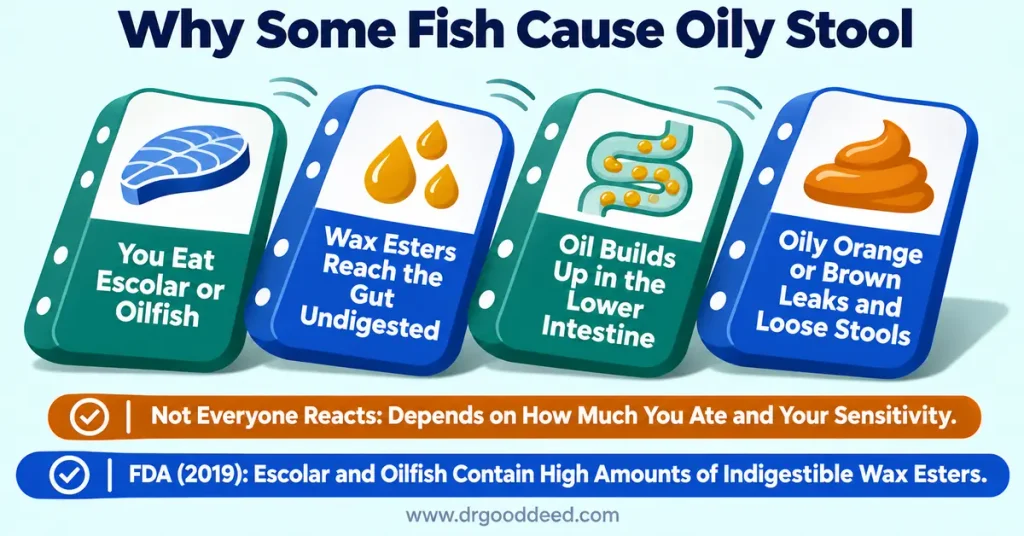
Orange oily stool after fish happens because some fish contain wax esters that the gut cannot break down, so the oil passes straight through.
Wax esters are a natural fat found in certain types of fish. They can’t be digested like the fats found in most foods. After eating these types of fish, the oil can build up in the lower intestine and cause oily spots in the toilet. These will be orange or brown.
The US Food and Drug Administration (FDA, 2019) states that escolar and oilfish contain high amounts of indigestible wax esters.
Symptoms you may experience:
- Orange or yellow oily spots in the toilet.
- Oily leaks from the rectum, sometimes without a bowel movement.
- Loose stools or diarrhea.
- Stomach cramps, nausea or vomiting.
Not everyone will experience symptoms after eating these types of fish. It may depend on how much you’ve eaten and how sensitive you are to the oil.
Keriorrhea will make your stools more oily rather than changing the shape. You can compare this to the types of poop chart.
Which Fish Cause Oily Stool?
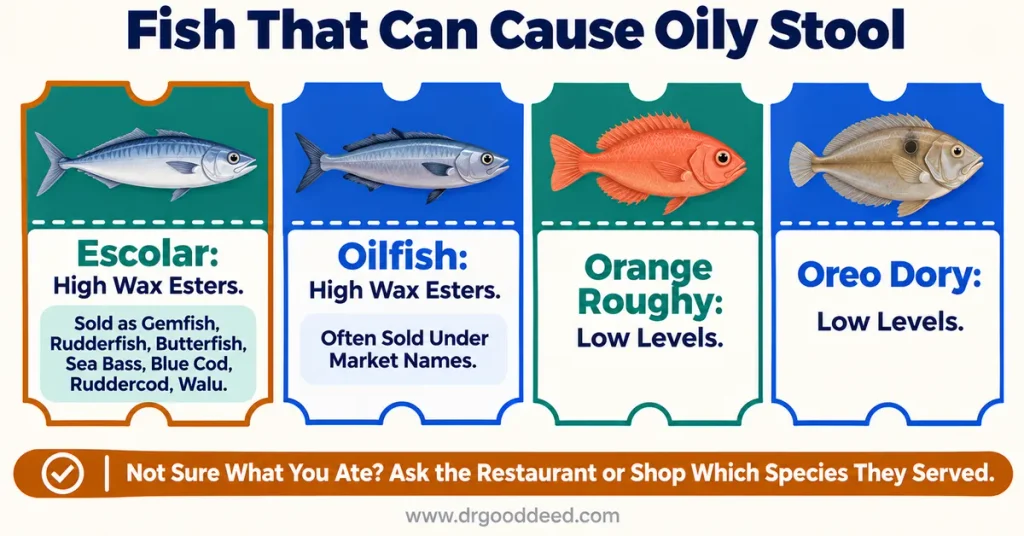
The most common cause of keriorrhea is escolar and oilfish. Orange roughy and oreo dory also contain low amounts of wax esters.
| Fish | Names It May Be Sold As | Notes |
| Escolar | Gemfish, rudderfish, butterfish, sea bass, blue cod, ruddercod, walu. | High levels of indigestible wax esters. |
| Oilfish | Often sold under market names. | High levels of indigestible wax esters. |
| Orange roughy | Orange roughy | Low levels of wax esters. |
| Oreo dory | Oreo dory | Low levels of wax esters. |
Escolar can often be sold under many different names. This can make it hard to know what fish you have eaten, especially if you’ve eaten it at a restaurant or sushi bar.
If you notice orange oil after eating fish, you should ask the restaurant or shop what species they served. The fish may not be obvious from the name on the menu.
Symptoms and How Long Keriorrhea Lasts
Oily orange or yellow leaks usually begin within a few hours of eating the fish, and symptoms usually pass within 24 to 48 hours (Health Canada, 2008).
Symptoms you may experience:
- Oily orange or brown leaks.
- Loose stools or diarrhea.
- Abdominal cramps.
- Nausea and vomiting.
- Headache.
Some cases may last up to 90 hours (Medical News Today, 2024). Symptoms vary, but keriorrhea is not life threatening and does not usually cause fluid loss (Health Canada, 2008).
If your symptoms last longer than a few days or aren’t caused by eating the fish, you shouldn’t assume it’s keriorrhea.
What to Do If It Happens
Keriorrhea will usually pass on its own. The most important thing to do is stay hydrated, avoid eating any more of the fish and find out what type of fish you’ve eaten.
- Stay Hydrated: Drink plenty of water.
- Avoid Eating More Fish: Don’t eat any more of the fish while you have symptoms.
- Find Out What Type Of Fish You Ate: Ask the restaurant or shop what type of fish you ate and what it was called.
- Monitor Symptoms: If your leaks stop within a day or two, it may be following the typical pattern. If it continues or gets worse, you should contact a doctor.
Next time, skip escolar if it has caused symptoms before, or keep to a small portion. Grilling may help because some oil drips off, but heat does not break down the wax esters (Health Canada, 2008).
Other Causes of Orange Oily Stool
If you have not eaten fish, orange or oily stool usually comes from food, a very fatty meal, some medicines or a problem absorbing fat.
Possible causes include:
Orange foods: Foods high in beta-carotene, such as carrots and sweet potatoes, can turn stool orange (SingleCare, 2024). This usually passes on its own.
Very fatty meal: Having an occasional oily stool after a high-fat meal isn’t necessarily a sign of disease (Cleveland Clinic, 2022).
Steatorrhea: This refers to having too much fat in your stools. This can be due to poor fat absorption in the digestive system.
Issues With Pancreas, Liver, or Bile Ducts: This can impact your ability to digest and absorb fat.
Issues With Small Intestine: Certain intestinal issues can impact how well your body absorbs nutrients.
If you’re experiencing recurring oily stools, especially if you’re losing weight, experiencing jaundice, or pale stools, then a doctor may want to investigate fat malabsorption.
For babies, orange or yellow stool is often normal, so compare it with a baby poop chart and ask your pediatrician.
Keriorrhea vs Steatorrhea: How to Tell
Keriorrhea follows a fish meal and clears within days; steatorrhea keeps coming back and points to a digestive problem.
| Feature | Keriorrhea | Steatorrhea |
| Main Cause | Indigestible wax esters from certain fish. | Poor fat absorption. |
| Common Cause | Eating escolar or oilfish. | Can occur without eating fish. |
| Appearance | Orange or brown leaks. | Greasy, large or oily stools. |
| Duration | Usually passes within 24 to 48 hours. | Can be recurring. |
| What To Do | Avoid eating the fish and monitor symptoms. | Doctor may investigate digestive causes. |
Steatorrhea can occur due to issues with your pancreas, liver, bile ducts or small intestine. Your doctor may suggest a fecal fat test.
When to See a Doctor
If you’re experiencing recurring oily stools lasting longer than a few days or experiencing weight loss or jaundice, you should see your primary care doctor. Recurring symptoms may require investigation to see if you’re absorbing fat properly.
Contact a doctor if you’re experiencing:
- Recurring oily stools without eating escolar or oilfish.
- Unexplained weight loss.
- Yellow skin or eyes (jaundice).
- Pale or clay-colored stools.
- Persistent abdominal discomfort.
Your doctor may want to assess your diet, symptoms, and perform an examination. They may also want to perform tests such as a fecal fat test. If you’re experiencing greasy stools and upper abdominal pain, this can indicate an issue with your pancreas or gallbladder. You should see a doctor.
If you have severe belly pain, repeated vomiting or signs of dehydration, go to urgent care or the ER.
If orange oily stool keeps showing up when you have not eaten fish, see your doctor to check how your body is handling fat.
Frequently Asked Questions
Is Orange Oil in Stool Serious?
Usually not. Orange oil in stool after eating escolar or oilfish clears up on its own. This is keriorrhea, and it is not life threatening (Health Canada, 2008). If oily stools keep coming back without fish, see a doctor, as there may be another cause.
Can You Get Keriorrhea Without Eating Fish?
No. Keriorrhea is caused by wax esters in certain fish, especially escolar and oilfish. Oily stool without fish has other causes, from an occasional high-fat meal to fat malabsorption. If oily stools keep coming back, contact a healthcare professional.
Can Pancreatitis Cause Orange Poop?
Chronic pancreatitis can cause fatty, greasy stools because the pancreas makes fewer digestive enzymes. Stool color alone cannot confirm pancreatitis, but if you have oily stools with ongoing belly pain, weight loss or other symptoms, see a doctor.
Is Oily Stool a Sign of Cancer?
Rarely. Most oily stool comes from diet or fish, but pancreatic cancer is one cause of fat malabsorption. If oily stool keeps coming back with weight loss, read about the signs of pancreatic cancer and see your doctor.
Does Cooking Escolar Stop the Oily Stool?
No. The wax esters won’t be broken down by cooking. Grilling can help reduce symptoms as some of the oil will drip away. However, it won’t make the fish safe to eat. If you’ve had a reaction before, avoid eating it.
Is Escolar Safe to Eat?
Escolar is not considered toxic, but it can cause keriorrhea. The FDA (2019) advises against importing and selling escolar and oilfish across state lines, and Health Canada (2008) advises pregnant women, children, older adults and people with bowel problems to avoid it.
Sources
- FDA, Fish and Fishery Products Hazards and Controls Guidance, Chapter 6: Natural Toxins (2019). link
- Health Canada, Escolar and Adverse Reactions (2008). link
- Cleveland Clinic, Steatorrhea (Fatty Stool) (2022). link
- Medical News Today, Keriorrhea: Symptoms, Causes, and Treatment (2024). link
- SingleCare, Why Is My Poop Orange? (2024). link
Medically reviewed by: Dr Nivedita Pandey, GI and hepatology, https://drgooddeed.com/dr-nivedita-pandey
Medical Disclaimer: This article is for general information only and is not medical advice. It does not replace a diagnosis, treatment plan, or guidance from a qualified healthcare professional. Always talk to your doctor about your own symptoms and before starting, stopping, or changing any treatment. If you think you may be having a medical emergency, call 911 or go to your nearest emergency room.