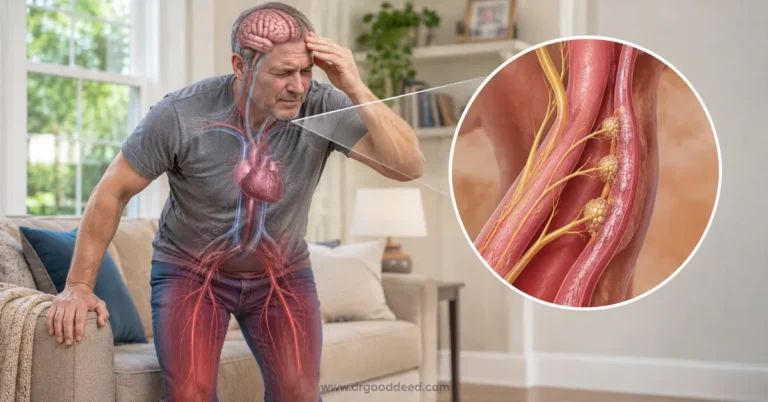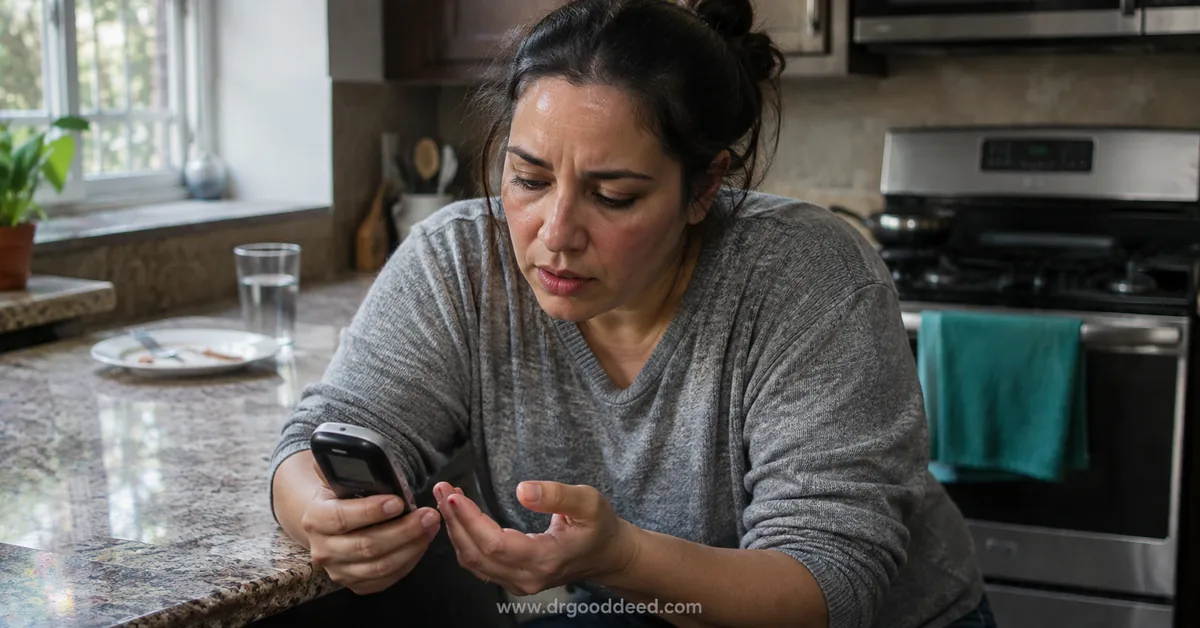

If you feel shaky, sweaty, dizzy, unusually hungry, weak or anxious 2 to 3 hours after eating, reactive hypoglycemia (low blood sugar after a meal) is one possible explanation, but it is not the only one. These symptoms can occur in people who do not have diabetes, and they do not always mean your blood sugar is low.
The best way to know what is happening is to check your blood glucose while the symptoms are occurring. A normal glucose reading during an episode makes true hypoglycemia less likely and suggests that another cause may be responsible.
Key Takeaways
- Reactive hypoglycemia is diagnosed only when a low glucose is measured during symptoms; feeling shaky or sweaty after eating does not prove it.
- Doctors use Whipple’s triad: symptoms, a low glucose measured at the time, and relief when glucose is raised. Symptoms usually start 2 to 4 hours after eating.
- Symptoms after meals with a normal glucose may point to idiopathic postprandial syndrome.
- A glucose tolerance test should not be used to diagnose postprandial hypoglycemia.
- Confusion, fainting, slurred speech or seizures need urgent medical care.
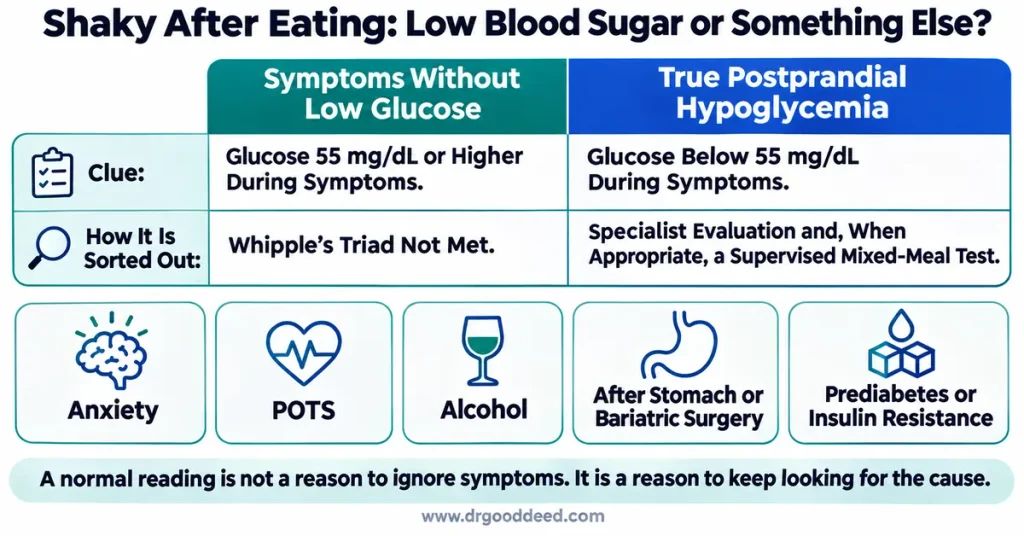
| Cause | Clue | How it is sorted out |
| Symptoms without low glucose | Glucose is 55 mg/dL or higher during symptoms | Whipple’s triad is not met |
| True postprandial hypoglycemia | Glucose is below 55 mg/dL during symptoms | Specialist evaluation and, when appropriate, a supervised mixed-meal test |
| After stomach or bariatric surgery | Symptoms occur within about 5 hours of eating | Specialist evaluation |
| Medicines, alcohol, or rare causes | Episodes may occur after alcohol, medicines, or sometimes fasting | Medical evaluation |
| Anxiety or POTS | Racing heart, sweating, lightheadedness with normal glucose | Evaluation for other causes |
| Prediabetes or insulin resistance | Abnormal glucose regulation | Fasting glucose or HbA1c |
Why Am I Shaky and Sweaty 2 to 3 Hours After Eating?
Shakiness and sweating 2 to 4 hours after a meal, sometimes up to 5 hours, are classic signs of reactive hypoglycemia, which means blood sugar drops after eating. The term is often used loosely, though, for any unpleasant symptoms after meals.
You may notice:
- Shakiness or trembling
- Sweating
- Hunger
- Fatigue
- Dizziness or lightheadedness
- Anxiety or nervousness
- A fast heartbeat
- Difficulty concentrating
These symptoms are real, but they do not always mean your blood sugar is low. If trouble concentrating is your main symptom, read about brain fog after eating.
The Endocrine Society says that hypoglycemia should only be evaluated when there is clear evidence that glucose levels are actually low during the episode. True hypoglycemia is rare in adults who do not have diabetes.
If you often feel shaky after eating, note what happens during each episode and share it with a healthcare professional.
Is It Really Reactive Hypoglycemia?
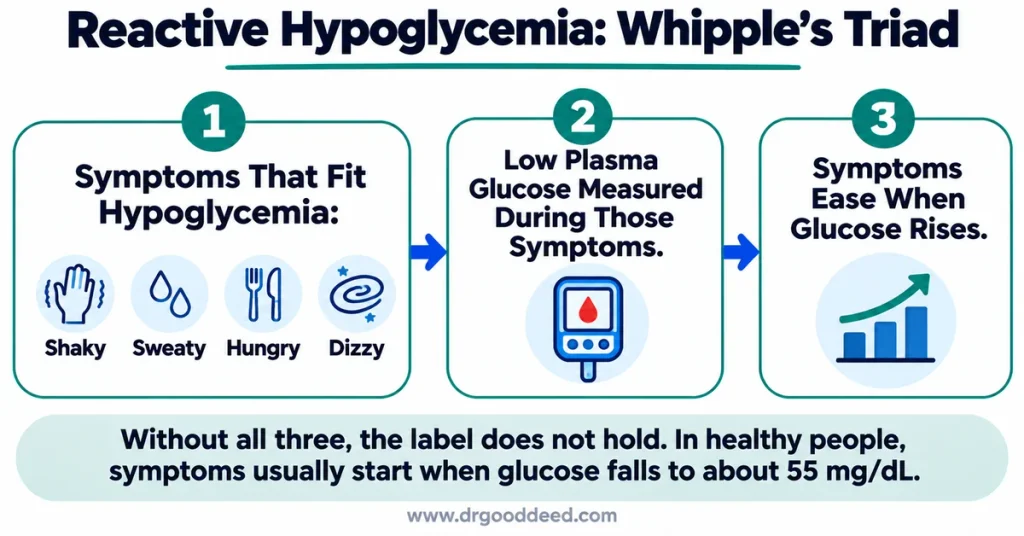
Doctors confirm reactive hypoglycemia only when Whipple’s triad is met: symptoms that fit hypoglycemia, a low plasma glucose measured at that time, and relief when glucose is raised. Without all three, the label does not hold.
The three parts are:
- Symptoms or signs that fit hypoglycemia
- Low plasma glucose measured during those symptoms
- Relief of symptoms after glucose rises
In healthy people, symptoms of hypoglycemia usually start when plasma glucose falls to about 55 mg/dL. A reading below 70 mg/dL is only an alert level and does not, on its own, mean hypoglycemia.
This matters because people can feel shaky, sweaty, weak or anxious even when their glucose is normal.
The Endocrine Society classifies post-meal symptoms without a documented low glucose, previously called reactive hypoglycemia, as a functional disorder, because the symptoms are not caused by hypoglycemia.
So do not diagnose yourself based on symptoms alone. A glucose reading taken during an episode is the way to find out whether your blood sugar is really low.
What Causes Postprandial Hypoglycemia?
Postprandial hypoglycemia can happen without diabetes, but true hypoglycemia is rare in adults who do not have diabetes, and in many cases the exact cause is unclear.
Possible causes and risk factors include:
- Prediabetes or insulin resistance: Changes in how the body handles glucose and insulin can lead to symptoms after a meal. Learn how insulin resistance fits into type 1 and type 2 diabetes.
- Stomach or bariatric surgery: Some operations can lead to post-bariatric hypoglycemia, with symptoms after meals.
- Alcohol: It can stop the liver from releasing glucose and can mimic hypoglycemia. See how alcohol affects blood sugar.
- Medicines: Some medicines can lower glucose, so a clinician should review what you take.
- Insulinoma: A rare tumor that can cause true hypoglycemia.
- Non-insulinoma pancreatogenous hypoglycemia syndrome: Another rare cause of low glucose after meals.
Not having diabetes does not mean glucose is irrelevant. A clinician may check your fasting glucose and HbA1c and review your medicines, alcohol use, medical history and any past stomach surgery.
Shaky After Eating Without Low Blood Sugar
Feeling shaky after eating with a normal glucose is called idiopathic postprandial syndrome, and the symptoms are real even when blood sugar is not low.
Several conditions can produce similar symptoms:
- Anxiety: It can cause sweating, trembling, a racing heart and weakness.
- POTS (postural orthostatic tachycardia syndrome): Some people feel shaky, sweaty and lightheaded, with a racing heart, after a carbohydrate-heavy meal without a drop in glucose. See why your heart races after eating.
- Alcohol: It can mimic low blood sugar and change how the body handles glucose.
Glucose levels rise and fall through the day, so symptoms alone cannot tell reactive hypoglycemia apart from these causes. A normal reading is not a reason to ignore your symptoms; it is a reason to keep looking for the cause with your doctor.
How Is It Tested?
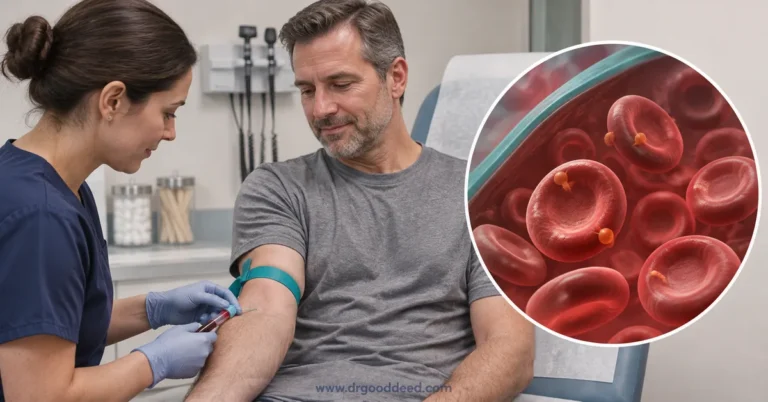
The most useful test is a glucose reading taken during an episode. A home meter can help, but readings can be inaccurate, so a doctor may check your meter against a professional one. For typical ranges, see this normal blood sugar levels chart.
If an episode cannot be caught, a doctor may arrange a supervised mixed-meal test, which uses a normal mixed meal to try to trigger symptoms. Standards for reading the results are not yet established.
An oral glucose tolerance test should not be used for suspected postprandial hypoglycemia. The Endocrine Society advises against it because results can mislead, and after some stomach surgeries it can trigger severe symptoms.
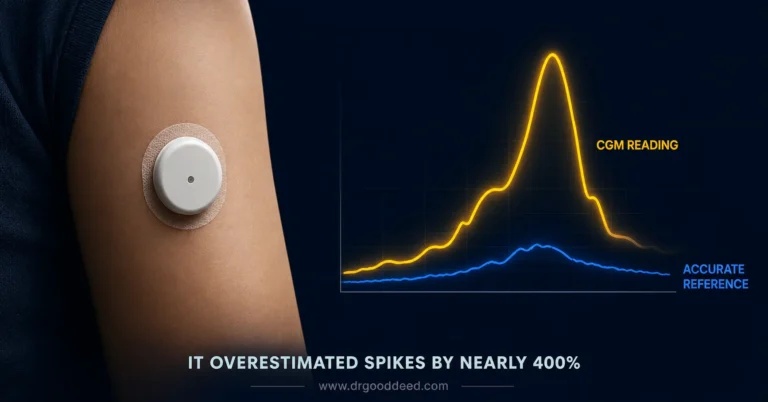
Continuous glucose monitors (CGMs) are not approved to diagnose hypoglycemia in people without diabetes. They often flag lows that are not real, which can cause needless worry.
In one study of healthy adults, CGM showed a median of about 1.1% of the day (about 15 minutes) below 70 mg/dL, and other studies report more.
Do not buy a CGM to diagnose reactive hypoglycemia on your own; talk to your doctor first.
Whipple’s triad remains the standard for deciding whether symptoms are caused by hypoglycemia.
How to Manage Low Blood Sugar After Eating?
Managing reactive hypoglycemia depends on whether a low blood sugar has actually been recorded.
For confirmed post-bariatric hypoglycemia, diet is the cornerstone of treatment. Specialists may advise small, frequent, nutrient-dense meals that are rich in protein and low on the glycemic index, and may consider medicines such as acarbose.
For symptoms without a documented low, evidence for any specific diet is limited. Supplements, very low-carbohydrate diets and other strict diets are not proven to help.
You can start by tracking what happens during episodes:
- Keep a record of the times you eat and the times when your symptoms start.
- Note the foods and drinks you had.
- Log the symptoms and the length of time they last.
- If you have been told to do so, check the glucose level during the episode.
- Note any alcohol or medicines taken around the time.
- Share the pattern with your healthcare professional.
If true hypoglycemia occurs, eating or drinking carbohydrate raises glucose and relieves symptoms quickly. Your doctor can tell you what to carry and what to do based on your own risk. For more on blood sugar conditions, see our diabetes guide.
When Low Blood Sugar After Eating Needs Urgent Care?
Low blood sugar after eating needs medical review if episodes keep coming back, are documented, are severe or come with worrying symptoms.
Get medical care promptly for:
- Confusion or slurred speech
- Fainting or loss of consciousness
- A seizure during an episode
- Symptoms that occur while fasting or overnight
- Documented low glucose with symptoms
- A history of stomach or bariatric surgery
- Use of diabetes medicines
- A family history suggesting a possible inherited or endocrine condition
Note: A seizure or loss of consciousness is an emergency. In the US, call 911 or go to the emergency department. In the UK, call 999 or go to A&E.
For repeated episodes that are not emergencies, start with your primary care doctor (GP in the UK). If true hypoglycemia is documented or the cause stays unclear, an endocrinologist can help.
Frequently Asked Questions
Does reactive hypoglycemia mean I will get diabetes?
Not necessarily. Prediabetes is a known risk factor, so your doctor may check your fasting glucose or HbA1c to look for early changes in blood sugar control.
Why do I feel shaky after eating sugar or carbohydrates?
Feeling shaky after eating sugar or carbohydrates can be an adrenaline response or have another cause, and it does not always mean low blood sugar. A glucose reading during symptoms shows whether your sugar is truly low.
What should I eat to avoid a crash after meals?
For confirmed post-bariatric hypoglycemia, specialists may suggest small, protein-rich, low-glycemic meals. For symptoms without a documented low, evidence for any diet is limited, so ask your doctor what may help.
Is a sugar crash the same as reactive hypoglycemia?
No. A sugar crash is an informal term, while reactive hypoglycemia means a documented low glucose with matching symptoms that ease when glucose rises.
Sources
Endocrine Society, Evaluation and Management of Adult Hypoglycemic Disorders: An Endocrine Society Clinical Practice Guideline. link
PubMed Central, Non-Diabetic Hypoglycemia: Evaluation and Management in Adults. link
Cleveland Clinic Journal of Medicine, Hypoglycemia After Bariatric Surgery: Management Updates. link
The Journal of Clinical Endocrinology and Metabolism, Continuous Glucose Monitoring Profiles in Healthy Nondiabetic Participants: A Multicenter Prospective Study. link
Journal of Laboratory and Precision Medicine, Postprandial Hypoglycaemia in Adults: Pathogenesis, Diagnosis and Management. link
Medical Disclaimer: This article is for general information only and is not medical advice. It does not replace a diagnosis, treatment plan, or guidance from a qualified healthcare professional. Always talk to your doctor about your own symptoms and before starting, stopping, or changing any treatment. If you think you may be having a medical emergency, call 911 or go to your nearest emergency room.