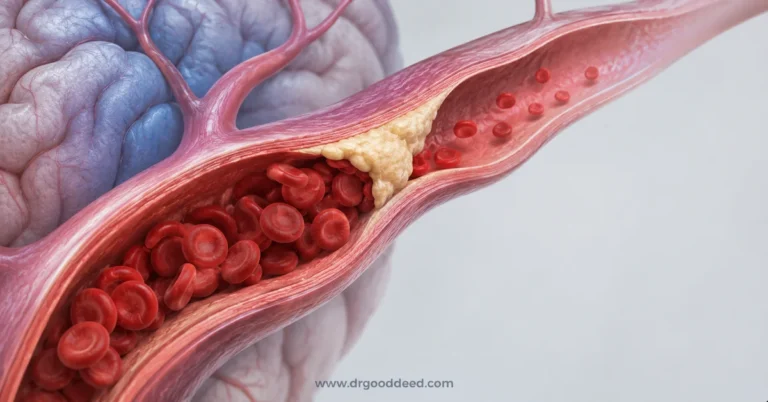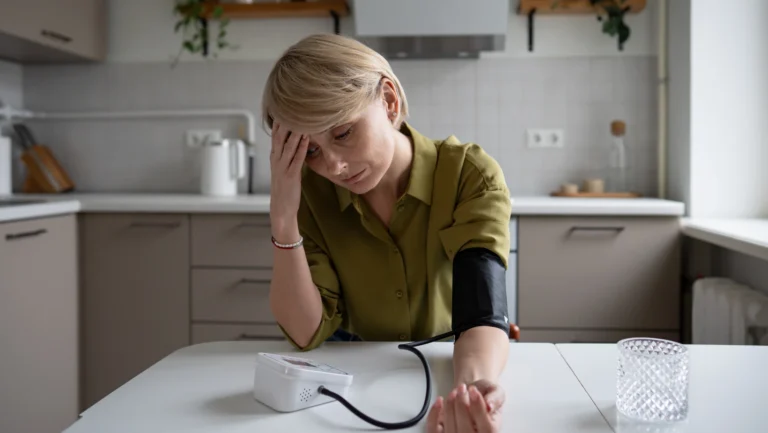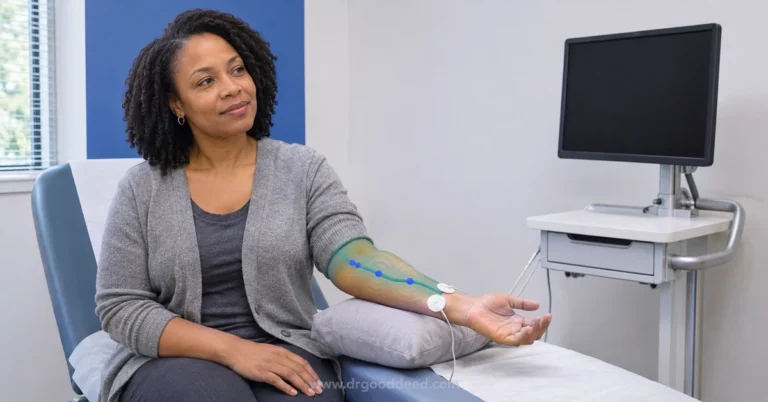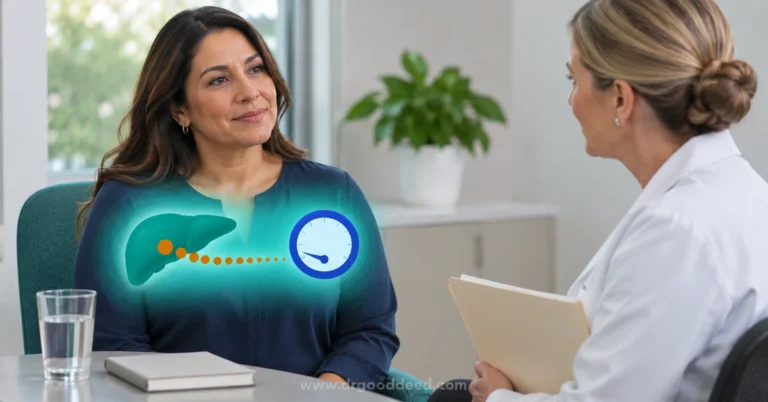
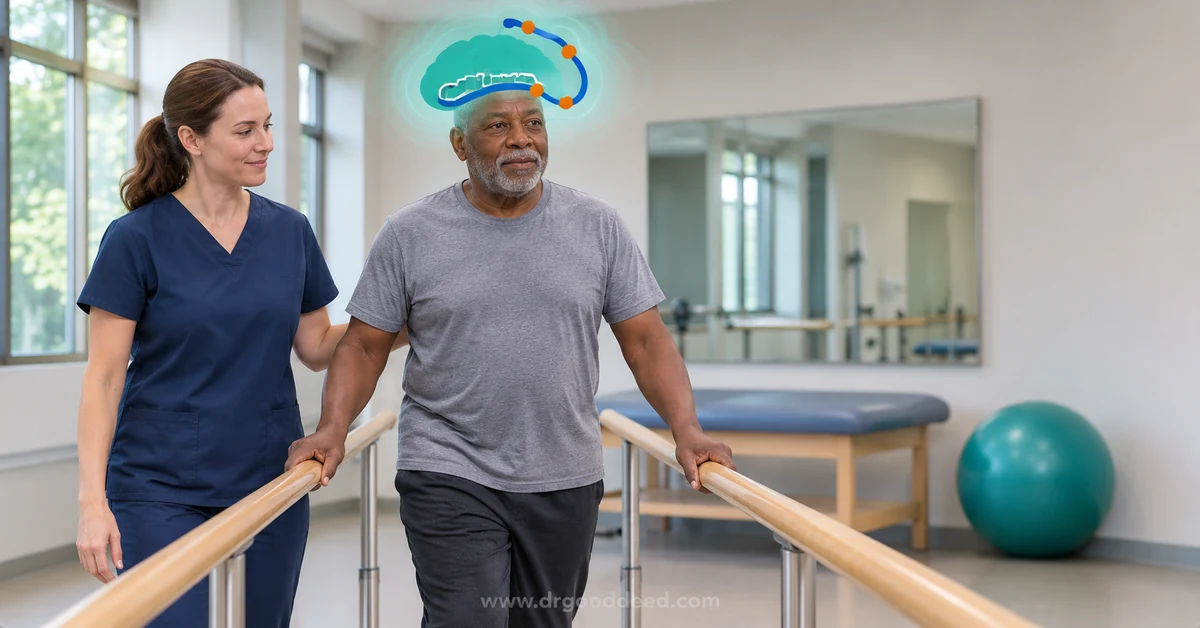

Stroke recovery in the first 3 months is when most people see their fastest progress, though the pace differs from person to person. Severity, how fast treatment started and the kind of rehab all shape it. Early rehabilitation, medical care, and family support play an important role in long-term recovery.
Key Takeaways
- Stroke recovery in the first 3 months is usually the fastest stretch, but improvement can continue long after it ends.
- Rehab timing: It starts in the hospital once you’re medically stable, ideally within 48 hours (AHA, 2026).
- Fatigue and mood: Both are common and treatable, so tell the care team early.
- Setbacks: Old symptoms can briefly return with a stressor, so report any change to the care team.
- When to call 911: Call 911 for any sudden stroke sign, even if it goes away.
Stroke Recovery in the First 3 Months Explained
Stroke recovery in the first 3 months is usually the period of most noticeable improvement, as the brain adapts and therapy builds skills, per Johns Hopkins Medicine. Doctors sometimes call it the critical period.
- Why the brain improves fast: The brain can form new connections, a process called neuroplasticity. Early on, that ability seems heightened, which is why therapy starts as soon as it safely can. Whether specific neuroplasticity exercises fit into your plan is your therapist’s decision.
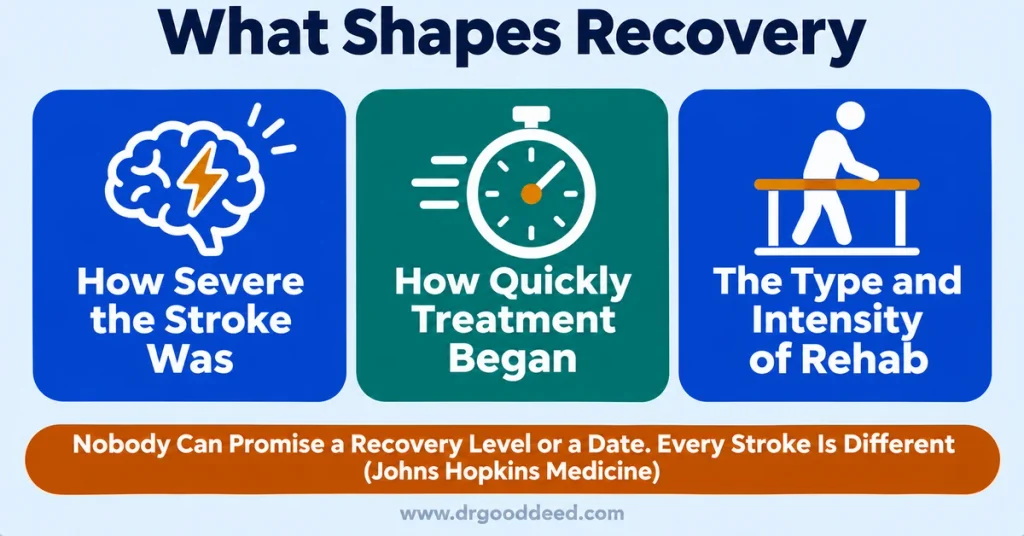
- What shapes the outcome: Johns Hopkins lists how severe the stroke was, how quickly treatment began, and the type and intensity of rehab. Nobody can promise a recovery level or a date, since every stroke is different.
- The chances of recovery: Some people regain full independence, and others need ongoing support. The first three months are the fast stretch.
Stroke Recovery Timeline From Day 1 to Month 3
A stroke recovery timeline runs from hospital care to home practice. The American Heart Association (AHA) published a new rehab guideline on August 27, 2026, replacing the 2016 version.
Table: Stroke recovery timeline from day 1 to month 3
| When | What usually happens |
| Day 1 | The team stabilizes you. No moderate to high-intensity exercise or task practice in the first 24 hours (AHA, 2026). |
| First days | Rehab begins in the hospital, ideally within 48 hours (AHA, 2026). |
| Leaving the hospital | An inpatient rehab unit, a skilled nursing facility, or home with outpatient visits. |
| Months 1 to 3 | The most noticeable gains. |
| After 3 months | Progress slows, especially after six months, but there’s no expiration date (Johns Hopkins Medicine, 2026). |
Part of early progress is spontaneous recovery, where lost skills return on their own as the brain heals. The rest comes from practice and compensatory strategies, which are new ways of doing a task.
Recovery can also look different after a small deep stroke such as a lacunar stroke. And gains don’t stop at three months. Performance can improve even 12 to 18 months later (Mayo Clinic, 2026).
Where Does Stroke Rehab Happen After the Hospital?
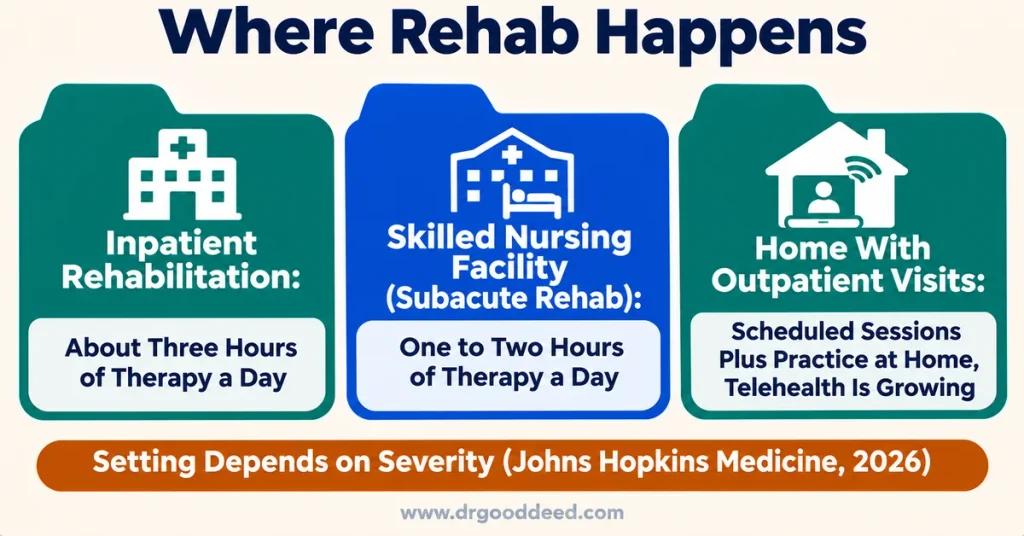
Stroke rehab happens at an inpatient unit, a skilled nursing facility, or at home with outpatient visits, based on severity. The setting changes how much therapy you get.
Table: Stroke rehab settings after the hospital and typical therapy time (Johns Hopkins Medicine, 2026)
| Setting | What it involves |
| Inpatient rehabilitation | About three hours of therapy a day. |
| Skilled nursing facility (subacute rehab) | One to two hours of therapy a day. |
| Home with outpatient visits | Scheduled therapy sessions, plus practice at home. Telehealth is growing. |
- The team: A physiatrist (a rehab doctor) leads care. A physical therapist works on movement, an occupational therapist on daily tasks, and a speech-language pathologist on speech and swallowing.
- Care partners: Education and training for care partners. About 2.7 million Americans are stroke caregivers (AHA, 2026), and they’re part of the plan, not bystanders.
Post-Stroke Fatigue and Depression in Early Recovery
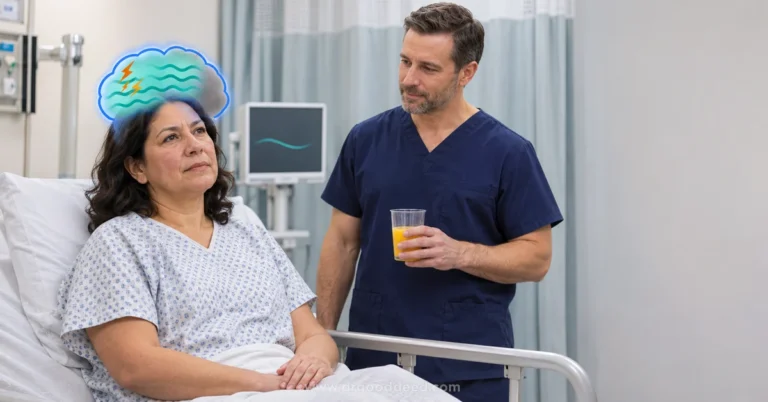
Post-stroke fatigue and depression are common and treatable. Neither means you’re not trying hard enough.
- Fatigue: The American Stroke Association says it can strike at any time and sometimes lasts for years. It has physical, emotional, and lifestyle causes, so describe it to the care team.
- Depression: About 30% of people who have a stroke get depressed (American Stroke Association, 2022); however, treatment helps recovery.
- Screening: Screen for depression and anxiety early and rescreen (AHA, 2026).
- Younger survivors: Strokes under age 50 are increasing (AHA newsroom, 2026), so work and parenting goals belong in rehab.
- If thoughts of suicide or self-harm start, call or text 988, and call 911 if there’s immediate danger. The American Stroke Association advises speaking with a professional right away.
Is It Normal for Stroke Symptoms to Get Worse?
Stroke symptoms may briefly return with a stressor, but sudden worsening needs 911.
- Setbacks: Pneumonia, a heart attack, and a second stroke are among the things that can interrupt recovery (Johns Hopkins Medicine, 2026).
- Old symptoms returning: Practical Neurology (2023) describes poststroke recrudescence, a short-lived return or worsening of old deficits with a stressor. Only a clinician can make that diagnosis.
Doctor’s Tip: Old stroke symptoms that suddenly return can be a flare-up or a new stroke, and that can’t be sorted out at home, so call 911.
How to Lower the Risk of Another Stroke
Lowering the risk of another stroke starts with finding the cause and your risk factors. The CDC (2024) says about 185,000 strokes, nearly 1 in 4, happen in people who’ve had one before.
- Ask your doctor what your target is, and read more on blood pressure and stroke risk.
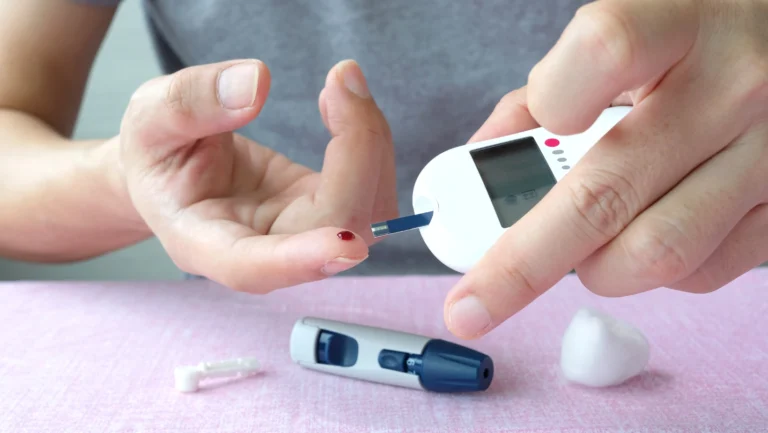
- If you live with diabetes, learn how strokes and diabetes are connected.
- Keep moving as your team advises. Check with your doctor before any medicine change. Don’t stop or adjust one yourself.
When to Call 911 During Stroke Recovery
Call 911 for B.E. F.A.S.T. signs, even if they go away. That stands for balance, eyes, face, arms, speech, and time.
Table: What you notice, what it may mean, and who to call
| What you notice | What it may mean | Who to call |
| Sudden face droop, arm weakness, speech trouble, vision loss or loss of balance | A new stroke or TIA | 911, even if it goes away |
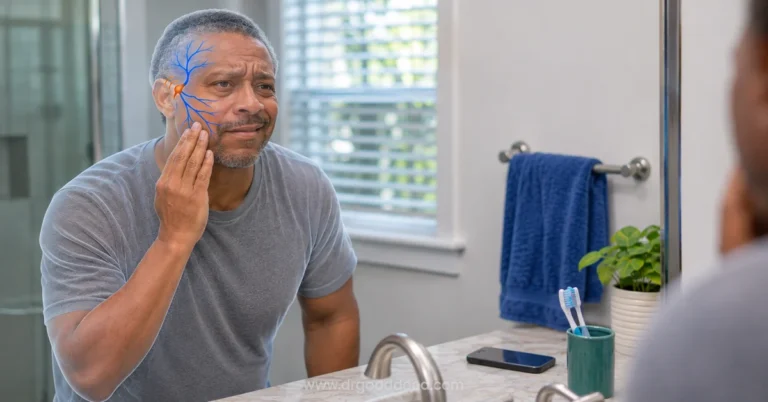
| Old symptoms suddenly return or get worse | A flare-up or a new stroke | 911 |
| Slow tiredness or low mood that lingers | Fatigue or depression | Your care team or primary care doctor |
| Thoughts of suicide or self-harm | A mental health emergency | 988, or 911 if in immediate danger |
A TIA is a brief stroke-like episode. The CDC (2024) says 10% to 15% of people who have one go on to have a major stroke within 3 months. That’s why, if your TIA symptoms went away, you should still treat it as an emergency.
Any sudden new symptom during stroke recovery in the first 3 months is a reason to call 911, even if it goes away.
Frequently Asked Questions
How Long Does It Take to Get Over a Stroke?
Recovery after a stroke can go on for months to years without a clearly defined endpoint, per the American Stroke Association’s 2026 guideline. Some people regain full independence, while others need ongoing support. Your care team can describe what’s realistic for your type and severity of stroke.
Does Post-Stroke Fatigue Ever Go Away?
Sometimes, but not always. Post-stroke fatigue can improve, but for some people it continues for years. Survivors often find ways to spend their energy where it matters most. Tell your care team about it, because tiredness has physical, emotional and lifestyle causes.
What Is the Best Exercise After a Stroke?
No single exercise is best. Task practice is matched to the person, and uncertainty remains about the best approaches, timing, and dosing. Ask your therapist what fits your abilities, and don’t copy a routine from the internet or another survivor.
What Are the Signs of Recovery From Stroke?
Needing less help with a task is a milestone, and lost skills coming back on their own is a spontaneous recovery. Both count. Write down small gains as they happen, since they’re easy to miss and useful to bring to appointments.
What Are the 3 Stages of Stroke Recovery?
There is no official count, but Johns Hopkins Medicine describes early hospital care, the first three months, and a later phase after six months, when progress slows. Treat any “three stages” list online as a teaching tool, not a schedule your own recovery has to follow.
Can You Still Improve After the First 3 Months?
Yes. Progress slows but can continue, and gains can continue even 12 to 18 months after a stroke (Mayo Clinic, 2026). Recovery has no expiration date. Keep going to therapy, and ask your team how to continue practice at home.
Sources
American Heart Association, Stroke Rehab Should Start Early and Address Physical, Cognitive and Mental Health (2026). link
American Heart Association, Top Things to Know: 2026 Guideline for Adult Stroke Rehabilitation and Recovery (2026). link
Johns Hopkins Medicine, Stroke Recovery Timeline (2026). link
Mayo Clinic, Stroke Rehabilitation: What to Expect as You Recover (2026). link
American Stroke Association, Depression and Stroke (2024). link
American Stroke Association, Let’s Talk About Feeling Tired After Stroke. link
Centers for Disease Control and Prevention, Stroke Facts (2024). link
American Stroke Association, Preventing Another Stroke. link
Practical Neurology, Poststroke Recrudescence (2023). link
Centers for Disease Control and Prevention, About Stroke (2024). link
Medical Disclaimer: This article is for general information only and is not medical advice. It does not replace a diagnosis, treatment plan, or guidance from a qualified healthcare professional. Always talk to your doctor about your own symptoms and before starting, stopping, or changing any treatment. If you think you may be having a medical emergency, call 911 or go to your nearest emergency room.