
A lacunar stroke is a small but serious type of ischemic stroke caused by a blockage in one of the brain’s tiny deep-penetrating arteries. Classified under ICD-10 code I63.0-I63.5, lacunar strokes account for approximately 25% of all ischemic strokes in the United States, per the American Heart Association. Unlike larger strokes that block major brain arteries, lacunar strokes damage small, deep brain structures, which means symptoms are often subtle, frequently misdiagnosed, and sometimes ignored until the damage is done.
This guide covers how lacunar stroke affects the brain, its causes, symptoms including slurred speech, treatment, and recovery with specific clinical detail.
How Lacunar Stroke Affects the Brain
How lacunar stroke affects the brain is different from how large-vessel strokes work. The blocked vessels are tiny, called penetrating arteries, and they feed structures deep inside the brain that most people have never heard of. The damage they cause is small in size but significant in function.
Damage to Small Penetrating Arteries
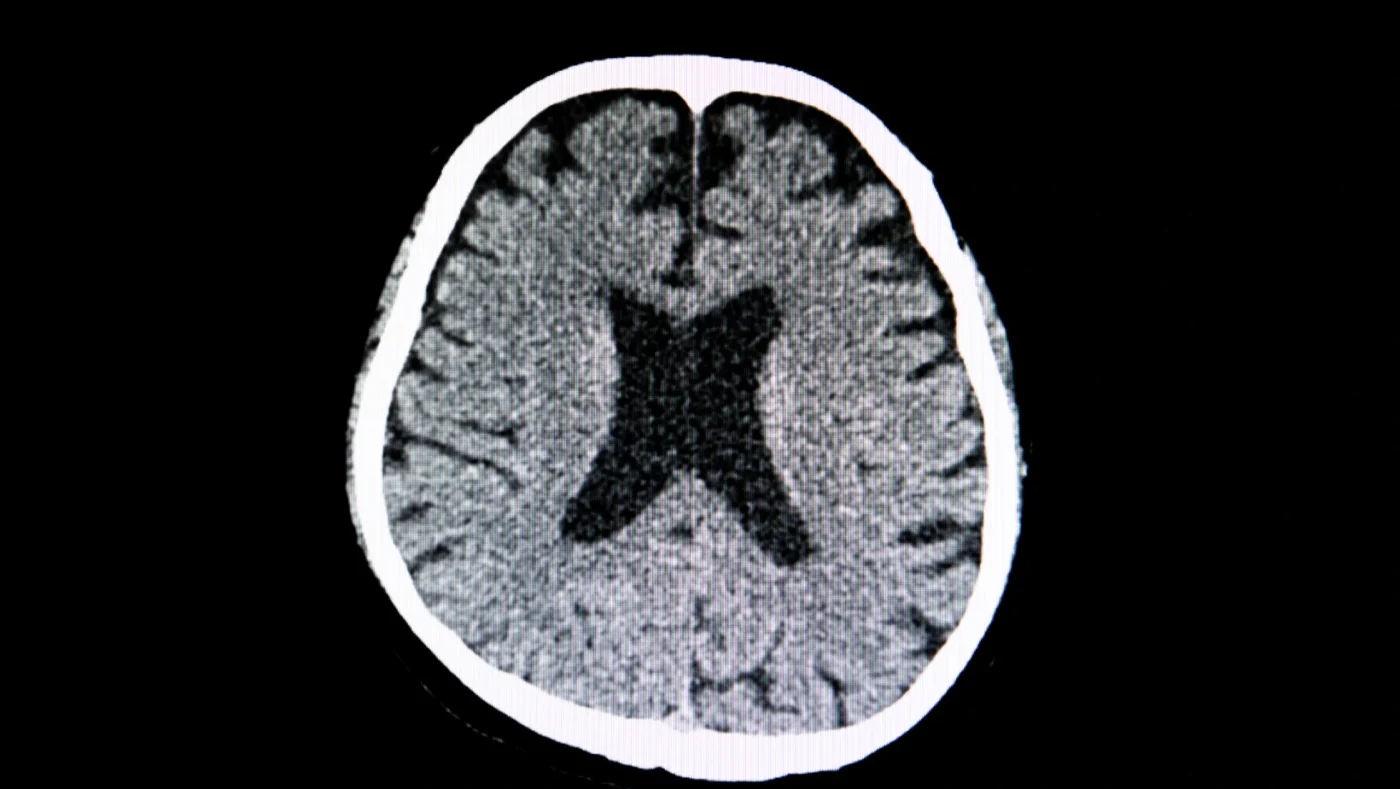
Penetrating arteries branch off the larger middle cerebral artery and basilar artery. They are 100-400 micrometers wide, roughly the width of 3-4 human hairs. When one of these vessels closes off, it creates a tiny cavity of dead tissue called a lacune, which is Latin for “small lake.” These cavities measure 3-15mm in diameter. Small in size. Big in consequence.
Impact on Deep Brain Structures (Basal Ganglia, Thalamus)
The structures these tiny arteries feed include the basal ganglia (which controls movement), the thalamus (which relays sensory signals), the internal capsule (which carries motor signals from the brain to the body), and the pons (which controls speech and coordination). Damage in any of these areas disrupts the signals traveling between the brain and the rest of the body.
Disruption of Motor and Sensory Pathways
The internal capsule is where motor pathway damage hits hardest. This structure carries every movement signal from the brain’s motor cortex to the spinal cord and body. A lacunar infarct the size of a marble in the internal capsule produces weakness across an entire side of the body. The brain’s wiring runs through an extremely tight space at that location.
Causes of Lacunar Stroke
The causes of lacunar stroke differ from those of large-vessel ischemic stroke. Emboli from the heart attack are rarely responsible. The damage comes from within the vessel walls themselves.
Chronic High Blood Pressure (Primary Cause)
Sustained high blood pressure physically damages the walls of small penetrating arteries over years. This process, called lipohyalinosis, replaces the normal elastic vessel wall with a waxy, stiff material that narrows the artery and makes it prone to blockage. The American Stroke Association identifies hypertension as the single most common cause of lacunar stroke, present in 70-80% of confirmed cases.
Diabetes and Small Vessel Damage
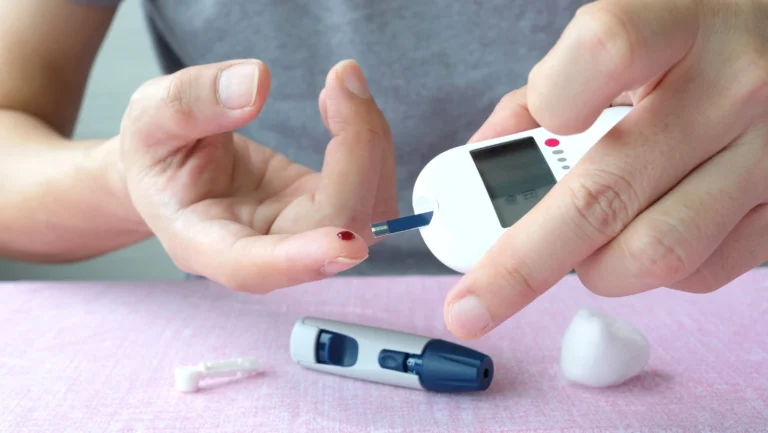
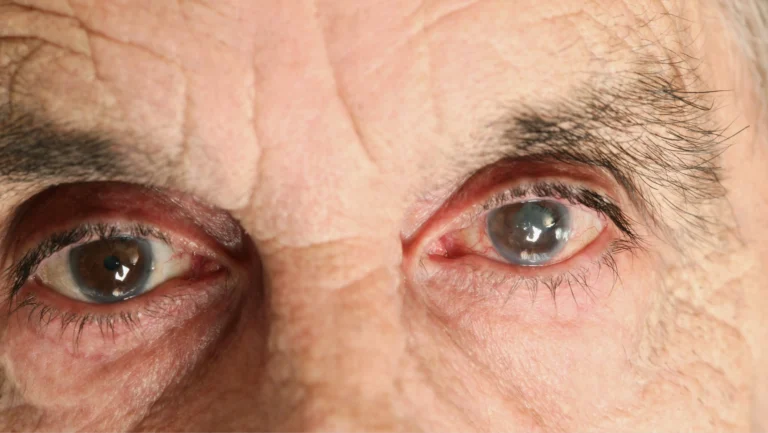
Chronically elevated blood glucose accelerates atherosclerosis in small vessels through the same advanced glycation end-product (AGE) mechanism that damages retinal vessels in diabetic retinopathy. Diabetic adults have a 2-3 times higher risk of small vessel stroke than non-diabetics, per research in Stroke journal.
Atherosclerosis (Narrowed Small Arteries)
Fatty plaque accumulation inside small penetrating artery walls narrows their internal diameter over time without producing any symptoms until a critical threshold is crossed. This differs from large-vessel atherosclerosis, where plaque breaks off and travels. In small vessels, the narrowing itself is the blockage.
Slurred Speech Lacunar Stroke Symptoms
Slurred speech lacunar stroke symptoms occur when the infarct damages the pons or specific thalamic nuclei that control speech production and tongue coordination. Most online articles list slurred speech without explaining exactly why it happens in lacunar stroke.
Slurred or Unclear Speech
Dysarthria, the medical term for slurred speech, results from weakness in the muscles controlling the lips, tongue, and jaw. A lacunar infarct in the pons disrupts motor signals to these muscles. Speech becomes slurred, slow, or thick. The patient understands language and knows what they want to say but cannot produce it clearly.
Weakness on One Side of Body
One-sided weakness, called hemiparesis, is the most common slurred speech lacunar stroke symptom companion finding. When both slurred speech and one-sided weakness appear together, it is called dysarthria-clumsy hand syndrome, one of the five classic lacunar syndromes. This specific combination strongly suggests a pontine or internal capsule lacunar infarct.
Loss of Coordination
Ataxic hemiparesis produces weakness on one side plus loss of coordination on the same side. The patient walks with an unsteady gait and struggles with fine hand movements. This syndrome results from an infarct in the posterior limb of the internal capsule or the pons.
Sensory Changes (Numbness or Tingling)
Pure sensory stroke produces numbness or tingling on one entire side of the body, including the face, arm, and leg, without any motor weakness. This happens when the lacunar infarct sits in the thalamus, the brain’s sensory relay center.
Types of Lacunar Stroke Syndromes
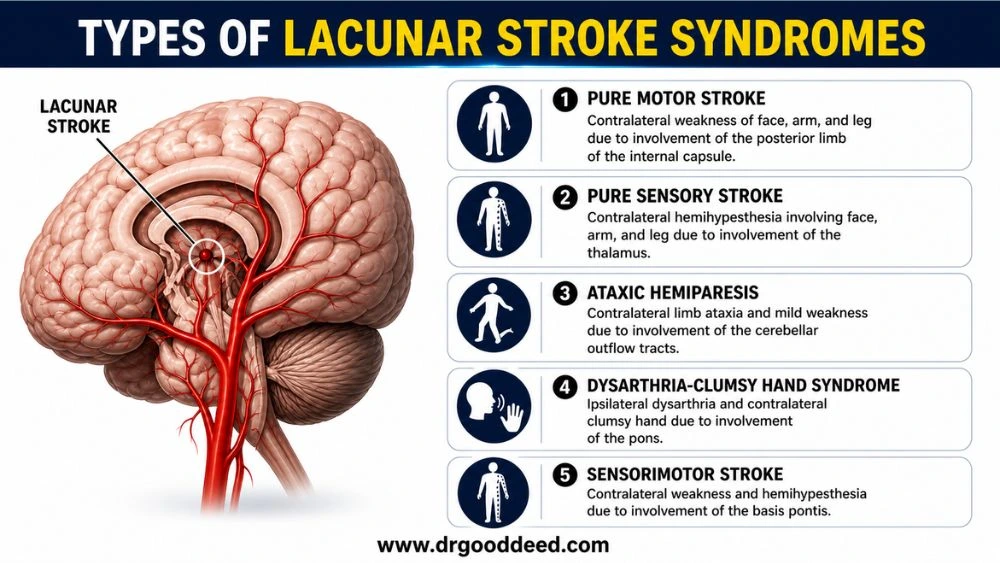
Neurologists classify lacunar strokes into five specific syndromes based on symptom patterns. This classification is clinically important because each syndrome points to a different brain location.
- Pure motor stroke: Weakness of face, arm, and leg on one side with no sensory changes. Location: posterior internal capsule or pons. Most common lacunar syndrome, representing 57% of cases.
- Pure sensory stroke: Numbness and tingling on one entire side of the body. Location: thalamus (ventral posterolateral nucleus).
- Ataxic hemiparesis: Weakness plus coordination loss on the same side. Location: internal capsule or pons.
- Dysarthria-clumsy hand syndrome: Slurred speech with clumsiness of one hand. Location: pons or genu of internal capsule.
- Sensorimotor stroke: Weakness and sensory loss on one side together. Location: thalamus combined with internal capsule.
Why Lacunar Stroke Is Often Missed
Knowing about a lacunar stroke includes routinely missed or delayed in diagnosis, both by patients and sometimes by physicians in emergency settings.
Symptoms May Be Mild or Subtle
Many patients experience mild weakness rather than complete paralysis, slight slurring rather than total speech failure. These mild presentations lead patients to wait and see if symptoms resolve, which they sometimes temporarily do before worsening.
No Severe Headache or Loss of Consciousness
Lacunar strokes rarely cause the severe “thunderclap” headache or unconsciousness associated with hemorrhagic strokes. Patients remain awake and alert. Without dramatic symptoms, both patients and bystanders underestimate the severity of what is happening.
Gradual Onset in Some Cases
Approximately 30% of lacunar strokes have a stuttering or gradual onset, where symptoms develop over hours rather than seconds, per Neurology journal. This gradual presentation delays the recognition of stroke symptoms and reduces the number of patients arriving within the 4.5-hour IV tPA treatment window.
Treatment Options for Lacunar Stroke
The treatment options for lacunar stroke focus on stopping clot formation, preventing recurrence, and managing the conditions that caused the stroke in the first place.
Blood Thinners (Antiplatelet Therapy)
Aspirin (81-325mg daily) or clopidogrel (Plavix, 75mg daily) are the standard antiplatelet medications after lacunar stroke. The CHANCE trial, published in New England Journal of Medicine, found that dual antiplatelet therapy with aspirin plus clopidogrel for 21 days after a minor ischemic stroke reduced recurrence risk by 32% compared to aspirin alone.
Blood Pressure Control
Reducing systolic blood pressure below 130 mmHg after stroke cuts the risk of a second stroke by approximately 34%, per the PROGRESS trial data. ACE inhibitors such as perindopril and diuretics such as indapamide are the most studied combination for secondary prevention specifically after small vessel stroke.
Managing Diabetes and Cholesterol
HbA1c control below 7% reduces progressive small vessel damage in diabetic patients. Statin therapy (atorvastatin 40-80mg daily) is recommended for all lacunar stroke patients regardless of baseline cholesterol, as statins stabilize vessel walls beyond their cholesterol-lowering effect.
Rehabilitation After Lacunar Stroke
Rehabilitation after lacunar stroke begins within 24-48 hours of stabilization. Early rehabilitation produces better outcomes than delayed starts, per the American Stroke Association’s 2019 guidelines.
Physical Therapy for Movement Recovery
Physical therapists address the hemiparesis and gait problems that follow motor lacunar strokes. Constraint-induced movement therapy (CIMT), where the unaffected arm is restrained to force use of the weaker arm, produces measurable motor recovery even months after stroke in some patients.
Speech Therapy for Communication
Dysarthria after lacunar stroke responds to speech therapy targeting the specific muscles affected. Patients work on articulation, breath control, and speech rate. Most patients with dysarthria-clumsy hand syndrome achieve significant speech improvement within 3-6 months of consistent therapy.
Occupational Therapy for Daily Function
Occupational therapists focus on practical recovery: dressing, cooking, writing, and returning to work. Patients with ataxic hemiparesis particularly benefit from fine motor retraining exercises targeting grip strength and hand precision.
Risk Factors for Lacunar Stroke
Knowing about a lacunar stroke includes knowing which risk factors are modifiable and which are not. Controlling the modifiable ones is the strongest tool for prevention.
- Hypertension: Present in 70-80% of cases; the single highest-impact modifiable risk factor
- Type 2 diabetes: Accelerates small vessel wall damage independently of blood pressure
- Smoking: Doubles small vessel stroke risk through endothelial inflammation and clotting promotion
- Age over 60: Small vessel damage accumulates over decades; risk increases significantly after 65
- Prior lacunar stroke: A history of one lacunar infarct raises the risk of a second by approximately 4-14% per year without medical management
- Chronic kidney disease: Impairs blood pressure regulation and independently damages small vessels throughout the body
FAQs
What is a lacunar stroke?
A lacunar stroke is a small ischemic stroke caused by blockage in a penetrating artery feeding deep brain structures. It creates a cavity (lacune) of 3-15mm in the basal ganglia, thalamus, internal capsule, or pons. It accounts for 25% of all ischemic strokes in the US.
What are slurred speech lacunar stroke symptoms?
Slurred speech lacunar stroke symptoms include dysarthria (thick, slow speech), one-sided facial weakness, and clumsiness in one hand, a combination called dysarthria-clumsy hand syndrome. This specific triad points to a pontine or internal capsule infarct. It differs from aphasia; the patient understands language but cannot produce it clearly.
How is lacunar stroke treated?
The treatment options for lacunar stroke include dual antiplatelet therapy (aspirin plus clopidogrel for 21 days post-event), blood pressure reduction below 130 mmHg systolic, and statin therapy with atorvastatin 40-80mg daily. IV tPA (alteplase) applies if the patient arrives within 4.5 hours of symptom onset with confirmed ischemic stroke on imaging.
What is rehabilitation after a lacunar stroke?
Rehabilitation after lacunar stroke starts within 24-48 hours of stabilization. It includes physical therapy for hemiparesis and gait, speech therapy for dysarthria (with measurable improvement in 3-6 months), and occupational therapy for fine motor function. Constraint-induced movement therapy produces motor recovery even months after the acute event.
Can lacunar stroke be prevented?
Yes. A lacunar stroke for prevention: controlling blood pressure below 130/80 mmHg cuts recurrence risk by 34%. Maintaining HbA1c below 7% reduces progressive small vessel damage in diabetics. Quitting smoking halves small vessel stroke risk within 2-4 years of cessation. These three actions together address the top modifiable causes.
Why is lacunar stroke often missed?
Lacunar stroke is missed because symptoms are often mild: slight slurring, minor hand weakness, or subtle gait changes without headache or loss of consciousness. Approximately 30% have a gradual onset over hours rather than seconds. Patients wait, symptoms seem to pass, and the treatment window closes before evaluation happens.
What are long-term effects of lacunar stroke?
Long-term effects depend on location and number of infarcts. A single lacunar infarct in the internal capsule causes persistent one-sided weakness in approximately 30% of patients at 1 year. Multiple lacunar infarcts over time, called lacunar state, cause vascular dementia, pseudobulbar palsy, and significant gait impairment that worsens progressively.
When should you seek emergency help?
Call 911 immediately if you notice sudden one-sided weakness, slurred speech, numbness across one side of the face and body, or loss of coordination with no clear cause. Use the FAST test: Face drooping, Arm weakness, Speech difficulty, Time to call 911.