
Hypoglycemia mimicking a stroke happens when very low blood sugar causes stroke-like signs such as one-sided weakness or slurred speech, and only hospital tests can tell the two apart. If someone develops these symptoms suddenly, call 911 immediately. Do not assume the problem is low blood sugar, even if the person has diabetes.
Key Takeaways
- Hypoglycemia mimicking a stroke can cause one-sided weakness, face droop, or slurred speech, so call 911 for any sudden stroke sign.
- You cannot reliably tell a stroke from low blood sugar at home. Both need urgent medical assessment.
- Give fast-acting sugar only when the person is fully awake and can swallow safely. Never give food or drink to someone drowsy or unconscious.
- The American Diabetes Association’s 2026 Standards define low blood sugar as below 70 mg/dL and a more serious low as below 54 mg/dL.
- Hospitals check blood glucose during stroke assessment and before giving clot-busting treatment. A low reading does not automatically rule out a stroke.
Can Low Blood Sugar Look Like a Stroke?
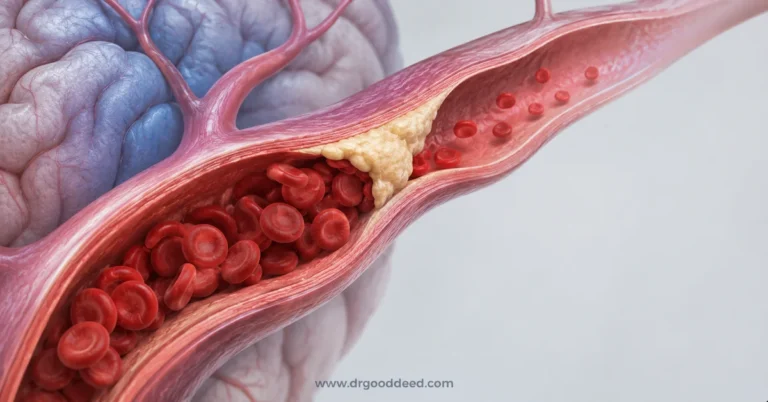
Yes, low blood sugar can look like a stroke; doctors call this hypoglycemia mimicking a stroke, and the 2026 American Heart Association and American Stroke Association guidelines recognize low blood sugar as a condition that can mimic an acute stroke.
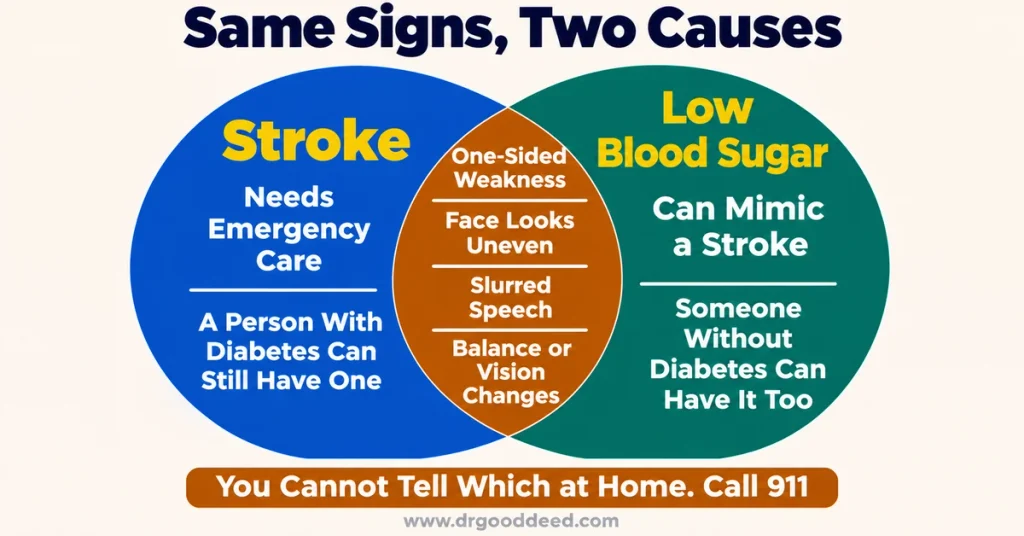
A stroke mimic is a health problem that produces signs similar to a stroke without a stroke being the cause. Low blood sugar is one example. It can affect movement, speech, vision, and alertness, sometimes making it difficult to tell what is happening.
The important point is that you cannot safely identify a stroke mimic by looking at someone or checking their medical history. A person with diabetes can still have a real stroke. Likewise, someone without diabetes can develop dangerously low blood sugar.
Other conditions can also produce stroke-like signs. For example, hemiplegic migraine may cause temporary weakness on one side of the body. However, sudden weakness or speech changes always need emergency assessment.
If you notice a sudden change in someone’s face, arm movement, speech, balance, or vision, call 911. Do not wait to see whether the symptoms improve.
Why Low Blood Sugar Causes Stroke-Like Signs
Low blood sugar causes stroke-like signs because your brain needs a steady supply of glucose to work properly. When glucose levels fall too low, brain cells cannot get enough fuel. This can interfere with movement, speech, coordination, and other functions.
Glucose is the brain’s main energy source. When the supply drops, the brain may struggle to carry out normal tasks. Doctors call the effects of insufficient glucose on brain function neuroglycopenia.
The symptoms do not always affect the whole body equally. In some cases, low blood sugar affects specific brain functions and causes a focal neurological deficit. This means a problem with a particular function, such as movement or speech.
For example, a person may develop hemiparesis, or weakness on one side of the body. They may also have difficulty finding words or understanding speech. These signs can look almost identical to those of an acute stroke.
Brain imaging can sometimes add to the confusion. A 2012 review in BMC Neurology examined imaging findings from 67 people with hypoglycemia. Thirteen people, or 20%, had changes that resembled a cortical or lacunar stroke (a stroke in the brain’s outer layer or a small, deep stroke).
This finding comes from a review of reported cases and should not be taken as the percentage of all people with low blood sugar who develop stroke-like symptoms.
Low blood sugar can also cause seizures. If you want to understand how seizures and stroke can differ, read about stroke and seizure.
The symptoms may improve after glucose levels return to a safe range, but improvement does not prove that a stroke has not occurred. Doctors must assess the person and use appropriate tests to identify the cause.
Stroke-Like Symptoms Low Blood Sugar Can Cause
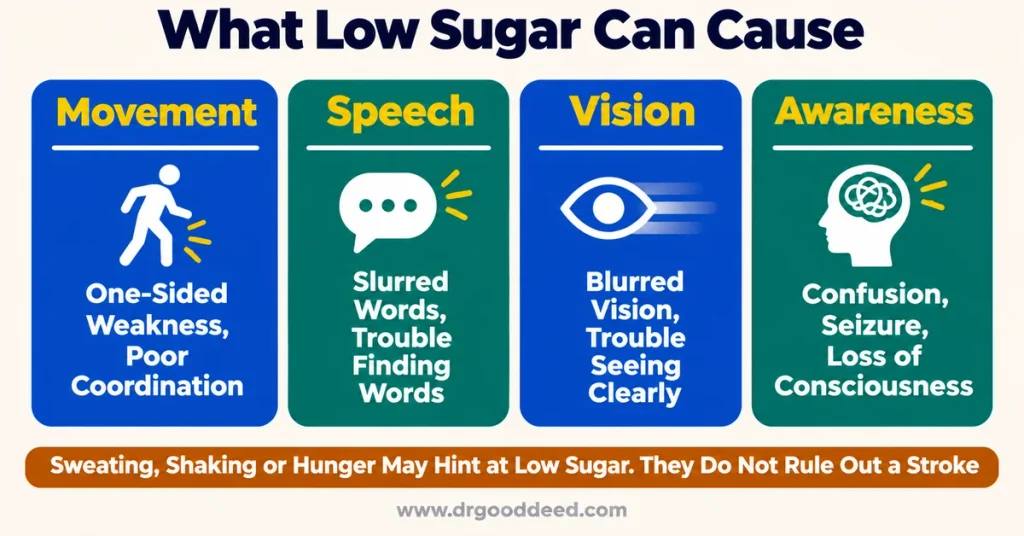
Hypoglycemia stroke symptoms can affect movement, speech, vision, and awareness. Some signs overlap with a stroke, so you should treat sudden neurological changes as an emergency rather than trying to identify the cause yourself.
Watch for these possible symptoms:
- One-sided weakness: The person may struggle to lift one arm or move one leg.
- Face drooping: One side of the face may look uneven when the person smiles.
- Slurred speech: Their words may sound unclear or difficult to understand.
- Trouble speaking: They may struggle to find words, form sentences, or understand what others say. This can include aphasia, a problem with language.
- Confusion or unusual behavior: The person may seem disoriented, irritable, lethargic, or unable to respond normally.
- Vision changes: They may experience blurred vision or trouble seeing clearly.
- Poor coordination: Walking, standing, or handling objects may become difficult.
- Seizures: A severe drop in blood sugar can trigger a seizure or loss of consciousness.
Low blood sugar can cause aphasia, but speech problems are also a warning sign of stroke. You cannot use this symptom to distinguish between the two.
Other low blood sugar symptoms include sweating, shaking, dizziness, hunger, a fast heartbeat, and tingling around the lips. These clues may suggest hypoglycemia, but they do not rule out a stroke.
For a clearer explanation of warning signs, read what a stroke feels like. If someone suddenly develops trouble speaking, one-sided weakness, or facial drooping, call 911.
Who Is Most at Risk
People who use certain diabetes medicines, have a history of low blood sugar, or have health conditions that affect glucose control face a higher risk of hypoglycemia. Older adults may also be more vulnerable, particularly when they have other health problems.
According to the National Institute of Diabetes and Digestive and Kidney Diseases (NIDDK), the following groups have a greater chance of developing low blood glucose:
- People who take insulin.
- People who use sulfonylureas or other diabetes medicines that can lower blood glucose.
- Adults aged 65 years or older.
- People who have experienced low blood sugar before.
- People with kidney or heart disease.
- People with cognitive impairment who may have difficulty recognizing or responding to symptoms.
Certain everyday situations can also trigger a low. Skipping a meal, eating less than usual, drinking alcohol, or exercising more than planned can cause blood glucose to fall, especially in someone taking medicines that lower it.
A person may also develop hypoglycemia without recognizing the early warning signs. This is called hypoglycemia unawareness. It can make an episode more dangerous because the person may not notice the drop until confusion, weakness, or other serious symptoms appear.
The NIDDK (2021) reports that about 2 in 100 adults taking insulin or medicines that increase insulin release experience a severe low each year. This figure applies to the group described by the source, not to everyone with diabetes.
Diabetes also increases the risk of a real stroke. Read more about the connection between strokes and diabetes. Having a known risk of low blood sugar should never lead you to dismiss sudden stroke signs.
Signs, What They May Mean and What to Do
Some symptoms may point toward low blood sugar, but they can overlap with stroke signs. Use this table of signs, what they may mean and what to do as a guide to understand what you may be seeing, not as a way to diagnose the person.
| Sign | What it may mean | What to do |
| Sudden face droop, arm weakness, speech difficulty, balance problems, or vision changes | Stroke or low blood sugar; you cannot tell which one is responsible | Call 911 and note when the symptoms started. |
| The person uses insulin or certain diabetes medicines | Low blood sugar may be more likely, but a stroke remains possible | Call 911 and tell emergency responders about the person’s medicines. |
| Blood glucose reading below 70 mg/dL | Low blood sugar, according to the American Diabetes Association | If the person is fully awake and can swallow safely, follow their established low-glucose treatment plan while help is on the way. |
| Blood glucose below 54 mg/dL | Level 2 hypoglycemia, which needs prompt attention | Call 911 if stroke-like symptoms are present or the person cannot manage the low safely. |
| Confusion, seizure, severe drowsiness, or unconsciousness | Severe hypoglycemia or a stroke | Call 911. Do not give anything by mouth. |
| Symptoms improve after sugar | Low blood sugar may have contributed, but a stroke has not been ruled out | Go to the emergency room the same day for assessment. |
The American Diabetes Association’s 2026 Standards of Care classify hypoglycemia into three levels:
- Level 1: Blood glucose below 70 mg/dL but at least 54 mg/dL.
- Level 2: Blood glucose below 54 mg/dL.
- Level 3: A severe episode in which the person needs help from someone else, regardless of the glucose reading.
A glucose reading can help emergency teams understand what is happening. However, even a low reading does not prove that all the symptoms come from hypoglycemia. A stroke and low blood sugar can occur at the same time.
You can compare a reading with the guide to normal blood sugar levels, but do not delay emergency care to interpret a number.
What to Do if Someone Shows Stroke Signs
Call 911 first if someone suddenly develops facial drooping, one-sided weakness, speech problems, or another possible stroke sign. Do not wait for a glucose reading or try to treat the person at home before calling for help.
Follow these steps:
- Call 911 immediately. Tell the dispatcher that the person has sudden stroke-like symptoms and may also have low blood sugar.
- Do not drive the person to the ER yourself. Emergency medical teams can begin assessment and arrange the right care during transport.
- Note the time symptoms started. If you do not know the exact time, record when the person was last seen acting normally. This information can help doctors decide which treatments are appropriate.
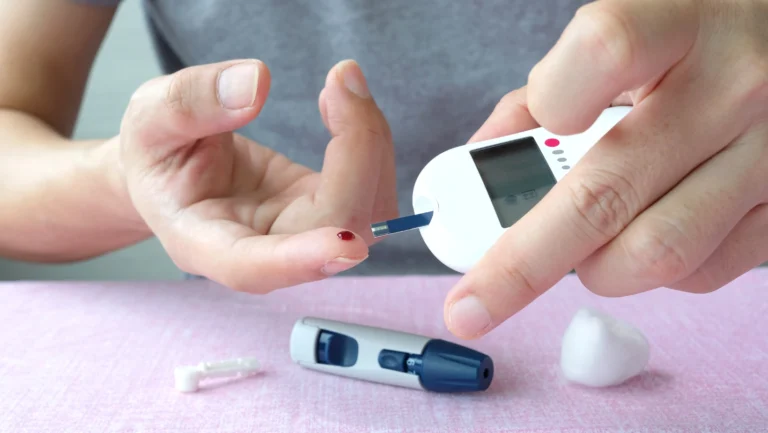
- Check blood glucose if a meter is immediately available. Do this without delaying the emergency call or other urgent care.
- Give fast-acting sugar only if the person is fully awake and can swallow safely. Follow their established diabetes care plan. Never put food, drinks, or sugar in the mouth of someone who is drowsy, confused, having a seizure, or unconscious.
- Stay with the person and watch their breathing and level of awareness. Follow the emergency dispatcher’s instructions.
- Tell responders about the person’s diabetes, medicines, recent meals, and any glucose reading you obtained. Share the time symptoms began and whether they changed.
The CDC’s 2024 guidance recommends the 15-15 rule for a person who is awake and able to swallow: take 15 grams of fast-acting carbohydrates, wait 15 minutes, and check blood glucose again. However, when someone has sudden stroke signs, calling 911 comes first. Do not use this rule as a reason to delay emergency assessment.
Doctor’s Tip: If you or a family member takes medicines that can cause low blood sugar, make sure the people around you know what to do. Explain that sudden facial drooping, one-sided weakness, or speech changes still require a 911 call, even when low blood sugar seems likely.
What Happens at the Hospital
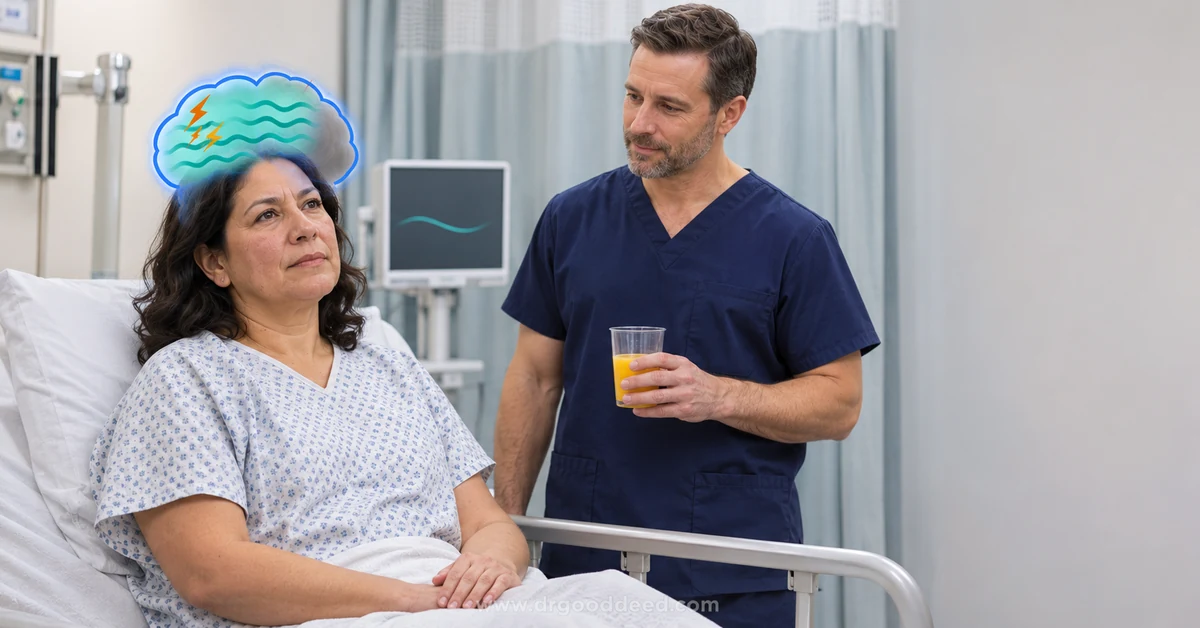
At the hospital, the medical team checks blood glucose and assesses the person’s brain function while investigating whether a stroke has occurred. A low glucose reading may explain some symptoms, but doctors still need to assess the possibility of a real stroke.
The emergency team may:
- Check blood glucose: A finger-stick blood glucose test can quickly identify a low reading. The team checks glucose early during the assessment.
- Assess neurological function: Doctors examine movement, speech, vision, alertness, and other functions. They may use the National Institutes of Health Stroke Scale (NIHSS) to assess the severity of stroke-related problems.
- Order brain imaging: A CT scan or MRI can help identify bleeding, blocked blood vessels, or changes that may resemble a stroke.
- Correct low blood glucose: If testing confirms a low level, the team treats it promptly and monitors the person’s response.
- Decide on stroke treatment: Doctors consider the examination, imaging, timing, and other findings before choosing treatment.
The 2026 AHA/ASA guideline recommends checking blood glucose before giving clot-busting medicine. It also advises correcting blood glucose below 60 mg/dL and avoiding delays caused by unnecessary extra testing.
The team does not rely on a glucose result alone. A person can have low blood sugar and a stroke at the same time, so doctors assess both possibilities.
Time matters during stroke care. The CDC (2026) explains that some treatments work best when given within the first three hours after symptoms begin. This is one reason you should call 911 rather than wait for symptoms to settle.
If Symptoms Go Away After Sugar
Symptoms that improve after sugar may suggest that low blood glucose played a role, but improvement does not rule out a stroke. You should still seek emergency assessment, even if the person looks or feels normal again.
Some people recover quickly after their glucose level improves. However, published case reports show that stroke-like weakness and other neurological problems may not disappear immediately after doctors correct low blood sugar.
Do not use the speed of recovery to decide whether the person needs care. Symptoms that come and go can also occur with a transient ischemic attack (TIA), sometimes called a mini-stroke. A TIA is a warning that a more serious stroke may follow.
If the weakness or speech difficulty disappears, the person still needs urgent evaluation. Read about why stroke symptoms that went away should never be ignored.
At the emergency department, doctors can review the glucose reading, examine the person, assess possible stroke signs, and decide whether imaging or further testing is needed. They can also investigate why the low blood sugar happened and help prevent another episode.
Even when hypoglycemia mimicking a stroke seems to clear up after sugar, go to the ER the same day so doctors can rule out a stroke and find out why the low happened.
Frequently Asked Questions
What Mimics a Stroke but Is Not a Stroke?
Several conditions can cause stroke-like symptoms, including low blood sugar, seizures, migraines, brain tumors, and certain toxic exposures. Doctors call these conditions stroke mimics. Their symptoms can overlap with a real stroke, so hospital assessment and appropriate tests are needed to identify the cause.
What Are 5 Signs Your Blood Sugar Is Too Low?
Five possible signs are sweating, shaking, dizziness, confusion, and blurred vision. You may also notice hunger, irritability, a fast heartbeat, or tingling lips. Symptoms vary from person to person. A blood glucose meter can confirm a low reading, but do not delay calling 911 for stroke-like symptoms.
Can Low Blood Sugar Cause a Stroke?
The sources reviewed describe low blood sugar as a stroke mimic, not as a proven direct cause of stroke. However, severe hypoglycemia can cause seizures, loss of consciousness, and other serious complications. A person with diabetes can also have a real stroke, so sudden neurological symptoms need emergency care.
Is a Hypoglycemia Stroke Mimic Dangerous?
Yes. A hypoglycemia stroke mimic is dangerous because severe low blood sugar can lead to seizures, coma, or death. It is also impossible to rule out a real stroke based on symptoms alone. Call 911 for sudden stroke-like signs and let the emergency team assess the cause.
What Are 5 Signs of a Mini Stroke?
Five warning signs include sudden facial drooping, weakness in one arm, slurred speech, sudden vision problems, and loss of balance. These signs may disappear after a short time, but that does not make them harmless. Call 911 because a transient ischemic attack needs urgent medical assessment.
Sources
American Heart Association and American Stroke Association, 2026 Guideline for the Early Management of Acute Ischemic Stroke. link
BMC Neurology, Acute symptomatic hypoglycaemia mimicking ischaemic stroke on imaging: a systematic review. link
National Institute of Diabetes and Digestive and Kidney Diseases, Low Blood Glucose (Hypoglycemia). link
American Diabetes Association, Standards of Care in Diabetes 2026, Section 6: Glycemic Goals, Hypoglycemia, and Hyperglycemic Crises. link
Centers for Disease Control and Prevention, Treatment of Low Blood Sugar (Hypoglycemia). link
Centers for Disease Control and Prevention, Signs and Symptoms of Stroke. link
eNeurologicalSci, Hypoglycemia presenting as a stroke mimic with focal neurological deficits. link
Medical Disclaimer: This article is for general information only and is not medical advice. It does not replace a diagnosis, treatment plan, or guidance from a qualified healthcare professional. Always talk to your doctor about your own symptoms and before starting, stopping, or changing any treatment. If you think you may be having a medical emergency, call 911 or go to your nearest emergency room.