


The gastroenterologist vs colorectal surgeon choice comes down to one question: do you need tests and medical care, or might you need an operation? A gastroenterologist and a colorectal surgeon both specialize in digestive health, but they focus on different parts of the system and have different training. The main distinction is that gastroenterologists diagnose and manage digestive conditions through medical treatment and procedures, while colorectal surgeons also perform operations involving the colon, rectum and anus.
Although their responsibilities differ, their work often overlaps. Understanding what each specialist treats, the procedures they perform and how they work together makes it easier to understand your treatment options. Most people start with a primary care doctor or gastroenterologist, who refers them to a colorectal surgeon if surgery seems likely.
Key Takeaways
- Gastroenterologist vs colorectal surgeon: a gastroenterologist treats digestive problems without operating, while a colorectal surgeon can operate on the colon, rectum and anus.
- Gastroenterologists train in internal medicine before a fellowship in gastroenterology. Colorectal surgeons train in general surgery and then complete a fellowship in colorectal surgery.
- Both specialists can perform colonoscopies and evaluate certain conditions, including polyps and inflammatory bowel disease.
- For new symptoms, start with a primary care doctor; for heavy rectal bleeding, fainting or black stools, call 911 or go to the ER.
- Some conditions require both specialists to coordinate care, particularly colorectal cancer, complicated inflammatory bowel disease and severe hemorrhoids.
Gastroenterologist vs Colorectal Surgeon: The Key Difference
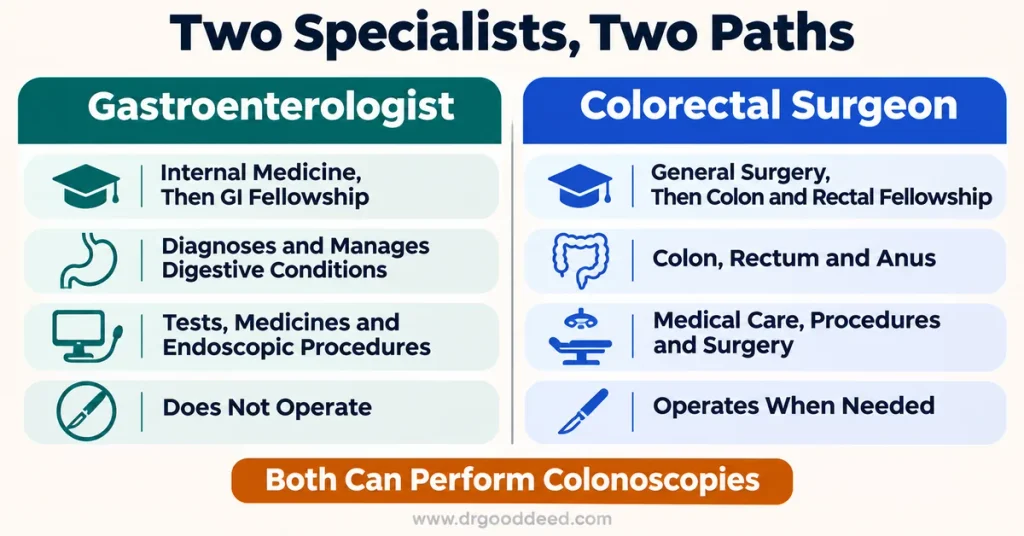
The main gastroenterologist vs colorectal surgeon difference is training: a gastroenterologist trains in internal medicine and treats with tests and scopes, while a colorectal surgeon trains in surgery and can operate.
Both specialists understand the digestive system, but their day-to-day responsibilities are different. The table below compares the two specialists on focus, approach, training, procedures, surgery and certification.
| Area of comparison | Gastroenterologist | Colorectal surgeon |
| Main focus | Digestive diseases and disorders | Conditions affecting the colon, rectum and anus |
| Treatment approach | Medical management, diagnostic testing and endoscopic procedures | Medical evaluation, procedures and surgery |
| Training | Medical school, internal medicine residency and gastroenterology fellowship | Medical school, general surgery residency and colon and rectal surgery fellowship |
| Common conditions | Acid reflux, IBS, Crohn’s disease, ulcerative colitis, ulcers and liver conditions | Hemorrhoids, anal fissures, fistulas, rectal prolapse and colorectal cancer |
| Procedures | Upper endoscopy, colonoscopy and polyp removal | Colonoscopy, sigmoidoscopy and colorectal operations |
| Surgery | Does not perform operations | Performs operations when necessary |
| Certification | Board certification in gastroenterology | Certification through the American Board of Colon and Rectal Surgery |
According to the American College of Surgeons, colorectal surgeons complete a five-year general surgery residency followed by a one-year fellowship in colon and rectal surgery. Cleveland Clinic (2022) describes gastroenterology training as medical school, a three-year internal medicine residency and approximately three years of additional gastroenterology training.
This difference in training shapes the type of care each specialist provides. A gastroenterologist may investigate persistent abdominal discomfort, identify inflammation or perform a colonoscopy. A colorectal surgeon may evaluate a complicated anal condition or determine whether a bowel condition needs an operation.
Neither specialty is automatically better than the other. The appropriate specialist depends on the condition, its severity and the treatment required.
What Does a Gastroenterologist Treat?
A gastroenterologist treats diseases and disorders affecting the digestive tract and related organs, including the esophagus, stomach, small intestine, large intestine, liver, pancreas and gallbladder. These specialists use medical evaluation, laboratory tests, imaging and endoscopic procedures to identify digestive problems and manage them.
Some common conditions treated by gastroenterologists include:
- Acid reflux and GERD: Gastroenterologists evaluate persistent heartburn, regurgitation and irritation caused by stomach acid moving into the esophagus.
- Irritable bowel syndrome: They manage symptoms such as abdominal discomfort, bloating, constipation and diarrhea associated with IBS. Learn more about how long an IBS flare-up can last.
- Inflammatory bowel disease: Conditions such as Crohn’s disease and ulcerative colitis require ongoing assessment and management to control inflammation and monitor complications.
- Celiac disease: Gastroenterologists investigate digestive symptoms and evaluate whether gluten exposure is causing an immune response that damages the small intestine.
- Stomach and intestinal ulcers: They investigate abdominal discomfort, digestive bleeding and other symptoms that may indicate ulcers.
- Liver and pancreatic conditions: They evaluate diseases affecting the liver, pancreas and gallbladder, which also play important roles in digestion.
Gastroenterologists also perform several diagnostic and therapeutic procedures.
Upper endoscopy: This procedure allows the specialist to examine the esophagus, stomach and upper part of the small intestine using a flexible camera.
Colonoscopy: A colonoscopy helps examine the inside of the colon and rectum. It can identify inflammation, bleeding, polyps and suspicious growths.
Polyp removal: Gastroenterologists can remove many polyps during a colonoscopy. If a polyp is too large or complex to remove safely through the scope, they may refer you to a colorectal surgeon.
Changes in bowel movements, persistent diarrhea, constipation or mucus in stool may also need evaluation by a gastroenterologist. The specialist considers your symptoms, medical history and test results before deciding what further investigation or treatment is appropriate.
Gastroenterologists generally manage digestive conditions without performing operations. When a condition requires surgery, they coordinate with a colorectal surgeon or another surgical specialist.
What Does a Colorectal Surgeon Do?
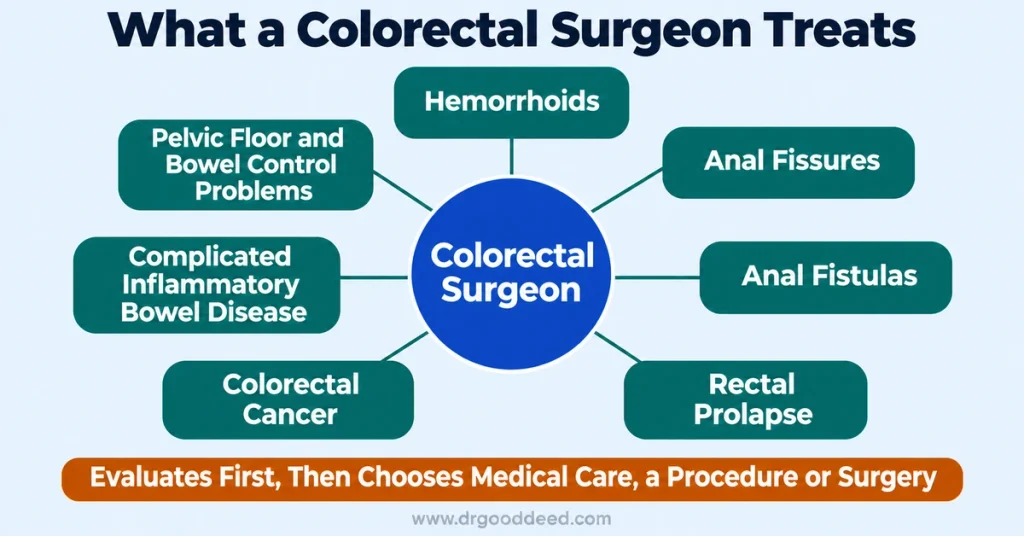
A colorectal surgeon specializes in diseases and conditions affecting the colon, rectum, anus and pelvic floor. These specialists evaluate digestive and bowel-related problems, recommend suitable treatments and perform surgery when an operation is necessary.
The conditions they commonly manage include:
- Hemorrhoids: Colorectal surgeons evaluate persistent or severe hemorrhoids and may recommend office-based procedures or surgery, depending on their severity.
- Anal fissures: These are small tears in the lining of the anus that can cause pain and bleeding during bowel movements.
- Anal fistulas: These abnormal connections between the anal canal and nearby skin may require surgical treatment.
- Rectal prolapse: This occurs when part of the rectum slips out through the anus. Treatment depends on the severity and the patient’s overall health.
- Colorectal cancer: Colorectal surgeons may remove cancerous sections of the colon or rectum as part of a wider treatment plan.
- Complicated inflammatory bowel disease: Some patients with Crohn’s disease or ulcerative colitis develop complications that require surgery.
- Pelvic floor and bowel disorders: Colorectal surgeons also evaluate certain cases of fecal incontinence, pelvic floor dysfunction and other problems affecting bowel control.
A colorectal surgeon does more than perform operations. The specialist first evaluates the condition and considers whether medical treatment, an office-based procedure or surgery is appropriate.
An examination may include a digital rectal exam, in which the clinician checks the rectum using a gloved finger. An anoscopy may also help examine the anal canal and identify abnormalities.
Colorectal surgeons can perform colonoscopies and sigmoidoscopies (a scope exam of the rectum and lower colon) as part of their practice. They may also perform operations such as colectomy, which involves removing part or all of the colon, or procedures to treat severe hemorrhoids and other colorectal conditions.
A colorectal surgeon has additional training beyond general surgery. A general surgeon treats a broad range of surgical conditions, while a colorectal surgeon develops specialized expertise in diseases of the colon, rectum and anus. The term “GI surgeon” is often used for any surgeon who operates on the digestive tract; a colorectal surgeon is one who focuses on the colon, rectum and anus.
The term proctologist was commonly used in the past to describe a specialist who treated conditions involving the rectum and anus. Colorectal surgeon is the modern name for this specialty.
If you have recurring hemorrhoids or unexplained rectal bleeding, the specialist may investigate the cause rather than assume that hemorrhoids are responsible. Understanding the difference between hemorrhoids and cancer risk can also help explain why persistent or unusual symptoms need proper evaluation.
Gastroenterologist or Colorectal Surgeon: Who to See First
The choice between a gastroenterologist and a colorectal surgeon depends on the location of the problem, the symptoms involved and whether the condition may require surgery. For most new symptoms, a primary care doctor or gastroenterologist is the first stop, while a colorectal surgeon usually steps in for anal problems, polyps too large for the scope, colon cancer or possible surgery.
The following table explains which specialist may be involved in different situations.
| Condition or symptom | Specialist who may be involved |
| Acid reflux and heartburn | Gastroenterologist |
| Persistent bloating and abdominal discomfort | Primary care clinician or gastroenterologist |
| Irritable bowel syndrome | Gastroenterologist (some colorectal practices also see it) |
| Crohn’s disease and ulcerative colitis | Gastroenterologist; colorectal surgeon if complications require surgery |
| Hemorrhoids | Gastroenterologist or colorectal surgeon, depending on severity and treatment |
| Anal fissure | Colorectal surgeon |
| Anal fistula | Colorectal surgeon |
| Colon polyps | Gastroenterologist; colorectal surgeon for complex polyps that cannot be removed safely during colonoscopy |
| Colorectal cancer | Gastroenterologist and colorectal surgeon as part of a coordinated care team |
| Complicated diverticular disease (inflamed or infected pouches in the colon wall) | Gastroenterologist and colorectal surgeon, depending on the condition |
Digestive symptoms: Persistent heartburn, bloating, diarrhea, constipation and unexplained changes in bowel movements are commonly evaluated by a gastroenterologist. The specialist may recommend tests to identify the cause and develop a treatment plan.
Bowel and anal conditions: Conditions such as anal fissures, fistulas and rectal prolapse often require evaluation by a colorectal surgeon because they involve the anus or rectum and may need specialized procedures.
Hemorrhoids: Both specialists can evaluate and treat hemorrhoids. The treatment depends on their severity, symptoms and response to previous treatment. Some cases can be managed with office-based procedures, while others may require surgery.
Colon polyps: A gastroenterologist usually identifies polyps during a colonoscopy and may remove them during the same procedure. A colorectal surgeon may become involved if a polyp is too large, difficult to access or unsuitable for removal through the scope.
Colorectal cancer: Diagnosis and treatment often involve several specialists. A gastroenterologist may detect an abnormal growth during colonoscopy and take a biopsy. A colorectal surgeon may then evaluate whether surgery is needed.
For most adults at average risk, colorectal cancer screening should begin at age 45, according to the CDC’s 2026 screening guidance. However, symptoms such as rectal bleeding or persistent bowel changes need evaluation even if you are younger than the recommended screening age.
Bleeding should not automatically be attributed to hemorrhoids. A hemorrhoid vs polyp comparison explains why different conditions can cause similar symptoms, but an examination is needed to identify the actual cause.
How Gastroenterologists and Colorectal Surgeons Work Together
Gastroenterologists and colorectal surgeons often work together when a digestive condition requires both medical management and surgical expertise. One specialist may identify and monitor the condition, while the other evaluates whether an operation or specialized procedure is necessary.
Colorectal cancer is one example of this shared approach.
A gastroenterologist may perform a colonoscopy and identify an abnormal growth in the colon. During the procedure, the specialist may collect a tissue sample for laboratory examination. If the results confirm cancer, a colorectal surgeon may assess the tumor and discuss whether surgery is appropriate.
The two specialists may continue coordinating care throughout diagnosis, treatment and follow-up.
They may also share responsibility when managing inflammatory bowel disease. A gastroenterologist generally monitors inflammation and manages the disease medically. If complications develop, a colorectal surgeon may evaluate whether an operation could help.
Hemorrhoids and diverticular disease can also involve both specialists. The gastroenterologist may evaluate symptoms and recommend initial treatment, while the colorectal surgeon may provide additional procedures or surgery when needed.
This shared approach helps address different aspects of a condition. It also means that a referral to another specialist does not necessarily indicate that the original treatment has failed. It may simply be the next step in getting the right type of care.
Referrals and Board Certification in the US
In the United States, referral requirements depend on your health insurance plan, provider network and location. Some insurance plans allow you to book a specialist directly, while others require a referral from your primary care clinician.
Prior to making an appointment, make sure to review your insurance coverage and find out if the specialist is covered under your insurance plan. You can also ask whether any prior authorization is needed for certain procedures.
Board certification is another important factor when choosing a specialist.
A colorectal surgeon may hold certification from the American Board of Colon and Rectal Surgery (ABCRS). This certification reflects additional specialty training and the board’s certification requirements. You can use the ABCRS Find a Physician directory to look for certified specialists.
For a gastroenterologist, check the clinician’s gastroenterology certification and board status through ABMS Certification Matters, which checks certification in any specialty.
Before your appointment, prepare the information that may help the specialist understand your condition.
- Bring your insurance card and identification.
- Carry previous medical records, laboratory reports, and imaging results.
- Prepare a list of current medications.
- Note when your symptoms began and how they have changed.
- Mention any previous digestive conditions, procedures, or surgeries.
- Write down questions about diagnosis, treatment, and follow-up.
Providing accurate medical information helps the specialist understand your history and decide whether additional tests or treatment are needed.
When to See a Doctor Right Away
Certain digestive symptoms require prompt medical attention rather than a routine specialist appointment. New or persistent rectal bleeding, unexplained changes in bowel habits and ongoing abdominal discomfort should be evaluated by a healthcare professional.
Some symptoms may indicate significant gastrointestinal bleeding or another serious condition.
Seek emergency care at the ER if you experience:
- Heavy rectal bleeding or bleeding that does not stop.
- Black, tarry stools, particularly when accompanied by weakness or dizziness.
- Fainting, severe dizziness or sudden weakness.
- Severe or worsening abdominal pain.
- Bleeding accompanied by confusion, difficulty breathing or signs of collapse.
Call 911 if symptoms are severe, you faint, or you cannot travel safely to the hospital. Do not wait for a routine appointment with a gastroenterologist or colorectal surgeon when an emergency may be developing. The National Institute of Diabetes and Digestive and Kidney Diseases advises seeking medical help right away for signs of gastrointestinal bleeding.
Doctor’s Tip: Heavy rectal bleeding or feeling faint means going to the ER or calling 911, not waiting for a specialist appointment.
Urgent care can be considered for non-emergency issues that need prompt evaluation. A primary care doctor can evaluate ongoing or mild symptoms and coordinate referrals.
If you notice blood in stool, do not assume that hemorrhoids are the cause. Similarly, the location of discomfort can provide useful information, but it cannot establish a diagnosis. Our abdominal pain location chart explains common abdominal pain locations and patterns.
If you are unsure where you stand in the gastroenterologist vs colorectal surgeon decision, start with your primary care doctor, who can examine you and refer you to the right specialist.
Frequently Asked Questions
Is a proctologist the same as a colorectal surgeon?
Yes. “Colorectal surgeon” is the modern name for the specialty previously known as “proctology.” These specialists treat conditions affecting the colon, rectum, and anus, including hemorrhoids, anal fissures, and rectal prolapse. Some people still use the older term, but both names describe the same specialist.
Can a colorectal surgeon do a colonoscopy?
Yes. Colorectal surgeons receive training in colonoscopy and other procedures involving the lower digestive tract. They can examine the colon, identify abnormalities, and perform certain procedures, including polyp removal. Gastroenterologists also perform colonoscopies, so you can have the test done by either specialist.
Should I see a gastroenterologist or colorectal surgeon for hemorrhoids?
Either a gastroenterologist or colorectal surgeon can evaluate and treat hemorrhoids. A gastroenterologist may manage smaller or less complicated cases and offer office-based treatment. A colorectal surgeon is often involved when hemorrhoids are severe, keep returning or may require an operation.
Is a colorectal surgeon also a gastroenterologist?
No. These are two different medical specialties. A colorectal surgeon completes general surgery training followed by additional training in colon and rectal surgery. A gastroenterologist completes internal medicine training followed by a gastroenterology fellowship. Both treat digestive conditions, but their training and responsibilities differ.
Can a gastroenterologist tell if you have colon cancer?
Often, yes. A gastroenterologist can identify suspicious growths during a colonoscopy and collect tissue samples for testing. A laboratory examines the biopsy to determine whether cancer is present. If surgery is needed, a colorectal surgeon may become part of the treatment team.
Sources
American College of Surgeons, Colon and Rectal Surgery. link
Cleveland Clinic, Gastroenterologist: What It Is, When to See One and What They Treat. link
Cleveland Clinic, What Is a Colorectal Surgeon? link
American Board of Colon and Rectal Surgery, Importance of Verifying Your Physician. link
Centers for Disease Control and Prevention, Screening for Colorectal Cancer. link
National Institute of Diabetes and Digestive and Kidney Diseases, Gastrointestinal (GI) Bleeding. link
Medical Disclaimer: This article is for general information only and is not medical advice. It does not replace a diagnosis, treatment plan, or guidance from a qualified healthcare professional. Always talk to your doctor about your own symptoms and before starting, stopping, or changing any treatment. If you think you may be having a medical emergency, call 911 or go to your nearest emergency room.