

Biohacking is the practice of making deliberate, data-driven changes to your body and lifestyle to improve how you think, feel, and perform. It sits at the intersection of biology and self-experimentation. The term covers a wide range of methods, from adjusting your diet and sleep schedule to using wearable devices that track your body’s real-time signals.
This guide covers how biohacking works, the proven methods, the real risks most articles skip, and what the research actually says.
How Biohacking Works
Biohacking works by measuring something about your body, making a change, then measuring again to see if it improved. That loop, measure, change, reassess, is the core of every serious biohacking protocol.
Data-Driven Self-Optimization
The goal is to stop guessing. Instead of assuming you sleep well, you track your sleep stages. Instead of assuming your diet works, you check blood glucose responses. Companies like Levels Health and Oura have built entire products around this idea: give people real data so they stop relying on how they “feel.”
Tracking Body Metrics
The most commonly tracked metrics in biohacking programs include:
- Heart rate variability (HRV)
- Blood glucose levels
- Resting heart rate
- Sleep stage duration (deep, REM, light)
- Cortisol patterns via saliva tests
HRV is worth understanding specifically. It measures the variation between heartbeats. Higher HRV generally signals better recovery and lower stress load on the nervous system. Athletes and executives track it daily.
Making Targeted Lifestyle Changes
Once you have baseline data, you make one change at a time. Changing three things simultaneously makes it impossible to know what worked. This is the mistake most beginners make. Good biohacking is methodical. You adjust sleep timing, track for two weeks, then decide if it moved your numbers.
Types of Biohacking Methods
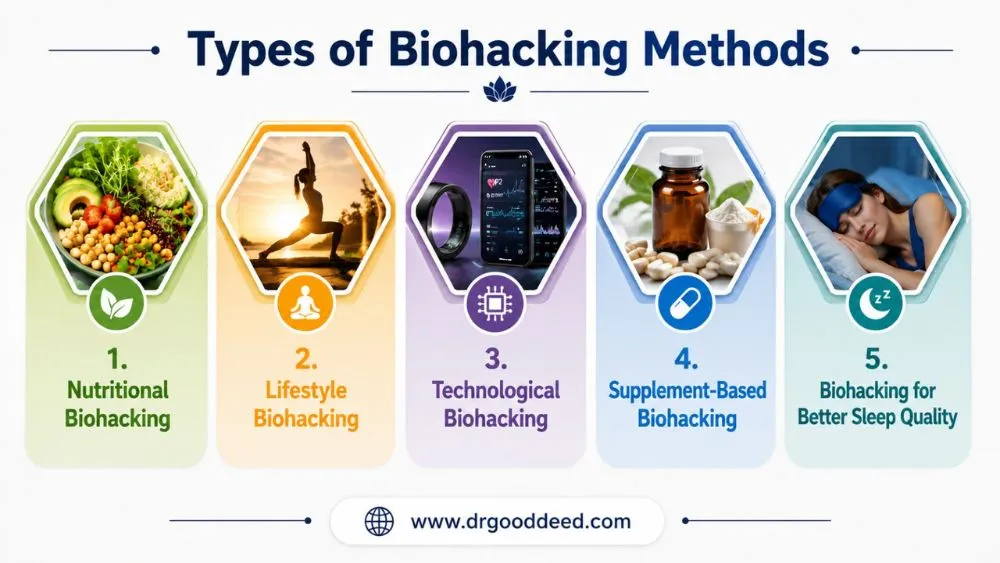
Types of biohacking methods range from free, low-effort changes to expensive, clinical-level interventions. Most people get 80% of the results from the basics.
Nutritional Biohacking (Diet Optimization)
Time-restricted eating (TRE), specifically eating within an 8-10 hour window, has shown measurable effects on insulin sensitivity and metabolic markers in studies published in Cell Metabolism. Ketogenic diets reduce blood glucose variability. Elimination diets identify foods causing chronic inflammation. None of this requires expensive equipment.
Lifestyle Biohacking (Sleep, Exercise)
Sleep is the single highest-leverage biohacking target available. Improving sleep quality from poor to adequate produces larger gains in cognitive performance than almost any supplement. Cold exposure through cold showers or ice baths triggers norepinephrine release, which reduces inflammation and improves mood. Studies from the Journal of Applied Physiology show 20-second cold water immersion raises norepinephrine by 200-300%.
Technological Biohacking (Wearables, Tracking Devices)
Wearables like the Oura Ring, WHOOP band, and Garmin Fenix track HRV, sleep stages, and activity with clinical-grade accuracy. Continuous glucose monitors (CGMs), used off-label by non-diabetics, show real-time blood sugar responses to food. This data changes eating behavior faster than any diet book.
Supplement-Based Biohacking
Supplements are the most marketed and most misused part of biohacking. The evidence base varies enormously. Some supplements have strong clinical backing. Others are sold on trend and anecdote.
Supplements Used in Biohacking
Supplements used in biohacking fall into three main categories based on their evidence quality and mechanism.
Nootropics for Brain Performance
Nootropics are compounds that support cognitive function. The ones with actual clinical evidence include:
- Creatine monohydrate: A 2003 study in Psychopharmacology found 5g daily improved working memory and processing speed in vegetarians by 25-50%.
- Lion’s mane mushroom: Stimulates nerve growth factor (NGF). A 2009 study in Phytotherapy Research showed improved mild cognitive impairment scores after 16 weeks.
- Caffeine + L-theanine: The most studied nootropic combination. L-theanine reduces caffeine’s anxiety spike while maintaining alertness.
Vitamins and Minerals
Magnesium glycinate improves sleep quality by supporting GABA receptor function. About 48% of Americans are deficient according to the National Health and Nutrition Examination Survey. Vitamin D deficiency, affecting 42% of U.S. adults, correlates strongly with fatigue, depression, and poor immune response. These aren’t trends. They’re documented deficiencies with documented consequences.
Adaptogens for Stress Control
Adaptogens help the body regulate cortisol. Ashwagandha (KSM-66 extract) reduced cortisol by 27.9% in a randomized controlled trial published in the Indian Journal of Psychological Medicine. Rhodiola rosea reduces mental fatigue. These aren’t strong drugs, but they’re not placebo either.
Biohacking for Better Sleep Quality
Biohacking for better sleep quality is where most people see the fastest, most measurable results. Sleep affects every other health metric. It’s not a passive recovery state.
Sleep Tracking Tools
Oura Ring Gen 3 tracks sleep stages with 79% accuracy compared to polysomnography (clinical sleep lab equipment). WHOOP measures respiratory rate during sleep, an early indicator of illness or overtraining. These tools don’t just collect data. They identify patterns most people never notice, like how alcohol at 7pm collapses deep sleep even when total hours look normal.
Light Exposure Management
Morning sunlight within 30 minutes of waking anchors your circadian rhythm. Andrew Huberman’s lab at Stanford has documented this extensively. Blue light blocking after 8pm prevents melatonin suppression. These two changes alone, morning sun and blocking blue light at night, measurably improve sleep onset speed and deep sleep duration.
Circadian Rhythm Optimization
Eating your largest meal before 2pm aligns digestion with your circadian biology. Late-night eating shifts your peripheral clocks out of sync with your central clock in the brain. Research from the Salk Institute shows this misalignment increases metabolic disease risk over time.
Benefits of Biohacking
The documented benefits of biohacking, when methods are evidence-based, include:
- Improved energy: Better sleep and corrected nutrient deficiencies reduce chronic fatigue without stimulants.
- Mental clarity: Nootropics like creatine and corrected vitamin D levels improve cognitive speed.
- Physical performance: HRV monitoring prevents overtraining. Cold exposure improves recovery markers.
- Weight management: Time-restricted eating reduces caloric intake without active calorie counting in most adherents.
Risks and Limitations of Biohacking
Not all biohacking methods are safe. Some carry real risks that rarely get covered in the enthusiasm-heavy blogs dominating this topic.
Lack of Scientific Evidence for Some Methods
Bulletproof coffee, grounding mats, and many “quantum” wellness devices have zero peer-reviewed backing. The supplement industry in the U.S. is not pre-approved by the FDA. A company can sell a nootropic stack without proving it works or that it’s safe.
Overuse of Supplements
Taking multiple supplements simultaneously creates interaction risks. High-dose vitamin E increases all-cause mortality in some studies. Excessive zinc supplementation over 40mg daily causes copper deficiency. More is not better. This is one area where biohacking communities frequently go wrong.
Potential Health Risks
DIY gene editing using CRISPR kits, marketed online, carries serious and irreversible biological risks. Extreme fasting protocols without medical supervision cause electrolyte imbalances and cardiac arrhythmia in rare but documented cases. The fringe end of biohacking is genuinely dangerous.
Start with basics. Track simple metrics. Avoid anything that involves injecting, implanting, or genetically modifying your own biology without clinical supervision.
How to Start Biohacking Safely
How biohacking works at the beginner level requires neither devices nor supplements. Start with what has the strongest evidence.
Start With Basics (Sleep, Diet, Exercise)
Fix sleep first. Set a consistent wake time, every day including weekends. This alone improves HRV, mood, and energy within two weeks. Then address diet quality. Then add exercise.
Track Simple Metrics
A free sleep journal beats most apps for beginners. Note sleep time, wake time, and a 1-10 energy score daily. After two weeks, patterns become obvious without spending anything.
Avoid Extreme or Unproven Methods
Skip anything that promises rapid transformation. Avoid IV drip lounges without a medical reason. Avoid unregulated peptide injections sold online. Talk to your doctor before adding any supplement that interacts with medication.
Common Mistakes in Biohacking
Overcomplicating Routines
People stack 15 supplements, buy four wearables, and change diet and sleep simultaneously. Then nothing works and nothing is identifiable as the cause.
Following Trends Without Evidence
Blue light therapy panels, PEMF mats, and hyperbaric oxygen chambers all have some research behind them in specific clinical contexts. Most consumers use them for wellness claims that are far beyond what the evidence supports.
Ignoring Medical Advice
Biohacking is not a replacement for clinical care. People with thyroid disorders trying to self-manage with iodine supplements, or diabetics adjusting insulin timing based on CGM readings without physician input, are taking serious risks.
FAQs
Can biohacking help with weight loss?
Yes. Biohacking for weight loss through time-restricted eating reduces daily caloric intake by an average of 350-550 calories without active restriction, according to a 2022 study in the New England Journal of Medicine. Combined with CGM-informed food choices, it produces consistent fat loss in 8-12 weeks.
How does biohacking improve sleep quality?
Biohacking for better sleep quality works by targeting the three controllable variables in sleep architecture: circadian timing, light exposure, and body temperature. Morning sunlight, blue light blocking after 8pm, and a bedroom kept at 65-68°F increase deep sleep duration measurably within one week.
Is biohacking safe?
Basic biohacking (sleep optimization, diet timing, HRV tracking) is safe for most adults. Advanced biohacking using unregulated peptides, DIY gene editing, or high-dose supplement stacks without medical supervision carries documented health risks. Safety depends entirely on which methods you choose.
Who should try biohacking?
Adults experiencing chronic fatigue, poor sleep, low mental focus, or plateaued athletic performance get the most benefit from biohacking. People with existing medical conditions, especially cardiovascular disease, diabetes, or autoimmune disorders, should consult a physician before starting any protocol.
How to start biohacking safely?
Fix sleep timing first. Set a consistent wake time for 14 days. Add morning sunlight exposure for 10 minutes. Track energy on a 1-10 scale daily. Add one change every two weeks maximum. This approach identifies what works without risking supplement interactions or wasted money on devices.