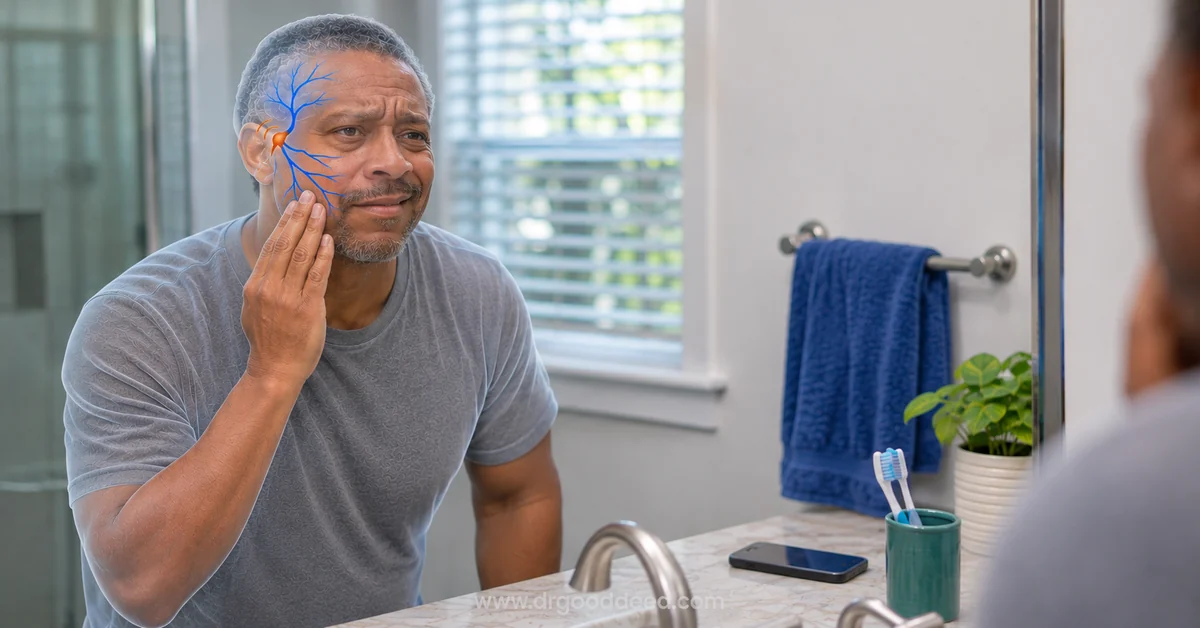

If one side of your face is drooping, call 911 first; Bell’s palsy vs stroke can look alike, and only an emergency team can tell them apart safely. Bell’s palsy is a nerve problem that weakens one side of the face. A stroke is a brain emergency where brain cells die and every minute counts.
Key Takeaways
- Sudden drooping on one side of your face needs 911 right away, because Bell’s palsy vs stroke can’t be told apart safely at home.
- Bell’s palsy comes from facial nerve swelling, builds over 48 to 72 hours, and weakens that whole side of the face.
- A stroke starts suddenly and often adds arm weakness, slurred speech, vision trouble, or lost balance.
- Medicine to reduce nerve swelling works best when started within 72 hours for people 16 and older (AAO-HNS, 2013).
- StatPearls (2024) reports 70% to 80% recover fully without treatment. Protect an eye that won’t close.
Bell’s Palsy vs Stroke: Call 911 First
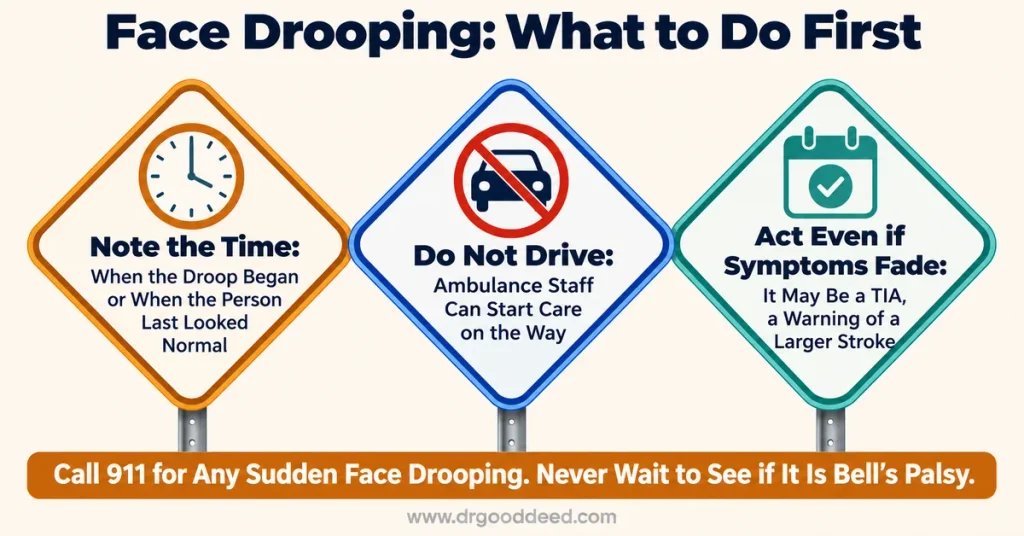
With Bell’s palsy vs stroke, the safe rule is to call 911 for any sudden face drooping, because the early signs overlap and a stroke needs treatment fast. Healthcare providers check for stroke whenever the face droops, so never wait to see whether it is Bell’s palsy.
- Note the time. Write down when the facial droop (one side of the face sagging) began, or when you last saw the person looking normal, which helps the team choose treatment.
- Do not drive. NINDS (2026) advises against driving the person yourself or letting them drive. Ambulance staff can start care on the way.
- Act even if symptoms fade. Symptoms that disappear may be a transient ischemic attack (TIA), a brief blockage that clears but warns of a larger stroke (NINDS, 2026).
Learn the full list of stroke warning signs so you can act fast for yourself or someone else.
How Bell’s Palsy and a Stroke Differ
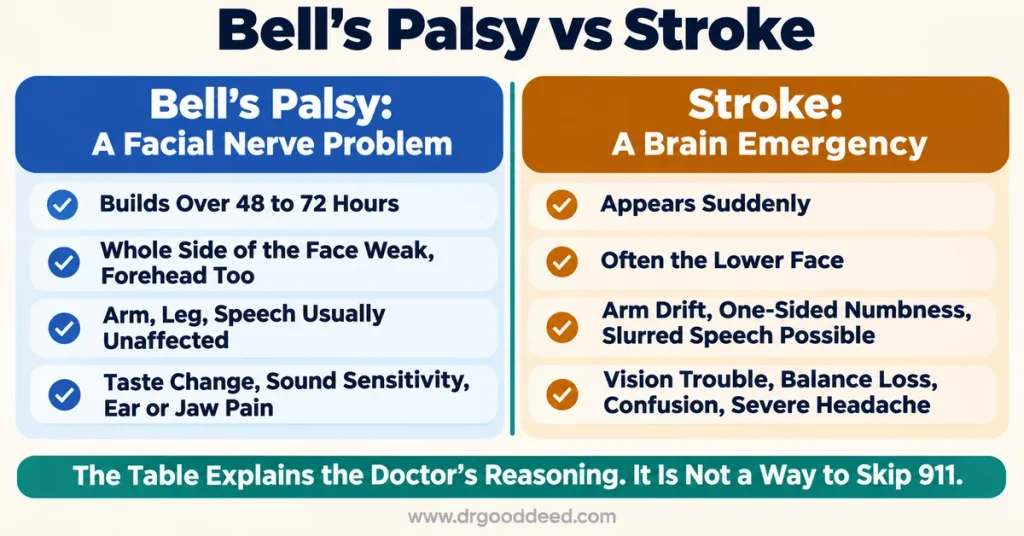
Doctors tell the difference between Bell’s palsy and stroke by how fast it starts, which parts of the face are weak, and whether anything beyond the face is affected.
The table follows NINDS (2026) and StatPearls (2024). It explains the doctor’s reasoning and is not a way to skip 911.
| Feature | Bell’s palsy | Stroke |
| Onset | Builds over 48 to 72 hours | Appears suddenly |
| Face weakness | Whole side of the face | Often the lower face |
| Forehead | Weak on the affected side | Usually spared in cortical strokes, can be weak in brainstem strokes |
| Arm, leg, speech | Usually unaffected | Arm drift, one-sided numbness, slurred speech possible |
| Other clues | Taste change, sound sensitivity, ear or jaw pain | Vision trouble, balance loss, confusion, sudden severe headache |
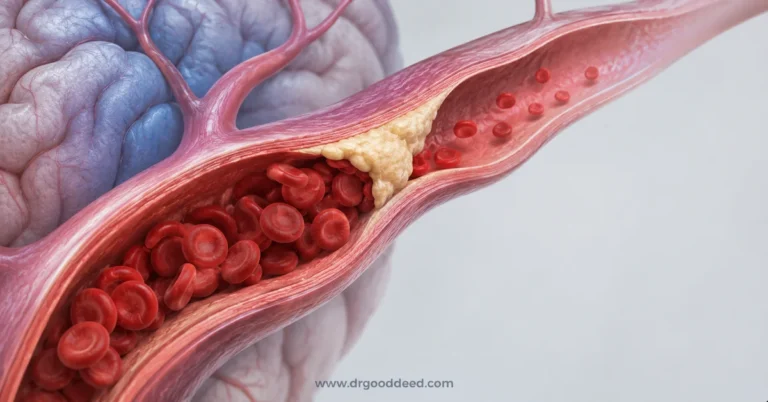
| Cause | Swelling of the facial nerve, possibly after a viral illness | Blocked or burst blood vessel in the brain |
| Red flags for another cause | Rash or blisters near the ear, tick bite, both sides weak | Any other new nerve sign |
AAO-HNS (2013) calls Bell’s palsy the most common facial nerve disorder. So facial paralysis (a face that cannot move) is often Bell’s palsy, but only an exam can confirm it.
Why the Forehead Matters, and Its Limits
Bell’s palsy usually weakens the forehead on the affected side, while many strokes spare it, but some strokes weaken it too, so it is a doctor’s clue, not a home test.
- In Bell’s palsy, the injury sits on the facial nerve itself, a lower motor neuron problem (damage to the nerve outside the brain). That cuts signals to the whole half of the face, so wrinkling the forehead and raising the eyebrow are weak (StatPearls, 2024).
- In a cortical stroke (a stroke in the brain’s outer layer), the forehead is usually spared. Both sides of the brain steer the forehead muscles, so the healthy side can cover the gap. Doctors call this forehead sparing (StatPearls, 2024).
- A brainstem stroke can weaken the forehead, but usually with other nerve signs (StatPearls, 2024). A small deep-brain stroke, called a lacunar stroke, can cause one-sided weakness with few other signs.
Expert Insight: Clinicians never judge the forehead alone. A weak forehead fits Bell’s palsy, but brainstem strokes can cause it too, so the clue only means something next to onset speed, arm strength, speech and eye movements.
Other Symptoms of Bell’s Palsy
Besides drooping, Bell’s palsy can bring a hard-to-close eye, drooling, taste changes, sound sensitivity, and pain near the ear (NINDS, 2026). These Bell’s palsy symptoms trace back to the facial nerve, also called the seventh cranial nerve, which carries signals for the face, tears, taste and hearing sensitivity.
- Drooping of the brow and mouth, with a weak forehead on the same side.
- An eye that does not close fully, plus tearing.
- Drooling from the weak side of the mouth.
- Changes in taste.
- Hyperacusis (everyday sounds seem too loud).
- Pain in or behind the ear, or in the jaw.
FAST Signs That Point to a Stroke
A stroke rarely affects the face alone; check for an arm that drifts down and slurred speech, then call 911. The FAST stroke test turns this into four quick checks.
- Face: ask the person to smile. Does one side droop?
- Arm: ask them to raise both arms. Does one drift down?
- Speech: ask them to repeat a simple phrase. Is it slurred or strange?
- Time: if you see any of these, call 911.
NINDS (2026) lists other sudden stroke symptoms: one-sided numbness or weakness, confusion, vision trouble, loss of balance, and a severe headache. Knowing what a stroke feels like from the inside helps you act on early signs. Signs can differ between people, so it also helps to know the stroke symptoms in women.
What Happens at the Hospital
The clinical team examines your face and nerves; if it is clearly Bell’s palsy, routine scans and labs are not needed, but scans are done when a stroke or other cause is possible.
- You are asked how fast the drooping began, and about any ear rash, tick bite or recent illness.
- The doctor checks your forehead, eye closure, smile, arm strength, speech and eye movements.
- Stroke is ruled out first. A CT or MRI (brain scan) is done when a stroke or another cause is suspected (MedlinePlus, 2026).
- Blood tests may be done to look for causes such as Lyme disease (MedlinePlus, 2026). AAO-HNS (2013) says routine labs and imaging are not needed when it is clearly Bell’s palsy.
- If it is Bell’s palsy, medicine to reduce nerve swelling is most useful within 72 hours of onset, for people 16 and older (AAO-HNS, 2013). Your doctor decides the type and amount.
Emergency teams face a similar puzzle with the difference between stroke and seizure.
Bell’s Palsy Recovery and When to Follow Up
Most people regain some or all facial movement within a few weeks to six months (NINDS, 2026). Bell’s palsy recovery time varies, so these ranges are guides.
- Odds: StatPearls (2024) reports about 70% to 80% recover fully without treatment, and 90% to 97% with treatment.
- Early sign: MedlinePlus (2026) calls improvement within 3 weeks a good sign.
- Eye care: if the eye won’t close, ask your doctor about lubricating drops or an eye patch to protect it (NINDS, 2026; AAO-HNS, 2013).
- Recurrence: StatPearls (2024) puts it at 8% to 12%, on average about 10 years later.
- Recheck: AAO-HNS (2013) advises reassessment or referral at 3 months for new nerve signs, eye symptoms, or incomplete recovery.
Until a doctor has ruled out a stroke, treat Bell’s palsy vs stroke as an emergency question and call 911 for any new drooping.
Frequently Asked Questions
Can Face Drooping on One Side Be Something Else?
Yes. Face drooping on one side can also come from Lyme disease, an ear infection or shingles near the ear, called Ramsay Hunt syndrome, but with Bell’s palsy vs stroke, doctors always check for stroke first. A rash near the ear or a tick bite points away from Bell’s palsy.
Should You Drive Yourself to the Hospital?
No. Call 911 instead of driving, because ambulance staff can start care on the way and the person with symptoms should not drive. NINDS (2026) also advises noting when symptoms began and calling even if they fade, since a brief episode can be a transient ischemic attack.
Can Bell’s Palsy Come Back?
Yes, but rarely. StatPearls (2024) reports that 8% to 12% of people have another episode, on average about 10 years later. A repeat episode still needs urgent evaluation, so call 911 for any new drooping, since doctors must rule out stroke each time.
Who Is More Likely to Get Bell’s Palsy?
Anyone can get it, but NINDS (2026) says it is most common between ages 15 and 45. Pregnancy, preeclampsia (a high blood pressure disorder of pregnancy), obesity, high blood pressure, diabetes, and a recent cold raise the risk. MedlinePlus (2026) says males and females are equally affected.
Can Bell’s Palsy Affect Both Sides of the Face?
Rarely. Bell’s palsy usually affects one side, so weakness on both sides is a red flag for another cause. Because that needs urgent medical review, call 911 for any new drooping, on one side or both, rather than waiting to see if it settles.
References
- NINDS, Bell’s Palsy. link
- NINDS, Stroke Signs and Symptoms. link
- MedlinePlus, Bell palsy. link
- StatPearls (NCBI Bookshelf), Bell Palsy. link
- AAO-HNS, Clinical Practice Guideline: Bell’s Palsy. link
Medical Disclaimer: This article is for general information only and is not medical advice. It does not replace a diagnosis, treatment plan, or guidance from a qualified healthcare professional. Always talk to your doctor about your own symptoms and before starting, stopping, or changing any treatment. If you think you may be having a medical emergency, call 911 or go to your nearest emergency room.