

The three main types of ear infections are outer ear infection (otitis externa), middle ear infection (otitis media), and inner ear infection (labyrinthitis). Each affects a different part of the ear, causes different symptoms, and requires a different treatment approach.
Ear infections are among the most common medical complaints in the U.S.; otitis media alone accounts for over 30 million doctor visits annually, making it the leading reason children visit pediatricians. This guide breaks down every type, how to tell them apart, and what treatment actually works.
Different Types of Ear Infections
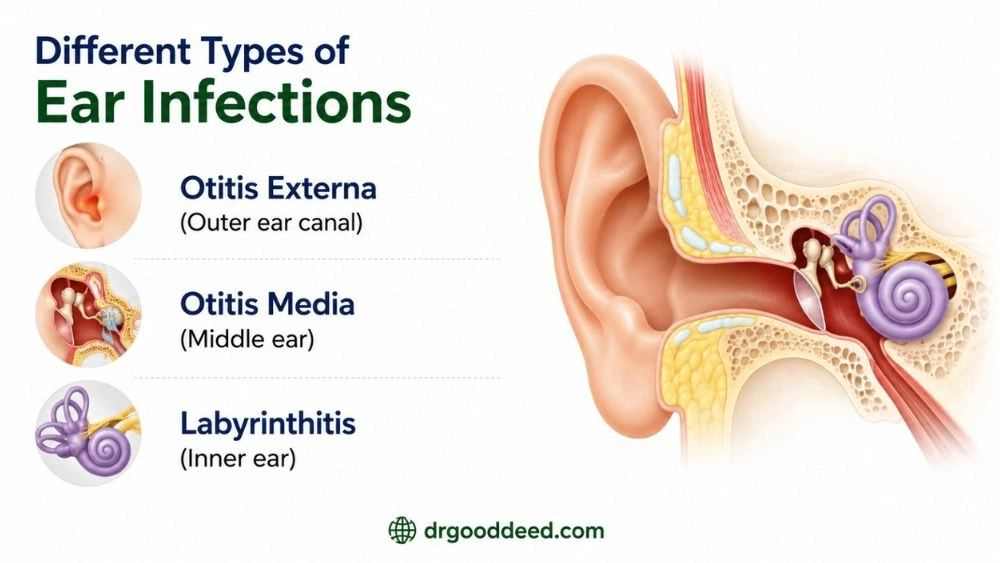
The different types of ear infections are separated by location. The ear has three distinct sections: the outer canal (visible part), the middle ear (behind the eardrum), and the inner ear (deep structure controlling hearing and balance). An infection in any of these sections produces a completely different set of symptoms.
| Type | Location | Most Common In | Key Symptom |
| Otitis Externa | Outer ear canal | Adults, swimmers | Itching, canal pain |
| Otitis Media | Middle ear | Children under 5 | Fever, ear pressure |
| Labyrinthitis | Inner ear | Adults 30–60 | Vertigo, balance loss |
Treating the wrong type with the wrong approach, such as using outer ear drops for a middle ear infection, does nothing. Knowing which type is present is the first step.
Outer Ear Infection (Otitis Externa)
Otitis externa, known as swimmer’s ear, is an infection of the ear canal that sits between the outer ear and the eardrum. It accounts for roughly 98% of all types of ear infections in adults who swim regularly. The infection stays entirely outside the eardrum.
Moisture Causing Outer Ear Infection
Moisture causing outer ear infection is the most direct and documented cause. Water trapped in the canal softens the skin lining, strips the canal’s natural acidic pH, and gives bacteria a warm, moist breeding ground. Pseudomonas aeruginosa causes approximately 60% of swimmer’s ear cases in the U.S. Staphylococcus aureus causes most of the remaining cases.
Cotton swab use is the second leading cause. It removes the protective cerumen (earwax) layer, leaving the canal skin exposed and vulnerable to bacterial entry.
Symptoms (Itching, Redness, Pain)
- Itching inside the ear canal, often the first sign
- Pain that worsens when the earlobe or outer ear is touched or pulled
- Redness visible at the canal opening
- Clear or yellow discharge in moderate-to-severe cases
- Temporary muffled hearing if swelling partially blocks the canal
Pain when you press on the small cartilage flap in front of the ear canal (the tragus) is a strong clinical indicator of otitis externa.
Common Causes (Water Exposure, Bacteria)
Repeated water exposure, high-humidity environments, and canal trauma from objects inserted in the ear are the three leading causes. People with eczema or psoriasis near the ear canal have elevated risk because their skin barrier is already compromised.
Middle Ear Infection (Otitis Media)
Otitis media is an infection behind the eardrum in the middle ear space. It is the most common of all types of ear infections in children under 5. The American Academy of Pediatrics reports that 5 out of 6 children experience at least one middle ear infection before age 3.
Fluid Buildup Behind Eardrum
When the Eustachian tube swells shut during a cold or upper respiratory infection, fluid gets trapped in the middle ear. That fluid becomes infected by bacteria like Streptococcus pneumoniae or Haemophilus influenzae. The fluid presses against the eardrum from behind, causing the pressure and pain that characterize otitis media.
Symptoms (Pain, Fever, Hearing Loss)
- Ear pain that worsens at night when lying down
- Muffled hearing or delayed speech response in children
- Fever above 100.4°F (38°C)
- Fluid draining from the ear if the eardrum ruptures (pressure relief)
- In infants: pulling at the ear, fussiness, feeding refusal
A ruptured eardrum sounds alarming, but it often brings immediate pain relief. The eardrum heals on its own in most cases within 2–4 weeks.
Common in Children
Children’s Eustachian tubes are shorter and more horizontal than adults. That anatomy makes drainage difficult and infection more likely. Daycare attendance, bottle feeding while lying flat, and secondhand smoke exposure all raise the risk of recurrent otitis media.
Inner Ear Infection Symptoms (Labyrinthitis)
Labyrinthitis is inflammation of the inner ear labyrinth, the structure that controls both hearing and balance. It is the least common of the types of ear infections but causes the most severe and disorienting symptoms. Inner ear infection symptoms labyrinthitis often appear suddenly, sometimes within hours.
Severe Dizziness or Vertigo
Vertigo from labyrinthitis is severe. The room spins even when completely still. It’s not mild dizziness; it’s a full spinning sensation that makes standing or walking very difficult. This happens because the labyrinth sends distorted balance signals to the brain.
Balance Problems
Walking in a straight line becomes difficult or impossible during active labyrinthitis. Patients often hold walls to stay upright. This symptom separates inner ear infection symptoms labyrinthitis from middle and outer ear infections, which don’t affect balance at all.
Nausea and Hearing Issues
The vestibular disruption triggers nausea and sometimes vomiting. Hearing in the affected ear drops noticeably. Some labyrinthitis patients experience tinnitus (ringing in the ear) that persists even after the infection clears. Viral labyrinthitis following influenza or herpes simplex virus infection is the most documented cause in adults.
How to Identify Which Type You Have
Identifying different types of ear infections at home requires paying attention to three specific factors.
Location of Pain
- Pain when pulling the earlobe or pressing the ear canal opening: outer ear infection
- Deep ear pain with pressure sensation behind the eardrum: middle ear infection
- No localized ear pain but severe dizziness and hearing loss: inner ear infection
Presence of Dizziness or Fever
Fever above 100.4°F with ear pain points to middle ear infection. Vertigo and balance loss without significant fever points to inner ear infection (labyrinthitis). Outer ear infections rarely cause fever unless the infection is severe.
Associated Symptoms
- Discharge from the canal: outer ear infection
- Stuffy nose or recent cold before ear pain started: middle ear infection
- Sudden hearing loss with spinning sensation: inner ear infection
Treatment Options for Different Ear Infections
Treatment options for different ear infections depend entirely on which type is present and whether the cause is bacterial or viral.
Antibiotics (For Bacterial Infections)
- Outer ear (otitis externa): Ofloxacin or ciprofloxacin ear drops, applied directly into the canal for 7–10 days. Oral antibiotics aren’t used for most cases.
- Middle ear (otitis media): Oral amoxicillin 500 mg three times daily for 7–10 days is first-line per AAP guidelines. For penicillin-allergic patients, azithromycin is standard.
- Inner ear (labyrinthitis): Most cases are viral and don’t respond to antibiotics. Corticosteroids like prednisone reduce inner ear inflammation. Antiviral medications (acyclovir) apply when herpes virus is confirmed.
Pain Relief Medications
Ibuprofen reduces both pain and inflammation for all types of ear infections. Acetaminophen controls pain but doesn’t address inflammation. For middle ear infections, warm compresses on the ear provide additional short-term comfort.
Ear Drops for Outer Ear Infections
Prescription antibiotic ear drops are the primary treatment for otitis externa. Neomycin/polymyxin B/hydrocortisone (Cortisporin) is one of the most prescribed combinations in U.S. clinics. Insert drops with the ear facing upward, then stay still for 5 minutes to allow absorption.
Home Care for Mild Ear Infections
Home care for ear infections works for mild outer ear irritation and early otitis media cases in children over 2 years old, per American Academy of Pediatrics watchful waiting guidelines.
Warm Compress
Apply a warm (not hot) cloth against the outer ear for 15–20 minutes, two to three times daily. Heat reduces muscle tension near the ear and provides temporary pain relief.
Rest and Hydration
The immune system clears viral infections faster with adequate sleep and hydration. Drink 8–10 glasses of water daily. Staying upright during the day reduces pressure buildup behind the eardrum.
Avoiding Water Exposure
Keep the ear dry during recovery from outer or middle ear infections. Use a shower cap, cotton ball lightly coated in petroleum jelly at the canal opening, or custom earplugs during bathing.
When Ear Infections Become Serious
Most types of ear infections resolve without complications. These symptoms signal that the infection is progressing beyond the ear itself.
Persistent Pain or Fever
Fever that doesn’t drop after 48 hours of antibiotics, or pain that increases instead of improving, requires reassessment. The bacteria may be resistant to the prescribed antibiotic.
Hearing Loss
Temporary hearing loss during infection is expected. Hearing that doesn’t return within 2–4 weeks after the infection clears needs an audiological evaluation. Chronic otitis media with effusion causes conductive hearing loss that, in children, interferes with speech development.
Spread of Infection
Mastoiditis (infection spreading to the mastoid bone behind the ear) causes visible swelling and redness behind the ear. This is a medical emergency. Meningitis, though rare, represents the most serious complication of untreated bacterial middle or inner ear infections.
When to See a Doctor
See a doctor immediately if:
- Ear pain is severe and worsening despite ibuprofen
- Swelling or redness appears behind the ear
- Fever rises above 102.2°F (39°C)
- Balance problems or vertigo make standing unsafe
- Hearing loss persists beyond 3 days
- Discharge from the ear is green or has an odor
- A child under 6 months shows any ear infection symptoms
- Symptoms don’t improve within 3 days of starting antibiotics
FAQs
What are inner ear infection symptoms of labyrinthitis?
Inner ear infection symptoms labyrinthitis include sudden severe vertigo (room spinning while still), significant hearing loss in one ear, nausea, vomiting, and balance loss severe enough to prevent walking. These symptoms appear within hours. Unlike middle ear infections, labyrinthitis rarely causes fever or localized ear pain.
What causes outer ear infection?
Moisture causing outer ear infection is the leading cause. Water trapped in the canal strips its acidic pH, enabling Pseudomonas aeruginosa (responsible for 60% of cases) to colonize the skin. Cotton swab use is the second cause; it removes protective earwax and abrades the canal lining.
How to treat different ear infections?
Treatment options for different ear infections: outer ear infections need antibiotic ear drops (ofloxacin or ciprofloxacin) for 7–10 days. Middle ear bacterial infections need oral amoxicillin for 7–10 days. Inner ear infections (labyrinthitis) need corticosteroids, not antibiotics, because 90% of cases are viral.
Can moisture cause outer ear infection?
Yes. Moisture causing outer ear infection is documented extensively in clinical literature. Repeated water exposure neutralizes the ear canal’s acidic pH (normally 4–5), which is its primary bacterial defense. Without that acidity, Pseudomonas aeruginosa and Staphylococcus aureus colonize the softened canal skin within 24–48 hours.
How to identify ear infection type?
Press the small cartilage bump in front of the ear canal opening (the tragus). Pain there signals otitis externa. Deep pressure behind the eardrum with fever signals otitis media. Severe room-spinning vertigo with hearing loss and no fever signals labyrinthitis. Location and associated symptoms identify the type.
When should I see a doctor for ear infection?
See a doctor if: pain or fever doesn’t improve after 3 days, hearing doesn’t return after the infection clears, swelling appears behind the ear, or vertigo prevents safe standing. Children under 6 months with any ear infection symptoms need same-day evaluation per AAP guidelines.
Are ear infections serious?
Most types of ear infections resolve without complications in 7–10 days. They become serious when untreated: mastoiditis (bone infection behind the ear), permanent hearing loss, or in rare cases, meningitis. Labyrinthitis carries the highest complication risk; roughly 15% of patients develop permanent single-sided hearing loss.