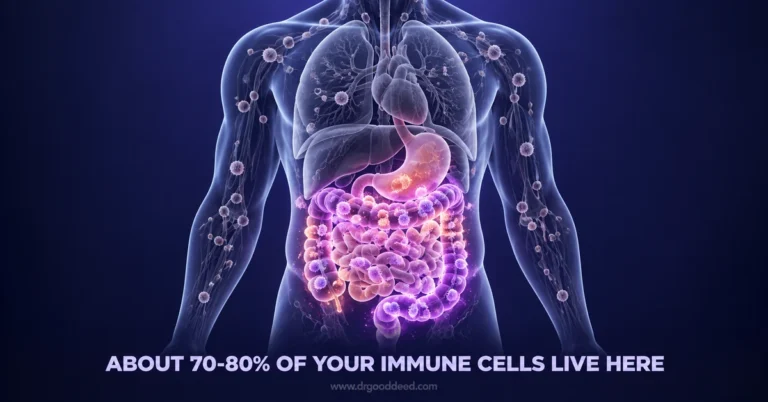

Poor gut health can cause headaches. The gut-brain axis confirms a real, bidirectional link between intestinal function and head pain. Conditions like H. pylori infection, celiac disease, and IBS carry documented associations with migraine frequency.
Understanding these signs of digestive problems helps clarify when gut symptoms and headaches share a common root cause.
Key Takeaways
- The gut and brain communicate bidirectionally through the vagus nerve and enteric nervous system, forming what researchers call the gut-brain axis.
- H. pylori infection has a documented association with migraine in peer-reviewed research, though the causal pathway isn’t fully established.
- Constipation can trigger headaches through dehydration and gut-brain signaling disruption, not through “toxin buildup” as older theories claimed.
- Celiac disease and IBS both carry measurably higher rates of headache and migraine compared with the general population.
- Nausea and digestive upset are frequently part of a migraine attack itself, not a separate, unrelated problem.
The Gut-Brain Axis: How Intestinal Health Connects to Head Pain
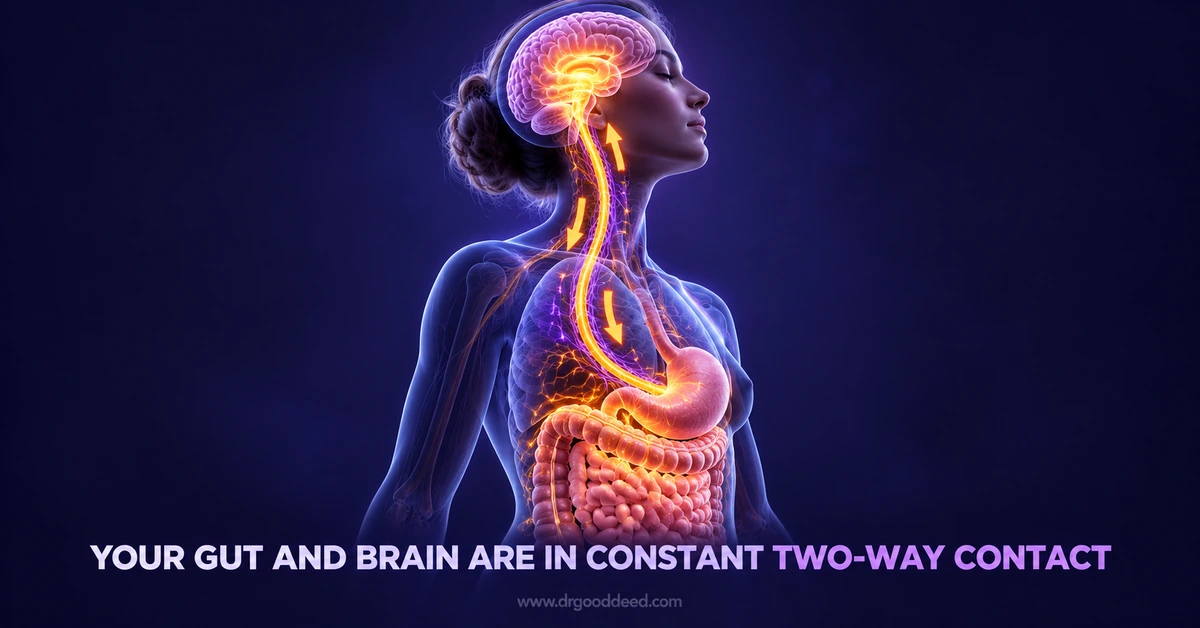
The gut-brain axis describes constant two-way signaling between your digestive tract and your central nervous system, carried largely through the vagus nerve. This connection means digestive inflammation or dysfunction can influence brain chemistry, and stress or neurological changes can just as easily disrupt digestion. For a deeper look at how this pathway affects overall physical symptoms, see the gut-brain axis explained on our stress and illness page.
- The vagus nerve acts as the primary communication highway, sending signals in both directions between gut bacteria, the intestinal lining, and brain regions involved in pain processing and mood regulation.
- The enteric nervous system, sometimes called the “second brain,” contains hundreds of millions of neurons lining the gut and can independently trigger inflammatory signals that reach the central nervous system.
- Inflammatory mediators produced in the gut, including cytokines like IL-6 and TNF-alpha, can enter systemic circulation and are implicated in sensitizing pain pathways associated with migraine.
Can H. Pylori Infection Be Associated With Migraines?
Migraine is associated with several gastrointestinal conditions, including Helicobacter pylori infection, irritable bowel syndrome, and celiac disease. This is a documented statistical association observed across multiple studies, not proof that H. pylori directly causes migraine in every affected person.
What’s the Proposed Mechanism Behind This Connection?
Researchers propose that H. pylori infection triggers sustained inflammatory and immune activity, releasing cytokines that may sensitize pain-processing pathways linked to migraine attacks.
- This is described as a proposed mechanism involving inflammatory mediators and gut microbiota shifts, not a definitively proven direct causal chain.
- Some smaller trials have observed migraine improvement after H. pylori eradication therapy, which supports the association but doesn’t confirm it as the sole driver for most migraine patients.
How Does Constipation Actually Trigger Headaches?
Constipation-related headaches happen through dehydration, disrupted gut-brain signaling, and low-grade inflammation.
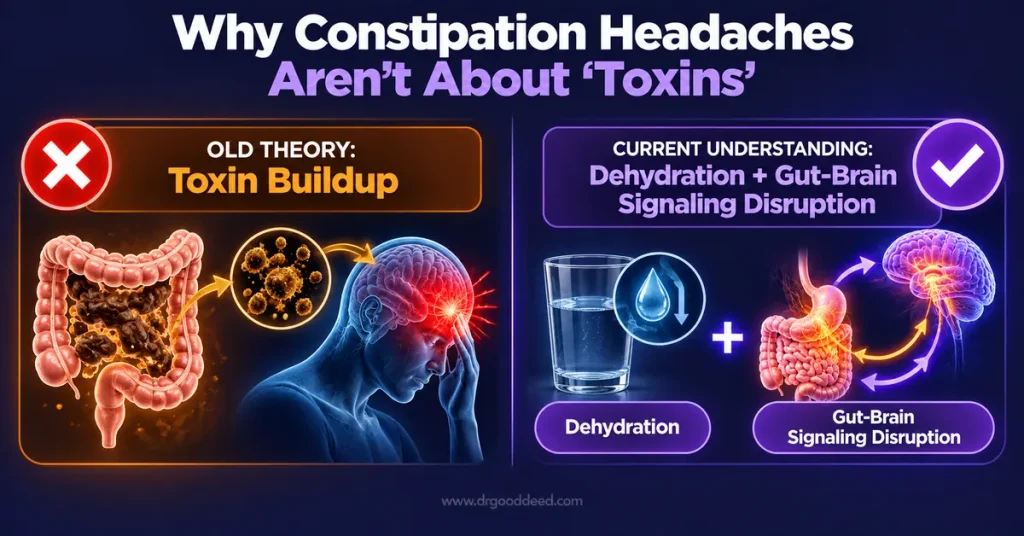
- Dehydration is a primary driver. Chronic constipation often coexists with inadequate fluid intake, and dehydration is independently one of the most common, well-documented headache triggers.
- Straining during bowel movements can transiently raise intracranial pressure, which in susceptible individuals may provoke or intensify head pain during or shortly after a difficult bowel movement.
- Gut-brain signaling disruption plays a measurable role. Constipation is linked to broader systemic symptoms, including headache and fatigue, through altered enteric nervous system activity rather than any toxin-based mechanism.
- Low-grade inflammation from delayed intestinal transit may contribute to systemic symptoms in some individuals, consistent with the broader inflammatory pathways seen across the gut-brain axis.
Can Celiac Disease or IBS Make Headaches Worse?
Both celiac disease and irritable bowel syndrome show consistently higher rates of migraine and headache disorders compared with the general population, based on multiple population studies.

- In celiac disease, headache can sometimes appear even before classic digestive symptoms.
- Researchers link this partly to systemic inflammation triggered by gluten exposure in celiac disease, and to shared serotonergic and inflammatory pathways in IBS, since serotonin plays a role in both gut motility and pain signaling in the brain.
Neither condition guarantees headaches will occur, but both meaningfully raise the statistical likelihood compared with people without these gastrointestinal disorders.
Are Nausea and Digestive Symptoms Part of a Migraine Attack Itself?
Nausea, vomiting, and gastroparesis (delayed stomach emptying) are recognized as core features of a migraine attack itself.
During an active migraine attack, gastric motility can slow significantly, which means an oral tablet stays in the stomach far longer before it’s absorbed, delaying relief precisely when speed matters most. Hence, non-oral formulations, like nasal sprays or dissolvable tablets, are prescribed for significant nausea.
How Can You Support Gut Health to Reduce Headache Frequency?
- Adequate hydration directly addresses one of the clearest, most consistent headache triggers tied to constipation and general fluid loss.
- Sufficient dietary fiber supports regular bowel movements and may ease constipation-related strain and pressure changes linked to headache episodes.
- Fermented foods, such as yogurt with live cultures or kefir, are commonly discussed for gut microbiota diversity, though direct headache-reduction evidence remains limited.
- Stress management techniques, including regular sleep and relaxation practices, address the enteric nervous system’s sensitivity to stress hormones that influence both gut function and pain thresholds.
When Should You See a Doctor?
You should see a doctor if headaches occur alongside persistent digestive symptoms, sudden severe head pain, or any new neurological symptoms like vision changes or confusion. Chronic constipation lasting several weeks, unexplained weight loss, or blood in the stool alongside recurring headaches also warrants prompt evaluation.
A healthcare provider can screen for underlying conditions like H. pylori infection, celiac disease, or IBS that carry documented headache associations.
FAQs
Can Probiotics Help Reduce Headache Frequency?
Evidence is limited but emerging. Small studies suggest certain probiotic strains may modestly reduce migraine frequency by influencing gut inflammation and serotonin pathways, but results aren’t consistent enough yet to recommend specific strains or doses for headache prevention.
Is This Connection The Same For Tension Headaches And Migraines?
No. Most gut-brain axis research, including H. pylori, IBS, and celiac disease associations, focuses specifically on migraine. Tension headaches have weaker documented gastrointestinal links, so this connection shouldn’t be generalized across all headache types equally.
Can Food Intolerances Specifically Trigger Headaches?
Yes, in some individuals. Gluten intolerance in celiac disease and certain food sensitivities have documented associations with headache onset, likely through inflammatory pathways. An elimination approach under medical guidance, not self-diagnosis, is the appropriate way to confirm a specific trigger.
How Long Does It Take Gut-Health Changes To Affect Headache Frequency?
This varies significantly by underlying cause. H. pylori eradication studies showed migraine improvement over several weeks to months post-treatment, while hydration and fiber changes for constipation-related headaches may show effects within days to two weeks.
Can Gut Health Cause Headaches Without Any Digestive Symptoms At All?
Yes, this can happen. Celiac disease sometimes presents with headache before classic digestive symptoms appear, and H. pylori infection can be asymptomatic in the gut while still contributing to systemic inflammation linked to migraine.
Sources:
- The Journal of Headache and Pain: Gut-Brain Axis and Migraine Headache Review link
- American Gastroenterological Association link
- World Journal of Gastroenterology: Gastrointestinal Disorders Associated With Migraine link
Medical Disclaimer: This article is for general information only and is not medical advice. It does not replace a diagnosis, treatment plan, or guidance from a qualified healthcare professional. Always talk to your doctor about your own symptoms and before starting, stopping, or changing any treatment. If you think you may be having a medical emergency, call 911 or go to your nearest emergency room.