

Frequent urination at night occurs when you have high blood sugar, causing glucose to be passed in the urine along with increased water. However, there are many reasons why you may wake up needing to pee.
If you are waking up regularly to go to the toilet, you may be wondering if you have diabetes. This article provides you with information on how many times you should expect to go to the toilet at night, what other symptoms to look for, tests to determine the cause, and when to see a medical professional.
Key Takeaways
- Frequent urination at night from diabetes is real, but waking to pee has many causes, so only a blood test can confirm diabetes.
- Most adults can sleep 6 to 8 hours without needing to pee (MedlinePlus, 2025); waking two or more times is called nocturia.
- High blood sugar means you are passing excess glucose and water in your urine.
- Having drinks in the evening, bladder issues, sleep apnea, and certain medications can cause you to pee at night.
- If you are experiencing ongoing symptoms, you should seek medical advice. If you are confused, very weak, or experiencing any other serious symptoms, seek immediate help.
Is Frequent Urination at Night a Sign of Diabetes?
It can be. Frequent urination at night from diabetes is common when blood sugar runs high, but nighttime trips alone cannot confirm diabetes.
An increase in glucose can cause the kidneys to struggle to reabsorb all the glucose from the blood. This causes excess glucose to be passed in the urine along with water.
However, if you are experiencing other changes such as:
- Increased thirst: You are feeling thirsty more often.
- Going to the bathroom more frequently during the day: You are noticing that you are urinating more often during the day.
- Unexpected changes in your health: Losing weight, feeling very tired, or noticing blurry vision.
These symptoms can be a sign of diabetes; however, there are many other reasons you may be experiencing changes. A blood test will be required to determine if you have diabetes.
Nocturia can be one of many symptoms. Read more about the causes of diabetes and the factors that may increase your risk.
How Many Times a Night Is Normal to Pee?
Most adults can sleep 6 to 8 hours without getting up (MedlinePlus, 2025); waking two or more times is called nocturia (Cleveland Clinic, 2026). Some people may normally pee one or two times.
How many times you pee will depend on your sleeping patterns, age, how much you drink, and your general health.
- As you get older, you are more likely to pee at night due to changes in your sleeping patterns and bladder.
- During pregnancy, hormonal changes and pressure on the bladder can cause you to need to go to the bathroom more.
- Drinking a lot of fluids close to bedtime can cause your bladder to become full during the night. Caffeine and alcohol can also contribute to this.
While one or two times may not be an issue, if you are suddenly peeing several times at night, it is ongoing, or causing you to not sleep well, then you should speak to your doctor.
It also depends on how many times you are going to the bathroom. If you are going to the bathroom a lot or passing small amounts of urine, this may be an issue.
Why Do I Have Frequent Urination At Night From Diabetes?
Frequent urination at night from diabetes happens because the kidneys cannot reabsorb all the extra sugar in the blood, so the sugar passes into the urine and draws water with it.
Doctors call this extra urine polyuria, and the process osmotic diuresis. As you are losing more water from your body, you may feel increasingly thirsty and drink more. This can cause you to pee more.
Your body can respond in this way:
- Blood glucose levels increase beyond what the kidneys can cope with.
- Glucose is passed in the urine along with extra water.
- You begin to pee more frequently and lose fluids.
- Your body responds by making you feel thirsty.
This can cause you to pee more during the day and night. Both type 1 and type 2 diabetes can cause it, though type 1 tends to come on faster. It can be more noticeable at night as you are constantly going to the bathroom.
A 2022 meta-analysis by Fu and colleagues, published in Frontiers in Public Health, combined 29 studies involving 197,809 people. People with diabetes had about 1.5 times the odds of nocturia, though most studies relied on self-reported symptoms.

Other Diabetes Symptoms to Watch For
Nighttime urination is more likely to be diabetes when it comes with excessive thirst, hunger, weight loss without trying, tiredness or blurry vision (CDC, 2024).
Symptoms of diabetes can develop gradually or suddenly (especially type 1 diabetes). These can include:
- Thirst: Feeling thirsty throughout the day or needing to drink a lot more.
- Hunger: Feeling hungry more often.
- Unintentional weight loss: Losing weight.
- Fatigue: Feeling very tired.
- Blurry vision: Temporary blurry vision.
- Frequent infections: Frequent urinary tract infections or yeast infections.
Not everyone will experience obvious symptoms of diabetes. Some people may only experience mild changes. However, some people may experience multiple symptoms. If you are also always feeling thirsty, high blood sugar moves higher on the list.
If your child has suddenly started wetting the bed, especially if they are also feeling thirsty, peeing a lot, or losing weight unintentionally, then you should contact their pediatrician as soon as possible. Sudden bed-wetting can be a sign of type 1 diabetes.
Other Causes of Waking Up to Pee at Night
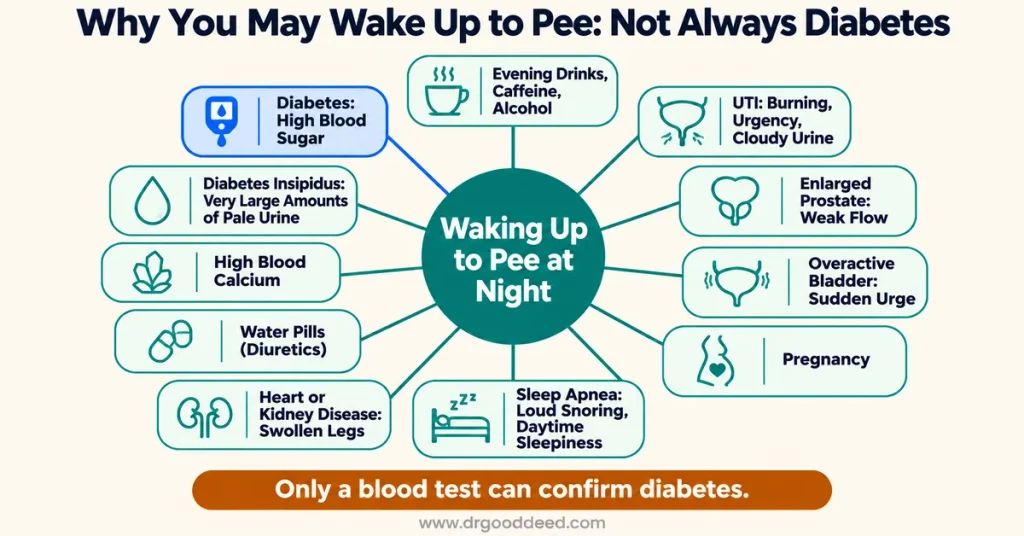
Most of the time, there will be another reason why you are waking up to pee at night. Other symptoms you are experiencing will usually indicate what the cause is.
| Possible Cause | Indications | Who it can affect |
| Drinks/caffeine/alcohol in the evening | Going to the bathroom more after drinking later in the evening | Anyone (depending on how much you drink) |
| Urinary Tract Infection (UTI) | Peeing with a burning sensation, discomfort, urgency or cloudy urine. | Anyone |
| Enlarged prostate (benign prostatic hyperplasia) | Weak flow, difficulty starting or incomplete emptying. | Anyone with a prostate (particularly as you get older). |
| Overactive bladder | Sudden urge to pee, going frequently and sometimes leaking. | Anyone of any age. |
| Pregnancy | Going frequently with other pregnancy-related changes. | Pregnant individuals. |
| Obstructive Sleep Apnea | Loud snoring, stopping breathing while asleep and feeling sleepy during the day. | Anyone with sleep apnea. |
| Heart or kidney disease | Swollen legs, changes in urination or other signs of water retention. | Depending on the condition. |
| Water pills (diuretics) | Peeing more in the hours after a dose; ask your doctor about the best time to take it. | People who take them. |
| High blood calcium | Thirst, constipation and tiredness; found on a blood test. | Anyone. |
| Diabetes insipidus | Passing very large amounts of pale urine and always feeling thirsty. Not related to blood sugar; urine can reach up to 20 quarts a day (NIDDK, 2021). | Rare condition which can affect adults and children. |
These indications can help your doctor narrow down the cause. For example, if you are feeling a burning sensation when going to the bathroom, it may indicate a UTI. If you are snoring and feeling sleepy during the day, it may indicate sleep apnea.
Urinary tract infections can also be more common in people with diabetes. Read about UTIs in people with diabetes for more information.
How Doctors Find the Cause
For most people, a short bladder diary, urine test and blood sugar test will determine the cause. Your doctor may recommend further tests depending on your symptoms, medical history and physical examination.
They will ask you about your symptoms. This may include when you started going to the bathroom at night, how often you are going, how much you are passing, and if you are feeling thirsty, pain, snoring, or changes to your urine flow.
- Bladder diary: A voiding diary can help identify patterns. This will involve noting when you drank, how much you drank, when you went to the bathroom, and approximately how much you passed.
- Urine sample: A urine sample can identify if there is glucose, signs of infection, or anything else abnormal. A urine culture may be recommended if a UTI is suspected.
- Blood Sugar Test: The American Diabetes Association (ADA) uses the following for diagnosing diabetes in non-pregnant adults:
- A1C test: 6.5% or above.
- Fasting blood sugar: 126 mg/dL or above (after at least 8 hours fasting).
- Oral Glucose Tolerance Test (2hr): 200 mg/dL or above.
- Random Plasma Glucose: 200 mg/dL or above (with classic diabetes symptoms).
- Confirmation: Unless there is clear evidence of diabetes, the ADA generally recommends repeating the same test or another diagnostic test. Your clinician will interpret your results.
- Other causes: Depending on your symptoms, your doctor may check your kidney function, medications or prostate/sleep apnea issues.
Your results will be compared to normal blood sugar levels and the relevant diagnostic criteria. While home glucose monitoring can be useful, it is not a substitute for diagnostic tests.
When to See a Doctor
If you are having trouble sleeping due to going to the bathroom several times at night, then book an appointment with your primary care doctor. If you are experiencing burning, blood in your urine, or a fever, then seek same-day help.
Primary Care: Book an appointment if you are frequently waking up to pee, having trouble sleeping, feeling very thirsty, or experiencing unintentional weight loss or fatigue.
Same day/Urgent Care: If you are experiencing painful urination, blood in your urine, fever or your symptoms are getting worse, then seek prompt assessment. If you are experiencing a fever with back or side pain, vomiting or feeling very unwell, this can be a sign of a more serious infection.
Emergency Room: If you are experiencing severe symptoms such as new confusion, significant sleepiness, or signs of severe dehydration, then seek emergency help. Very high blood sugar levels with vomiting, abdominal pain, or difficulty breathing can be a sign of a dangerous complication of diabetes.
Call 911: If the individual is difficult to wake, very confused, or having trouble breathing, call 911.
If you are feeling very unwell, then don’t wait until you are going a certain number of times at night. If you are experiencing new or worsening symptoms, then this should be addressed, especially if you are feeling excessively thirsty, weak, or unintentionally losing weight.
If you suspect frequent urination at night from diabetes, a simple blood test at your primary care doctor’s office is the fastest way to know.
Frequently Asked Questions
Is Waking Up to Pee Several Times a Night Always Diabetes?
No. Frequent urination at night from diabetes is only one possibility; evening drinks, an enlarged prostate, sleep apnea and bladder infections are common causes too. Your doctor may perform a blood sugar test, urine test and bladder diary to determine the cause. If you are experiencing ongoing or new symptoms, it is best to have an assessment.
Can New Bed-Wetting in a Child Be a Sign of Diabetes?
Yes. Unintentional bed-wetting or increased accidents can be a sign of type 1 diabetes. If your child is also very thirsty, peeing a lot, or unintentionally losing weight, then contact their pediatrician as soon as possible. If they are vomiting, with abdominal pain, difficulty breathing or unusual sleepiness, then seek emergency help.
How Much Urine Is Normal in a Day?
Most people pass around 1 to 3 quarts of urine per day (NIDDK, 2021). This will depend on how much you are drinking, your general health, and other factors. However, if you are passing significantly more urine than usual and always feeling thirsty, then you should seek medical advice.
Is Waking Up at Night to Pee Dangerous?
Not necessarily. Nocturia is often linked to how much you are drinking, sleeping or a treatable medical issue. However, if you are going frequently, this can disrupt your sleep and increase your risk of falling, especially in older adults. If it is new, ongoing, painful, or you are experiencing other symptoms, then seek medical advice.
How Can You Cut Down on Nighttime Bathroom Trips?
Try to have most of your fluids earlier in the day and limit your fluids 2 to 4 hours before bed. Limiting caffeine and alcohol in the evening may also help. If your legs are swelling, then ask your clinician if it would be appropriate to elevate them earlier in the day. Don’t limit your fluids if your clinician has said otherwise.
Sources
- MedlinePlus, Urinating More at Night. link
- Cleveland Clinic, Nocturia. link
- Mayo Clinic, Diabetes Symptoms: When Diabetes Symptoms Are a Concern. link
- Centers for Disease Control and Prevention (CDC), Symptoms of Diabetes. link
- American Diabetes Association (ADA), Diabetes Diagnosis. link
- National Institute of Diabetes and Digestive and Kidney Diseases (NIDDK), Diabetes Insipidus. link
- Urology Care Foundation, Sleep Awareness Week Draws Attention to Urologic Condition Keeping Millions of Americans Up at Night. Press release, March 14, 2021. link
- Fu Z, et al. The association between diabetes and nocturia: A systematic review and meta-analysis. Frontiers in Public Health, 2022. link
Medical Disclaimer: This article is for general information only and is not medical advice. It does not replace a diagnosis, treatment plan, or guidance from a qualified healthcare professional. Always talk to your doctor about your own symptoms and before starting, stopping, or changing any treatment. If you think you may be having a medical emergency, call 911 or go to your nearest emergency room.