
Your blood sugar is high when you’re sick because illness triggers stress hormones that push the liver to release sugar and make insulin work less well. This can happen when you have a cold, flu, fever, or infection, and it may cause your blood sugar levels to be higher than usual even if you are eating less food.
If you have diabetes, it can be concerning to see high blood sugar levels while you are unwell. However, knowing why this can happen, how to monitor your blood sugar levels, and when to seek medical assistance can help keep you safe while you’re unwell.
Key Takeaways
- Blood sugar is high when you’re sick because stress hormones and inflammation raise glucose and blunt insulin, even if you eat less than usual.
- Cold, flu, infections, and dehydration can cause an increase in your blood sugar levels. Some cold medications can also cause this.
- NIDDK (2023) calls above 180 mg/dL high; MedlinePlus (2026) says to call your provider if it stays above 240 mg/dL for over a day.
- Stick to your sick day plan, monitor your blood sugar levels regularly, stay hydrated, and, if required, check for ketones.
- Seek immediate medical attention if you are struggling to breathe, confused, have ketones in your urine, or are vomiting.
Does Being Sick Raise Blood Sugar?
Yes. Being sick raises blood sugar in most people with diabetes, and it can happen even when you eat less. Even with a mild cold, your body will release hormones to give you extra energy to fight the illness. This causes your blood sugar levels to increase.
Depending on your overall health and type of diabetes you have, you may experience:
Type 1 diabetes: Increased glucose levels when unwell. This can increase the risk of ketones building up in your body. You could be at risk of diabetic ketoacidosis (DKA) which is a potentially life-threatening emergency.
Type 2 diabetes: Your blood sugar levels may increase due to insulin becoming less effective. Severe illness can cause very high blood sugar levels and lead to dangerous dehydration and hyperosmolar hyperglycemic state (HHS).
If you don’t have diabetes, serious infections or acute illnesses can cause temporary high blood sugar levels. This is known as stress hyperglycemia. Illness is one of the many causes of high blood sugar levels in people without diabetes. Poor sleep and some medications can cause high blood sugar levels. Read more about high blood sugar without diabetes to understand why this happens and when it may need further evaluation.
Just because your blood sugar levels are higher doesn’t mean you’re no longer responding to your diabetes treatment. Your body will react to illness temporarily.
Why Blood Sugar Is High When You’re Sick
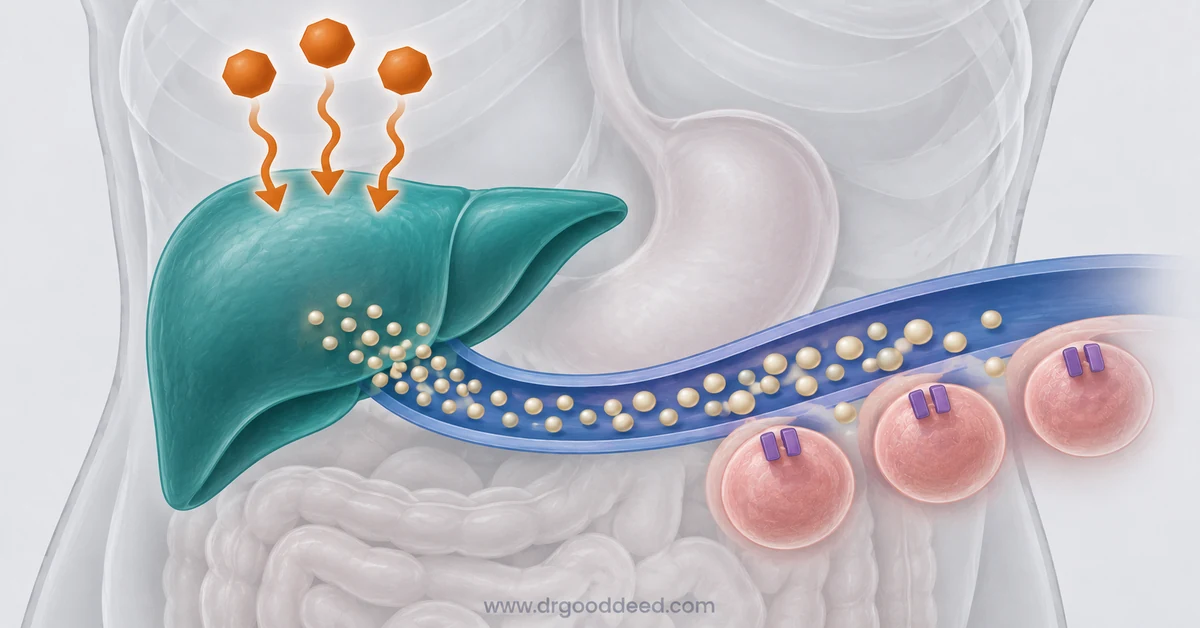
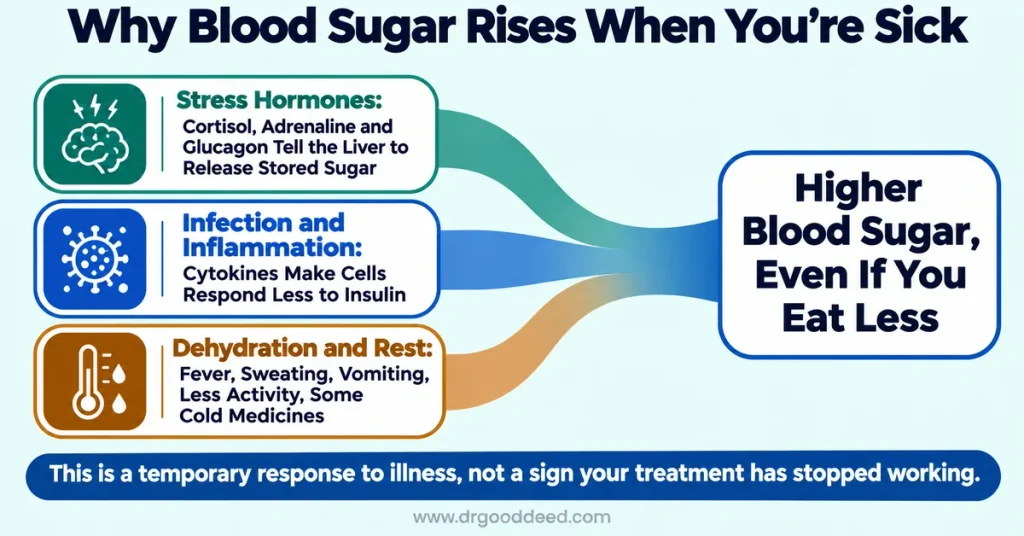
Blood sugar is high when you’re sick mainly because your body releases stress hormones, such as cortisol and adrenaline, that tell the liver to release stored sugar and make insulin work less well. Inflammation can also contribute to it.
Stress Hormones Release Stored Sugar
When you become unwell, your body will go into a state of stress. Hormones such as cortisol, adrenaline and glucagon will be released, telling your liver to release glucose into your blood. This gives your body extra energy to help fight the illness.
This can cause your blood sugar levels to increase. While your body is fighting off the infection, your blood sugar levels may be higher than usual even if you’re resting in bed and eating less.
Infection Makes Insulin Work Less Well
Infections can cause inflammatory proteins (cytokines) to be released. This works with stress hormones to cause the liver to produce more glucose. This also makes the cells in your body less responsive to insulin (insulin resistance).
This means the insulin your body produces or that you take may not be as effective at controlling your blood sugar levels.
Dehydration, Rest and Cold Medicines
Fever, sweating, vomiting and diarrhea can cause dehydration. As your body loses fluids, your blood sugar can become more concentrated. This can cause you to urinate more frequently due to high glucose levels.
Along with being less active while recovering from illness, you may also be taking cold medications that can raise your blood sugar. Speak to your pharmacist to find out what over-the-counter medications are suitable for you. Ask what medication would be best for your health and sick day plan.
How High Does Blood Sugar Go When You’re Sick?
There is no single number for how much blood sugar rises when you’re sick. It depends on the illness, type of diabetes and treatment you have. Different sources in the USA will have different warning levels. Your target blood sugar levels, symptoms, ketone levels, and how long your blood sugar remains high will all play a part.
The major health sources in the USA state:
- Most people with diabetes will have high blood sugar levels if their levels are over 180 mg/dL. (NIDDK, 2023). Symptoms of hyperglycemia often start at 180-200 mg/dL. (Mayo Clinic, 2026)
- Aim to keep your blood sugar below 200 mg/dL when you’re unwell. (MedlinePlus, 2026). Your target may vary, so stick to what your care team has told you.
- If your blood sugar remains over 240 mg/dL for more than a day, contact your healthcare provider. (MedlinePlus, 2026). If your blood sugar remains over 240 mg/dL and you have symptoms that suggest ketones then seek immediate medical attention. (Mayo Clinic, 2026).
- These figures are for different reasons so shouldn’t be used as guidelines for when to seek emergency treatment. Compare your readings with the normal blood sugar levels your care team has told you.
If your blood sugar continues to rise, you’re feeling worse and/or noticing signs of dehydration, then contact your healthcare provider.
Type 1 vs Type 2 Diabetes: Sick-Day Risks
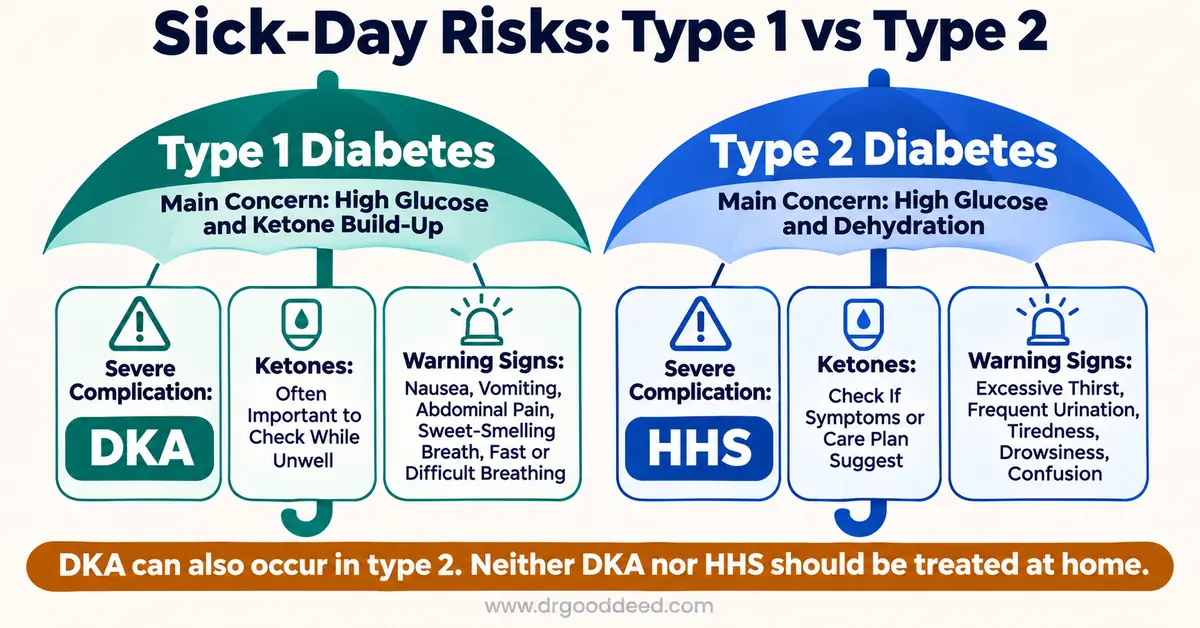
Both types of diabetes can cause high blood sugar levels when you’re unwell. However, type 1 diabetes increases the risk of ketone build-up and DKA. While type 2 diabetes can also cause DKA, severe hyperglycemia can cause HHS and severe dehydration.
Due to type 1 and type 2 diabetes affecting insulin differently, the risks of being unwell can vary.
| Factor | Type 1 diabetes | Type 2 diabetes |
| Main concern | High glucose and ketone build-up | High glucose and dehydration |
| Severe complication | DKA (can develop when there isn’t enough effective insulin) | HHS (can cause extremely high glucose levels and severe dehydration) |
| Ketones | Often important to check while unwell (depending on your sick day plan) | May need to be checked if symptoms or care plan suggest |
| Warning signs | Nausea, vomiting, abdominal pain, sweet-smelling breath and fast or difficult breathing | Excessive thirst, frequent urination, tiredness, drowsiness, and confusion |
While DKA is more common in type 1 diabetes, it can occur in type 2 diabetes. Hyperosmolar hyperglycemic state can cause blood glucose levels to be over 600 mg/dL. (Mayo Clinic, 2026). This requires emergency treatment. Neither of these should be treated at home.
How to Manage High Blood Sugar When You’re Sick
Stick to your sick day plan. Regularly check your blood sugar, stay hydrated and eat if possible. Take your diabetes medication as instructed by your care team. If you don’t have a plan then contact your diabetes care team for individual advice.
- Check your blood sugar regularly: The CDC recommends checking every 4 hours while unwell. (CDC, 2024). MedlinePlus recommends checking every 2-4 hours. (MedlinePlus, 2026). Follow what your care team has said. If you’re using a CGM, then follow its instructions.
- Stay hydrated: Drinking water can help to replace fluids lost due to fever, sweating, vomiting, or frequent urination. If you’re struggling to stay hydrated, then seek medical advice.
- Eat if possible: Try to follow your regular meal plan. If you’re unable to, then ask your care team how you can still eat enough carbohydrates.
- Take your medication: In most cases, you should take your insulin and diabetes medication as you usually would, unless your care team tells you otherwise. Don’t skip or double a dose. If you’re unable to eat or drink as usual, then ask your clinician for individual advice.
- Check ketones: Ketones can build up if your body doesn’t have enough effective insulin. The American Diabetes Association recommends checking every 4-6 hours while unwell. Ask your care team if you need to check and when. If you receive a positive result, then contact them as soon as possible.
- Monitor your symptoms: Keep an eye on your temperature, hydration and symptoms. If your blood sugar remains high, you’re vomiting, or have diarrhea, then seek advice.
- Have a sick day bag: Keep your blood sugar monitoring equipment, ketone testing kit (if required), thermometer and sick day plan together. Knowing where everything is can help reduce stress while managing your illness.
A sick day plan will work best if you have an understanding of the causes and symptoms of diabetes. Know who to contact if your blood sugar levels become difficult to manage.
When to See a Doctor or Go to the ER
If you’re struggling to breathe, confused, have ketones in your urine or are vomiting then seek emergency treatment. Serious complications can develop quickly so don’t wait for your blood sugar levels to reach a certain level.
| Warning sign | Action |
| Struggling to breathe, confused, or very drowsy | Call 911 or seek immediate emergency treatment. |
| Positive blood/urine ketone test (especially if blood sugar is high or you’re experiencing symptoms of illness) | Contact your care team for advice; however, if you’re feeling very unwell, then go to the emergency room immediately. |
| Unable to stay hydrated for over 4 hours or unable to eat for over 24 hours. | Go to the ER. (CDC sick day guidance, 2024). |
| Vomiting or severe diarrhea for over 6 hours or losing 5 lb or more during your illness. | Seek emergency treatment. (CDC guidance, 2024). |
| Blood sugar remains over 240 mg/dL for more than a day or you have a temperature of 100°F or higher. | Contact your healthcare provider as soon as possible. (MedlinePlus, 2026). If your temperature is over 101°F for 24 hours this is a warning sign to go to the ER. (CDC, 2024). |
| Blood sugar drops below 60 mg/dL. | Seek emergency treatment. (CDC, 2024). |
These figures come from different sources and may be for different situations. Depending on your medical history and symptoms, you may want to seek earlier treatment. If your blood sugar is high when you’re sick and you can’t keep fluids down, have ketones or feel confused, don’t wait it out; call your doctor or get emergency care.
Frequently Asked Questions
Does Having a Cold Raise Blood Sugar?
Yes. A cold or flu can cause high blood sugar due to illness and stress causing hormones to increase glucose. Even with a mild infection, if you have diabetes, this can make your glucose harder to control. Keep monitoring your levels and follow your sick day plan until you’re better.
Can High Blood Sugar When Sick Happen Without Diabetes?
Yes, blood sugar is high when you’re sick even without diabetes in some cases, mostly during a serious illness such as a severe infection. This will only last for a short period of time and is known as stress hyperglycemia. If your levels remain high once you’ve recovered, then contact your healthcare provider to see if further tests are required.
Can Being Sick Make Your Blood Sugar Low?
Yes. Being unwell can cause low blood sugar levels. This can happen if you’re eating less, vomiting, or unable to eat due to your treatment lowering your glucose levels. You may also experience changes due to a fever and sweating. Monitor your levels regularly and ask your care team what to do if you’re unable to eat as usual.
Do Cold and Flu Medicines Raise Blood Sugar?
Some cold and flu medications can cause high blood sugar or affect your diabetes. Check the label and ask your pharmacist or healthcare provider if it’s suitable for you. Any approved medications should be included in your sick day plan. Keep taking your diabetes medicine as usual unless your care team tells you otherwise.
Should You Keep Taking Diabetes Medicine When You’re Sick?
In most cases, yes. Continue taking your insulin and diabetes medication as you usually would unless your healthcare team says otherwise. Your glucose levels can change while you’re unwell. If you’re unable to follow your usual routine, then ask for individual advice. Don’t skip or double a dose unless your care team tells you to.
Sources
- Centers for Disease Control and Prevention (CDC). Managing Sick Days. Published May 15, 2024. link
- Centers for Disease Control and Prevention (CDC). Your Immune System and Diabetes. Reviewed December 19, 2023. link
- American Diabetes Association. Planning for Sick Days. link
- Mayo Clinic. Hyperglycemia in diabetes: Symptoms and causes. September 3, 2026. link
- MedlinePlus. Diabetes: When You Are Sick. Reviewed May 18, 2026. link
- National Institute of Diabetes and Digestive and Kidney Diseases (NIDDK). Managing Diabetes. Last reviewed October 2023. link
- Marik PE, Bellomo R. “Stress hyperglycemia: an essential survival response!” Critical Care. 2013. link
Medical Disclaimer: This article is for general information only and is not medical advice. It does not replace a diagnosis, treatment plan, or guidance from a qualified healthcare professional. Always talk to your doctor about your own symptoms and before starting, stopping, or changing any treatment. If you think you may be having a medical emergency, call 911 or go to your nearest emergency room.