

Nausea every morning when not pregnant usually has a common cause, such as an empty stomach, acid reflux, poor sleep, anxiety, a medicine effect or alcohol the night before. Typically, morning nausea starts before breakfast, right after waking up, or several minutes after eating.
Feeling nauseous when you wake up may be caused by overnight fasting, sleep disturbances or other health issues. A few bad mornings are usually minor, but nausea that lasts weeks or comes with warning signs should be checked. Knowing what symptoms to expect if the nausea is accompanied by vomiting, abdominal pain, dizziness, or weight loss can aid your health care professional in deciding what to do next.
Key Takeaways
- Nausea every morning when not pregnant is usually caused by an empty stomach, acid reflux, poor sleep, dehydration, anxiety or a medicine effect.
- Other causes: Nausea may also be caused by anxiety, side effects of certain medications, migraine, or some medical condition.
- Timing clues: When it starts, what comes with it and any recent medicine change help a doctor find the cause.
- Seek medical attention: If symptoms of nausea persist, if vomiting occurs more than once, or if there is unexplained weight loss.
- Emergency warning signs: Vomiting blood, severe pain, confusion or fainting need emergency care (911 in the US, 999 in the UK).
When Is Morning Nausea an Emergency?
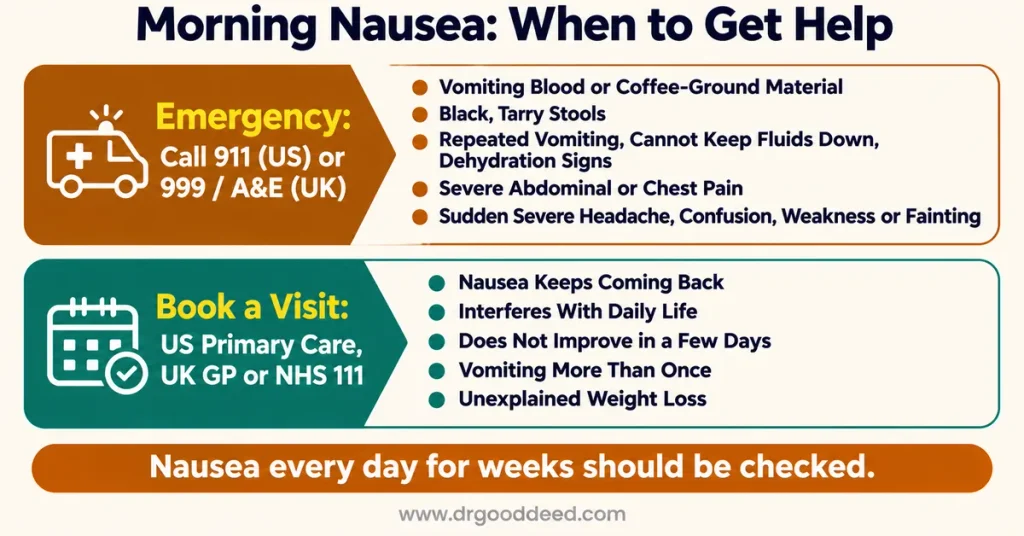
Get emergency care right away (call 911 in the US, or 999 or go to A&E in the UK) if nausea comes with any of these:
- Vomiting blood or material that looks like coffee grounds
- Black, tarry stools
- Repeated vomiting, not being able to keep fluids down, or signs of dehydration
- Severe abdominal or chest pain
- A sudden, severe headache, confusion, weakness or fainting
Morning Nausea: Symptom Patterns and Possible Causes
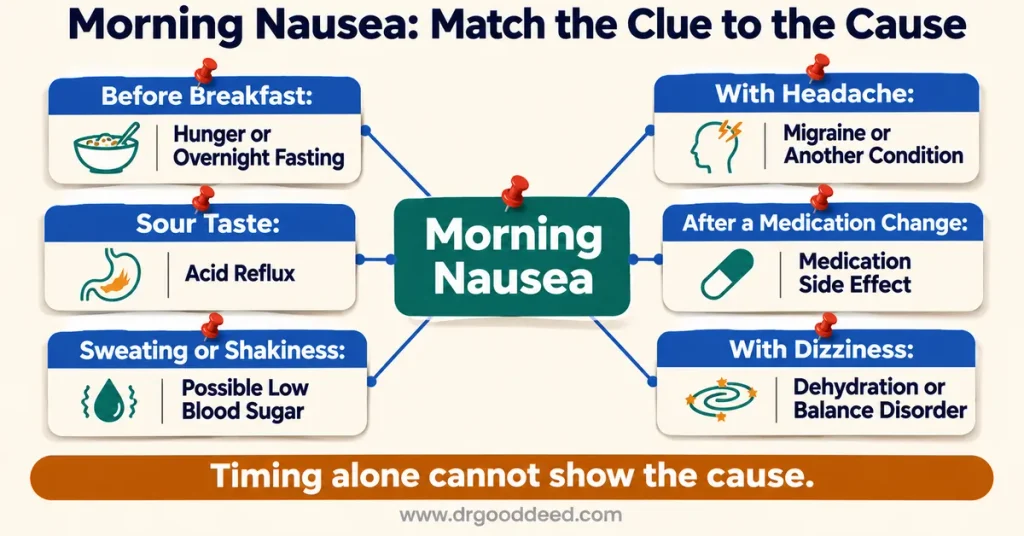
| Symptom pattern | Possible explanation | What to discuss with a doctor |
| Nausea before breakfast | Hunger or overnight fasting | Whether symptoms improve after eating |
| Nausea with a sour taste | Acid reflux | Whether symptoms worsen when lying down |
| Nausea with sweating or shakiness | Possible low blood sugar | Diabetes history and glucose readings |
| Nausea with headache | Migraine or another condition | Headache severity and associated symptoms |
| Nausea after a medication change | Medication side effect | Recent prescriptions and dosage changes |
| Nausea with dizziness | Dehydration or a balance disorder | Fluid loss and balance symptoms |
What Causes Nausea Every Morning When Not Pregnant?
Morning nausea causes include digestive, metabolic, neurological, psychological and medication effects. Timing alone cannot show the cause, but it helps when combined with other symptoms.
Nausea in the Morning on an Empty Stomach
Nausea in the morning on an empty stomach is common after a long overnight gap without food. Hunger and stomach discomfort can be a source of queasiness. Another possible cause is low blood sugar, especially if the person is taking insulin or some diabetes medications. If you take these medicines, talk to your diabetes care team.
Morning Nausea and Acid Reflux or Gastritis
Nausea in the morning might be accompanied by acid reflux, a condition that occurs when the stomach contents go back up the esophagus. Additional symptoms may be heartburn, a sour taste or irritation of the throat, especially while lying down overnight. The NIDDK provides information about the symptoms and causes of GERD.
Inflammation of the lining of the stomach (gastritis) can also lead to nausea, upper abdominal discomfort, bloating and loss of appetite. Some drugs and H. pylori infection may play a role. Read more details in the NIDDK gastritis guide.
Medication safety tip: Some medicines can cause nausea in some people, including some antibiotics, iron supplements, diabetes medicines and weight-management medicines. Tell your pharmacist or doctor when the nausea started, and do not stop or change a medicine on your own.
To read more about related symptoms, see Causes of Stomach Pain in the Morning.
Morning Nausea, Anxiety and Medicine Effects
Feelings of stress can cause adverse interactions between the brain and the digestive system, which can lead to morning nausea and anxiety. Other symptoms of anxiety include changes in appetite, upset tummy and dizziness. But persistent nausea doesn’t necessarily mean that it is stress-induced.
Certain prescription drugs may have nausea as a side effect. If symptoms developed after beginning or changing medications, talk with your doctor or pharmacist about when the symptoms started. Do not discontinue or modify prescribed medication without consulting the doctor.
Read more about the impact of stress on gut health.
Morning Nausea, Low Blood Sugar and Dehydration
Morning nausea and low blood sugar can happen with other symptoms such as sweating, shakiness, hunger, weakness or dizziness. This risk is especially applicable to those on insulin or some blood glucose-lowering drugs. Nausea in the morning alone does not confirm hypoglycemia. Low blood sugar symptoms and causes are described by MedlinePlus.
Loss of fluids due to fever, vomiting, diarrhea or heavy sweating can also lead to nausea and dizziness. Other signs are dry mouth, dark urine and low urine output.
Morning Nausea, Sleep Apnea and Migraines
If nausea happens in addition to loud snoring, disrupted breathing at night, daytime fatigue or morning headaches, it is advisable to consult a physician about morning nausea and sleep apnea. Nausea alone is not enough to diagnose sleep apnea. Read about the types of sleep apnea.
Nausea and headache in the morning can also happen with migraine. Read more about migraine causes and symptoms. Some individuals may have nausea and vomiting, with or without a strong headache. Nausea and dizziness often can come from inner ear problems which impact balance. Sudden onset or severe headache, or headache with neurological symptoms of weakness or confusion, should be assessed immediately. Acid reflux can also be linked to headaches; read whether acid reflux can cause headaches.
How to Narrow Down the Cause of Morning Nausea
If you feel nauseous when you wake up, note when it happens and what comes with it. You can use these observations to communicate about your symptoms with a clinician:
- Do you feel nauseous before breakfast or after a late, heavy meal?
- Is it accompanied with heartburn, a sour taste or upper abdominal pain?
- Does it come with dizziness, sweating, headache or vomiting?
- Has it started following a change in medications?
- Does it occur on days when you are stressed or having trouble falling asleep?
These questions are designed to be used as conversation starters and are not a self-diagnosis checklist. A pregnancy test may be helpful to rule out pregnancy, if possible.
What Doctors Check When Morning Nausea Won’t Go Away
Your medical history, how long the symptoms have persisted, and your eating and sleeping habits, as well as drugs you are taking and symptoms that you may experience, will be reviewed by a healthcare professional. Physical examination will include assessment of hydration, blood pressure, abdominal tenderness, and other pertinent findings.
Based on the history and exam, the physician might order blood tests, urine tests, or additional digestive or neurological tests. Laboratory tests or imaging are not always necessary for those who have occasional nausea.
Evaluation and Treatment of Nausea and Vomiting in Adults, published in American Family Physician in 2024, categorizes nausea as either acute (up to approximately seven days) or chronic (four weeks or longer). Chronic nausea causes span digestive, infectious, metabolic, neurological, psychiatric and medication-related problems.
Chronic nausea may last for more than four weeks and may include problems such as gastroparesis (delayed emptying of the stomach) as well as gastrointestinal motility disorders. Diagnosis may require blood tests, as well as tests for electrolytes and glucose levels.
Morning Nausea: When to See a Doctor
When to see a doctor if nausea occurs in the morning is based on the severity of it, how long it lasts, and whether there are other symptoms. Make an appointment with a doctor if nausea occurs again, interferes with activities of daily living, or doesn’t get better in a few days.
Nausea every day for weeks should be evaluated by a doctor, not continued with indefinite self-treatment. Four weeks or more is the chronic-duration criterion applied by the 2024 American Family Physician review, but you do not need to wait that long if symptoms are getting worse.
For warning signs that need emergency care, see the list near the top of this page.
If it is not an emergency, book a visit with your primary care doctor in the US, or contact your GP or NHS 111 in the UK.
Nausea every morning when not pregnant can have several causes, and timing alone does not show which one. Note what comes with it, any medicine changes and your eating patterns, and see a healthcare professional if it continues, gets worse or affects daily life.
FAQs
Why Do I Feel Nauseous Every Morning but I’m Not Pregnant?
Common causes include an empty stomach, acid reflux, poor sleep, anxiety, dehydration, a medicine effect or alcohol the night before. The pattern, such as timing and what comes with it, helps point to the cause. If it lasts for weeks or comes with warning signs, see a doctor.
Can Acid Reflux Cause Nausea in the Morning?
Yes. Acid reflux can cause nausea in the morning, often with heartburn or a sour taste, especially after a late or heavy meal or when lying down overnight. If it happens often, a doctor can check for reflux or gastritis.
Can Anxiety Cause Nausea Every Morning?
Yes. Anxiety can also impact digestion and make people feel queasy or have a stomach ache. But if symptoms keep coming back, it is not always anxiety, and a clinician can help sort anxiety from physical causes.
Can Low Blood Sugar Cause Morning Nausea?
Yes. When blood glucose is low, nausea, sweating, shakiness and dizziness may occur, particularly in those who use insulin or some diabetes medicines. Nausea alone does not confirm low blood sugar; if you take these medicines, talk to your diabetes care team.
How Long Is Too Long to Have Nausea Every Morning?
Sources differ. The 2024 American Family Physician review treats nausea lasting up to about 7 days as acute and 4 weeks or longer as chronic. See a doctor sooner if it keeps coming back for more than a few days, gets worse, affects daily life or comes with warning signs.
Sources
American Family Physician, Evaluation and Treatment of Nausea and Vomiting in Adults. link
NHS, Feeling Sick (Nausea). link
Mayo Clinic, Nausea and Vomiting Causes. link
MedlinePlus, Nausea and Vomiting. link
NIDDK, GERD Symptoms and Causes. link
NIDDK, Gastritis Symptoms and Causes. link
MedlinePlus, Low Blood Sugar. link
MedlinePlus, Dehydration. link
Medical Disclaimer: This article is for general information only and is not medical advice. It does not replace a diagnosis, treatment plan, or guidance from a qualified healthcare professional. Always talk to your doctor about your own symptoms and before starting, stopping, or changing any treatment. If you think you may be having a medical emergency, call 911 or go to your nearest emergency room.