

Headaches linked to GERD typically appear in the morning or during active reflux flares. This guide covers the biological causes, symptoms, risk factors, and treatment options that address both conditions together.
How GERD May Contribute to Headaches
GERD can cause headaches through an indirect mechanism. The connection works through five separate pathways: sleep disruption, inflammation, stress, medication side effects, and shared triggers with migraines. Each pathway adds up, making headaches more frequent in people with poorly managed acid reflux.
Sleep Disruption From GERD Causing Headaches
Sleep disruption from GERD causing headaches is one of the most documented links. Acid reflux often worsens when lying down, waking people multiple times per night. The American Migraine Foundation states that fragmented sleep is one of the most common migraine triggers, with even one night of poor sleep increasing next-day headache risk significantly.
Chronic Inflammation and Pain Pathways
Repeated acid exposure irritates the esophagus lining, triggering an inflammatory response. A 2021 study in Neurogastroenterology & Motility found that chronic esophageal inflammation increases circulating inflammatory markers like CRP, which can sensitize pain pathways in the brain involved in headache and migraine.
Stress and Anxiety Associated With GERD
GERD and anxiety often occur together. The American College of Gastroenterology notes that stress doesn’t directly cause acid production to increase, but it heightens sensitivity to reflux symptoms and tightens neck and shoulder muscles, a known tension headache trigger.
Medication-Related Headaches
Some GERD medications list headaches as a side effect. Proton pump inhibitors (PPIs) and H2 blockers both report headache in roughly 5% of users during clinical trials, according to FDA prescribing information.
Shared Triggers Between GERD and Migraines
Caffeine, alcohol, chocolate, and high-fat meals trigger both acid reflux and migraines in many people. A 2020 study in Headache: The Journal of Head and Face Pain found that migraine patients with GERD reported overlapping dietary triggers in nearly 65% of cases.
Headache Symptoms Associated With Acid Reflux
People in the United States dealing with headache symptoms associated with acid reflux often notice morning headaches paired with heartburn, sour taste, or a hoarse voice upon waking. This combination points to nighttime reflux disrupting sleep and irritating the throat, creating a recognizable pattern that differs from typical tension headaches.
- Morning headaches that improve as the day goes on
- Head pressure, especially behind the forehead or temples
- Fatigue and trouble concentrating, often called brain fog
- Heartburn, a burning feeling in the chest or throat
- Sour or bitter taste in the mouth upon waking
- Regurgitation of food or liquid, especially overnight
- Chest discomfort that can mimic anxiety symptoms
- Chronic cough, especially at night
- Hoarseness or a raspy voice in the morning
- Difficulty falling or staying asleep
Morning Headaches
Morning headaches linked to GERD often happen because acid reflux is worse overnight when lying flat, disrupting sleep cycles needed for headache prevention.
Head Pressure and Discomfort
A dull pressure feeling, different from sharp migraine pain, often accompanies GERD-related headaches and tends to ease with movement or after eating.
Fatigue and Brain Fog
Poor sleep quality from nighttime reflux directly causes daytime fatigue. The CDC notes that adults sleeping less than 7 hours regularly report headaches at nearly double the rate of well-rested adults.
Heartburn
Heartburn is GERD’s hallmark symptom. The Mayo Clinic defines it as a burning sensation in the chest, often after eating or when lying down.
Sour Taste in the Mouth
Stomach acid reaching the throat leaves a sour or metallic taste, often noticed first thing in the morning after overnight reflux episodes.
Regurgitation
Regurgitation means food or sour liquid comes back up into the throat or mouth without vomiting, a classic GERD symptom that worsens lying down.
Chest Discomfort
GERD-related chest discomfort can feel like pressure or burning. The American Heart Association advises ruling out heart-related causes first if chest pain is severe or sudden.
Chronic Cough
Acid reaching the throat irritates airway tissue, causing a persistent dry cough, especially at night, that can disrupt sleep further.
Hoarseness
Morning hoarseness happens when stomach acid irritates the vocal cords overnight, a condition sometimes called laryngopharyngeal reflux.
Difficulty Sleeping
GERD symptoms worsening when lying flat make falling asleep and staying asleep harder, directly feeding into the sleep-headache connection.
Risk Factors for GERD and Headaches
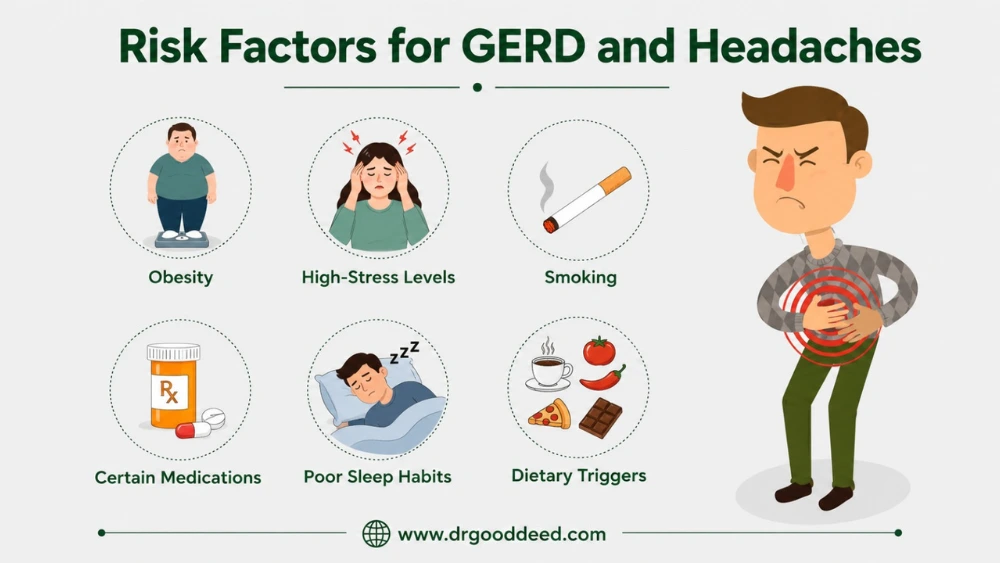
Obesity
Excess weight increases abdominal pressure, pushing stomach contents upward. The National Institute of Diabetes and Digestive and Kidney Diseases (NIDDK) identifies obesity as a primary GERD risk factor, and obesity independently increases chronic headache risk too.
High-Stress Levels
Chronic stress increases muscle tension and reflux sensitivity simultaneously, creating overlapping conditions for both GERD flares and tension headaches.
Smoking
Smoking relaxes the lower esophageal sphincter, allowing acid to escape more easily. The American Lung Association also links smoking to increased migraine frequency.
Certain Medications
Some blood pressure medications, antidepressants, and pain relievers can worsen acid reflux while also listing headaches as a separate side effect.
Poor Sleep Habits
Irregular sleep schedules worsen both GERD symptoms and headache frequency, creating a cycle that’s hard to break without addressing both together.
Dietary Triggers
Certain foods and drinks trigger reflux and headaches at the same time, covered in detail in the next section.
Diet Changes for Acid Reflux and Headaches
Diet changes for acid reflux and headaches target foods that trigger both conditions at once. The table below breaks down which foods to limit and which to add, based on guidance from the American Gastroenterological Association and American Migraine Foundation dietary recommendations.
Foods That May Worsen GERD
Fatty Foods
Fried foods and fatty cuts of meat slow stomach emptying, increasing reflux risk for hours after eating.
Spicy Foods
Spicy dishes can irritate the esophagus lining directly, worsening heartburn in sensitive individuals.
Chocolate
Chocolate contains both caffeine and theobromine, two compounds that relax the esophageal sphincter and are also documented migraine triggers.
Caffeinated Beverages
Coffee, energy drinks, and some sodas increase stomach acid production while also acting as a headache trigger when consumed in excess or skipped after regular use.
Foods That Support Digestive Health
| Food Group | Examples | Benefit |
| Lean proteins | Chicken breast, turkey, fish | Lower fat content reduces reflux risk |
| Non-citrus fruits | Bananas, melons, apples | Less acidic, gentler on the stomach |
| Whole grains | Oatmeal, brown rice | Absorb stomach acid, ease digestion |
| Vegetables | Leafy greens, carrots, broccoli | Low fat, high fiber, support gut health |
| Ginger | Fresh or tea form | Traditionally used to settle the stomach |
Meal Timing Strategies
Eating the last meal at least 3 hours before bed gives the stomach time to empty, reducing nighttime reflux and the morning headaches linked to it.
Portion Control and Symptom Reduction
Large meals stretch the stomach and increase pressure on the esophageal sphincter. Smaller, more frequent meals reduce this pressure throughout the day.
How One Patient Reduced Morning Headaches by Treating GERD First
Case Study: Managing Nighttime Reflux Cut Morning Headache Days From 20 to 4 Per Month
Linda (name altered for privacy), a 48-year-old from Florida, had dealt with near-daily morning headaches for over a year. She tried over-the-counter pain relievers every morning, along with caffeine to fight the fatigue that came with it, but the headaches kept returning.
During a routine check-up, Linda mentioned she also had nightly heartburn and woke up with a sour taste and hoarse voice. Her doctor connected the two issues and ordered a sleep study along with a GERD evaluation. Results showed Linda had nighttime acid reflux episodes waking her up six to eight times per night, fragmenting her sleep without her remembering it.
Her doctor recommended elevating the head of her bed by 6 inches, avoiding food for 3 hours before bedtime, and starting a low-dose proton pump inhibitor. Within three weeks, Linda’s nighttime reflux episodes dropped significantly, confirmed by a follow-up sleep study.
Her morning headaches dropped from roughly 20 days per month to about 4. Her doctor noted this case reflects a pattern increasingly documented in sleep medicine research, where treating nighttime GERD directly improves headache frequency by restoring uninterrupted sleep cycles.
How to Relieve Acid Reflux Related Headaches
Relieving acid reflux-related headaches in the U.S. starts with addressing nighttime reflux specifically, since this is the strongest link to morning headaches and disrupted sleep. The steps below target both the digestive trigger and the resulting headache pattern together.
- Elevate the head of the bed by 6 to 8 inches using a wedge or bed riser
- Avoid eating within 3 hours of bedtime
- Sleep on the left side, which reduces reflux frequency according to gastroenterology research
- Stay hydrated throughout the day, since dehydration worsens both GERD and headache symptoms
- Limit caffeine to one serving in the morning, avoiding afternoon or evening intake
- Track trigger foods using a simple symptom diary for two weeks
- Practice stress reduction techniques like deep breathing before bed
Treatment Options for GERD
Weight loss, smaller meals, and avoiding trigger foods form the first line of treatment for mild to moderate GERD, often improving symptoms within two to four weeks.
Antacids
Over-the-counter antacids like Tums neutralize stomach acid quickly but provide short-term relief, lasting one to two hours.
H2 Blockers
Medications like famotidine reduce acid production for up to 12 hours, useful for managing nighttime symptoms that contribute to morning headaches.
Proton Pump Inhibitors (PPIs)
PPIs like omeprazole reduce acid production more strongly than H2 blockers. The FDA recommends limiting over-the-counter PPI use to 14-day courses unless a doctor prescribes longer use.
Surgical Options for Severe GERD
For severe cases unresponsive to medication, procedures like fundoplication strengthen the esophageal sphincter. The American College of Surgeons notes this option is typically considered after lifestyle and medication approaches have been fully tried.
FAQ
1. Can acid reflux cause headaches?
Yes, GERD can cause headaches indirectly through sleep disruption, inflammation, and shared triggers like caffeine and chocolate that affect both digestion and headache pathways.
2. Does GERD cause headaches directly?
No. GERD doesn’t directly cause headache pain. It contributes through fragmented sleep, increased inflammatory markers, and medication side effects affecting roughly 5% of users.
3. Why do I get headaches when my acid reflux flares up?
Active reflux often disrupts sleep the night before, and inflammation from acid exposure raises CRP levels, which can sensitize brain pain pathways within hours.
4. Can sleep disruption from GERD cause headaches?
Yes. Reflux waking someone six to eight times nightly fragments sleep cycles, and the American Migraine Foundation links even one disrupted night to next-day headache risk.
5. What headache symptoms are associated with acid reflux?
Morning headaches paired with heartburn, sour taste, hoarseness, and brain fog. This combination points to nighttime reflux rather than a typical tension headache pattern.
6. Is there a connection between GERD and migraines?
Yes. A 2020 Headache journal study found 65% of migraine patients with GERD shared dietary triggers like caffeine, chocolate, and alcohol between both conditions.
7. Can heartburn trigger headaches?
Not directly, but heartburn that disrupts sleep six or more times nightly increases next-day headache risk by fragmenting the deep sleep stages needed for headache prevention.
8. What foods may worsen both acid reflux and headaches?
Chocolate, caffeine, alcohol, and high-fat fried foods top the list. These four relax the esophageal sphincter while also acting as documented migraine triggers.
9. How can I relieve acid reflux-related headaches?
Elevate the bed head 6 to 8 inches, stop eating 3 hours before sleep, sleep on the left side, and limit caffeine to one morning serving daily.
10. Do GERD medications cause headaches as a side effect?
Yes. PPIs and H2 blockers report headaches in about 5% of users per FDA data, usually mild and resolving within the first two weeks of use.
Sources
American Gastroenterological Association
American College of Gastroenterology
National Institute of Diabetes and Digestive and Kidney Diseases
Disclaimer: This article is for informational purposes only and does not replace professional medical advice. Talk to a licensed healthcare provider for diagnosis and treatment of GERD, acid reflux, or chronic headaches.
Yes, GERD can cause headaches indirectly through sleep disruption, chronic inflammation, and shared trigger pathways with migraines. The World Health Organization classifies GERD as a chronic digestive condition affecting roughly 20% of adults in the United States.