
Yes, thyroid hormone imbalances can trigger headaches through effects on blood vessels, inflammation, and brain chemistry. The American Thyroid Association states that thyroid disorders affect over 12% of the U.S. population at some point in life.
Headaches linked to thyroid problems often appear alongside fatigue, weight changes, and brain fog. This guide covers hypothyroidism, autoimmune thyroid disease, diagnosis, and treatment options that address both conditions.
Does Hypothyroidism Cause Headaches?
Low thyroid hormone levels slow metabolism throughout the body, including processes that regulate blood vessel tone and pain sensitivity in the brain. This bslowdown creates conditions favorable for tension-type of headaches and migraines.
Common Headache Patterns in Hypothyroidism
A 2020 study published in the Journal of Headache and Pain found that patients with hypothyroidism reported headaches at higher rates than the general population, with tension-type headaches being the most common pattern reported.
Fatigue, Brain Fs b og, and Head Pain
Hypothyroidism slows overall energy production in cells. This fatigue often comes with brain fog, a feeling of mental slowness, and headaches that worsen as the day progresses, particularly in the afternoon.
Why Low Thyroid Hormone Levels Affect the Brain
Thyroid hormone affects how brain cells use energy and regulate neurotransmitters like serotonin. The National Institute of Diabetes and Digestive and Kidney Diseases (NIDDK) notes that low thyroid hormone levels can alter serotonin pathways, the same pathways involved in migraine development.
Autoimmune Thyroid Disease and Headaches
Autoimmune thyroid disease and headaches often occur together because autoimmune conditions create system-wide inflammation, not just thyroid-specific effects. The two most common autoimmune thyroid conditions, Hashimoto’s thyroiditis and Graves’ disease, both show documented links to increased headache frequency.
Hashimoto’s Thyroiditis and Head Pain
Hashimoto’s thyroiditis, the most common cause of hypothyroidism in the United States according to the National Institutes of Health, involves the immune system attacking thyroid tissue. This ongoing immune activity releases inflammatory chemicals that can sensitize pain pathways.
Graves’ Disease and Neurological Symptoms
Graves’ disease causes hyperthyroidism, an overactive thyroid. The excess thyroid hormone increases heart rate and metabolism, and this overstimulation can trigger headaches alongside anxiety and tremors.
Chronic Inflammation and Autoimmunity
Autoimmune thyroid conditions keep the immune system in a constant state of low-level activity. This chronic inflammation affects blood vessels throughout the body, including those in the brain involved in headache pain.
The Impact of Autoimmune Disorders on Headaches
A 2021 review in Frontiers in Neurology found that patients with autoimmune thyroid conditions reported migraine at nearly twice the rate of patients without thyroid autoimmunity.
Headache With Weight Changes and Thyroid Issues
Headache with weight changes and thyroid issues form a recognizable pattern that many people overlook, since weight changes happen gradually while headaches feel like a separate problem. Both hypothyroidism and hyperthyroidism cause weight changes through opposite metabolic effects, and both conditions independently increase headache frequency through their impact on hormone levels and energy regulation.
Weight Gain in Hypothyroidism
Slowed metabolism in hypothyroidism often leads to gradual weight gain. The Cleveland Clinic notes this weight gain typically ranges from 5 to 10 pounds, occurring over weeks to months as metabolism slows.
Weight Loss in Hyperthyroidism
Hyperthyroidism speeds up metabolism, often causing unintentional weight loss despite normal or increased appetite, a pattern the American Thyroid Association considers a key diagnostic clue.
Metabolic Changes and Headaches
Rapid metabolic shifts, whether speeding up or slowing down, affect blood sugar regulation and hydration status, both of which are documented headache triggers independent of thyroid hormone levels directly.
When Weight Changes Signal a Thyroid Problem
Unexplained weight change of more than 5% of body weight over 6 months, combined with new or worsening headaches, warrants thyroid function testing according to American Thyroid Association screening guidance.
Other Symptoms That May Occur With Thyroid-Related Headaches
Thyroid-related headaches typically appear alongside a cluster of other symptoms that point toward either an underactive or overactive thyroid, helping distinguish thyroid-related headaches from other headache causes.
Symptoms common with hypothyroidism-related headaches:
- Persistent fatigue, even after adequate sleep
- Cold sensitivity
- Dry skin and hair thinning
- Constipation
- Depression or low mood
- Muscle weakness or aches
Symptoms common with hyperthyroidism-related headaches:
- Rapid heartbeat or palpitations
- Anxiety or irritability
- Heat sensitivity and excessive sweating
- Tremors in the hands
- Difficulty sleeping
- Increased bowel movements
How Thyroid Hormone Fluctuations Cause Head Pain
Thyroid hormone helps regulate blood vessel tone. The American Heart Association notes that both low and high thyroid hormone levels can affect blood pressure and circulation, both of which influence headache patterns.
Hormonal Changes and Brain Function
Thyroid hormone fluctuations and head pain connect through the hypothalamus, a brain region that regulates both thyroid hormone release and pain processing centers.
Inflammation and Pain Signaling
Thyroid hormone imbalances increase certain inflammatory markers in the blood. These markers can sensitize nerve pathways throughout the body, including those responsible for headache pain.
The Relationship Between Hormones and Migraines
The American Migraine Foundation notes that hormonal fluctuations, whether from thyroid issues, menstrual cycles, or other sources, rank among the most common migraine triggers reported by patients.
Risk Factors for Thyroid Disorders
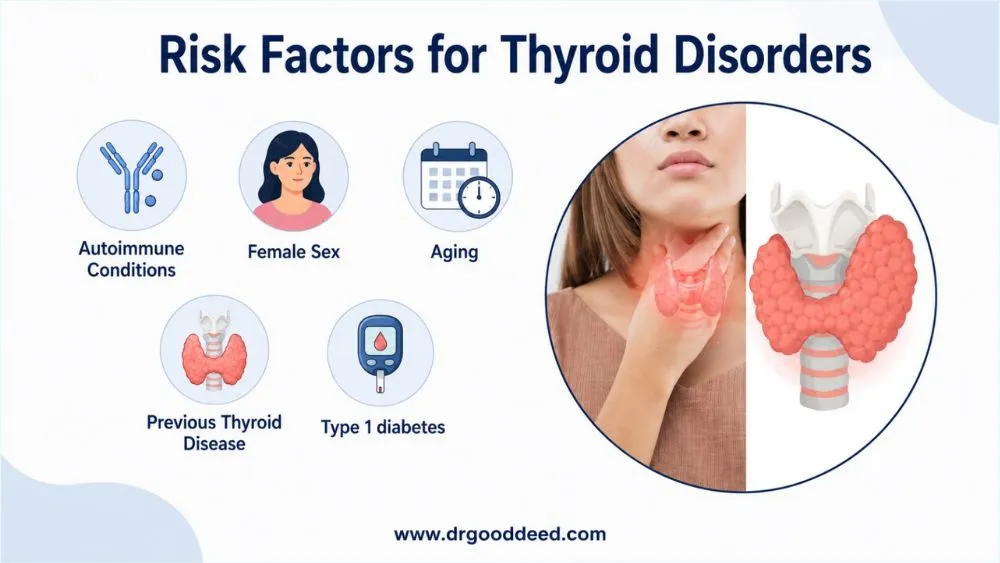
Thyroid conditions often run in families. The American Thyroid Association states having a first-degree relative with thyroid disease significantly increases personal risk.
Autoimmune Conditions
People with one autoimmune condition, like type 1 diabetes or celiac disease, have higher rates of developing autoimmune thyroid disease too.
Female Sex
Women are significantly more likely than men to develop thyroid disorders, with the American Thyroid Association reporting women face up to 8 times higher risk for some thyroid conditions.
Aging
Thyroid function naturally changes with age, and the risk of developing thyroid disorders increases notably after age 60.
Previous Thyroid Disease
A history of thyroid surgery, radiation treatment, or previous thyroid imbalance increases the likelihood of future thyroid issues developing.
How Thyroid Disorders Are Diagnosed
Doctors review symptom patterns, family history, and timing of symptoms like fatigue, weight changes, and headaches to identify thyroid involvement.
Thyroid Function Blood Tests
TSH Testing
Thyroid-stimulating hormone (TSH) testing is the primary screening tool. The American Thyroid Association considers TSH levels between 0.4 and 4.0 mIU/L generally normal for most adults.
Free T4 Testing
Free T4 measures the active thyroid hormone available in the bloodstream, helping confirm whether the thyroid is underactive or overactive.
Thyroid Antibody Testing
Antibody tests detect autoimmune thyroid conditions like Hashimoto’s or Graves’ disease by identifying immune system markers attacking the thyroid.
Imaging and Additional Evaluation
Ultrasound imaging may be used if a doctor finds an enlarged thyroid (goiter) or nodules during a physical exam, helping determine if further testing is needed.
How Thyroid Treatment Reduced Years of Chronic Headaches for Patricia
Case Study: Diagnosing Hashimoto’s Thyroiditis Cut Weekly Headaches by Half Within Three Months
Patricia (name altered for privacy), a 52-year-old from Pennsylvania, dealt with headaches occurring 4 to 5 days weekly for over two years. She had tried multiple over-the-counter pain relievers and a prescription migraine medication, both providing only partial relief.
During a routine physical, her doctor noted she’d also gained about 12 pounds over the past year, felt cold more often than usual, and reported increasing fatigue. Blood tests showed elevated TSH levels and the presence of thyroid antibodies, confirming Hashimoto’s thyroiditis.
Her doctor started levothyroxine, a standard thyroid hormone replacement medication, with dosing adjusted over two follow-up visits based on repeat TSH testing. Within three months, Patricia’s headache frequency dropped from 4 to 5 days weekly to about 2 days weekly.
Her doctor noted this outcome aligns with research showing that correcting thyroid hormone levels often reduces headache frequency in patients whose headaches were linked to undiagnosed thyroid dysfunction.
Additional Treatments for Thyroid-Related Headaches
Treating thyroid disorders to reduce headaches works best when thyroid hormone levels are corrected first, since headache treatments alone won’t address the underlying hormonal cause. Once thyroid levels stabilize, typically within 6 to 8 weeks of starting or adjusting medication, many patients notice gradual headache improvement.
- Levothyroxine for hypothyroidism, with dosage adjusted based on follow-up TSH testing every 6 to 8 weeks initially
- Antithyroid medications like methimazole for hyperthyroidism, reducing excess hormone production
- Beta-blockers for hyperthyroidism symptoms like rapid heartbeat, which can also help reduce certain headache types
- Standard headache treatments (over-the-counter pain relievers, migraine-specific medications) alongside thyroid treatment for headaches that persist after hormone levels normalize
- Regular follow-up testing to ensure thyroid levels remain stable, since fluctuations can cause headaches to return
Preventing Thyroid-Related Complications
People managing thyroid disorders across the United States benefit from consistent monitoring to prevent both thyroid complications and the headaches that often accompany hormone fluctuations, especially during dosage adjustments or pregnancy.
- Get TSH levels checked annually once thyroid medication doses are stable
- Take thyroid medication consistently at the same time each day, on an empty stomach as directed
- Report new or worsening headaches to a doctor, since this can signal thyroid levels need adjustment
- Monitor for pregnancy-related thyroid changes, since the American Thyroid Association notes thyroid needs often increase during pregnancy
- Avoid abruptly stopping thyroid medication, since sudden hormone level drops can trigger headache flares
FAQ
1. Can thyroid issues cause headaches?
Yes, hyroid hormone imbalances can trigger headaches through effects on blood vessel tone, inflammation, and serotonin pathways, with both underactive and overactive thyroid linked to increased headache frequency.
2. Does hypothyroidism cause headaches?
Yes. A 2020 Journal of Headache and Pain study found hypothyroid patients report higher headache rates, mostly tension-type, linked to slowed metabolism and serotonin pathway changes.
3. Can hyperthyroidism trigger headaches?
Yes. Excess thyroid hormone speeds up heart rate and metabolism, and this overstimulation triggers headaches alongside anxiety and tremors in Graves’ disease specifically.
4. How do thyroid hormone fluctuations cause head pain?
The hypothalamus regulates both thyroid hormone release and pain processing. Hormone fluctuations here directly affect pain signaling pathways, increasing headache sensitivity within days of imbalance.
5. What is the connection between autoimmune thyroid disease and headaches?
A 2021 Frontiers in Neurology review found autoimmune thyroid patients report migraine at nearly twice the rate of non-autoimmune patients, linked to chronic inflammatory markers.
6. Can Hashimoto’s disease cause migraines?
Yes. Hashimoto’s creates ongoing immune-related inflammation that sensitizes pain pathways, and patients with this condition show notably higher migraine rates in autoimmune research studies.
7. Are headaches a common symptom of thyroid disorders?
Yes, but rarely alone. Headaches typically appear alongside fatigue, weight changes, cold or heat sensitivity, and mood changes, forming a recognizable symptom cluster.
8. Can thyroid problems cause weight changes and headaches together?
Yes. Hypothyroidism causes weight gain of 5 to 10 pounds with headaches from slowed metabolism, while hyperthyroidism causes weight loss with headaches from overstimulation.
9. Will treating thyroid disorders reduce headaches?
Yes. Documented cases show headache frequency dropping by roughly half within three months of starting thyroid hormone treatment and reaching stable TSH levels.
10. What other symptoms occur with thyroid-related headaches?
Fatigue, cold or heat sensitivity, weight changes, and mood shifts. This symptom cluster, not headaches alone, points toward thyroid testing as the next step.
Sources
- American Thyroid Association
- National Institute of Diabetes and Digestive and Kidney Diseases
- National Institutes of Health
- American Heart Association
- American Migraine Foundation
Disclaimer: This article is for informational purposes only and does not replace professional medical advice. Talk to a licensed healthcare provider for diagnosis and treatment of thyroid disorders or chronic headaches.